
Quick Summary
When managing a flooded basement cleanup in NYC, rapid water extraction and structural drying within 24 to 48 hours are essential to prevent toxic mold growth and severe foundation damage. Wade's Restoration provides specialized emergency water removal using staged pumping to safely balance hydrostatic pressure on older pre-war masonry foundations alongside thermal imaging and hospital-grade sanitization. Property owners can call Wade's Restoration 24/7 for a free visual inspection, guaranteed 45-minute emergency dispatch, and comprehensive moisture documentation for seamless insurance claim processing.
Flooded Basement Cleanup: Rapid Water Removal in NYC
If you have standing water in your building right now, Wade’s Restoration handles everything from rapid water extraction to structural drying. We dispatch crews across NYC for emergency response. Most flooded basement cleanup projects cost between $3,000 and $10,000, though minor cleanups can run under $2,000 and heavy Category 3 sewage floods cost more. Because wet materials should be dried within 24 to 48 hours to help prevent mold growth, getting pumps and dehumidifiers on-site quickly protects both your structure and your health.[5]
When you call us, you speak directly with local restoration specialists rather than an automated call center. Our technicians arrive with truck-mounted extractors, commercial desiccant dehumidifiers, and thermal imaging gear. We take extra care with older New York brick foundations, where pumping water out too fast can crack historic masonry. Call Wade’s Restoration 24/7 for a free visual inspection and an honest, written scope of work.
Emergency Flooded Basement Cleanup in NYC
Emergency Flooded Basement Cleanup in NYC in brief: Flooded basements need immediate extraction, structural drying, and antimicrobial treatment. Fast action stops mold and prevents moisture from migrating through shared party walls. Complete mitigation includes controlled water pumping, thermal moisture mapping, sanitizing contaminated framing, and recording daily drying logs for insurance adjusters. Property owners should shut off power before entering any flooded area.
Whether storm runoff came through the foundation or a sewer backed up through the floor drain, every hour water sits makes recovery harder. Wade’s Restoration runs a 24/7 live dispatch service across NYC to contain property damage before it spreads into upper living spaces.
Immediate Safety Actions Before Help Arrives
If your basement takes on water, follow these safety steps before our team arrives:
- Cut the electrical power: If your breaker box is on an upper, dry level, shut off power to the basement immediately. Never walk through standing water to reach an electrical panel.
- Shut off the main water line: If the flooding comes from an internal pipe failure, turn the main gate valve clockwise to cut off the supply.
- Avoid direct contact with drain water: Municipal backups contain dangerous bacteria, industrial chemicals, and biological contaminants. Keep children and pets away from the area.
What Our Emergency Response Entails
Once on-site, our technicians run a complete visual inspection and map moisture pockets behind finished surfaces. In older pre-war homes, unreinforced brick and fieldstone foundations require measured, staged pumping. If you empty a flooded basement in one quick pass while the outside soil remains soaked, the uneven hydrostatic pressure can bow or collapse the masonry walls. We stage the extraction safely, set up drying containment, and start room-by-room photographic records for your insurance claim.
Emergency Water Damage Restoration
Water mitigation is about halting structural deterioration, not just vacuuming puddles. Wade’s Restoration brings truck-mounted extractors and submersible trash pumps straight to your door without relying on third-party sub-contractors.[3]
Rapid Extraction and Industrial Pumping
Extracting water from older masonry foundations takes real calculation. When groundwater saturates the soil around a brownstone or attached brick row house, that external weight presses hard against basement walls. FEMA notes that flood insurance cleanup reimbursement can cover water pumping, foundation drying, and mold treatments. Our team manages pump rates carefully to keep external soil loads and internal pressure in safe balance.
Moisture Mapping with Thermal Imaging
Water rarely stays where it started. In attached homes, moisture travels sideways through plaster-on-brick party walls into neighboring basements. We scan your floors, baseboards, and ceiling cavities with FLIR thermal cameras and non-penetrating moisture meters. This step maps hidden water pockets so we can target our drying equipment right where it is needed.
Flood Damage Restoration
Stormwater floods carry silt, mud, and contaminants that require structural sanitization alongside water extraction. Removing standing water is step one; drying the subfloor and treating porous materials protects your building value over time.
Groundwater Seepage and Storm Inundation
During severe rainstorms, heavy runoff quickly overwhelms street sewers and flows into sub-grade basements. Our crews isolate wet electrical lines, track moisture paths along shared brick party walls, and apply botanical antimicrobials before airborne mold counts rise.
Managing Pre-War Hydrostatic Pressure Safely
Pumping out a flooded 1920s brick basement too quickly is dangerous. Saturated dirt outside creates lateral soil pressure. If you remove all the interior water in a few hours, you remove the counter-pressure holding those brick walls in place.
- Staged Water Extraction: We draw down standing water in stages so internal and external pressure equalizes safely as the surrounding water table drops.
- Antimicrobial Application: We apply EPA-registered treatments across damp stone and brick to halt microbial growth without degrading older lime mortar.
Mold Remediation
Mold remediation stops fungal spores from spreading into living areas, removes unsalvageable porous items, and sanitizes framing. Because wet materials should be dried within 24 to 48 hours to help prevent mold growth, starting active containment during initial extraction is essential.
Mold Containment and Structural Drying
In attached New York multi-family properties, microscopic mold spores easily travel through shared floor joists and plumbing chases. Wade’s Restoration isolates work areas with plastic barriers under negative air pressure so spores cannot circulate into upper apartments while drying takes place.
HEPA Air Scrubbing and Structural Antimicrobial Fogging
We treat mold-damaged basements using a structured process:
- Containment: We build 6-mil poly containment barriers with zipper entry points to isolate the work zone.
- Air Scrubbing: Industrial HEPA filtration units run continuously to capture 99.97% of airborne spores and dust particles down to 0.3 microns.
- Antimicrobial Treatment: Technicians mist EPA-registered botanical antimicrobials across structural timber and masonry to eliminate remaining spores.
Sewage Cleanup
Need flooded basement cleanup?
We’re available now - call for a fast, free estimate.
Sewage backups introduce Category 3 blackwater filled with dangerous bacteria, viruses, and parasites. Cleaning a sewage flood requires professional extraction, removal of contaminated porous items, and multi-stage disinfection.
Category 3 Black Water Biohazard Removal
Our biohazard protocols protect building occupants:
- Technicians arrive in complete personal protective equipment (PPE), with unmarked vehicles available when discreet service is preferred.
- We extract contaminated sludge and liquid using specialized waste pumps.
- We remove and double-bag soaked porous items like carpet, padding, and drywall for safe disposal according to local environmental regulations.
Hospital-Grade Disinfection and Odor Neutralization
Sewage odors linger if organic residue remains trapped in concrete pores or framing joints. Our team applies hospital-grade disinfectants and runs hydroxyl generators to break down volatile organic compounds (VOCs) and neutralize foul odors at the molecular level.
Fire and Smoke Damage Restoration
Basement fires present overlapping hazards: structural charring, acidic soot deposits, and hundreds of gallons of standing water left behind by firefighting efforts. Remediating these spaces requires stabilizing the foundation, protecting mechanical systems, and clearing toxic smoke particles.
Corrosive Soot Removal and Water Mitigation
Water from fire hoses mixes with soot to form acidic compounds that pit copper pipes and weaken mortar. We stabilize the space with three steps:
- Soot Neutralization: We wipe down brickwork, joists, and electrical conduits with alkaline cleaners to halt acid corrosion.
- Measured Water Removal: We extract standing water in steady increments to keep external soil loads from damaging foundation walls.
- Air Filtration: We deploy HEPA air scrubbers and carbon filters to trap fine soot particles and remove heavy smoke odors.
Structural Drying and Deodorization
Water-damaged structural timbers require controlled heat and low relative humidity to dry completely. Rapid structural drying prevents joist rot and stops moisture from escaping upward into first-floor living spaces.
Burst and Frozen Pipe Cleanup in NYC Pre-War Properties
Winter pipe bursts in older brownstones and row houses often happen when uninsulated exterior walls let freezing air reach supply lines. When pipes crack, pressurized water quickly fills wall cavities and drains into the basement.
Wade’s Restoration provides 24/7 winter freeze response:
- Immediate Isolation: We help locate and shut down supply lines to stop continuous water flow.
- Cavity Drying: We use specialized wall cavity drying systems to force heated, dry air directly into lath-and-plaster spaces, saving original wall materials whenever possible.
- Controlled Water Extraction: Submersible pumps remove basement accumulations while technicians check the foundation for structural stability.
Basement Flooding and Hydrostatic Pressure Management
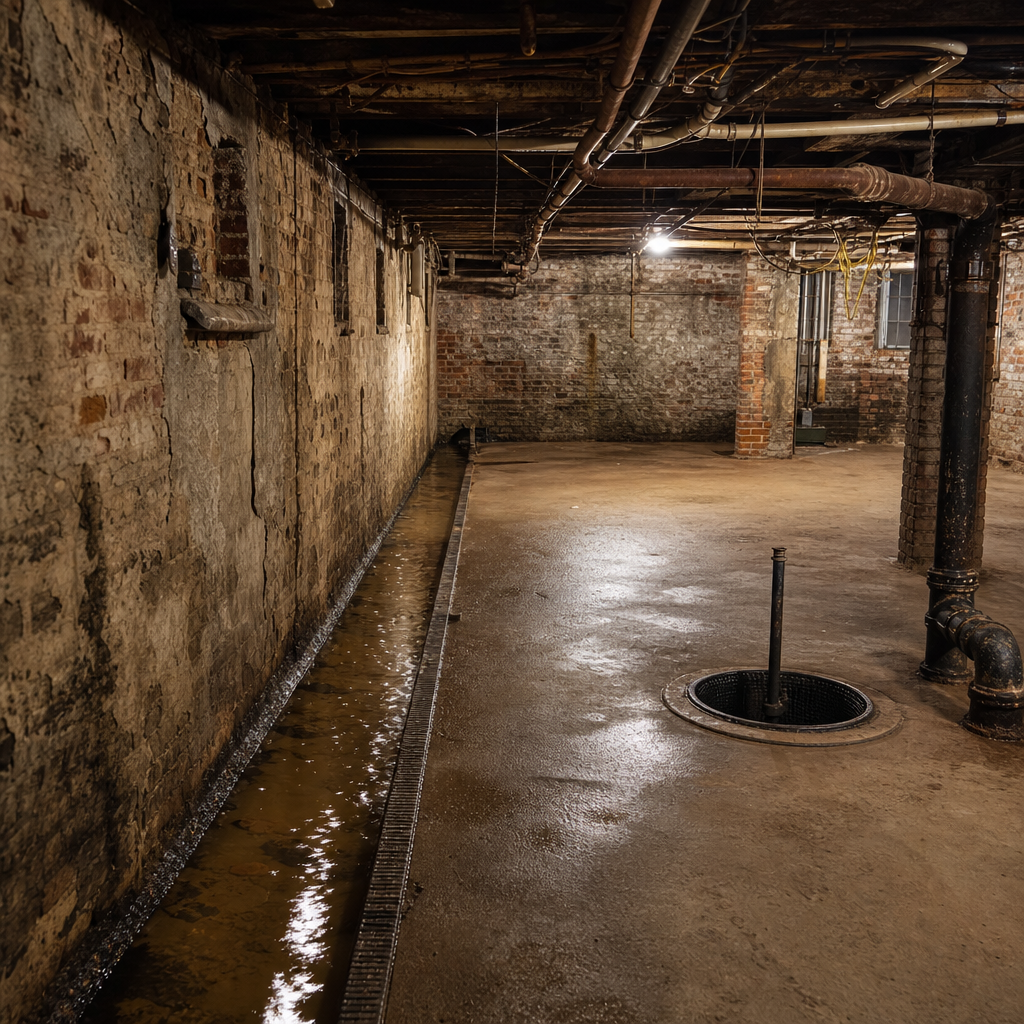
Hydrostatic pressure is the physical force exerted by water-saturated soil against your foundation. In pre-1950 New York buildings with fieldstone or brick basements, saturated soil pushes inward with immense force. When a basement fills with water during a storm, that interior water actually counteracts the outside soil pressure. If an untrained contractor pumps all that water out in an hour, the exterior soil can push the masonry inward, causing structural cracks or wall failure.
We manage hydrostatic risks through careful mitigation steps:
- Foundation Assessment: We inspect exterior soil conditions and check mortar joints for active displacement before selecting pump sizes.
- Phased Extraction: We lower water levels gradually so the water table outside drops in tandem with interior water.
- Party-Wall Isolation: We set up drying containment to stop moisture from weeping through shared brickwork into adjoining buildings.
Roof Leaks and Storm Damage Mitigation
Flat roofs on New York apartment buildings and brownstones can fail during severe rainstorms. Water pools on the roof membrane, finds a split seam, travels down interior plumbing chases, and pools on the concrete basement floor. Wade’s Restoration addresses both ends of the building at the same time.
We stop storm water intrusion through an organized sequence:
- Emergency Tarping: We secure heavy-duty tarps over the roof breach to stop incoming rain immediately.
- Cavity Drainage: We relieve trapped water from ceiling cavities across all floors and set up directed air paths inside walls.
- Basement Pumping: Submersible pumps clear standing water around boilers and electrical panels before mechanical systems suffer permanent water damage.
Sewage Backups and Drain Overflows
Need flooded basement cleanup?
We’re available now - call for a fast, free estimate.
When heavy NYC downpours overwhelm municipal combined sewer systems, street wastewater backs up into sub-grade utility drains, basement sinks, and toilets. This Category 3 biohazard requires prompt containment, disposal of ruined porous materials, and structural sanitization.
Our sewage mitigation sequence includes:
- Biohazard Extraction: We extract raw sewage using sealed, truck-mounted suction units.
- Controlled Demolition: We remove contaminated drywall, insulation, and vinyl flooring, sealing the debris in heavy disposal bags before transport.
- Sanitization and Check-Valve Consultation: We wash all exposed concrete with hospital-grade biocides and guide property owners on installing backwater check valves to prevent future municipal backups.
Mold After Water Damage: Prevention and Containment
Because wet materials should be dried within 24 to 48 hours to help prevent mold growth, fast structural drying is critical. In attached townhouses, prompt drying also stops dampness from traveling across shared party walls into neighboring homes.
Effective drying requires industrial low-grain refrigerant (LGR) dehumidifiers and high-velocity air movers, not ordinary household fans that simply stir spores into the air.
Through our Claim Clarity Program, we give you and your insurance company complete verification:
- Psychrometric Monitoring: We log relative humidity, ambient temperature, and grains per pound (GPP) daily to prove that structural materials are drying on schedule.
- Moisture Logs and Thermal Photos: Technicians document pin-probe moisture percentages and thermal images directly from structural framing.
- Adjuster Reports: We supply itemized drying logs directly to your insurance adjuster to expedite claim approvals and avoid payout disputes.
Parts & Components We Repair After Basement Floods
Complete basement restoration involves structural repairs and interior finishing. Wade’s Restoration handles both phases so you never have to manage separate cleanup crews and repair contractors.
Drywall, Plaster, and Ceiling Systems
We make straight flood cuts above the moisture line on wet drywall and dry out historic plaster-on-brick walls without causing unnecessary demolition.
Hardwood, Laminate, and Subfloor Framing
We lift buckled finish flooring so we can dry, clean, and test structural floor joists before wood rot develops.
Cabinets, Insulation, and HVAC Ductwork
We strip out wet fiberglass insulation, treat solid wood cabinets, and sanitize HVAC duct lines. Porous materials soaked by contaminated water are replaced to protect indoor air quality.
Basement Slabs and Crawl Spaces
We power-wash and disinfect concrete slabs, patch damaged perimeter mortar, and encapsulate damp crawl spaces with durable vapor barriers to control humidity.
What Does Flooded Basement Cleanup Cost?
Flooded basement cleanup and restoration typically costs between $3,000 and $10,000. Minor cleanups involving clean water and minimal damage can cost under $2,000, while extensive blackwater sewage backups or severe structural drying can cost $10,000 or more. The final price depends on water category (clean, grey, or black), total standing water volume, affected square footage, and drying requirements for older brick walls.[2]
Itemized Pricing and Service Cost Table
Costs vary depending on water contamination levels and structural stabilization needs.
| Service Criteria | Clean Water (Cat 1) | Storm / Grey (Cat 2) | Sewage / Black (Cat 3) |
|---|---|---|---|
| Estimated Cost | Under $2,000 – $3,500 | $3,000 – $7,000 | $5,000 – $10,000+ |
| Extraction Method | Standard submersible pumps | Controlled extraction units | Staged biohazard pumping |
| Structural Risk | Low foundation stress | Hydrostatic balancing needed | Party-wall biohazard containment |
Insurance Claims and NFIP Limitations
Standard homeowners insurance usually covers sudden and accidental water damage from internal plumbing failures. Overland flooding from heavy rain requires a separate flood policy. Under the National Flood Insurance Program (NFIP), basement coverage is limited. According to FEMA, NFIP covers certain building materials and cleanup expenses, including pumping out floodwater, mold and mildew treatment, and drying out the interior foundation, as well as items used to service the building, such as central air units, furnaces, water heaters, and electrical panels. However, NFIP basement coverage is limited and does not cover most personal property in finished basements, such as finished walls, ceilings, floors, built-in fixtures, or cabinets. Our detailed daily moisture logs provide your insurance adjuster with the documentation required to evaluate eligible cleanup costs.[1]
Our NYC Service Area
Wade’s Restoration provides 24/7 emergency dispatch across New York City. Working in century-old New York properties requires specific field experience. Removing standing water from an attached pre-war basement too quickly can crack old brick foundations and force moisture into the house next door. Our technicians use staged extraction and controlled airflow to protect your building and keep your neighbors safe.
Frequently Asked Questions About Flooded Basement Cleanup
Cleaning up a basement flood in NYC demands fast extraction, balanced drying, and clear documentation. Staged pumping prevents foundation wall damage while industrial dehumidification halts mold. Wade’s Restoration provides 24/7 emergency service.
How fast can Wade’s Restoration respond, and what does service cost?
Our technicians provide 24/7 emergency dispatch across NYC. Cleanup costs generally range from $3,000 to $10,000. Minor cleanups can run under $2,000, while severe Category 3 blackwater floods cost more depending on square footage and structural drying requirements.
Does insurance cover extraction, and how long does drying take?
Standard homeowners policies typically cover internal plumbing pipe bursts, while storm flooding requires dedicated flood insurance. Under NFIP flood policies, basement coverage is limited and does not cover most personal property in finished basements, such as finished walls, ceilings, floors, built-in fixtures, or cabinets. FEMA notes that flood insurance cleanup reimbursement can cover water pumping, foundation drying, and mold treatments. Depending on the extent of water penetration, dry-out can take several days.[4]
How do you manage pre-war foundations and mold risks?
We pump standing water out in measured stages to prevent saturated exterior soil from cracking older brick or stone foundations. We set up commercial dehumidifiers and apply EPA-registered antimicrobials, as wet materials should be dried within 24 to 48 hours to help prevent mold growth on structural framing.
Need flooded basement cleanup?
We’re available now - call for a fast, free estimate.
Sources
- Introduction to the National Flood Insurance Program (NFIP) – congress.gov (2025)
- The Cost of Flooding – floodsmart.gov (2024)
- View PDF – fema.gov (2022)
- HGTR_sec2.p65 – fema.gov
- Toronto Residents Share How to Restore Their Home After … – witanworld.com (2024)
Frequently Asked Questions
How does flooded basement cleanup prevent water and mold from migrating into attached neighboring properties?
Wade's Restoration uses FLIR thermal imaging to track moisture paths along shared brick party walls and installs negative air containment barriers. Staged water extraction safely balances hydrostatic pressure across connected foundations while industrial LGR dehumidifiers draw moisture out before it penetrates adjacent basements.
What documentation does Wade's Restoration provide to help insurance adjusters approve flooded basement claims?
Through our Claim Clarity Program, Wade's Restoration supplies daily psychrometric drying logs, thermal moisture maps, and pin-probe readings directly to your insurance adjuster. This itemized documentation verifies drying milestones and separates structural mitigation from finished items to help streamline NFIP and private policy claims.
How do you determine which basement materials can be restored versus what must be removed?
Wade's Restoration assesses items by water contamination category and material porosity, safely salvaging solid wood framing, structural brick, and concrete through targeted antimicrobial treatments. Contaminated porous materials like wet drywall, carpet padding, and fiberglass insulation are carefully removed and double-bagged to eliminate biohazards.
About the author
 |
David Harrison David Harrison is a certified water damage restoration technician with over 8 years of experience in the field. He holds a degree in Construction Management from Pratt Institute and specializes in providing practical advice for navigating property emergencies and insurance claims. |
Water damage, flood, or mold emergency?
We’re available now - call for a fast, free estimate.
Call Now - Free Estimate