
Quick Summary
When active leaks or flooding strike multi-family and pre-war properties, securing same day water damage mitigation in Astoria is critical to prevent moisture from rapidly saturating dense masonry, plaster, and structural framing. Wade's Restoration delivers premier local rapid-response mitigation, utilizing thermal imaging diagnostics, commercial-grade water extraction, and comprehensive moisture mapping to prevent secondary structural rot and hidden mold growth while streamlining insurance claims. Property owners can immediately call Wade's Restoration 24/7 emergency dispatch line to secure a 45-minute on-site arrival and a free visual inspection to protect their building.
Same Day Water Damage Mitigation in Astoria
If you have standing water or an active leak in your building, professional water mitigation services provide emergency water extraction and structural drying. Standard mitigation includes visual assessments, water extraction, and structural drying using commercial air movers, dehumidifiers, and moisture detection equipment.
Water can spread quickly through building materials, including plaster, masonry, and subfloors. Delaying mitigation allows water to saturate structural materials and increases the potential for mold growth. Professional mitigation, such as that provided by Wade’s Restoration, focuses on containment, moisture extraction, and documenting drying progress for property owners and insurance carriers.
Protect your property before moisture spreads into neighboring areas. Contact a water mitigation professional for an on-site inspection and response.
How Fast Can You Get Same Day Water Damage Mitigation in Astoria?
When requesting emergency mitigation, rapid response depends on crew availability and conditions. Whether dealing with a split supply line, an overflowing plumbing fixture, or a flooded basement, prompt response helps prevent water from migrating through shared walls and subfloors.[1]
What to Do While Help Is on the Way
- Shut off the main water valve: Locate the main gate or ball valve in your basement or utility area and turn it off to stop the flow of water.
- Cut power to affected areas: Switch off circuit breakers for flooded rooms at your electrical panel before stepping into standing water.
- Protect your furniture: Lift rugs, curtains, and wooden furniture off wet surfaces. Place aluminum foil or plastic wrap under furniture legs to prevent stain transfer.
Priorities for Emergency Water Extraction
Standard household equipment only pulls liquid from the surface. In multi-family and masonry buildings, water can travel into wall cavities and joist spaces. Heavy water damage can affect properties regardless of their proximity to designated flood zones.[3]
Moisture trapped behind building materials should be mapped with moisture meters and thermal imaging tools, as noted by Wade’s Restoration, to ensure structural assemblies are stabilized properly before secondary damage develops.
Why Masonry Walls and Subfloors Require Advanced Mitigation
Properties built with dense masonry, multi-layer plaster, or shared brick walls present distinct drying challenges. Surface drying alone may not pull moisture out of dense structural assemblies. Trapped moisture can damage wood framing and raise humidity levels. Thorough mitigation often requires specialized dehumidification and air movement to dry structural pockets without unnecessary demolition.
Moisture Migration in Masonry and Cavities
In buildings where plaster is applied directly over masonry, porous brick and mortar can absorb water, wicking moisture through structural cavities. According to Wade’s Restoration, without targeted drying and monitoring, trapped moisture can foster hidden mold growth and degrade building materials over time.
Hardwood, Subfloors, and Structural Framing
Water naturally drains down through flooring, subflooring, and structural joists. Inadequate drying methods can lead to cupping floorboards, buckling subfloors, and compromised structural framing.
| Drying Method | Equipment Used | Impact on Building Materials |
|---|---|---|
| Basic Surface Drying | Standard fans, residential dehumidifiers | Removes surface moisture but may leave deep-set dampness within cavities and dense materials. |
| Structural Cavity Mitigation | Moisture meters, commercial dehumidifiers, air movers | Draws moisture out of structural assemblies and subfloors to prevent long-term degradation. |
Drywall, Ceilings, and Basements: Repair vs. Replace Criteria
Need same day water damage mitigation astoria?
We’re available now - call for a fast, free estimate.
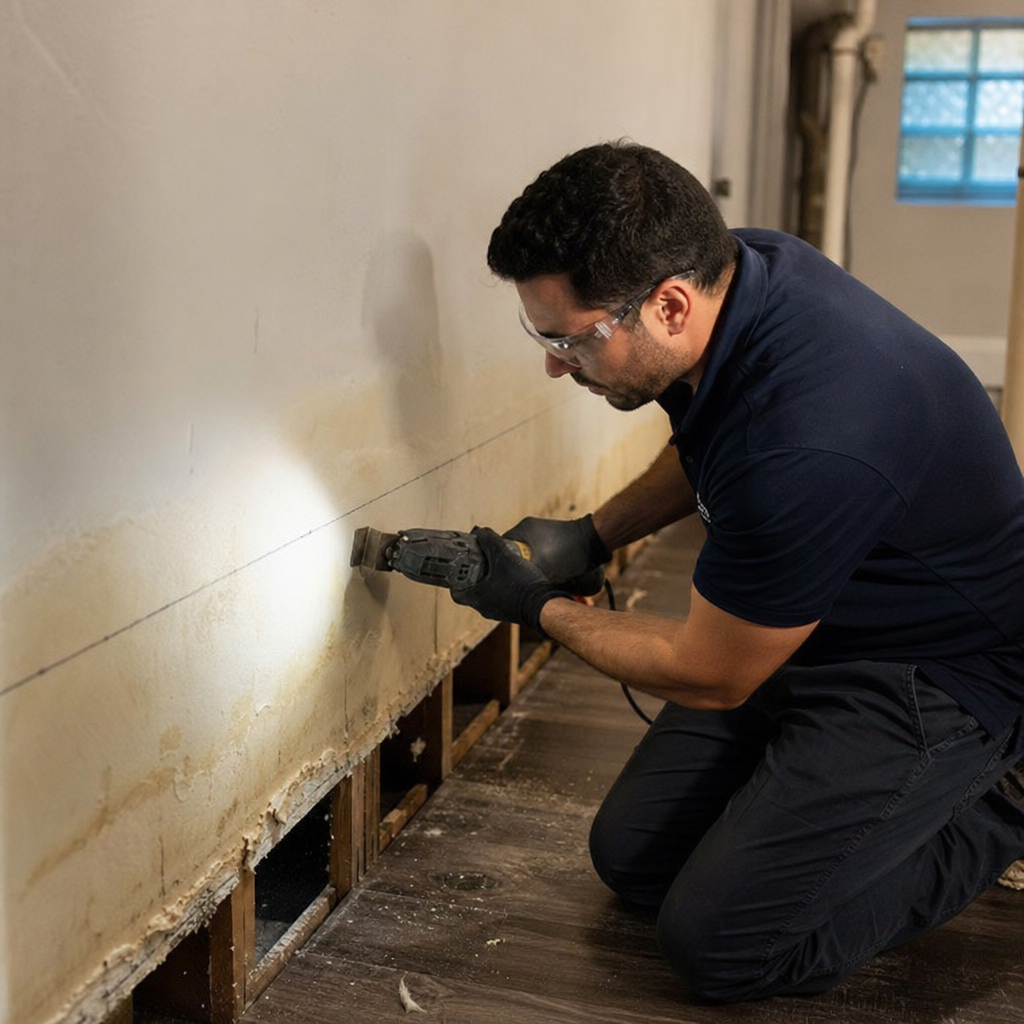
Deciding whether to dry building materials in place or remove them depends on the water source, saturation level, and safety considerations. Clean-water supply leaks often allow drywall and framing to be dried in place, whereas contaminated water or heavily saturated, sagging ceilings may require removal for safety.
Assessing Overhead Ceilings and Drywall
Wet drywall and plaster can become heavy and unstable when saturated. If a ceiling shows significant sagging or moisture meters detect heavy saturation in overhead materials, controlled removal is often necessary to prevent sudden collapse.
Basement Seepage and Water Cleanup
During heavy rainstorms or sewer backups, sub-grade spaces can take on water under hydrostatic pressure. Remediating contaminated water in lower levels generally requires standard safety protocols:
- Bulk Extraction and Containment: Pumping standing water and containing affected areas.
- Material Removal: Removing non-salvageable, water-damaged porous materials above the water line.
- Sanitization and Drying: Cleaning affected surfaces with appropriate antimicrobials and running commercial dehumidification systems.
What Does Same Day Water Damage Mitigation Cost?
Water mitigation costs vary significantly based on the source of water (clean water, gray water, or black water), the volume and extent of saturation, the specific materials affected, and the labor and equipment required to dry the structure safely, as Wade’s Restoration explains.[4]
Insurance Coverage and Claim Documentation
Homeowners insurance may cover sudden and accidental water damage, while flood damage usually requires separate flood insurance. Proper documentation helps support the claims process:[2]
- Moisture Mapping: Documenting initial moisture readings across floors, walls, and structural assemblies.
- Daily Drying Logs: Tracking drying progress with calibrated meters to verify that materials reach target moisture levels.
- Itemized Scopes: Providing detailed breakdowns of services, equipment used, and structural work performed.
Frequently Asked Questions About Water Mitigation
How fast can a water damage mitigation team arrive?
Rapid response depends on crew availability and conditions. Contacting a dispatch line promptly allows technicians to assess the situation and schedule an emergency response as quickly as possible.
What is the cost of emergency water extraction?
Costs depend on factors such as the water volume, contamination level, and overall square footage affected. Minor clean-water extractions generally cost less than extensive sewage cleanups or multi-room structural drying projects. An on-site visual evaluation is typically needed to determine exact costs.
Does homeowners insurance cover emergency water mitigation?
Homeowners insurance may cover sudden and accidental water damage, while flood damage usually requires separate flood insurance. Review your specific policy terms and consult your insurance carrier or adjuster regarding coverage details.
What immediate steps should I take while waiting for a mitigation crew?
Shut off the main water supply valve, turn off electricity to affected rooms at the circuit breaker, and keep occupants away from standing water. If safe to do so, elevate furniture on foil or plastic wrap to limit moisture absorption.
What is the difference between water mitigation and water damage restoration?
Water mitigation is the initial phase focused on stopping water intrusion, extracting standing water, removing non-salvageable wet materials, and drying the structure. Restoration involves repairing or rebuilding damaged structural elements, such as installing new drywall and flooring, to return the property to its previous condition.
How long does the structural drying process take?
Drying times vary widely depending on the density of the materials, the extent of saturation, humidity levels, and airflow. As Wade’s Restoration explains, standard drying often takes several days of continuous dehumidification and monitored air movement to safely achieve normal moisture levels.
Need same day water damage mitigation astoria?
We’re available now - call for a fast, free estimate.
Sources
- July 1, 2016 thru September 30, 2016 Performance Report – drgr.hud.gov (2016)
- [PDF] [Designed] VIA FInal Report .docx – NYC.gov – nyc.gov (2021)
- Reducing the Effects of Urban Flooding in New York City – fema.gov
- Crossref Metadata Search – search.crossref.org
Related reading: Commercial Water Mitigation Astoria – Call Now-10% Off – Same-Day Service – Free Estimate
Frequently Asked Questions
How does thermal imaging detect hidden water in Astoria pre-war plaster and masonry walls?
Thermal imaging cameras detect subtle temperature differentials caused by moisture trapped inside dense brick, plaster, and subfloor assemblies without requiring invasive demolition. Wade's Restoration utilizes advanced thermal diagnostics and calibrated moisture meters to track water migration pathways across multi-family structural framing, preventing hidden rot and mold growth.
How does Wade's Restoration help property owners navigate insurance claims for water damage?
Wade's Restoration assists property owners by generating comprehensive claim documentation, including digital moisture maps, daily drying logs, and itemized repair scopes. This verifiable data provides insurance adjusters with the exact proof needed to evaluate structural damage and accelerate claim approvals.
How can I request a rapid 45-minute on-site visual inspection in Astoria?
Property owners can call Wade's Restoration 24/7 emergency dispatch line to request immediate same-day deployment with an average 45-minute local arrival time. Dispatchers quickly mobilize a certified crew to conduct a free on-site visual inspection and initiate containment and commercial extraction.
About the author
 |
Sarah Miller Sarah Miller is a certified water damage restoration specialist with over eight years of experience helping property owners navigate the complexities of mitigation and recovery. She holds an associate degree in Construction Management from New York City College of Technology and has extensive knowledge of local building codes and insurance claim procedures. Through her writing, Sarah provides actionable advice to help property managers and homeowners in the Astoria area understand the true costs and critical steps involved in emergency water damage restoration. |
Water damage, flood, or mold emergency?
We’re available now - call for a fast, free estimate.
Call Now - Free Estimate