
Quick Summary
Finding the best way to remove water from basement spaces requires safe utility shutoffs, staged water extraction to prevent hydrostatic foundation collapse, and rapid drying to stop hazardous mold growth. The most effective approach combines daily incremental pumping to equalize exterior soil pressure with commercial dehumidification and high-capacity extraction provided by Wade's Restoration. Property owners will learn how to properly triage water-damaged structural materials and can contact Wade's Restoration 24/7 for immediate emergency water extraction and a free visual inspection.
Basement Flood Mitigation and Drying Guidance
A key approach to managing basement water intrusion involves cutting utility power safely, removing standing water in controlled stages, and applying active drying measures like dehumidification. Moisture can lead to rapid microbial growth on damp drywall, framing timber, and organic debris. According to the 2023 American Housing Survey from the U.S. Census Bureau, 39.8% of single-family homes in the United States have a full or partial basement, leaving millions of properties exposed to below-grade water intrusion during severe weather.[1]
As specialists at Wade’s Restoration point out, removing standing water is a critical early step, but addressing moisture trapped behind baseboards, beneath subfloors, or inside porous foundation walls is equally important. Combining physical extraction with structured drying protocols based on federal and public health guidance provides an effective strategy to help protect foundation integrity and indoor environments. See also Flooded Basement Cleanup – Call Now-10% Off – Same-Day Service – Free Estimate.
Basement Water Mitigation: Step-by-Step Action Plan
Action plan summary: Based on guidance from FEMA and the National Center for Healthy Housing (NCHH), shut down electrical breakers from a dry location, identify the water source, and pump out standing water gradually to protect foundation walls from exterior soil pressure. Once bulk water is removed, discard saturated porous materials and run dehumidifiers and ventilation equipment continuously.
Dealing with a flooded basement requires careful timing. Pumping water out too quickly can damage foundation walls under the pressure of saturated exterior soil, while delaying water removal can promote mold growth and material deterioration.
Immediate Safety Measures and Utility Shutoff
According to FEMA and NCHH safety guidelines, personal safety comes first. Never step into standing basement water until you have turned off the main electrical breaker and shut down natural gas lines from a completely dry area. Submerged electrical outlets, water heaters, and extension cords present severe shock hazards.
Beyond electrical risks, standing water often carries biological contaminants. The CDC tracks waterborne illness data through its Waterborne Disease and Outbreak Surveillance Reporting system, which has documented health risks from contaminated floodwater dating back to 1971. FEMA and public health agencies advise wearing rubber boots, heavy gloves, and an N95 respirator before entering any flooded below-grade space.[5]
The Core Extraction Protocol
Federal emergency management and health agencies recommend a structured sequence of cleanup steps:
- Disconnect Utilities: Cut power to lower-level circuits at the main service panel before entering standing water, in line with FEMA electrical safety protocols.
- Stage the Water Extraction: Following FEMA and NCHH guidelines, remove standing water in measured daily increments to balance outside soil pressure against foundation walls.
- Remove Porous Materials: In accordance with NCHH guidance, remove and dispose of soaked drywall, carpeting, and porous insulation that cannot be fully sanitized and dried.
- Establish Active Airflow and Dehumidification: Run heavy-duty dehumidifiers and air movers to accelerate structural drying and reduce moisture levels in framing lumber.
Why Staged Water Extraction Matters for Masonry Foundations
Need best way to remove water from basement?
We’re available now - call for a fast, free estimate.
When dealing with older homes, especially brick and stone foundation buildings, pumping all standing water out too quickly can lead to significant structural damage. During intense rain events, the soil surrounding the foundation becomes heavy and waterlogged, creating substantial exterior hydrostatic pressure.
The standing water inside a basement provides counter-pressure against that saturated soil. If several feet of water are pumped out all at once while the surrounding ground remains fully saturated, older brick, rubble stone, or unreinforced block walls can bow inward, crack along mortar joints, or suffer severe structural damage.
Understanding Hydrostatic Pressure and Foundation Risks
According to reports from the New York City Comptroller, basement and cellar flood exposure across the city is projected to reach 136,200 units by the 2050s, roughly one-third of the entire basement inventory. Many of these units sit inside brick multi-family buildings constructed between 1920 and 1950.[3]
To relieve water weight safely without damaging foundation walls, FEMA and NCHH recommend staged pumping standards:
- Wait until surrounding floodwaters outside the property have fully receded.
- Pump out no more than 2 to 3 feet of water on the first day.
- Mark the water line and wait 24 hours. If the water rises again, soil saturation remains too high to drain the basement completely.
- Continue pumping out 2 to 3 feet per day until the standing water is gone.
Selecting the Right Equipment: Submersible Pumps vs. Wet Vacs
According to U.S. Census Bureau data from the 2023 American Housing Survey, approximately 343,000 households reported basement or crawlspace flooding linked to sump pump failures during power disruptions. Choosing appropriate water extraction tools according to water depth is key to effective mitigation.[2]
| Equipment Type | Best Application | Primary Considerations |
|---|---|---|
| Standard Wet Vac | Shallow puddles under 2 inches (NCHH recommended for minor residual water) | Small tank size (5-15 gallons) requires continuous manual emptying. |
| Submersible Sump Pump | Standing water from 2 inches to several feet deep (FEMA recommended for bulk extraction) | Requires a dedicated, safe electrical connection and a secure discharge hose running away from the foundation. |
| Commercial Truck-Mounted Extractor | Massive flooding and contaminated water | Operated by professional restoration technicians to maintain controlled extraction rates and handle biohazards. |
Restoring Critical Structural Components: Joists, Slabs, and Party Walls
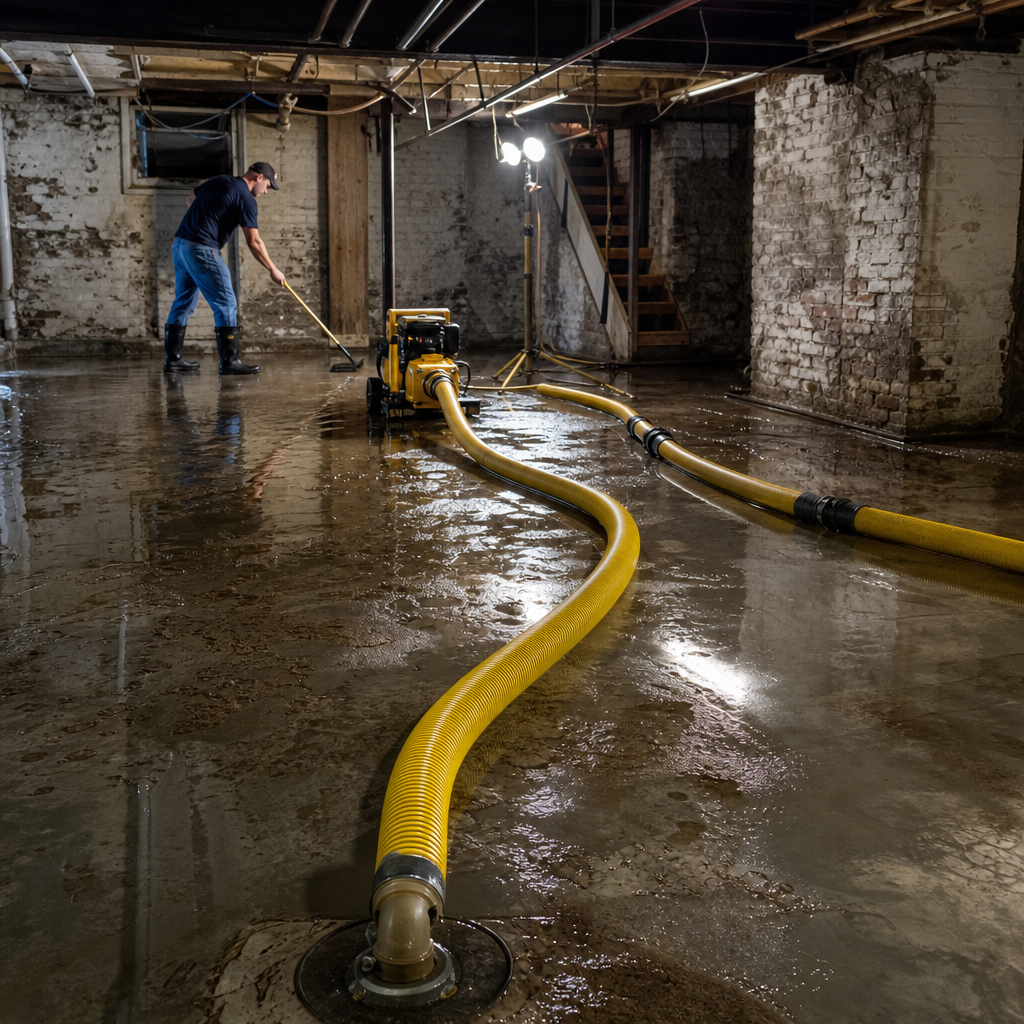
Removing standing water is only the first phase. Moisture often migrates into load-bearing framing, structural subfloors, and adjacent masonry walls, requiring targeted drying.
Subfloor and Structural Wood Joists
Wooden floor joists and subfloor plywood absorb moisture readily. Trapped humidity can foster wood rot and mold. Restoration professionals, including teams at Wade’s Restoration, use moisture meters to monitor structural framing to ensure it dries thoroughly and reaches stable moisture baselines.
Basement Slabs, Foundation Walls, and Shared Party Walls
In attached townhomes and urban walk-ups, moisture can travel through shared masonry party walls. Concrete slabs and brick foundation walls also retain deep moisture that slowly releases into the interior space if not actively dried using commercial dehumidifiers.
Repair vs. Replace Guidelines for Saturated Building Materials
Determining what can be sanitized and what should be discarded follows standard flood recovery protocols from FEMA and NCHH:
| Building Material | Salvage Status | Restoration Protocol |
|---|---|---|
| Drywall & Batt Insulation | Non-salvageable | Cut away well above the high-water line and discard per NCHH disposal guidance. |
| Carpet & Foam Padding | Non-salvageable | Remove, seal in plastic, and discard; padding traps contaminants and moisture. |
| Solid Wood Framing | Salvageable | Clean surfaces, apply appropriate antimicrobial treatments, and dry thoroughly in place. |
| Concrete Slabs & Brick | Salvageable | Clean, sanitize, and extract residual moisture using industrial dehumidification equipment. |
Factors That Influence Basement Water Remediation Costs
Need best way to remove water from basement?
We’re available now - call for a fast, free estimate.
According to field experts at Wade’s Restoration, the cost of clearing water from a basement ranges widely based on water volume, contamination levels, and structural impact. Removing clean water from an isolated plumbing leak generally requires fewer resources than remediating widespread storm runoff or sewer backup.
Key Variables in Water Extraction and Cleanup
Several factors affect the scope and cost of mitigation:
- Water Contamination Level: Clean supply-line water requires standard extraction and drying. Contaminated floodwater or sewage backups require biohazard containment, protective gear, and extensive material removal.
- Water Depth and Volume: Removing deep standing water requires larger pumps and staged operation over multiple days.
- Drying Equipment Timeline: Commercial dehumidifiers and high-capacity air movers typically need to run continuously for several days to achieve thorough drying.
- Flood Zone Location: New York City Comptroller data indicates that approximately 25,300 basement and cellar units are located directly within 100-year flood zones, where recurrent risks and documentation for insurance claims are critical considerations.
When to Consider Professional Water Damage Restoration
While a standard wet vac can manage minor surface puddles, substantial basement flooding often benefits from commercial extraction equipment and trained mitigation personnel. Professional teams, such as Wade’s Restoration, use specialized moisture meters, thermal imaging tools, and high-capacity pumps to identify hidden moisture pockets and manage staged drawdown safely.[4]
DIY Wet Vac vs. Industrial Extraction Comparison
Evaluating consumer tools against commercial-grade equipment helps determine the appropriate response level during basement recovery.
| Feature | Consumer Wet Vac | Standard Sump Pump | Professional Restoration Rig |
|---|---|---|---|
| Water Lift Capacity | Low; leaves surfaces damp | High volume; leaves residual surface moisture | Deep extraction down to slab level |
| Hydrostatic Pressure Control | Manual effort | Rapid unregulated pumping | Controlled staged drawdown protocols |
| Deep Moisture Drying | None (surface only) | None | Industrial dehumidification and forced airflow |
Navigating Contaminated Water Cleanup
When floodwater originates from city storm drains, overland runoff, or sewer systems, CDC surveillance programs note substantial contamination risks. Pathogens and chemical residues make unassisted cleanup risky without appropriate personal protective equipment. Mitigation specialists isolate affected zones, apply sanitizing agents, and dispose of contaminated materials following health and environmental regulations.
Frequently Asked Questions About Basement Water Removal
How quickly can mold develop after basement flooding?
Microbial growth can begin developing rapidly on damp organic materials following water exposure. Porous items such as drywall, cardboard, and carpet backing are particularly vulnerable, which is why federal guidance stresses prompt water extraction and continuous drying.
Can I use a regular shop vac to remove standing water from my basement?
As noted in NCHH cleanup resources, a wet-dry vacuum is practical for small puddles under two inches deep. For deeper water, a wet vac fills too quickly, making a submersible pump with a dedicated discharge hose the standard tool.
How long does it take to dry out a flooded basement?
According to Wade’s Restoration, using commercial dehumidifiers and air movers continuously, a flooded basement often requires three to five days to reach normal moisture levels, though dense materials like concrete and heavy structural framing may require additional drying time.
What type of pump is recommended for basement water removal?
FEMA and disaster response guidance recommend an electric submersible pump with a bottom intake for general basement dewatering. Where electrical power cannot be safely accessed, professional responders utilize outdoor gas-powered pumps with intake hoses extending into the basement.
Need best way to remove water from basement?
We’re available now - call for a fast, free estimate.
Sources
- American Housing Survey for the United States: 2023 – www2.census.gov (2023)
- 2023 AMERICAN HOUSING SURVEY INSTRUMENT ITEMS – www2.census.gov (2023)
- Building Performance: – fema.gov (2022)
- Bringing Basement Apartments Into the Light – comptroller.nyc.gov
- Precipitation & Flooding | Tracking Program – cdc.gov
Related reading: Black Mold Removal – Call Now-10% Off – Same-Day Service – Free Estimate
Frequently Asked Questions
What should I do if basement water levels rise again after initial pumping?
If water levels rise after an initial drawdown, surrounding soil remains heavily oversaturated and further pumping risks inward foundation wall collapse. Stop pumping for 24 hours and call Wade's Restoration 24/7 for safe, staged hydrostatic extraction and an immediate free visual inspection.
How can I detect moisture trapped inside concrete slabs or behind finished basement walls?
Moisture trapped in porous masonry and wall cavities cannot be detected by eye and requires professional thermal imaging and non-invasive moisture meters. Wade's Restoration uses advanced diagnostic equipment to locate hidden moisture pockets and ensure deep structural drying before mold develops.
Can standard household dehumidifiers prevent mold after major basement water extraction?
Residential dehumidifiers lack the continuous capacity and airflow needed to pull deeply absorbed moisture from structural framing, masonry, and subfloors. Wade's Restoration deploys industrial-grade dehumidifiers and high-velocity air movers to bring building materials to safe moisture baselines within 3 to 5 days.
About the author
 |
Sarah Miller Sarah Miller is a certified water damage restoration specialist with over eight years of experience helping property owners navigate the complexities of mitigation and recovery. She holds an associate degree in Construction Management from New York City College of Technology and has extensive knowledge of local building codes and insurance claim procedures. Through her writing, Sarah provides actionable advice to help property managers and homeowners in the Astoria area understand the true costs and critical steps involved in emergency water damage restoration. |
Water damage, flood, or mold emergency?
We’re available now - call for a fast, free estimate.
Call Now - Free Estimate