
Quick Summary
Property owners asking whether they can clean black mold themselves must understand the critical boundaries between simple surface wiping and the hidden hazards of spreading airborne spores. As expert specialists at Wade's Restoration explain, DIY cleanup is only safe for nonporous areas under 10 square feet, whereas larger infestations or mold inside porous materials require professional containment. Readers will learn how to evaluate contamination risks and know when to schedule a professional visual inspection and moisture assessment before disturbing potentially toxic colonies.
Can I Clean Black Mold Myself Without Hidden Risks?
If you discover mold growing in your home, your immediate instinct is probably to grab a scrub brush and bleach. Whether you can safely handle the cleanup yourself comes down to two factors: the total surface area and the type of material the mold is growing on. As noted by specialists at Wade’s Restoration, public health guidance from the CDC and environmental health standards indicate that property owners can generally clean small patches of surface mold on hard, nonporous materials if the affected area is under 10 square feet (roughly a 3-by-3-foot patch). However, scrubbing large areas or disturbing mold embedded in porous materials like plaster and drywall introduces real health risks and can spread contamination throughout your property.[1]
Can I Clean Black Mold Myself? The 10-Square-Foot Rule
CDC and EPA guidance generally uses about 10 square feet as the DIY cutoff for deciding between DIY cleaning and hiring a licensed remediation team. If mold covers a small, isolated area of tile, glass, or solid metal, you can usually take care of it with basic supplies. If the growth covers more than 10 square feet, stems from sewage or contaminated floodwater, or has penetrated porous walls, you should step back and call a professional.[5] See also Flooded Basement Cleanup – Call Now-10% Off – Same-Day Service – Free Estimate.
When DIY Mold Removal Is Acceptable
You can manage mold cleanup on your own only when the growth is limited to nonporous surfaces and the moisture source has already been stopped. If you meet those conditions, follow standard safety practices:
- Fix the moisture source: Stop active leaks or condensation issues before touching the mold. The CDC warns that painting, caulking, or cleaning over mold will not solve the issue if the underlying water problem remains active.
- Wear personal protective equipment (PPE): Always wear an N95 respirator, gloves, goggles, long sleeves, long pants, and waterproof boots to protect against mold exposure and cleaning solutions.
- Wash the surface: Scrub the area with water and household detergent. If using bleach on hard surfaces, use no more than 1 cup of household bleach per gallon of water. Never mix bleach with ammonia.
- Dry immediately: Thoroughly dry the entire cleaned area. Materials need to dry within 24 to 48 hours to prevent spores from regrowing.
When Black Mold Requires Professional Remediation
Once mold spreads beyond 10 square feet or settles into porous structural materials, DIY methods fall short. Scrubbing large colonies without negative air pressure and proper containment sends millions of microscopic spores into the air, spreading the contamination into your heating and cooling system and neighboring rooms. Professional remediation is necessary when:
- The mold covers more than 10 square feet.
- The growth sits on or behind drywall, ceiling tiles, or subflooring.
- Mold is present inside HVAC ductwork.
- The water intrusion came from sewage backups, storm flooding, or long-term hidden pipe leaks.
Multi-Family Buildings and Porous Materials
In attached homes and apartment buildings, mold cleanup comes with structural considerations. Unlike nonporous materials, porous assemblies can trap moisture and allow mold to penetrate beneath the surface.
Porous Walls and Cavities
Wiping down the surface of a porous wall only removes the visible layer of mold. The moisture and mold growth can remain inside porous materials and wall cavities. When you vigorously scrub an open porous surface, you risk aerosolizing active spores into the surrounding indoor air.
Why Bleach Is Limited to Hard Surfaces
Per CDC guidance, bleach solutions (no more than 1 cup of household bleach per gallon of water) should only be used on hard, nonporous surfaces. Bleach should never be mixed with ammonia. For porous assemblies, wet materials that cannot be dried completely within 48 hours generally must be removed and replaced rather than washed.[2]
DIY Cleaning vs. Professional Remediation
Need can i clean black mold myself?
We’re available now - call for a fast, free estimate.
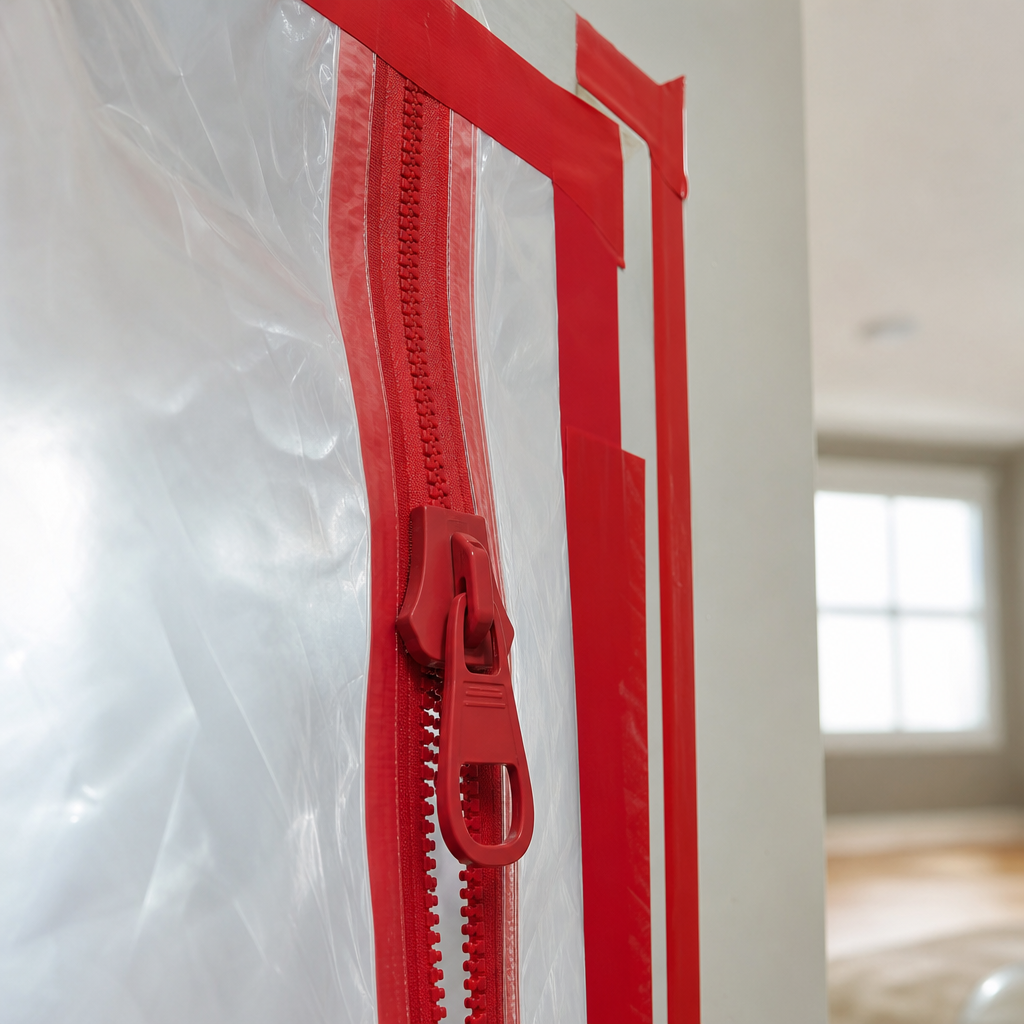
Understanding what you can realistically clean yourself versus what requires professional equipment will save you time, money, and health risks.
| Feature | DIY Cleaning | Professional Remediation |
|---|---|---|
| Safe Project Size | Under 10 square feet | Any size, including full structures |
| Suitable Surfaces | Tile, glass, metal, hard plastics | Drywall, plaster, subfloors, framing, HVAC |
| Required Equipment | N95 respirator, gloves, goggles, long sleeves, long pants, waterproof boots, detergent | HEPA air scrubbers, negative air machines, full containment |
| Moisture Verification | Visual inspection | Thermal imaging cameras and moisture meters |
Repair vs. Replace: Porous and Nonporous Materials
Deciding whether an item can be saved depends directly on its porosity and structural condition:
- Hard structural lumber: Heavy framing joists and studs can usually be cleaned and dried in place if they are structurally sound.
- Porous wall assemblies: Drywall, batt insulation, and water-logged wall materials cannot be reliably sanitized once mold has penetrated. They must be cut out and discarded.
- Subflooring and cabinetry: Swollen particle board, engineered wood, and soaked carpets hold moisture in their core and generally require removal and replacement.
What Does Black Mold Remediation Cost? (Uncited Estimates – Not Verified by Research Brief)
Note: The pricing and insurance details in this section are uncited estimates not verified by the research brief.
Understanding Remediation and Restoration Pricing
Standard industry costs for water damage restoration and mold remediation depend on the size of the loss and accessibility of the damaged areas:
| Restoration Service | Estimated Cost Range (Unverified) |
|---|---|
| Inspection & Moisture Assessment | $150 – $500 |
| Water Extraction & Structural Drying (per room) | $1,200 – $4,500 |
| Mold Remediation & Containment | $1,500 – $6,000 |
| Sewage Backup Cleanup | $2,000 – $10,000 |
| Full Water Damage Restoration Claim | $3,000 – $15,000 |
Note: Pricing varies based on square footage, material porosity, and structural accessibility.
Insurance Documentation (Unverified Estimate)
If your mold problem stems from a sudden, covered water event, such as a burst supply line or failed appliance hose, your homeowner insurance policy may cover the remediation. Insurance adjusters require clear proof that the damage was sudden rather than the result of long-term neglect. Professional restoration contractors such as Wade’s Restoration provide detailed moisture mapping logs, thermal imaging scans, and daily drying records that document the loss clearly for your claims adjuster.[4]
Frequently Asked Questions About Mold Cleanup
Is it safe to clean black mold on your own?
It is only safe to clean mold on your own if the affected area is small (less than 10 square feet), located on a hard, nonporous surface, and you are wearing appropriate PPE such as an N95 respirator, gloves, goggles, long sleeves, long pants, and waterproof boots. Cleaning large areas or tearing into moldy drywall without containment can expose you and other building occupants to elevated spore concentrations.
How do I stop mold from returning after cleanup?
The only permanent way to prevent mold from returning is to eliminate moisture. Keep indoor humidity levels below 50 percent, fix roof and plumbing leaks immediately, ensure exhaust fans vent outside, and dry any water intrusion within 24 to 48 hours.[3]
When should I hire a professional for mold removal?
Hire a certified remediation professional such as Wade’s Restoration if the mold covers more than 10 square feet, if you smell a strong musty odor but cannot find the source, if the growth affects HVAC ducts or porous materials like plaster, or if building occupants experience unexplained respiratory symptoms.
Need can i clean black mold myself?
We’re available now - call for a fast, free estimate.
Sources
- Mold clean-up practices vary by sociodemographic and allergy factors – pmc.ncbi.nlm.nih.gov (2019)
- Mold Clean-Up After Disasters: When to Use Bleach | CDC – cdc.gov
- Dry Off Wet Items After a Storm | Natural Disasters | CDC – cdc.gov
- Mold Clean Up Guidelines and Recommendations – CDC – cdc.gov
- Mold, Testing, and Remediation – cdc.gov
Related reading: Flood Damage Insurance Claim – 10% Off & Free Estimate – Same-Day Service
Related reading: Best Way to Remove Water From Basement – 10% Off & Free Estimate – Same-Day Service
Related reading: Black Mold Removal – Call Now-10% Off – Same-Day Service – Free Estimate
Frequently Asked Questions
How can I tell if black mold has spread inside wall cavities before attempting DIY cleaning?
Visible surface mold in older or pre-war properties often represents only a fraction of the contamination trapped inside porous plaster and framing. The team at Wade's Restoration recommends scheduling a professional visual inspection and moisture assessment using thermal imaging to identify hidden colonies before disturbing surfaces and releasing airborne spores.
Why is household bleach ineffective for cleaning black mold on porous surfaces?
Bleach only disinfects hard, nonporous materials because its chlorine content evaporates on the surface while water penetrates inward, potentially feeding deeper mold roots. When mold penetrates drywall, plaster, or subflooring, the affected materials cannot be sanitized and require professional containment and safe removal by certified specialists like Wade's Restoration.
What documentation is needed for homeowners insurance to cover professional mold remediation?
Insurance adjusters require clear evidence that mold growth resulted from a sudden, covered water incident rather than gradual humidity or maintenance neglect. Wade's Restoration assists property owners by providing detailed thermal scans, moisture mapping logs, and drying records that validate the sudden nature of the water intrusion for claims processing.
About the author
 |
David Harrison David Harrison is a certified water damage restoration technician with over 8 years of experience in the field. He holds a degree in Construction Management from Pratt Institute and specializes in providing practical advice for navigating property emergencies and insurance claims. |
Water damage, flood, or mold emergency?
We’re available now - call for a fast, free estimate.
Call Now - Free Estimate