
Quick Summary
When sudden water, fire, or mold events strike New York properties, prompt damage restoration services are critical to halt structural decay, fungal growth, and cross-property damage across shared pre-war assemblies. Wade's Restoration provides a comprehensive recovery solution by pairing guaranteed 45-minute emergency mitigation and certified structural reconstruction with direct, carrier-ready insurance claims billing. Property owners can call Wade's Restoration 24/7 to secure a free visual inspection and immediate emergency response that restores their building to pre-loss condition.
Damage Restoration Services: Fast 24/7 New York Property Repair
When you are dealing with an active flood, a burst pipe, or fire damage, every minute counts. Our emergency damage restoration services put certified technicians at your door within 45 minutes to pump out standing water, stop mold growth, and handle full structural repairs under direct insurance billing. In New York’s pre-war brick walk-ups and multi-family buildings, water moves quickly behind old plaster walls and through timber floor joists. An untreated leak can cause severe structural rot and cross-property damage in just a few hours.
At Wade’s Restoration, you will never get stuck in an automated call tree or deal with outsourced day labor. Our local, IICRC-certified crews manage every stage of your recovery directly, from the first emergency water extraction and containment steps to finished reconstruction. Through our Claim Clarity Program, we provide detailed, carrier-ready records directly to your insurance adjuster, following a simple rule: the scope written is the scope billed. Call our 24/7 live dispatch team now to set up a free visual inspection and get technicians on-site in 45 minutes.
What Are Damage Restoration Services and How Fast Can Help Arrive?
What Are Damage Restoration Services and How Fast Can Help Arrive? in brief: Professional damage restoration services include emergency containment, water extraction, structural drying, sanitizing, and full rebuilding after water, fire, mold, or sewage events. Field mitigation begins within 45 to 60 minutes of dispatch to stop active damage, followed by complete reconstruction to return your property to pre-loss condition.
Professional restoration stabilizes, cleans, dries, and repairs buildings after sudden disasters. When supply lines break or storm runoff enters multi-family basements, water soaks into porous brick party walls and wood subfloors. Wade’s Restoration uses a 24/7 live-person dispatch system to ensure a guaranteed 45-minute arrival across Queens and Manhattan, cutting out the delays of national call centers.
Key Takeaways for Property Owners in Crisis
Under the IICRC S500 Standard for Professional Water Damage Restoration, drying and containment must start within 24 to 48 hours to stop fungal growth and structural degradation (2021). A fast response keeps moisture from traveling along shared floor joists into neighboring apartments, protecting you from tenant disputes and third-party liability.
Mitigation vs Reconstruction Explained
| Phase | Primary Scope | Action Window |
|---|---|---|
| Mitigation | Sewage extraction, bulk water pumping, moisture mapping, sanitization | Immediate (0-48 hours) |
| Reconstruction | Plaster repair, subfloor replacement, finish carpentry | Post-drying recovery |
Whether you need flood cleanup after a flash storm or targeted mold removal after a hidden pipe failure, our single-source team handles the job from the initial visual inspection through final trim work.
Emergency Water Damage Restoration
Emergency water mitigation stops rot by extracting standing water, mapping hidden moisture paths with moisture meters, and balancing indoor humidity. In dense urban buildings, fast action stops plumbing failures from soaking shared floor assemblies and creating long-term structural issues.
Rapid Extraction and Industrial Dehumidification
Plumbing breaks call for immediate extraction. Our IICRC-certified water restoration technicians (WRT) set up commercial low-grain refrigerant (LGR) dehumidifiers and high-velocity air movers to control psychrometric conditions, drying subflooring and wall cavities before rot takes hold.
Thermal Imaging to Detect Hidden Moisture Pockets
Moisture easily travels into pre-war plaster and brick assemblies. We use non-invasive FLIR thermal imaging cameras to track hidden water behind baseboards and tiles without tearing open walls unnecessarily. Fast emergency water damage restoration in Astoria stops cross-property damage before you find yourself dealing with contaminated black water or widespread mold colonies.
Flood Damage Restoration
Flood cleanup addresses storm runoff and groundwater intrusion to stabilize building foundations and clear out biohazard contaminants. Unlike clean water from a supply pipe, floodwater carries bacteria and silt straight into framing and masonry, requiring immediate Category 3 extraction, controlled removal of contaminated materials, and clinical sanitization.
Category 3 Groundwater Extraction
Storm surges and saturated soil create heavy hydrostatic pressure against sub-grade foundation walls. According to the Federal Emergency Management Agency (FEMA), an inch of floodwater in a home can cause over $25,000 in damage (2022). Saturated drywall, insulation, and flooring must be pulled out quickly under clean containment protocols to prevent contamination from spreading.
Basement Sump Pump and Stormwater Failure Management
When heavy coastal rain overwhelms neighborhood storm drains and sump pumps, our team follows a clear recovery process:
- Continuous deep-well pumping to lower water levels, relieve foundation pressure, and remove black water.
- EPA-registered antimicrobial treatments across exposed wood and masonry framing to stop bacterial hazards.
- Setup of commercial HEPA air scrubbers while our containment barriers isolate adjoining walls and protect indoor air quality.
Certified Mold Remediation
Need damage restoration services?
We’re available now - call for a fast, free estimate.
Certified mold remediation eliminates fungal growth and filters airborne spores following water damage. According to the EPA, mold colonies can establish within 24 to 48 hours on wet drywall, wood, and other organic building materials (2023). Our certified team follows ANSI/IICRC S520 standards to isolate the affected space and protect your indoor air quality.
HEPA Negative Air Containment
In attached New York buildings, moisture trapped inside party walls can push mold spores into neighboring units. To handle remediation safely, our technicians build 6-mil plastic containment zones and run negative air machines with HEPA filtration, keeping airborne spores from escaping into clean living areas.
Safe Spore Removal and Surface Antimicrobial Sealing
Our Applied Microbial Remediation Technicians (AMRT) clear active mold through controlled phases:
- Remove water-damaged drywall, plaster, and insulation at least two feet past visible growth lines.
- HEPA-vacuum exposed wood studs and brick to capture root structures.
- Apply commercial antimicrobial wash and surface sealants, followed by third-party air clearance testing before rebuilding starts.
Biohazard and Sewage Cleanup
Biohazard and sewage cleanup sanitizes Category 3 black water, bloodborne pathogens, and raw waste to return properties to safe living conditions. Fast mitigation isolates hazardous organic waste, prevents bacteria from soaking deeper into porous masonry, and cleans structural framing with hospital-grade disinfectants.
Sanitary Black Water Decontamination
Under IICRC S500 guidelines, Category 3 black water contains dangerous pathogens that quickly degrade indoor air quality and contaminate building materials (2021). To stop sewage from spreading through porous subfloors and brick, Wade’s Restoration uses a strict cleaning plan:
- Safe Removal: Cut out and bag saturated carpets, underlayment, baseboards, and drywall in sealed biohazard bags.
- Structural Washing: Deep-clean concrete slabs and structural framing using hot-water biological detergents.
- Disinfection: Apply EPA-registered broad-spectrum disinfectants across all exposed structural elements.
Discreet, Empathetic Trauma and Biohazard Containment
Trauma cleanup and biohazard situations require careful sanitization and total personal privacy. We send unmarked service vehicles with 24/7 live dispatch, giving you compassionate, discreet sewage cleanup and biohazard services you can depend on.
Fire and Smoke Damage Restoration
Fire and smoke restoration secures the building, extracts water left behind by firefighting efforts, and neutralizes soot before acidic residues cause permanent corrosion. Our team secures the property envelope, cleans soot off finishes, and removes volatile organic compounds throughout multi-family layouts.
Soot and Corrosive Residue Neutralization
According to the IICRC S540 Standard, acidic soot starts pitting metal fixtures, etching glass, and staining porous materials within 24 hours of a fire (2021). Fire hose water also leaves hundreds of gallons trapped inside pre-war masonry, meaning emergency drying must happen alongside chemical soot removal to prevent mold blooms.
Thermal Fogging and Hydroxyl Odor Removal
Smoke particles penetrate deep into framing joists, duct runs, and wall cavities. Wade’s Restoration deploys industrial hydroxyl generators and thermal fogging equipment to break down odor-causing molecules. Our certified fire and smoke technicians (FSRT) handle the full project, from board-ups and contents cleaning to final framing and drywall repair, ensuring smoke odors do not linger in your space or spread next door.
Burst Pipes, Basement Infiltration, and Storm Inundation
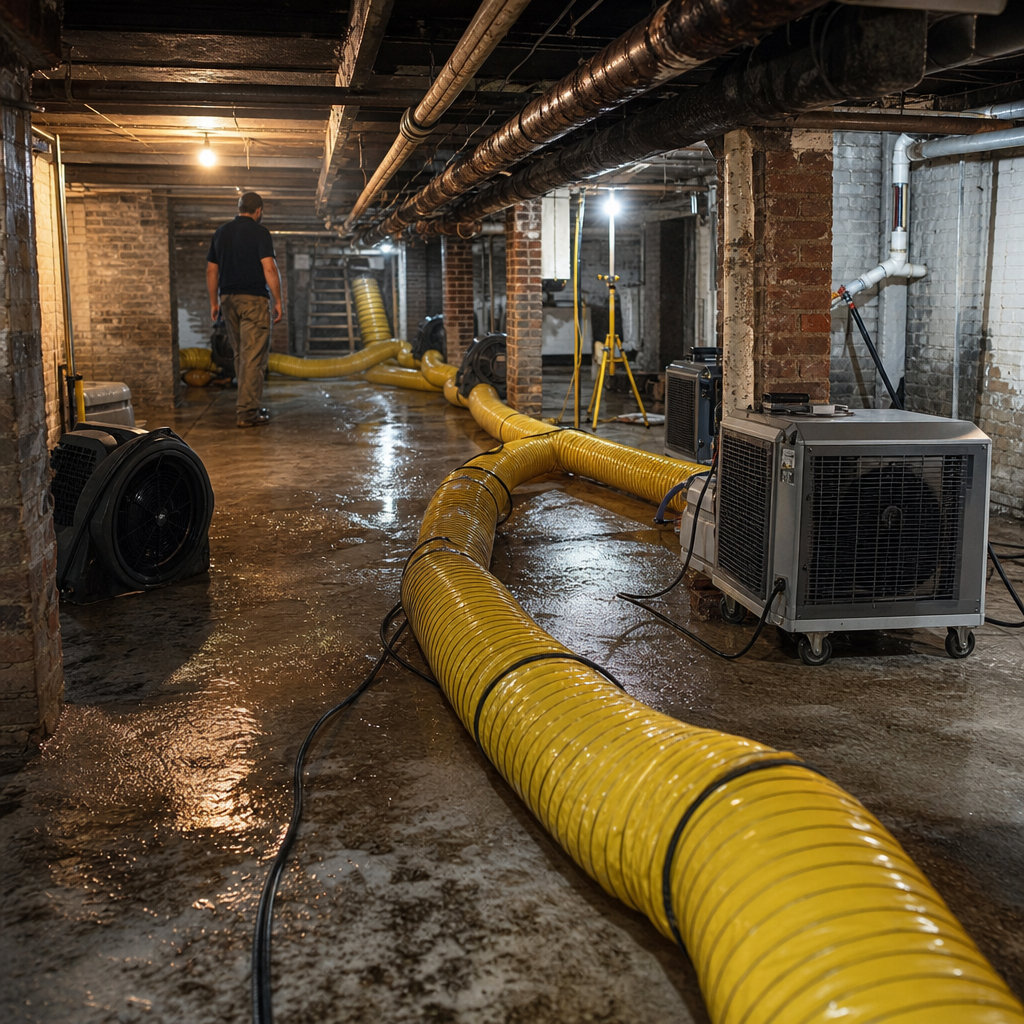
Urban water damage frequently happens when old supply lines freeze, heavy rain floods basements, or hydrostatic pressure pushes groundwater through foundation walls. Without fast drying, water weakens old stone mortar footings and travels into adjoining party walls, raising liability risks with neighboring properties.
Winter Freeze and Thaw Plumbing Failures
Uninsulated copper lines and older cast iron pipes in exterior walls are prone to freezing and bursting during cold snaps. The Insurance Information Institute notes that burst pipes are among the costliest property claims, frequently spilling hundreds of gallons per hour into structural cavities (2024). Our technicians provide around-the-clock emergency water response, carrying out fast shutoffs and deep cavity drying before moisture leads to widespread decay.
Managing Hydrostatic Pressure in Below-Grade Foundations
Heavy rains soak New York soils, driving water through stone foundations under high pressure. Wade’s Restoration arrives within 45 minutes with high-volume extraction pumps and commercial drying systems, taking pressure off your foundation and stopping water before it causes structural settling.
Why Pre-War Masonry Buildings Require Specialized Restoration Playbooks
Pre-war buildings need specialized restoration techniques because standard suburban drying methods do not work on multi-wythe brick and plaster. When water enters brick party walls, it wicks sideways across row houses, rotting structural joist pockets and creating shared property liability.
The Physics of Plaster-on-Brick Party Wall Water Migration
According to the Brick Industry Association, unsealed clay masonry can absorb up to 20% of its dry weight in water through capillary action (2020). In buildings built between 1920 and 1950, shared brick walls act like sponges. Water travels behind horsehair plaster, bypassing standard box fans and quietly weakening the ends of wood joists embedded in the masonry.
Avoiding Multi-Unit Cross-Property Liability
Basic surface drying leaves moisture locked deep in old brick, leading to hidden mold and disputes with neighbors. Our specialists avoid cross-property damage by using targeted cavity drying systems designed for historic New York architecture. From localized emergency water extractions to multi-unit brownstone repairs, we stop water migration before it reaches adjacent units.
Structural Parts and Property Components We Restore
Need damage restoration services?
We’re available now - call for a fast, free estimate.
Full-service property restoration means returning every surface and framing member to its original pre-loss condition, not just setting up drying fans. Wade’s Restoration uses its own in-house tradespeople from initial extraction through final carpentry, protecting the character and market value of your property.
Drywall, Ceilings, and Historic Plaster Walls
Our technicians stabilize sagging plaster ceilings, remove damaged sheetrock, and repair historic lath-and-plaster walls. Whether managing emergency water damage jobs or historic plaster repairs, our team applies smooth skim coats and matching paint finishes.
Subfloors, Structural Joists, and Hardwood Flooring
We use specialty vacuum floor-drying mats to salvage warped hardwood floors whenever possible. According to the IICRC S500 Standard, targeted vacuum extraction removes water trapped between subfloors and framing before fungi can take hold (2021). If structural wood has rotted after severe water intrusion or sewage backflows, our carpenters sister damaged joists and lay matching subflooring.
HVAC Ductwork, Cabinets, and Insulation Assemblies
Our crews clean and sanitize ductwork, replace wet fiberglass or cellulose insulation, and reinstall custom cabinetry after water extraction or remediation projects.
What Do Damage Restoration Services Cost?
Damage restoration services in New York typically range from $1,200 to $15,000+, depending on the area affected, the water contamination category, and how deeply materials are saturated. We provide free initial visual inspections, while specialized moisture mapping runs between $150 and $500. Most insurance claims fall between $3,000 and $15,000.
Average Price Ranges by Damage Category
According to the Insurance Information Institute, the average residential water damage and freezing claim is $12,514 (2024). Actual costs depend on the water category and how many structural layers are affected.
| Damage Category | Typical Price Range | Primary Scope of Work | Key Risk Factor |
|---|---|---|---|
| Clean Water | $1,200 – $4,500 / room | Extraction, structural drying | Hidden cavity moisture |
| Mold Remediation | $1,500 – $6,000 | HEPA air scrubbing, removal | Airborne spore spread |
| Sewage / Black Water | $2,000 – $10,000 | Bio-wash, antimicrobial sanitizing | Bacterial contamination |
| Fire & Smoke | $3,000 – $25,000+ | Soot removal, odor control, rebuild | Corrosive acid damage |
How the Scope Written Equals the Scope Billed
You will not find surprise fees or mid-job price hikes here. Whether you need emergency water extraction, flood cleanup, mold remediation, or sewage cleanup, our initial written scope matches the invoice we submit to your insurance carrier.
Navigating Insurance Claims: The Claim Clarity Advantage
Most standard property policies cover sudden water, fire, and smoke damage, but getting claims paid in full takes clear, carrier-grade documentation. Wade’s Restoration simplifies the process through our Claim Clarity Program, sending daily moisture logs and photos directly to your insurance adjuster to secure approvals quickly.
Daily Moisture Logs and Thermal Photo Evidence
Insurance adjusters require hard proof before approving mitigation scopes. Water damage and freezing claims make up roughly 24% of all homeowner losses (Insurance Information Institute, 2024). We provide infrared moisture maps, daily psychrometric readings, and room-by-room photo logs for every restoration job to document hidden moisture behind walls and floors.
Direct Carrier Billing Using Standard Xactimate Pricing
Whether you need mold cleanup or emergency sewage extraction, we communicate directly with your insurance representative using standard Xactimate estimating software. Our damage restoration services adhere strictly to our billing standard: the scope written is the scope billed, so you never get caught between contractor estimates and adjuster payouts.
Local Service Areas Across Astoria and New York City
Our service trucks are staged across Western Queens and Manhattan to ensure a reliable 45-minute response time. Our crew provides 24/7 damage restoration services in dense urban neighborhoods, bringing drying equipment matched to the challenges of pre-war row houses, storefronts, and multi-unit buildings.
Astoria Core: Steinway Street, Ditmars Boulevard, 30th Avenue, and Broadway
Our crews are stationed near major Queens corridors to provide the fast response property owners need when plumbing gives out. Fast extraction stops moisture from spreading into shared brick walls, preventing joist decay and stopping mold before other units are damaged.
Greater NYC Coverage: Long Island City, Sunnyside, and the Financial District
In attached city buildings, containing water quickly is the best way to protect party walls and shared framing (NYC Department of Buildings, 2023). Whether dealing with flooded commercial basements or residential pipe breaks, Wade’s Restoration dispatches in 45 minutes for a free on-site visual assessment.
Frequently Asked Questions About Damage Restoration Services
Professional restoration pairs emergency drying with complete structural repairs. In New York, acting fast protects pre-war framing from secondary rot and keeps your insurance claim on track.
How quickly should response begin, and what does it cost?
Mitigation should start immediately. Total costs range from $1,200 to over $15,000 depending on the damage category and square footage. According to the EPA, mold grows within 24 to 48 hours on wet organic framing (2023), making fast emergency water extraction a priority.
What is the difference between mitigation and restoration?
Mitigation halts active damage through fast water extraction, containment, and sanitizing. Restoration follows drying, repairing drywall, flooring, and structural finishes to return the property to its pre-loss condition.
How do I choose a local contractor?
Look for an IICRC-certified contractor with a live dispatch team rather than an automated franchise hotline. Choose a company that handles both certified remediation and complete structural reconstruction in-house. Call Wade’s Restoration 24/7 for a free visual inspection and 45-minute response.
Need damage restoration services?
We’re available now - call for a fast, free estimate.
Frequently Asked Questions
Will property insurance cover damage restoration services for older pre-war buildings?
Standard property policies generally cover sudden and accidental events like pipe bursts or fire, though gradual deterioration and deferred maintenance are typically excluded. Wade's Restoration provides daily moisture logs, thermal imaging proof, and direct Xactimate billing through its Claim Clarity Program to help ensure adjusters approve the full scope of necessary repairs.
Can I remain in my home or building during damage restoration services?
Occupants can typically remain on-site during minor clean water drying if essential living areas are unaffected. However, for Category 3 sewage backups, structural fire damage, or mold remediation requiring HEPA containment barriers, Wade's Restoration recommends vacating the affected zones until safety and sanitization clearances are complete.
How long does the complete damage restoration process take from initial cleanup to structural rebuilding?
The initial emergency extraction and structural drying phase typically takes three to five days, especially when removing deep moisture from pre-war brick and plaster. Full structural reconstruction timelines vary based on the required drywall, subfloor, and finish carpentry, which Wade's Restoration manages seamlessly under a single coordinated workflow.
About the author
 |
Sarah Miller Sarah Miller is a certified water damage restoration specialist with over eight years of experience helping property owners navigate the complexities of mitigation and recovery. She holds an associate degree in Construction Management from New York City College of Technology and has extensive knowledge of local building codes and insurance claim procedures. Through her writing, Sarah provides actionable advice to help property managers and homeowners in the Astoria area understand the true costs and critical steps involved in emergency water damage restoration. |
Water damage, flood, or mold emergency?
We’re available now - call for a fast, free estimate.
Call Now - Free Estimate