
Quick Summary
Managing overall water damage restoration cost requires immediate professional mitigation to prevent standing moisture from penetrating deep structural materials and causing severe secondary rot or mold. Wade's Restoration eliminates unexpected expenses by utilizing a strict 'scope written is the scope billed' policy alongside their Claim Clarity Program, which delivers carrier-grade documentation to maximize insurance coverage. Property owners can call Wade's Restoration 24/7 to secure a free visual inspection, understand their structural drying variables, and receive an upfront, itemized restoration estimate.
Water Damage Restoration Cost: Save Thousands Fast
Water damage restoration costs vary widely, ranging from a few hundred dollars for minor cleanups to several thousand for deep structural drying and repairs. Getting an experienced mitigation crew on-site immediately is the single most effective way to prevent those costs from multiplying. Standing water penetrates drywall, pre-war plaster, and subflooring within hours, triggering structural rot and hazardous mold growth that drive repair bills significantly higher.
At Wade’s Restoration, we eliminate financial guesswork with rapid emergency response across Astoria and New York City. Unlike standard general contractors who rely on subcontractor markups or vague estimates, our certified team handles your recovery from initial extraction to complete reconstruction under a strict “scope written is the scope billed” policy. Through our Claim Clarity Program, we provide real-time moisture logs, room-by-room photo documentation, and carrier-grade billing to help you get the full coverage you pay for. Call our live 24/7 dispatch for a free visual inspection and an upfront, itemized restoration estimate.
What Does Water Damage Restoration Cost? Immediate Pricing and Action Guide
What Does Water Damage Restoration Cost? Immediate Pricing and Action Guide in brief: Water damage restoration costs depend on the water category (clean, grey, or black), total square footage, structural materials like plaster or hardwood subfloors, and how quickly extraction starts. Wade’s Restoration provides free visual inspections, rapid 45-minute emergency response in Astoria and NYC, and direct insurance billing to keep out-of-pocket expenses minimal.
The total price of water damage restoration reflects the contamination category and structural complexity of the building. Your final investment is governed by how quickly certified technicians extract standing water and dry structural assemblies before secondary decay sets in.
Pricing Overview and Real Structural Variables
Drying and repairing water damage cannot be accurately estimated using simple square-footage calculators. This is especially true in pre-war NYC properties, where dense multi-layer plaster, wood lath, and brick party walls draw water horizontally and vertically through capillary action. Liquid travels along joist channels into neighboring units or deep into structural masonry, turning a seemingly small leak into a complex structural drying job. An itemized water damage repair estimate accounts for these hidden cavities and establishes what water damage is covered by insurance before unseen moisture causes permanent decay.
Why Response Speed Dictates Your Final Invoice
Drying delays quickly inflate remediation invoices. Clean water from a broken supply line will degrade into grey or biohazardous black water within 48 hours as it interacts with dirt, drywall compounds, and organic building materials. Once active mold colonization begins, the job requires full containment barriers and negative air equipment, which significantly increases labor and disposal fees. Wade’s Restoration dispatches technicians across Astoria and NYC within 45 minutes to halt water migration before reconstruction costs multiply.
Emergency Water Damage Restoration
Emergency restoration halts active flooding through immediate extraction, cavity moisture mapping, and controlled psychrometric drying. Deploying rapid mitigation controls the ultimate water damage restoration cost before saturated ceilings, floors, or framing fail under structural load.
Immediate Water Extraction and Moisture Trapping
Commercial truck-mounted extraction units remove bulk standing water quickly, keeping baseline water extraction costs low. In pre-war architecture, surface water is only part of the problem. Plaster-on-brick assemblies hold moisture like a sponge. Technicians use thermal imaging cameras and non-penetrating moisture meters to track water trapped behind baseboards and lath without tearing down sound building materials prematurely.
Preventing Structural Failure in Multi-Story Buildings
Saturated building materials lose their structural integrity quickly, especially when water pools above ceilings or seeps into shared party walls. Professional emergency property restoration stabilizes multi-unit and single-family properties through three steps:
- Immediate extraction to relieve ceiling weight and stop sheetrock or heavy plaster from falling.
- Thermal wall mapping to document moisture paths and substantiate insurance claims.
- Cavity dehumidification paired with an upfront, itemized water damage repair estimate.
Flood Damage Restoration
Flood damage restoration addresses Category 3 black water intrusions caused by heavy storms, exterior runoff, and storm surges. This work requires containment, sludge extraction, and decontamination. Unlike clean pipe breaks, the overall water damage restoration cost for flooding includes biohazard sanitization, controlled removal of contaminated materials, and deep masonry drying.
Managing Storm Surges and Street Runoff
Street runoff carries silt, road chemicals, and bacteria into ground-level spaces and sub-basements. In attached row houses and brownstones, hydrostatic pressure forces this dirty water through porous rubble foundations and brick party walls. Dense masonry wicks contaminated water upward, requiring targeted cavity drying and EPA-registered antimicrobial treatments rather than simple surface fan drying.
NFIP Compliance and Saltwater Residue Treatment
Navigating National Flood Insurance Program (NFIP) requirements demands strict documentation and specific remediation protocols. Flooding can leave behind fine silt and corrosive salt residues that break down electrical conduits and masonry over time. Our team follows an NFIP-compliant workflow to protect your property and support your claim:
- Sludge and Water Extraction: High-volume pumps remove standing water and silt rapidly to prevent corrosion and lower initial water extraction costs.
- Controlled Flood Cuts: Porous sheetrock and wet plaster are removed cleanly 12 to 24 inches above the water line to expose framing studs for drying.
- Decontamination and Psychrometric Logging: Substrates receive hospital-grade biocidal treatments backed by daily moisture readings to verify complete drying.
Mold Remediation
Professional mold remediation stops active fungal growth before moisture permanently weakens structural framing or ruins indoor air quality. When water sits unnoticed or untreated for more than 48 hours, remediation costs rise due to the safety equipment, physical containment barriers, and clearance testing required by law.
Mold spores thrive in dark, humid wall cavities. In older buildings, water wicks through plaster layers and stays trapped against vintage wood framing, creating ideal conditions for fungal colonies.
HEPA Air Scrubbing and Containment
Remediation crews isolate the work zone using heavy plastic poly-containment barriers maintained under continuous negative air pressure. Industrial air scrubbers equipped with HEPA filtration capture airborne spores, preventing cross-contamination to clean living areas while technicians treat framing with botanical antimicrobials.
Treating Hidden Growth Inside Wall Cavities
Leaving mold untreated inside wall cavities can lead to claim denials, as insurance carriers frequently exclude long-term, unmitigated rot. Wade’s Restoration uses precision cavity drying and direct treatment methods to resolve mold growth at its source, protecting structural framing and avoiding unnecessary wall demolition.
Sewage Cleanup
Need water damage restoration cost?
We’re available now - call for a fast, free estimate.
Sewage backups introduce Category 3 biohazards containing dangerous pathogens, viruses, and bacteria into living and working spaces. Because raw sewage quickly penetrates porous flooring and walls, the total cleanup cost reflects biohazard safety gear, sanitary extraction, demolition of non-salvageable materials, and laboratory-grade verification testing.
Category 3 Biohazard Decontamination
Sewage intrusion requires specialized personal protective equipment (PPE) and strict containment protocols. Plaster, porous subfloors, and trim that contact black water absorb contaminants immediately. Our certified technicians apply hospital-grade disinfectants and use ATP luminescence testing to confirm surfaces are clean and safe for occupancy.
Extraction and Permitted Waste Disposal
Biohazardous waste must be handled and disposed of according to strict environmental regulations:
- Technicians extract black water using sealed, filtered vacuum units to eliminate indoor contamination risks.
- Saturated porous items (carpeting, underlayment, baseboards, drywall) are cut out, sealed in biohazard bags, and hauled for permitted disposal.
- Technicians provide a full itemized estimate and file detailed documentation with your insurance carrier.
Fire and Smoke Damage Restoration
Restoring a property after a fire requires addressing two distinct issues at once: high-volume water saturation from firefighting efforts and corrosive soot residue. If water sits trapped in plaster and wood while acidic smoke coats surfaces, restoration costs increase as finishes corrode and wood framing rots.
Combined Water Mitigation and Soot Removal
Fire hoses release hundreds of gallons of water that soak through floors and pool inside wall cavities. When mixed with soot, water forms an acidic slurry that discolors paint, stains masonry, and rusts metal framing fasteners. Mitigation requires two coordinated steps:
- Heavy-duty water extraction to pull water out of floor cavities and stop moisture from traveling into adjoining walls.
- Soot removal using chemical sponges and specialty detergents to neutralize acidic residue before high humidity etches delicate surfaces.
Thermal Fogging and Hydroxyl Odor Neutralization
Removing smoke odor from structural joists without tearing down entire rooms requires thermal fogging and industrial hydroxyl generators. These units break down odor-causing molecules at the molecular level. Our team documents all structural drying and smoke cleanup on itemized estimates accepted by major insurance carriers.
Burst and Frozen Pipes Cleanup in Pre-War Plumbing
Burst and frozen pipe cleanup in older properties requires fast containment, moisture mapping, and non-destructive cavity drying. In historic multi-family buildings, total restoration costs depend on how many floors the water travels through and how deeply it saturates vintage plaster and wood assemblies.
Supply Line Failures Under Pressure
Aging plumbing in pre-war buildings is vulnerable to freeze-thaw splits, failed riser joints, and corroded brass fittings. A pressurized line can release dozens of gallons per minute, quickly flooding multiple vertical apartments. Fast emergency property restoration stops water flow, shuts down risers, and extracts water before multi-unit ceilings collapse.
Cavity Drying Behind Plaster-on-Brick Walls
Standard drying methods that work on modern drywall fail on plaster-on-brick walls because the brick behind the plaster holds water. Our technicians use targeted cavity injection systems that force warm, dry air into hidden voids. This approach dries original historical trim, wainscoting, and tongue-and-groove flooring in place, avoiding expensive tear-outs and saving thousands on historical reconstruction.
Basement Flooding Cleanup and Hydrostatic Pressure Control
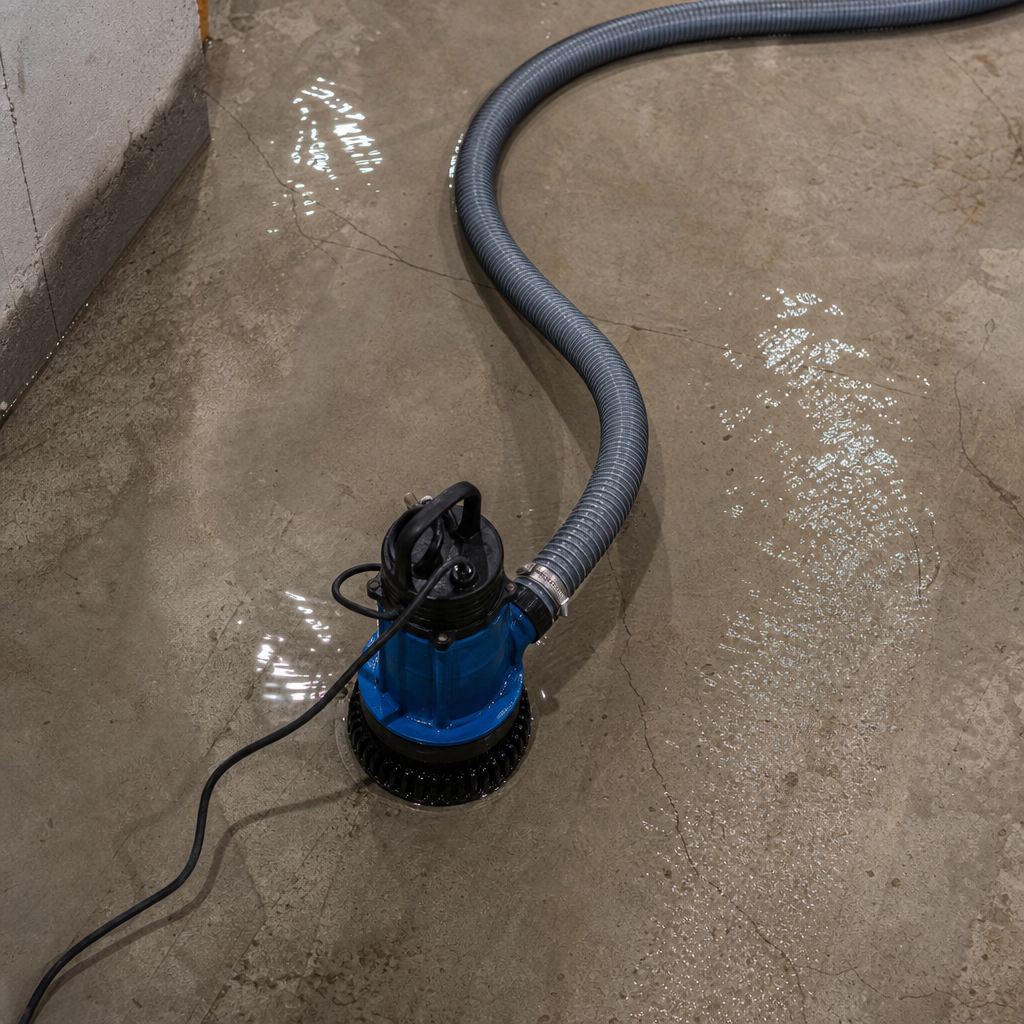
Basement flooding cleanup requires rapid water evacuation and moisture control to prevent foundation movement and structural damage. When heavy rainfall saturates surrounding soil, water is forced through cracks in stone or concrete foundations, meaning cleanup costs depend heavily on the depth of water and how long the slab has been submerged.
Groundwater Seepage vs Sump Pump Failures
Heavy storms create hydrostatic pressure against basement walls and floors. Seepage pushes moisture slowly through porous mortar, while a failed sump pump or backed-up floor drain can submerge mechanical systems, boilers, and storage areas in minutes. Documenting whether water entered through a failed mechanical pump or foundation seepage directly impacts insurance coverage eligibility.
Deep Foundation Slab Dehumidification
Porous concrete slabs pull moisture upward like a wick. To stop rising dampness and prevent mold under floating floors or inside finished walls, technicians set up industrial Low-Grain Refrigerant (LGR) dehumidifiers. These machines pull deeply bound moisture out of subterranean masonry, preventing lingering odors and structural damage.
Roof Leaks and Storm Damage Mitigation for Row Houses
Storm-related roof leaks on attached row houses require immediate exterior containment to prevent water from traveling across shared ceiling joists. When roofing membranes or parapet flashings fail, your repair costs depend on how quickly crews cover the breach and drain trapped water out of top-floor ceilings.
Flat-Roof Membrane Failures and Parapet Leaks
Ponding water on flat tar and modified bitumen roofs often finds weaknesses around deteriorated parapet walls, skylights, and drainage scuppers. Water enters the roof deck and travels horizontally along joists before dropping into living spaces below. Wade’s Restoration provides 24/7 emergency roof tarping and shrink-wrapping to seal exterior breaches immediately, keeping water extraction costs contained.
Top-Floor Ceiling Collapse Prevention
Water pooling above old plaster ceilings creates dangerous overhead weight. Restoration technicians perform controlled punctures to drain trapped water into collection bins, protecting structural lath and preventing catastrophic ceiling drops. Our crew documents the storm origin, provides emergency tarping, and delivers itemized estimates for carrier approval.
Structural Mold Remediation After Undetected Leaks
Need water damage restoration cost?
We’re available now - call for a fast, free estimate.
Hidden leaks behind bathroom walls or under kitchen fixtures cause structural decay long before water stains appear on paint. The cost to repair undetected leaks depends on whether joists and subfloors can be dried and sanitized in place, or whether extended wood rot requires structural sistering and rebuilding.
Slow Drain Leaks and Subfloor Rot
Wax ring failures under toilets and slow drain leaks rot subflooring over several months. Our specialists use moisture meters and borescopes to inspect the exact damage zone beneath fixtures. This targeted approach allows technicians to remove only the rotted decking while saving sound framing, which reduces overall project expenses.
Post-Remediation Verification and Clearance
Third-party post-remediation verification (PRV) testing confirms that indoor spore counts have returned to normal, safe levels before containment walls come down. Independent clearance reports provide proof of safety for your family and protect property value during future real estate transactions.
Parts and Structural Components We Restore
Restoring structural components after water intrusion requires preserving original materials whenever possible rather than defaulting to complete demolition. Our company saves historic plaster, hardwood flooring, and structural framing through advanced drying technology, managing both mitigation and rebuilding in-house to keep costs clear and consistent.
Plaster, Drywall, and Decorative Moldings
Plaster-on-brick walls respond well to high-capacity desiccant dehumidification. This process extracts moisture from deep inside the assembly, protecting hand-crafted crown moldings and historic finishes without requiring destructive drywall flood cuts.
Hardwood, Subfloors, and Structural Joists
Targeted negative-pressure drying mats pull trapped water directly up through wet hardwood boards. When deployed within 24 to 48 hours, these mats can flatten cupped oak flooring, saving the cost of complete floor replacement. Saturated joists are dried, treated with antimicrobials, and reinforced if structural strength was compromised.
Cabinetry, Insulation, and HVAC Systems
Wet fiberglass or cellulose insulation loses its R-value and must be removed to prevent mold. Custom cabinetry is saved using injectidry toe-kick systems, while wet HVAC ducts are sanitized and dried to prevent mold spores from circulating through the building.
What Does Water Damage Restoration Cost? Complete Pricing Breakdown
What Does Water Damage Restoration Cost? Complete Pricing Breakdown in brief: Restoration costs depend on the severity of the damage, the water category, and the materials affected. Standard projects include inspection and moisture mapping, water extraction, structural drying, sanitization, and repairs. Contact Wade’s Restoration for a free inspection and an itemized quote for your property.
Every restoration project is unique. A small clean-water supply line break on a tile floor requires far less labor and equipment than a multi-floor sewage backup in an older building with plaster walls and hardwood floors.
Typical Service Scope Overview
| Feature | Category 1 (Clean Water) | Category 2 (Grey Water) | Category 3 (Black Water) |
|---|---|---|---|
| Relative Cost | Lowest baseline cost | Moderate cost | Highest total cost |
| Extraction Needs | Standard physical extraction | Targeted containment & extraction | Sealed biohazard vacuum extraction |
| Plaster & Wall Care | Air movers & LGR dehumidifiers | Cavity injection drying | Controlled removal of wet materials |
| Sanitization Level | Light antimicrobial application | Broad-spectrum disinfectant wash | Full hospital-grade biohazard protocol |
Key Factors That Influence Your Final Estimate
Water category, exposure time, and building materials dictate the equipment, labor, and safety protocols required on the job. The primary cost drivers on any water damage repair estimate include:
- Water Cleanliness: Clean water from supply pipes requires less equipment and disposal than sump backups or sewage.
- Building Materials: Dense plaster, vintage lath, and multi-layer subflooring take longer to dry than modern sheetrock and require specialized desiccant drying.
- Time Elapsed: Water left standing for more than 24 to 48 hours spreads deeper into surrounding structures and triggers mold growth, which requires containment barriers and clearance testing.
We provide free visual inspections with transparent pricing and a strict “scope written is the scope billed” guarantee on all emergency property restoration work.
How to Maximize Insurance Coverage with the Claim Clarity Program
To maximize your insurance reimbursement, you must provide clear proof of the cause, timeline, and exact structural scope of the damage. Wade’s Restoration runs every insurance project through our Claim Clarity Program, using infrared moisture mapping, daily psychrometric logs, and carrier-standard Xactimate pricing to ensure adjusters have the data they need to approve your claim without delay.
What Water Damage Is Covered by Homeowners Insurance
Standard homeowner policies cover sudden and accidental water events, such as burst supply pipes, water heater ruptures, and washing machine hose failures. They generally exclude damage caused by deferred maintenance, continuous slow leaks, or exterior ground flooding (which requires a separate flood policy). In historic NYC buildings, adjusters need documented proof showing that moisture spread through capillary action in shared walls rather than from neglect. Our Claim Clarity Program provides this documentation directly to the carrier.
Daily Moisture Logs and Direct Carrier Billing
Our claims management process helps you secure fair coverage through three steps:
- Writing an itemized water damage repair estimate using carrier-approved pricing software.
- Submitting daily moisture meter readings and infrared photos to prove that structural drying equipment was necessary and effective.
- Billing your insurance carrier directly to keep your out-of-pocket costs limited to your deductible.
Local Emergency Coverage Across Astoria and New York City
Wade’s Restoration provides 24/7 local emergency restoration services across Queens and Manhattan with a dedicated rapid response fleet. Fast arrival stops moisture migration through plaster and party walls, keeping your overall restoration costs down before materials are ruined.
Neighborhoods We Serve
Our crews respond across Astoria (including Steinway Street, Ditmars Boulevard, 30th Avenue, and Broadway), Long Island City, Sunnyside, and Woodside, as well as residential and commercial buildings throughout Lower Manhattan and the Financial District. We know the architectural challenges of pre-war walk-ups, brownstones, and high-density commercial spaces, allowing us to dry your property effectively while protecting historical features.
Rapid Response Fleet
Every response vehicle carries commercial extraction units, desiccant and LGR dehumidifiers, air movers, and thermal imaging gear. Our technicians arrive ready to extract standing water immediately, stabilize the environment, and provide a clear, honest restoration plan.
Frequently Asked Questions About Water Damage Restoration Costs
Water restoration costs in NYC depend on building materials, contamination level, and how far moisture has migrated. Immediate mitigation stabilizes plaster, stops water from moving into shared walls, and prevents secondary mold growth before reconstruction is needed.
How Much Does Water Damage Restoration Cost in Astoria and NYC?
Costs range depending on the clean-water vs biohazard classification, how many rooms are affected, and whether plaster walls or subflooring need specialized cavity drying. Wade’s Restoration provides free visual inspections and upfront, itemized estimates with a strict “scope written is the scope billed” policy.
Will My Homeowners Insurance Policy Cover Water Extraction and Drying?
Most policies cover water extraction and structural drying when the damage comes from sudden, accidental incidents like burst pipes or appliance failures. Our Claim Clarity Program supplies daily drying logs and infrared photos directly to your insurance adjuster to support complete claim approval.
How Fast Can Wade’s Restoration Arrive at My Property?
Our certified technicians arrive within 45 minutes across Astoria, Queens, and Lower Manhattan to extract standing water and stabilize your building.
What Happens if I Try to Let Water Dry on Its Own?
Household fans only dry surface materials while leaving moisture trapped inside plaster, subflooring, and wall cavities. Trapped moisture leads to structural rot and mold growth within 24 to 48 hours, significantly increasing your final repair bill.
Need water damage restoration cost?
We’re available now - call for a fast, free estimate.
Frequently Asked Questions
How does Wade's Restoration prevent unexpected price increases during a project?
Wade's Restoration enforces a strict 'scope written is the scope billed' policy, ensuring your upfront itemized estimate covers the agreed work without hidden contractor markups or surprise mid-project fees. Detailed moisture mapping and thermal diagnostics during the initial inspection identify all hidden water pockets before work begins so the scope remains accurate.
How can property owners ensure their insurance carrier covers the full cost of structural drying?
Insurance carriers require carrier-grade documentation proving that equipment runtime and extraction steps were necessary. Through the Claim Clarity Program, Wade's Restoration provides adjusters with daily psychrometric drying logs, infrared imagery, and standardized Xactimate billing to support full claim approval and keep out-of-pocket expenses limited to your deductible.
Can historic hardwood floors and plaster walls be saved after water damage to reduce rebuilding costs?
Yes, deploying specialized negative-pressure drying mats and cavity desiccant injection within 24 to 48 hours can extract moisture trapped beneath hardwood and plaster without destructive tear-outs. Wade's Restoration utilizes non-invasive structural drying methods specifically designed for pre-war properties, helping preserve original materials and eliminating expensive reconstruction costs.
About the author
 |
Sarah Miller Sarah Miller is a certified water damage restoration specialist with over eight years of experience helping property owners navigate the complexities of mitigation and recovery. She holds an associate degree in Construction Management from New York City College of Technology and has extensive knowledge of local building codes and insurance claim procedures. Through her writing, Sarah provides actionable advice to help property managers and homeowners in the Astoria area understand the true costs and critical steps involved in emergency water damage restoration. |
Water damage, flood, or mold emergency?
We’re available now - call for a fast, free estimate.
Call Now - Free Estimate