
Last updated August 26, 2026
Free visual inspection and a written scope of work before any mitigation begins - photos, moisture readings, and drying logs go in your claim file
The scope we write is the scope we bill. Anything new gets shown to you, in writing, before we touch it.
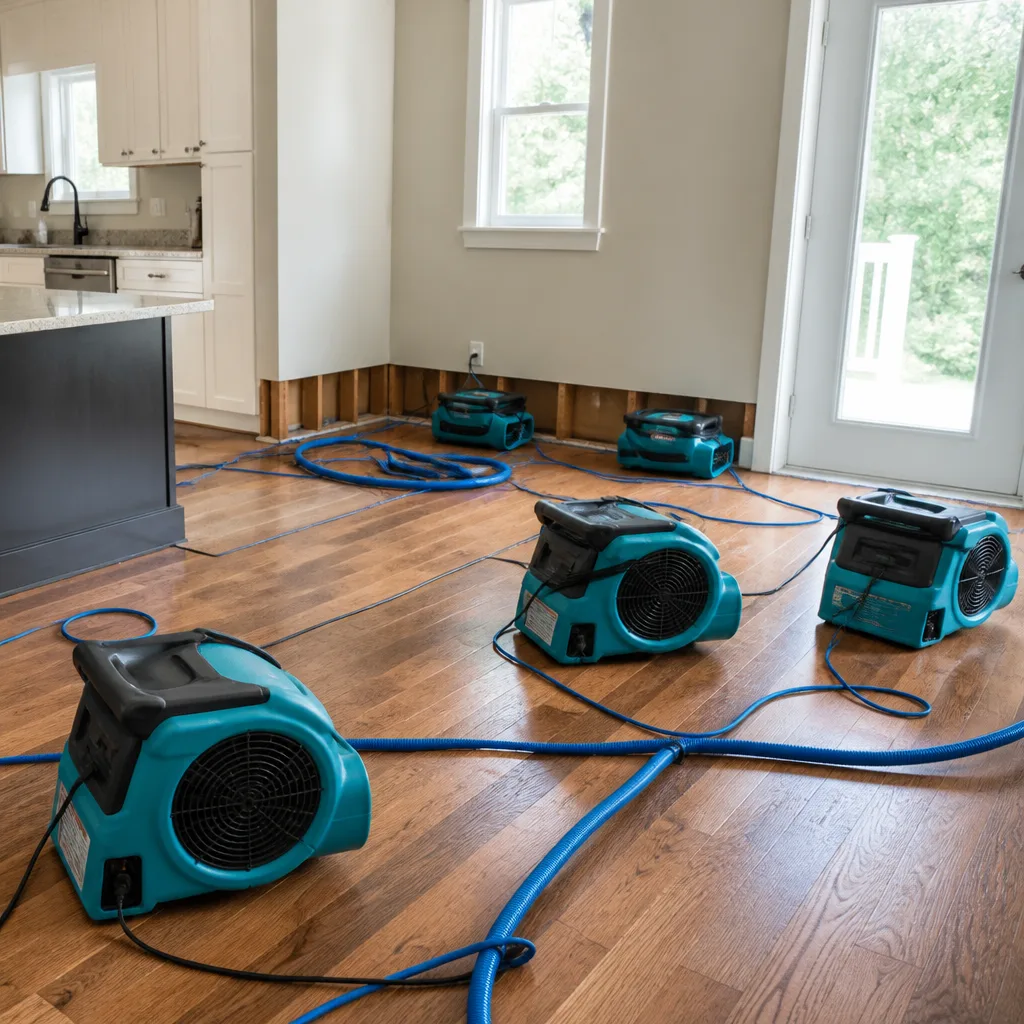
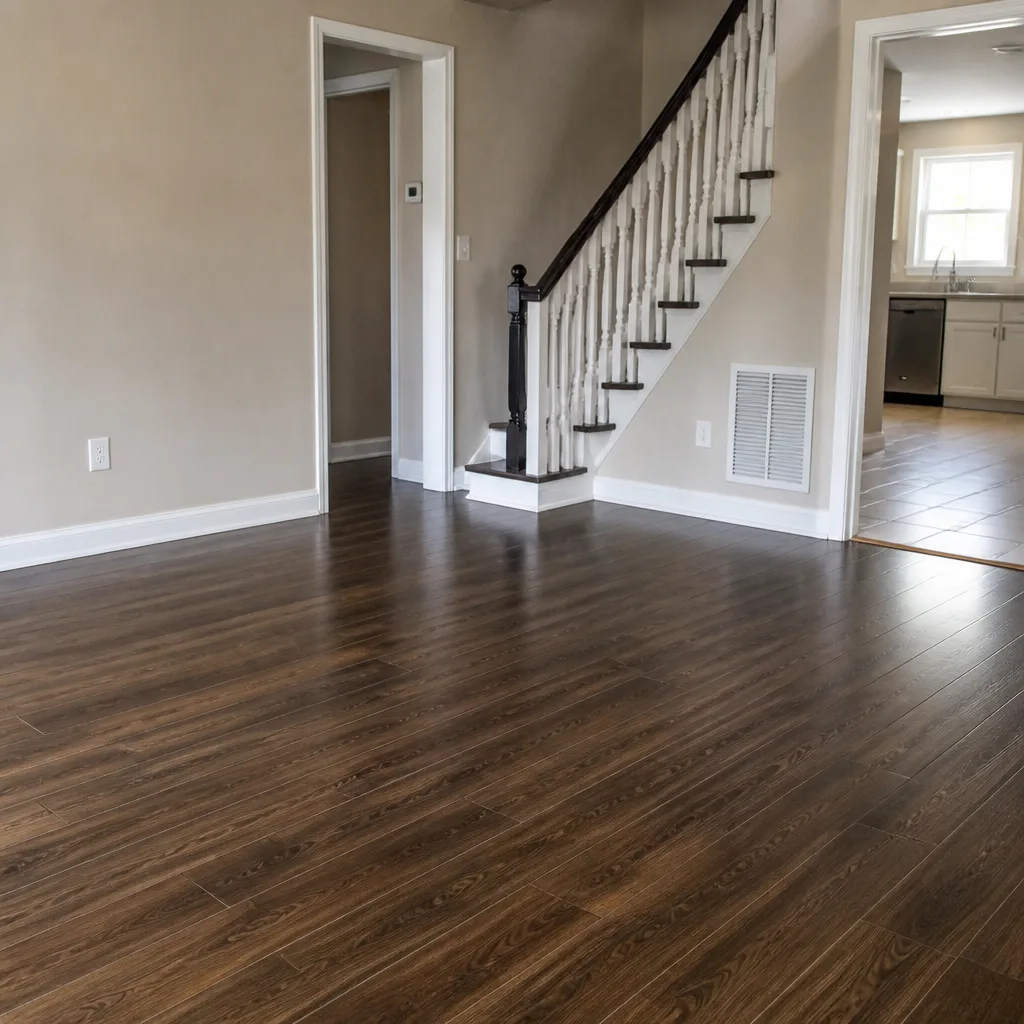
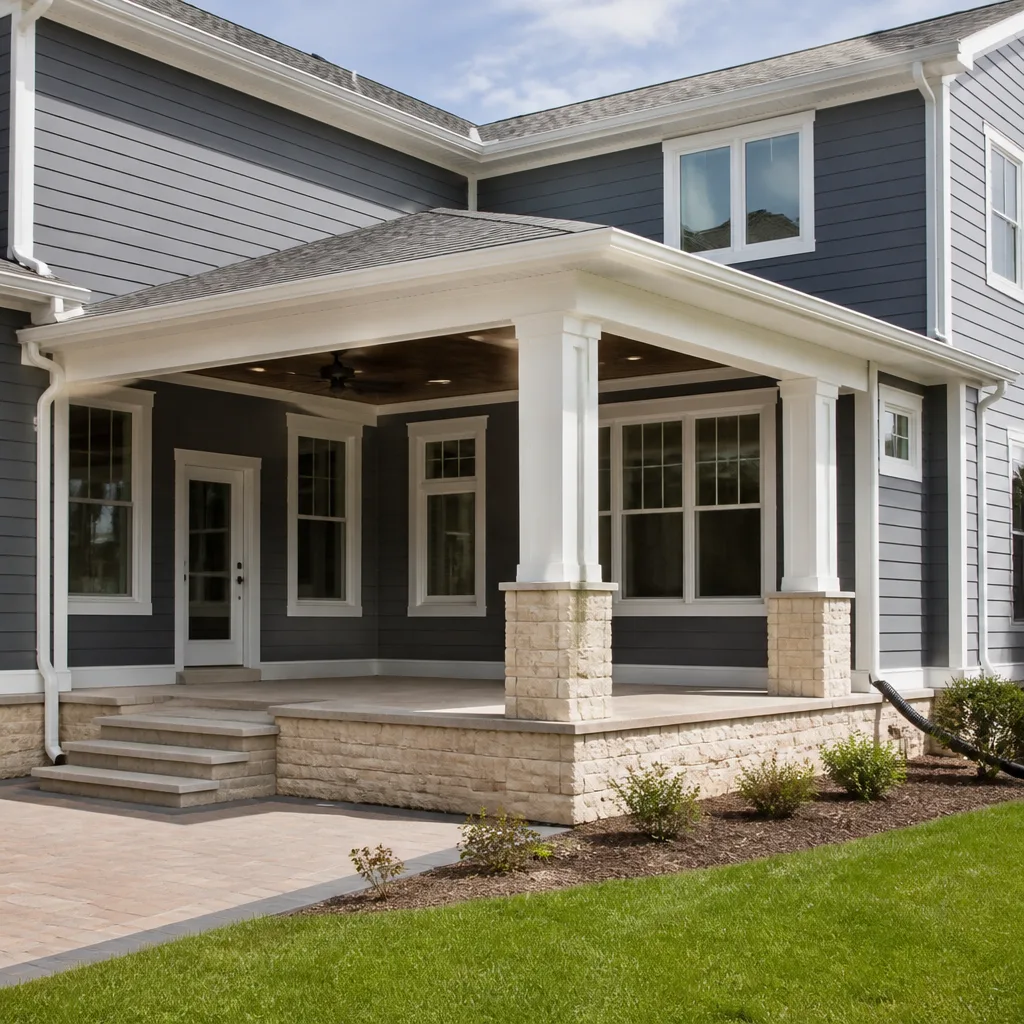
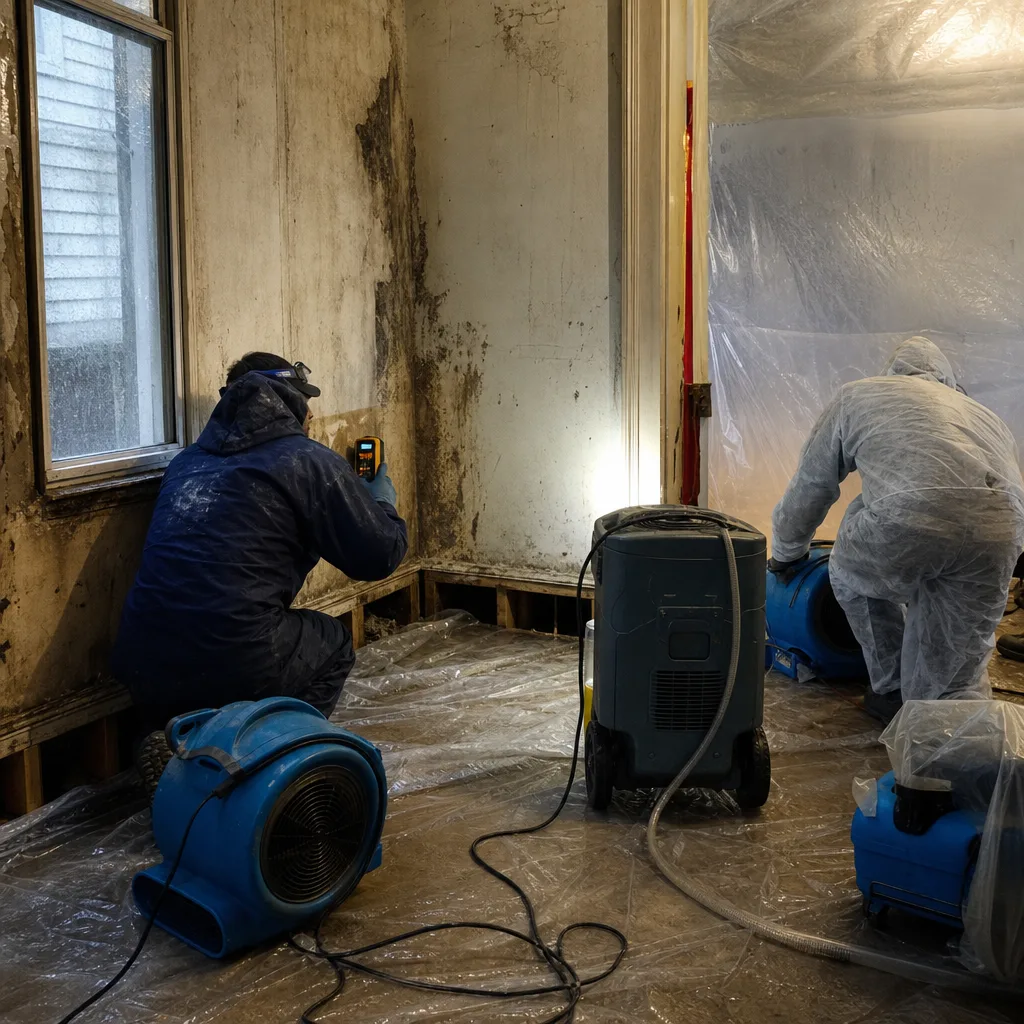 Before
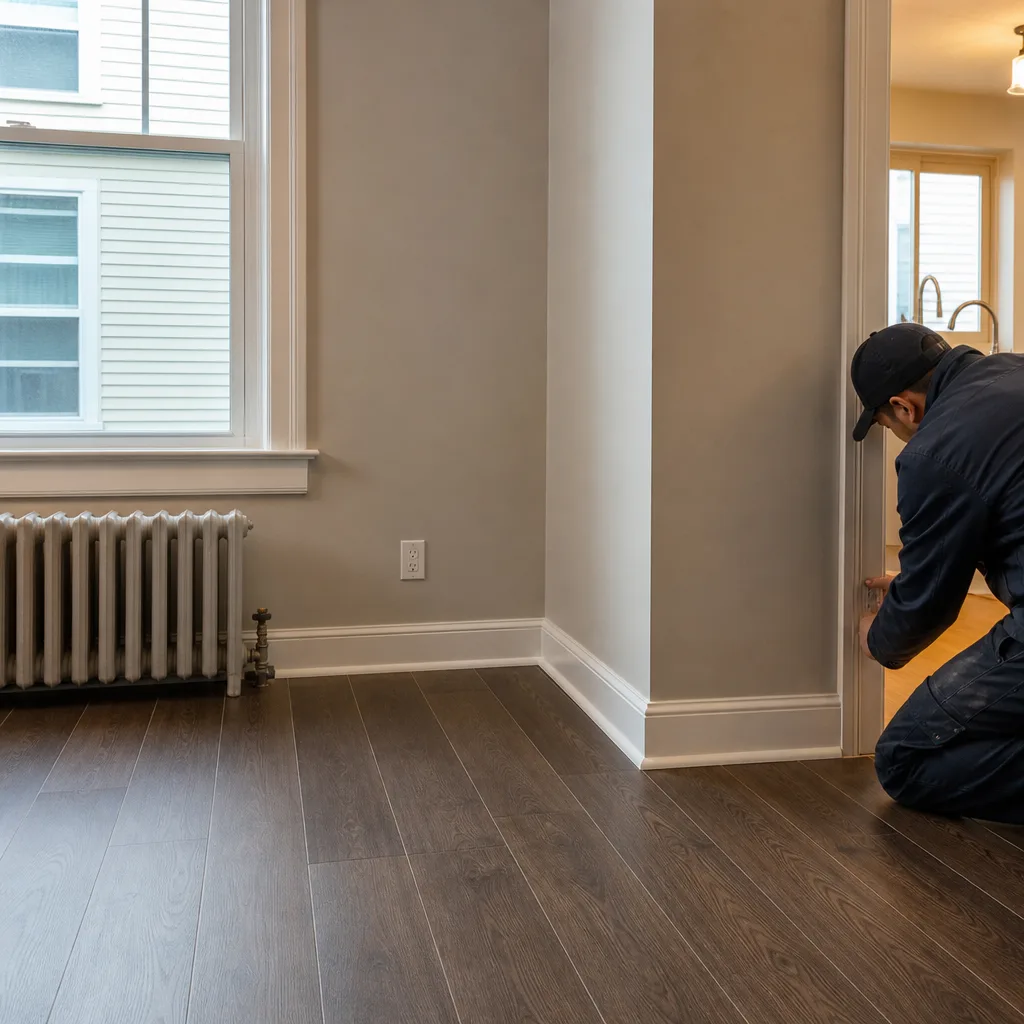 After
After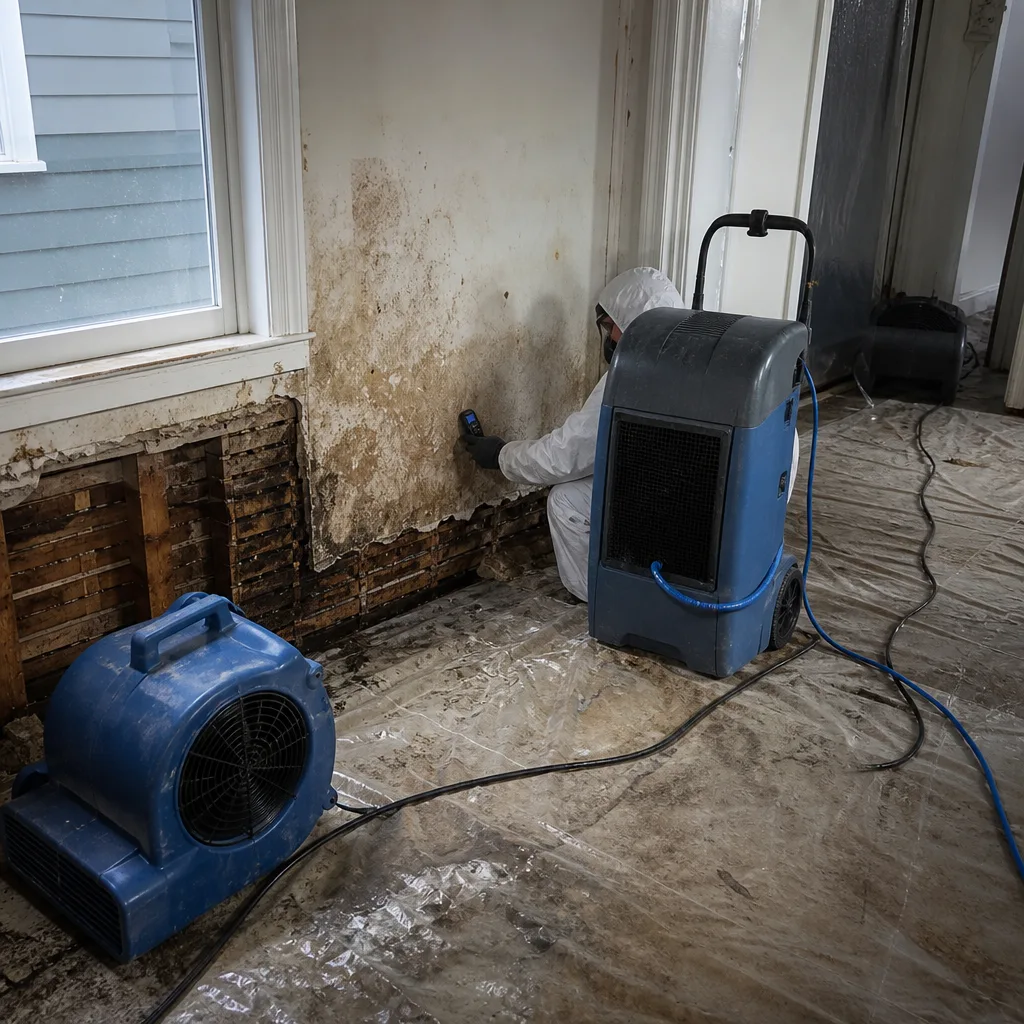 Before
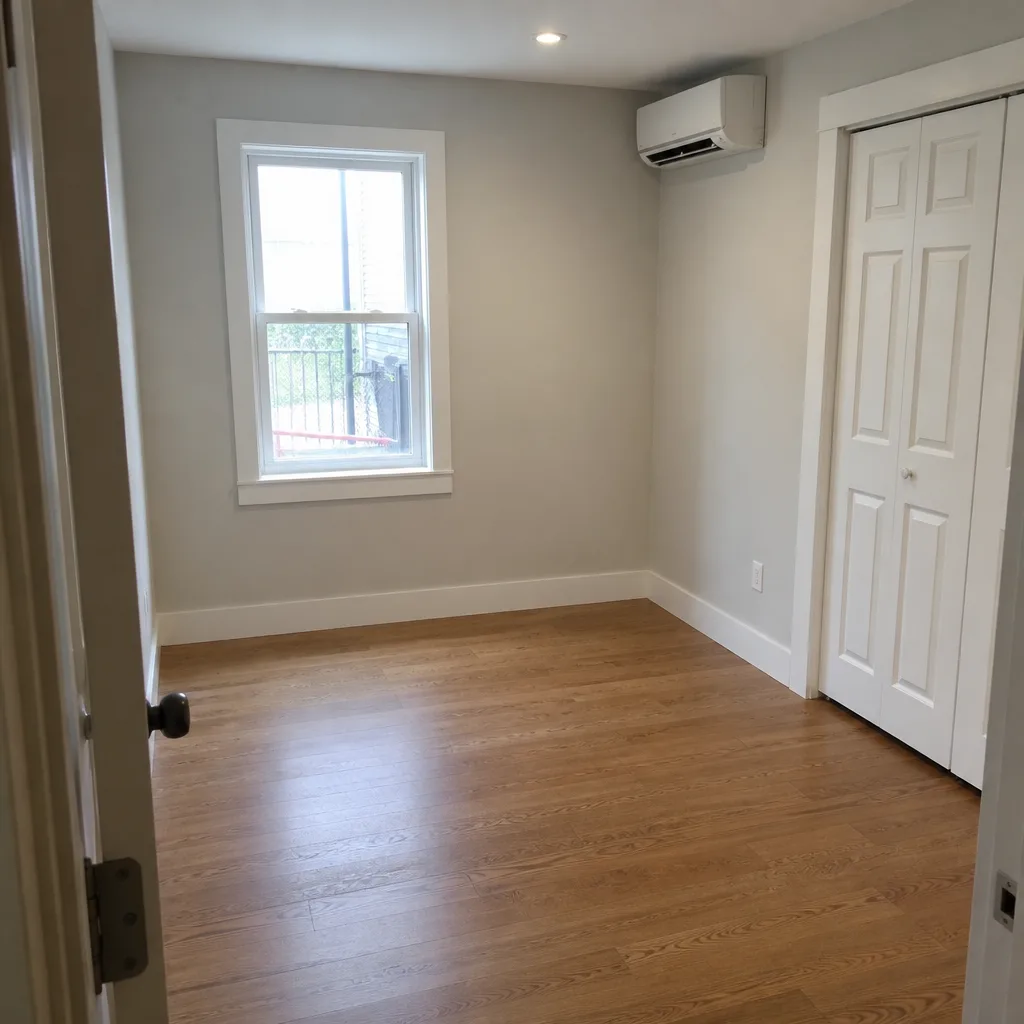 After
After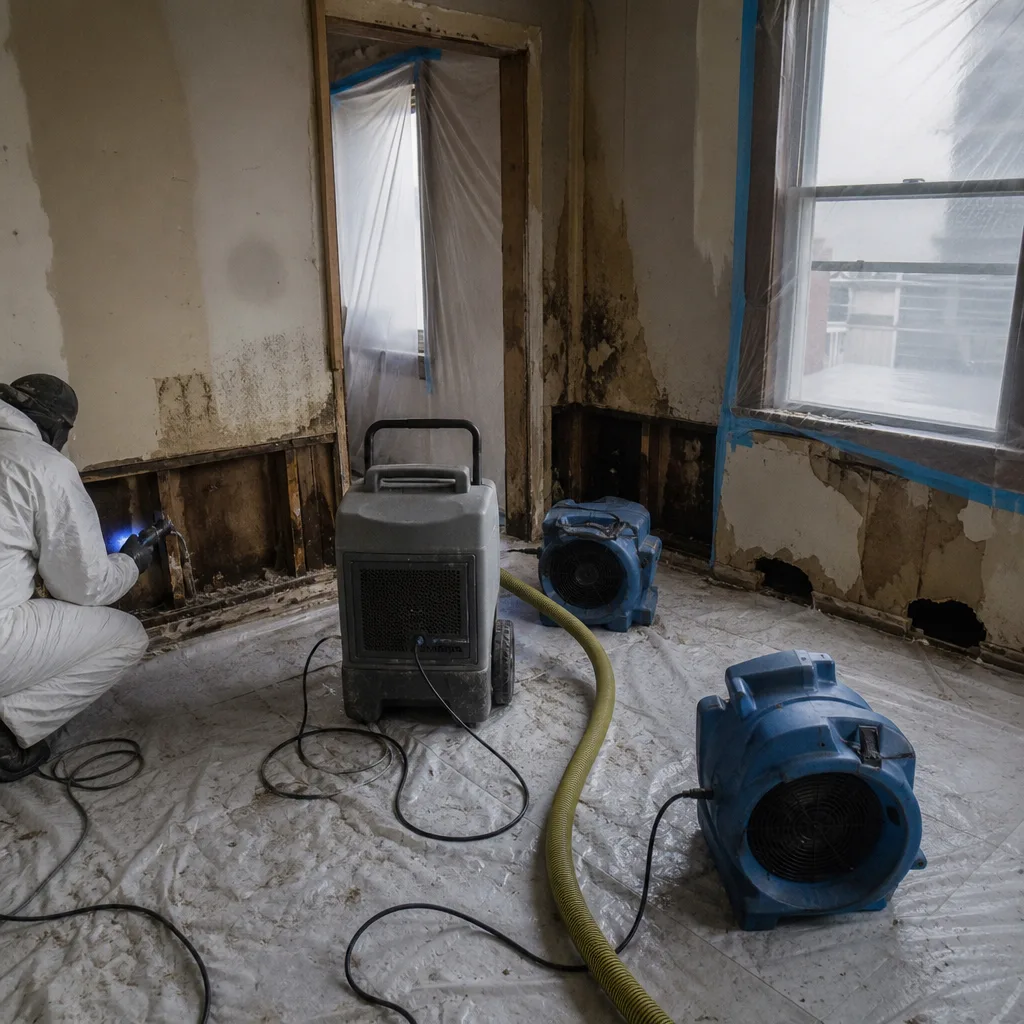 Before
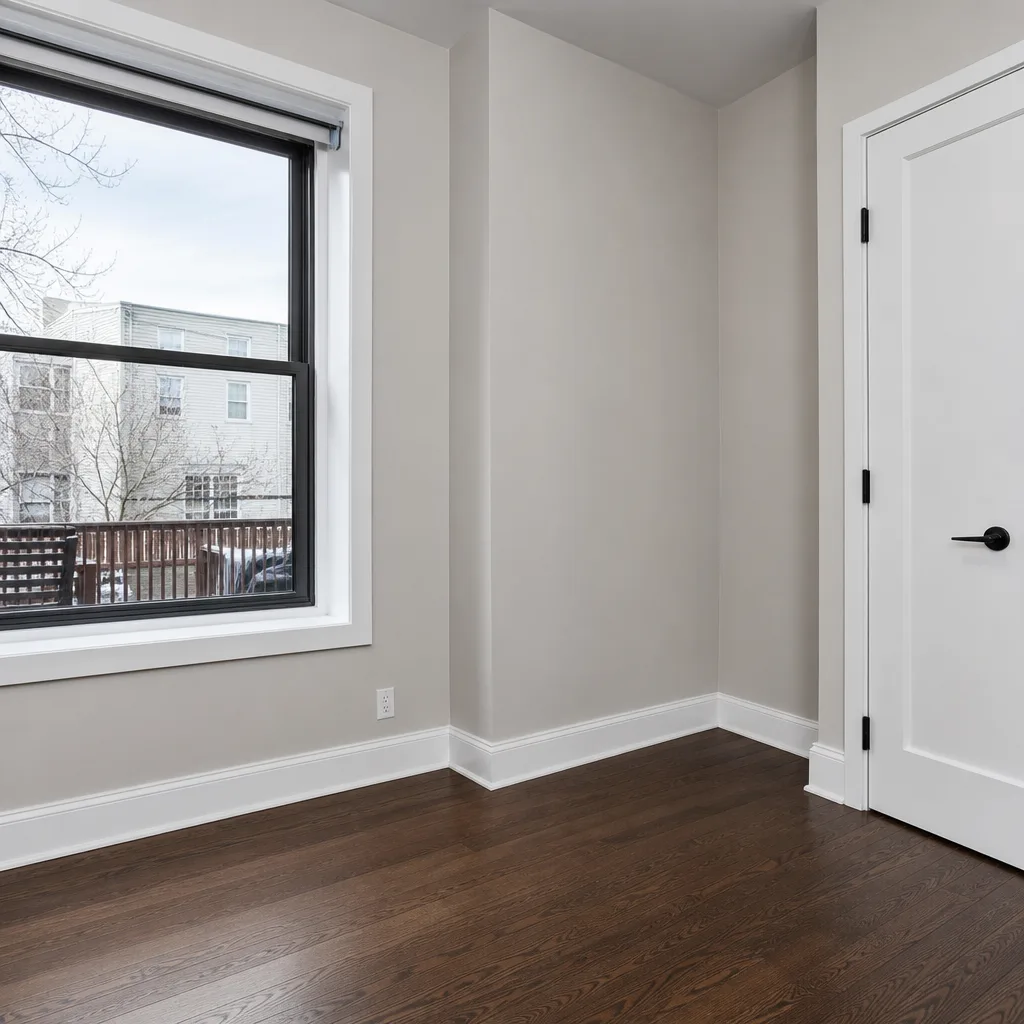 After
AfterDamage Restoration Permits, Codes & Inspections in NY: What You Need to Know
Every year in New York City, the Department of Buildings issues thousands of violations for work done without a permit. A surprising number of those violations are not for new construction or gut renovations. They are for restoration work: a rebuilt wall after a pipe burst, a re-framed floor after a fire, a mold remediation that crossed into structural territory. Homeowners in Astoria and across the five boroughs get handed a violation for work they paid a contractor to do, and they are the ones who have to answer for it. This guide walks you through what a permit actually covers in New York, when restoration work triggers one, what codes and inspections apply, and how to keep yourself out of trouble before, during, and after a restoration job. For more guides & resources, see our blog.
Quick Answer
In New York, restoration work requires a Department of Buildings permit when it goes beyond “ordinary repair” and involves structural, plumbing, electrical, or fire-protection changes. A permit is in the property owner’s name, not the contractor’s, which means the owner carries the liability if work is done without one. Mold remediation itself does not require a DOB permit, but any reconstruction done after remediation does, and New York City Local Law 55 has its own documentation rules for mold work.
Table of Contents
- Ordinary Repair vs. Permit Work: The NYC Threshold Most Contractors Don’t Explain
- The Permit Types That Actually Apply to Restoration, Not Construction
- Mold Remediation and Local Law 55: What Owner-Occupants and Landlords Each Must Document
- Certificate of Fitness: When Drying Equipment Triggers a Separate Requirement
- How to Check Whether Restoration Work Was Permitted and Inspected After the Fact
- The Paper Trail New York Adjusters Expect Alongside Permits
- Common Mistakes to Avoid
- When to Call a Professional
- Frequently Asked Questions
Ordinary Repair vs. Permit Work: The NYC Threshold Most Contractors Don’t Explain
New York City’s Building Code draws a line between “ordinary repair” and work that requires a permit, and that line is where most homeowner disputes begin. Ordinary repair means restoring something to its original condition without changing its structure, function, or fire rating. Patching drywall after a small leak is ordinary repair. Replacing a few damaged floorboards is ordinary repair. Repainting, re-grouting tile, swapping a damaged door that fits the same opening: all ordinary repair, no permit needed.
The threshold changes the moment any of these things happen:
- You remove or replace a structural member (a floor joist, a ceiling beam, a load-bearing stud)
- You alter the fire rating of a wall, ceiling, or floor assembly
- You move, add, or reconfigure plumbing lines or fixtures
- You modify or extend electrical wiring, add circuits, or replace a panel
- You change the size of a window or door opening
- You alter the building’s fire protection system, including sprinklers and alarms
Here is the part most contractors gloss over: in New York City, a permit is issued to the property owner, not the contractor. The contractor’s name can appear on the filing, but the permit runs with the property and the owner’s name is on it. If work is done without a permit and the Department of Buildings finds out, the violation is written to the owner. The Stop Work Order, if one is issued, lands on the owner’s property. The owner is also the one who must file a “Legalization” application after the fact, which can cost thousands of dollars in penalties and filing fees before any of the work is blessed.
We have seen this play out in Astoria more times than we can count. A water heater leaks upstairs, the restoration crew opens the ceiling to dry it out, and then somebody says “while we are in here, we might as well replace the damaged joist.” That single sentence turns a permit-free dry-out into permit-required structural work, and the homeowner does not find out until they try to sell the co-op or condo and the managing agent asks for the sign-off.
One more thing that surprises homeowners in Queens: the Department of Buildings is increasingly tipped off by disgruntled neighbors, and with in-person inspections back at full force, a dumpster full of framing lumber outside a brownstone is a red flag. The city does not need to catch you in the act. A violation can appear on your property record months later, and clearing it is entirely on you.
The Permit Types That Actually Apply to Restoration, Not Construction
When people hear “permit,” they usually picture the big one: the Alteration Type 1, or Alt-1, which covers major structural changes to a building. That is a construction permit, and it is rarely what a restoration job needs. But New York has a family of smaller filings that do apply to restoration, and knowing which one your job falls under changes everything about cost, timeline, and risk.
Here are the permits and filings most relevant to damage restoration work in New York City:
- Alteration Type 2 (Alt-2): This covers work that does not change the building’s use, egress, or occupancy. Most restoration jobs that need a permit are Alt-2 filings. Replacing a damaged section of a roof, re-framing a non-load-bearing partition after a fire, upgrading a bathroom branch line: Alt-2.
- Alteration Type 3 (Alt-3): This is for minor work, often filed by a licensed contractor, typically for a single trade. Replacing a boiler or water heater after a flood, repairing a gas line, replacing a limited section of sprinkler piping: Alt-3 often covers it.
- Electrical Permit: Any rewiring, panel replacement, or new circuits triggered by fire or water damage require a separate electrical permit filed by a New York City Licensed Electrician.
- Plumbing Permit: Repairing or replacing plumbing lines, waste lines, and fixtures is a separate filing by a New York City Licensed Plumber.
- Fire Suppression Permit: If fire damage touched any part of the sprinkler or standpipe system, the repairs require a separate filing and inspection by a licensed fire suppression contractor.
- Limited Alteration Application (LAA): This is the Department of Buildings filing often used for residential facade work and some types of localized structural repair. It moves through a faster review path than a full Alt-2 in many cases.
What this means in practice: a single water damage claim in an Astoria co-op could involve three separate filings from three different licensed trades, all coordinated under one main application. The restoration contractor handles the drying, demolition, and rebuild. The electrician files his own permit. The plumber files his. If the wobbly outlets were pre-existing and untouched, no electrical filing is needed. If the plumber only capped a line and didn’t alter the system, no plumbing filing is needed. A good restoration contractor knows where those boundaries sit and will tell you, in writing, which work requires a filing and which does not.
Be wary of the contractor who says “we will take care of all permits” without also giving you the permit number. Here is a simple rule: after filing, the permit number is searchable on the DOB’s BIS (Building Information System) under your property address. If the contractor cannot produce that number within a few days of pulling the permit, the permit was probably never pulled.
Mold Remediation and Local Law 55: What Owner-Occupants and Landlords Each Must Document
Mold remediation in New York City sits at a strange intersection. The DOB does not issue a permit for mold remediation itself. Removing moldy drywall, HEPA vacuuming, anti-microbial treatment: none of that requires a DOB filing. But New York City Local Law 55 of 2018 requires mold assessment and remediation work to be performed by a licensed mold assessor and a licensed mold remediation contractor, each with their own responsibilities.
Here is how it breaks down, and this is where many homeowners in Queens get confused:
- Owner-occupants of one- and two-family homes: Local Law 55 only applies to buildings with three or more dwelling units. If you own a single-family rowhouse in Astoria and find mold in the basement, you are not required to hire a licensed mold assessor. You can hire any remediation company and the work is not regulated by Local Law 55. This surprises people, and it also means the quality bar is set by whoever you hire, not by the city.
- Landlords and co-op/condo owners in buildings with 3+ units: Local Law 55 applies. The law requires a licensed mold assessor (an independent third party, not the remediation company) to assess the mold, determine the scope of work, and write a remediation plan. The work must then be performed by a New York State-licensed mold remediation contractor. After the work, the assessor must perform a post-remediation clearance inspection and the certificate of compliance must be filed with the Department of Environmental Protection.
The piece most people do not understand: the assessor and the remediation contractor must be independent. In other words, the company that tells you how much mold remediation you need cannot also be the company selling you the mold remediation. This is a consumer protection rule, and it matters in a city where some firms have been known to “find” mold that might not be there.
From our work in Astoria’s older housing stock, we consistently see mold hiding in the usual places: behind kitchen cabinets on exterior walls, under bathroom floors that were never properly ventilated, inside wall cavities where galvanized plumbing has been sweating for decades. When the mold is found because of a water damage event, the insurance picture is clearer, but when it’s found during a routine renovation, the claim gets harder. We will talk more about the adjuster paper trail later in this guide.
A crucial nuance for building owners: if the DOB or the Department of Housing Preservation and Development inspects your building and finds “visible and extensive” mold, they can issue a violation regardless of whether you think the mold is your problem or your tenant’s problem. Local Law 55 makes mold a housing maintenance issue, and violations land in the owner’s name. In buildings where tenants report mold, the owner has to act, document the work, and retain the clearance certificate. The law does not require owner-occupants of small homes to do any of this, but we recommend keeping your own documentation anyway. It will matter when you sell.
Certificate of Fitness: When Drying Equipment Triggers a Separate Requirement
Most homeowners have never heard of a Certificate of Fitness, and that is understandable. It is not a permit for construction. It is a Fire Department of New York requirement for certain types of equipment and procedures, and it becomes relevant in restoration in one specific, common scenario: high-volume drying equipment in occupied buildings.
Here is the core issue. Structural drying after a major water loss typically involves industrial dehumidifiers and high-velocity air movers running continuously for three to five days. In many New York buildings, particularly older Astoria apartments and co-ops, running this equipment means using electrical capacity in hallways, stairwells, and common areas. The FDNY has fire safety rules about how extension cords are used, how many devices can be on a circuit, and how temporary equipment may be placed in egress paths.
A Certificate of Fitness is required for specific job titles and activities: the person in charge of a fire watch, the person supervising a torch operation, the person operating a commercial cooking exhaust system. In the restoration context, the relevant Certificate of Fitness is usually the one required for supervising a temporary heating or drying operation that involves fuel-fired equipment, or for supervising the use of certain types of air-moving equipment in protected occupancies. It is most commonly triggered in New York when restoration crews bring in portable generators, temporary heaters, or large fuel-fired drying systems.
In practice, most residential water damage jobs in Queens use electric dehumidifiers and air movers and never come close to requiring a Certificate of Fitness. The requirement kicks in on large commercial jobs, and on residential jobs where a contractor proposes to use propane or diesel-fired heaters to accelerate drying during a cold snap. If a contractor tells you they need to bring a temporary boiler or generator into your building for restoration work, that is the moment to ask about Certificate of Fitness compliance. The FDNY does not issue these certificates to just anyone: the operator must complete training and pass an exam, and the certificate must be posted at the job site.
What does this mean for a homeowner in Astoria? It means you should ask your restoration contractor one simple question before equipment arrives: “Does any of your drying equipment require FDNY oversight?” A legitimate contractor will give you a straight answer. If you get a blank stare, that is your signal to keep looking. At Wade’s Restoration home, we have run drying jobs in every kind of building Astoria has to offer, from single-family attached homes to six-story prewar co-ops, and we will tell you upfront when a building’s electrical capacity or FDNY rules change the equipment plan.
How to Check Whether Restoration Work Was Permitted and Inspected After the Fact
This section is less about DIY vs Professional Damage Restoration: The Astoria Homeowner’s Decision Guide and more about protecting yourself when you buy a home that had prior water, fire, or mold damage. Every year, buyers in Queens close on homes that had restoration work done years earlier, with no idea whether that work was ever permitted or inspected. Then the buyer goes to renovate, finds undocumented work, and inherits the liability.
Here is a step-by-step process for checking the permit and inspection history of any property in New York City:
- Look up the property on the DOB’s BIS (Building Information System). Go to the DOB website, enter the address, and pull the full property history. You will see every permit application, every inspection result, and every violation ever filed. This is free and public.
- Cross-reference with the DOB NOW system. Newer filings (roughly 2016 onward) live in DOB NOW, the online filing portal. Check both systems, because older and newer records do not always appear together.
- Look for final inspection sign-offs. A permit that was issued but never signed off is a red flag. In DOB NOW, look for the “Permit Sign-off” or “Letter of Completion” for each job. An open permit means the city considers the work incomplete.
- Check for open violations and Stop Work Orders. If a previous restoration job triggered a complaint or an inspection found unpermitted work, that violation stays on the property record until it is resolved, even if the original owner is long gone.
- Pull the property’s Department of Environmental Protection records for Local Law 55 compliance. If the building had mold remediation done under Local Law 55, the clearance certificate should be on file with DEP. Gaps in that record are an issue.
We have helped Astoria homeowners sort through this after the fact, and the most common surprise is a restoration job that was done under an emergency repair provision. New York does allow certain emergency work to proceed before a permit is issued (gas leaks, burst pipes, structural instability), but the permit still has to be filed after the fact. If the emergency work is done and nobody files the paperwork, the work is technically unpermitted.
One more check worth doing: ask the seller for the closing documents from the original restoration. Insurance claims, contractor invoices, and scope of work documents all help establish what was done and when. If the seller cannot produce anything and the DOB record is empty, you are buying a question mark. At minimum, get a independent inspection before closing. The cost is small compared to the alternative.
The Paper Trail New York Adjusters Expect Alongside Permits
Insurance adjusters in New York are a specific breed. They see thousands of water and fire claims a year, they know the cost of everything in this market, and they are trained to look for reasons to reduce a payout. One of the things they look for, and one of the things homeowners rarely think about, is the permit paper trail.
Here is what a New York adjuster expects to see in a well-documented restoration claim, and how gaps in that paper trail affect settlement:
- The emergency service records. Time-stamped moisture readings, drying logs, and photo documentation from day one. If a crew shows up, dries the place, and leaves without daily readings, the adjuster will challenge the scope. We hand every homeowner a complete daily moisture log at the end of the job, because we know from experience that adjusters in Queens respect documentation.
- The permit filings. If the restoration work required a DOB permit and it was not filed, the adjuster may question whether the work was done to code, and the carrier may deny the reconstruction portion of the claim. This is the single most common gap we see. The homeowner’s contractor said “we handle it,” and the handle part never happened.
- The contractor’s license and insurance certificates. Adjusters expect to see a New York City-licensed contractor with workers’ compensation and liability insurance. If the owner hired an unlicensed side-job crew, the claim payout is at risk from the first phone call.
- The post-remediation clearance documentation. On mold claims, the adjuster will ask for the assessor’s post-remediation report, and in buildings subject to Local Law 55, the DEP filing. If that certification does not exist, the carrier may classify the mold as un-remediated and the claim stalls.
- The final sign-off. When the work is done, the adjuster wants to see the DOB sign-off or Letter of Completion for any permitted scope. Without it, the file stays open, and an open file is an unpaid claim.
From our experience handling Water Damage Restoration in Astoria claims, the fastest path to a settled claim is a file that reads like a book: every reading, every photo, every permit number, every inspection sign-off. The slowest path is a file full of verbal promises and no paper. If you are dealing with an adjuster now, start building the paper trail today. Ask your contractor for every reading, every filing number, and every inspection result. If they cannot produce it, that is a problem you need to solve before the claim deadline passes.
Common Mistakes to Avoid
- Letting the contractor “handle the permits” without you seeing a permit number. The permit is in your name. If the contractor never files it, you own the violation. Ask for the permit number on day one, not day thirty.
- Treating every restoration job as a permit-free ordinary repair. Drying and cleanup are often ordinary repair, but the moment structural wood comes out, the threshold is crossed. Replacement of a load-bearing joist is not ordinary repair, and it never will be.
- Confusing mold remediation with mold inspection under Local Law 55. In buildings with three or more units, the firm that assesses the mold cannot be the firm that remediates it. Hiring one company to do both is a violation, and the clearance certificate will not hold up.
- Buying a home without running the DOB property history. Open permits and unresolved violations travel with the property, not with the prior owner. This is a forty-five-minute check that saves six-figure surprises.
- Assuming the insurance carrier will not check permits. New York adjusters check permits, and a missing permit on reconstruction work is one of the fastest ways to get a claim denied or reduced.
- Ignoring the Certificate of Fitness question when temporary heating equipment is proposed. Any contractor proposing propane or diesel-fired drying equipment in a New York building needs the right FDNY credentials. Ask before the equipment arrives, not after.
- Leaving the post-remediation clearance to the contractor’s word. Get the certificate. Get the filing number. Confirm it on the DEP system. A verbal “all clear” is not documentation.
When to Call a Professional
You should call a licensed restoration contractor the moment the damage touches anything structural, electrical, or plumbing, and ideally before the demolition begins. If water has been sitting for more than 24 hours, the clock is running on mold, and the faster the drying starts, the less reconstruction you will need. If fire damage touched the framing or the electrical system, you need a contractor and a licensed electrician in the same room. If you have any question about whether work requires a permit, ask the contractor to show you the filing, not just tell you about it. For help choosing the right professional, see How to Hire a Damage Restoration Contractor in Astoria: A Step-by-Step Guide.
Wade’s Restoration offers free estimates in Astoria - call (363) 208-1526. We will tell you honestly whether your job needs a filing, what it will cost, and what the paper trail should look like. No charge for the second opinion if you already have a written estimate.
Frequently Asked Questions
No permit is needed for water extraction, drying, and cleaning, but any repair that involves structural framing, plumbing changes, electrical work, or fire-rated assemblies requires a DOB permit. The permit is filed in the property owner’s name.
Local Law 55 is New York City’s mold law, and it only applies to buildings with three or more dwelling units. If you own a one- or two-family home and live there, the law does not apply to you, but proper documentation still matters for insurance and resale.
Yes. Search the property address on the DOB’s BIS and DOB NOW systems. Every permit application, inspection, violation, and sign-off is public record. If nothing appears for the address around the time of your restoration job, no permit was ever filed.
In most New York homeowners policies, permit and inspection costs are covered as part of the restoration claim when they are directly related to the covered damage. The adjuster will expect to see the permit filings as part of the claim file. Call (363) 208-1526 for help with the documentation.
The Department of Buildings can issue a violation, impose penalties, and require the owner to file a Legalization application. The owner carries this liability, not the contractor, even if the contractor’s name was on the invoice. Call (363) 208-1526 if you need help sorting out a violation.
No. Mold remediation itself is not a DOB-permitted activity. However, any reconstruction needed after the mold is removed, such as replacing framing or drywall, requires the appropriate permit. Local Law 55 licensing requirements may also apply depending on your building type.
The Bottom Line
The permit rules for damage restoration in New York are not indecipherable, but they are unforgiving. The permit is in your name. The violation is in your name. The open permit that kills a future sale is on your property record. The single best thing you can do is ask for the permit number before work starts, check the public record after it ends, and keep your own paper trail of every moisture reading, every filing, and every inspection. Most of this costs nothing. All of it saves you from the worst-case scenario: paying twice, once for the work and once for the legalization. For straight answers in Astoria, call Wade’s Restoration at (363) 208-1526.
Written by Wade Ferris, Owner at Wade’s Restoration, serving Astoria since 2007.