
Quick Summary
Commercial water damage can rapidly spread across multi-tenant assemblies, concrete subfloors, and complex utility chases, causing severe structural loss and costly operational downtime if not quickly contained. Partnering with Wade's Restoration ensures rapid 24/7 commercial water extraction, high-capacity structural drying, and comprehensive documentation for seamless insurance claim processing. Facility managers can master emergency containment protocols and call Wade's Restoration 24/7 for immediate rapid-response dispatch and a free on-site visual inspection.
Commercial Water Damage Restoration: Fast Emergency Recovery
When an active supply line ruptures or storm water breaches a commercial building, the clock starts immediately. In a commercial setting, water can migrate through shared utility chases, concrete floor slabs, drop ceilings, and plenum spaces. Studies tracking commercial flood recovery show that up to 60% of businesses hit by water damage face significant operational downtime, even when the flooding originates in an adjacent unit rather than their own space. Fast, professional commercial water damage restoration helps protect physical assets, mitigate structural damage, and reduce lost operational time.[4]
Mitigation crews focus on rapid site stabilization. Emergency response teams typically aim to arrive within 1 to 4 hours to begin water extraction, establish containment, and assess moisture spread. For facilities throughout Astoria, Queens, and the greater New York City area, Wade’s Restoration provides 24/7 commercial water extraction, structural drying, and cleanup services to assist businesses in resuming operations.[3]
Emergency Commercial Water Damage Restoration: Immediate Response Protocol
Commercial mitigation typically begins with high-volume water extraction and environmental stabilization. Commercial properties often feature complex infrastructure, such as multi-zone HVAC systems, fire suppression risers, elevator shafts, and shared utility conduits. In general restoration practice, prolonged exposure to standing water or elevated humidity can allow moisture to penetrate building assemblies, increasing the potential for material degradation and microbial growth.
First Critical Actions for Facility Managers
In multi-unit properties and commercial facilities, uncontained moisture spread can complicate recovery efforts. Facility loss studies indicate an average business interruption of 15.05 days for flooded firms. Facility managers can take standard preliminary steps before restoration personnel arrive:[1]
- Isolate the source: Shut down main or localized water supply valves where accessible.
- Manage electrical safety: De-energize affected circuits in flooded areas from the main panel if safe to do so.
- Protect sensitive inventory and equipment: Elevate electronics, critical equipment, and inventory away from wet floors.
- Establish containment: Close doors to unaffected zones and adjust air-handling units as appropriate to limit moisture circulation.
Key Emergency Response Steps
- Perform high-volume extraction: Remove standing water using commercial extraction equipment.
- Conduct moisture mapping: Evaluate moisture levels across structural components and adjacent areas using standard moisture meters.
- Implement structural drying: Deploy commercial dehumidification equipment and air movers according to standard industry drying practices.
- Maintain documentation: Keep drying logs and visual records to assist with property and business interruption documentation.
Commercial vs Residential Water Mitigation: Multi-Tenant Considerations
Need commercial water damage restoration?
We’re available now - call for a fast, free estimate.
Commercial building water-loss events can produce much higher average losses than residential multi-family events. Managing water intrusion in commercial properties often involves shared structural elements, multi-tenant layouts, and operational downtime.
Moisture Management in Multi-Tenant Buildings
In commercial buildings and multi-tenant properties, shared plumbing chases, partition assemblies, and ceiling plenums can serve as pathways for moisture migration. Restoration industry practices emphasize containment and controlled airflow to help prevent moisture from affecting neighboring tenant spaces.
Because commercial building water-loss events can produce much higher average losses than residential multi-family events, mitigation protocols commonly rely on containment zones, commercial-grade dehumidification, and routine moisture monitoring.
Mitigation Methods Overview
| Feature | Standard Residential Drying | Uncontained Commercial Air Drying | Contained Commercial Drying Practice |
|---|---|---|---|
| Party-Wall Management | Individual structure focus | May risk moisture spread to adjacent units | Managed through containment practices |
| Dehumidification Approach | Standard portable units | Standard commercial units | High-capacity commercial dehumidifiers |
| Moisture Documentation | Basic moisture checks | Periodic spot checks | Systematic moisture logs and visual mapping |
| Multi-Tenant Exposure | Limited | Potential spread to neighboring spaces | Controlled through targeted containment |
Restoring Structural Components: Ceilings, Subfloors, and HVAC Systems
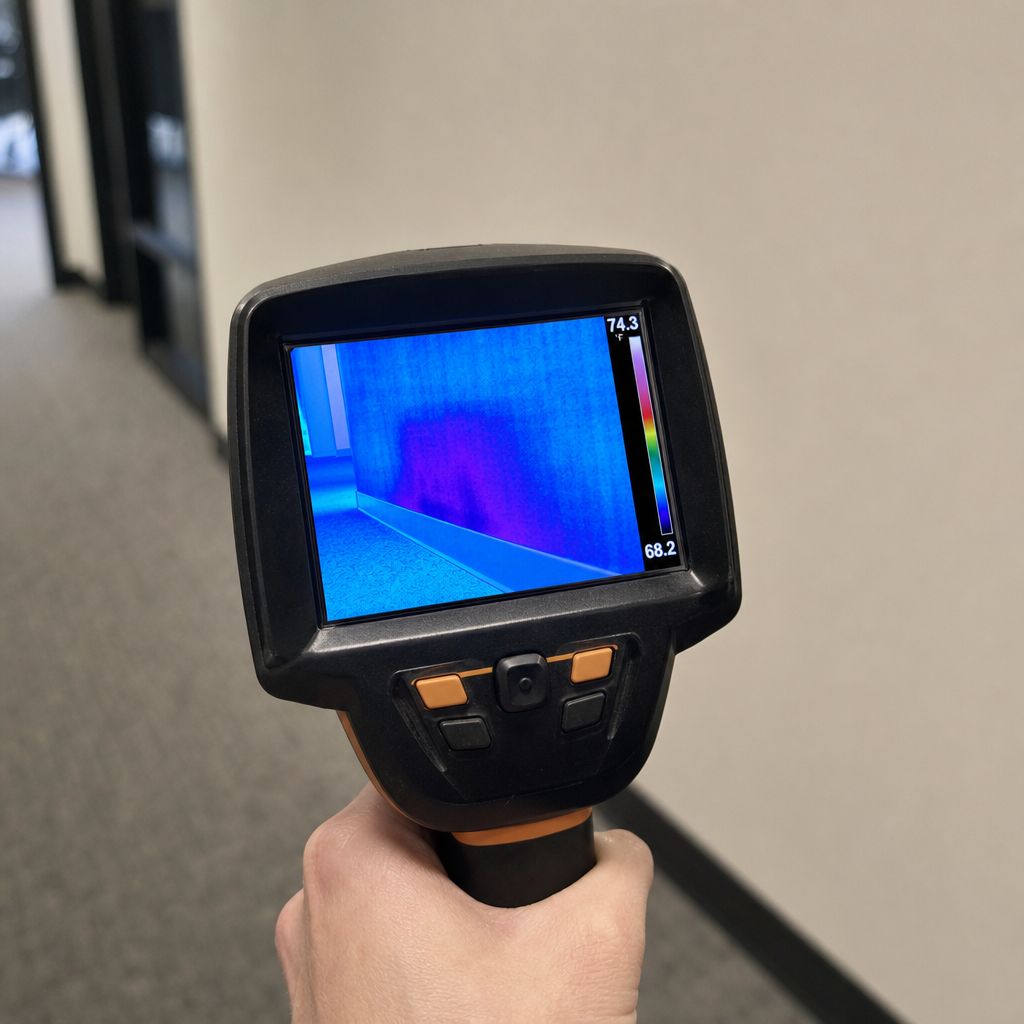
Commercial recovery involves identifying moisture within building assemblies to determine whether materials can be dried in place or require removal under standard restoration guidelines.
Drywall, Plaster, and Suspended Ceilings
Porous ceiling tiles that absorb water are typically removed to inspect overhead areas and prevent safety hazards. For wall assemblies, standard industry techniques may include removing baseboards and providing ventilation access to facilitate drying within wall cavities.
Subfloors, Concrete Slabs, and Structural Framing
Commercial floor assemblies, including poured concrete and heavy timber framing, present distinct drying considerations. Concrete can retain significant moisture, which may impact floor coverings if unaddressed. Restoration contractors like Wade’s Restoration generally use specialized commercial dehumidification and high-volume air movement to dry structural framing and subfloors toward standard moisture targets.
HVAC Systems and Air Quality Management
When moisture affects ductwork or air-handling systems, mitigation procedures generally include isolating affected sections, evaluating insulation materials, and utilizing HEPA air filtration equipment to maintain indoor air quality during drying.
What Does Commercial Water Damage Restoration Cost?
Need commercial water damage restoration?
We’re available now - call for a fast, free estimate.
Commercial restoration projects range in cost based on square footage, the source and category of water, structural complexity, and project duration. Commercial projects commonly fall within these general cost ranges:
| Project Scale and Loss Type | Estimated Cost Range | Key Scope Factors |
|---|---|---|
| Small to Moderate Commercial Loss | $5,000 – $50,000 | Single-floor offices, localized pipe breaks, clean water, minor material removal. |
| Large Facility or Multi-Tenant Loss | $50,000 – $200,000+ | Multi-floor leaks, industrial facilities, grey/black water, extensive drywall/subfloor rebuilds. |
Key Factors That Influence Commercial Restoration Budgets
- Water Category: Clean water losses generally require less labor and material disposal than Category 2 or Category 3 water losses (such as sewage backups or storm-related water), which require specialized sanitization and demolition protocols.
- Drying Equipment and Power Requirements: Large losses often require higher-capacity dehumidification systems, temporary power distribution, and extended operational run times.
- Structural Reconstruction: Costs vary based on the extent of repairs needed for flooring, wall assemblies, structural framing, or mechanical systems.
- Scheduling and Labor: Off-hours work or phased schedules designed to accommodate business operations can influence overall project costs.
Commercial Property Insurance and Documentation Considerations
Documenting a commercial water loss typically involves recording physical damage and tracking factors associated with operational downtime. Detailed mitigation records assist insurance adjusters in evaluating claim scopes.
Tracking Restoration and Drying Data
Restoration industry standards emphasize documenting on-site environmental conditions and material moisture levels throughout the drying process, which may include:
- Atmospheric readings: Monitoring temperature and relative humidity within the drying area alongside baseline reference measurements.
- Moisture readings: Logging periodic moisture measurements from affected framing, subflooring, and wall materials.
- Visual documentation: Using standard photography and thermal imaging to document the boundaries of moisture impact.
Coordinating with Insurance Representatives
Working with an experienced contractor helps streamline the documentation process. Wade’s Restoration assists facility owners by providing standard estimates, daily drying records, and comprehensive photographic logs to support insurance claim reviews.
Frequently Asked Questions About Commercial Water Damage Restoration
How much does commercial water damage restoration cost?
Small to moderate commercial projects typically range between $5,000 and $50,000. Large-scale losses, such as multi-story office floods, industrial facility damage, or severe water intrusions, can exceed $50,000 to $200,000+ depending on the structural repairs and equipment required.[5]
How quickly can a commercial water restoration crew respond to an emergency?
Emergency restoration teams typically aim to arrive on site within 1 to 4 hours. Wade’s Restoration maintains 24/7 rapid-response teams across Astoria and NYC commercial districts to begin containment and water extraction during the initial visit.
What is the difference between commercial and residential water damage mitigation?
Commercial building water-loss events can produce much higher average losses than residential multi-family events. Commercial mitigation often involves larger facilities, complex mechanical layouts, and multi-tenant structural considerations that require industrial drying equipment and systematic documentation.
Does commercial property insurance cover water damage restoration?
Many commercial property policies provide coverage for sudden and accidental water losses, such as burst pipes or localized plumbing failures. Coverage details depend on specific policy terms, endorsements, and whether separate flood insurance is in place.
How long does commercial water extraction and drying take for an office building?
In general industry practice, standard structural drying is commonly estimated at 3 to 5 days under typical dehumidification protocols, though dense building materials or saturated subfloors may require additional time depending on structural conditions.
What immediate steps should a business take after a major water leak or flood?
Where safe to do so, shut off the main water supply valve, turn off electricity to flooded areas at the breaker panel, document standing water and affected items with photos or video, and contact a professional commercial restoration contractor like Wade’s Restoration to begin extraction.[2]
Need commercial water damage restoration?
We’re available now - call for a fast, free estimate.
Sources
- Forensic disaster analysis of flood damage at commercial and industrial firms – academia.edu (2014)
- Deciphering the drivers of direct and indirect damages to companies … – nhess.copernicus.org (2021)
- Using Disaster Surveys to Model Business Interruption | Natural Hazards Review | Vol 25, No 1 – ascelibrary.org
- A methodology for estimating business interruption loss caus – ideas.repec.org
- Blank – egusphere.copernicus.org
Related reading: Same Day Water Damage Mitigation Astoria – Call Now-10% Off – Same-Day Service – Free Estimate
Related reading: Commercial Water Mitigation Astoria – Call Now-10% Off – Same-Day Service – Free Estimate
Frequently Asked Questions
Can commercial business operations continue while water damage restoration is underway?
Yes, mitigation teams can establish isolated containment zones, negative air pressure, and temporary power to keep unaffected departments operational. Wade's Restoration offers flexible off-hours scheduling and phased drying plans to help facility managers minimize operational downtime.
How do restoration professionals extract moisture trapped inside commercial concrete floor slabs?
Because poured concrete retains deep moisture, restoration teams utilize high-capacity commercial dehumidification systems and specialized air movers to draw out moisture without compromising slab integrity. Wade's Restoration monitors the process using precision moisture mapping to ensure subfloors reach standard target levels before new flooring is installed.
What documentation is required to support a commercial business interruption insurance claim?
Insurers require atmospheric logs, daily structural moisture readings, thermal imaging records, and itemized scope estimates to validate business interruption and property loss claims. Wade's Restoration assists facility owners by maintaining comprehensive digital drying logs and photographic evidence to streamline insurance claim reviews.
About the author
 |
Sarah Miller Sarah Miller is a certified water damage restoration specialist with over eight years of experience helping property owners navigate the complexities of mitigation and recovery. She holds an associate degree in Construction Management from New York City College of Technology and has extensive knowledge of local building codes and insurance claim procedures. Through her writing, Sarah provides actionable advice to help property managers and homeowners in the Astoria area understand the true costs and critical steps involved in emergency water damage restoration. |
Water damage, flood, or mold emergency?
We’re available now - call for a fast, free estimate.
Call Now - Free Estimate