
Quick Summary
When plumbing lines rupture, prompt burst pipe water damage restoration is essential to halt active flooding, prevent mold growth within 24 to 48 hours, and protect structural building assemblies. Wade's Restoration provides emergency water mitigation by utilizing high-volume water extraction, advanced thermal moisture mapping, and comprehensive structural drying across all affected materials. Readers will learn the critical first-hour safety protocols and how calling Wade's Restoration 24/7 for immediate water extraction and a free on-site assessment accelerates property recovery and insurance claims.
Burst Pipe Water Damage Restoration: Emergency Response and Structural Drying Guide
When a pressurized plumbing line ruptures, water pours into building assemblies quickly. Prompt action can limit additional damage, ruined finishes, and mold risk.
According to the American Housing Survey, the survey measures water leakage during the prior 12 months and distinguishes leakage from inside the home from leakage entering from outside. The Insurance Institute for Business & Home Safety (IBHS) notes that interior water damage from issues such as leaky pipes and plumbing connections is a significant cause of non-catastrophe insured losses each year. IBHS data shows that frozen pipes and leaking roofs are among the most common causes of cold-weather interior water claims.[1]
As specialists at Wade’s Restoration emphasize, professional burst pipe water damage restoration requires water extraction, moisture tracking, and structural drying designed for affected materials.
Immediate Action Steps: What to Do in the First 60 Minutes
If you are facing active flooding from a broken supply line, taking immediate steps protects your property and minimizes safety risks before technicians arrive on site.
- Shut Off the Main Water Supply: Locate your main gate or ball valve and turn it clockwise until fully closed. In multi-family buildings or row houses, know where the sub-meters and isolation valves sit for each line.
- Kill Electrical Power: If standing water reaches electrical outlets, baseboard heaters, or appliances, switch off the associated circuit breakers at the main panel. Never walk through standing water to reach an electrical box; if access is unsafe, contact your utility provider immediately.
- Call for Emergency Water Mitigation: Contact a certified restoration company such as Wade’s Restoration. Prompt action can limit additional damage and help prevent water from migrating deeply into adjacent areas and structural framing.
- Elevate and Protect Valuables: Lift furniture legs onto aluminum foil or plastic blocks. Move electronics, area rugs, and porous belongings out of the wet zone to avoid permanent staining and moisture absorption.
- Document the Initial Damage: Take clear photographs and video of the standing water, the ruptured pipe, and all visibly affected items before moving anything out of the area. This initial record supports your insurance claim.
Structural Drying Considerations
When water enters wall cavities and porous structural materials, effective burst pipe water damage restoration requires extracting hidden moisture from within internal assemblies. Thorough drying requires addressing moisture within internal assemblies and building materials.
Emergency Water Extraction and Mitigation Protocol
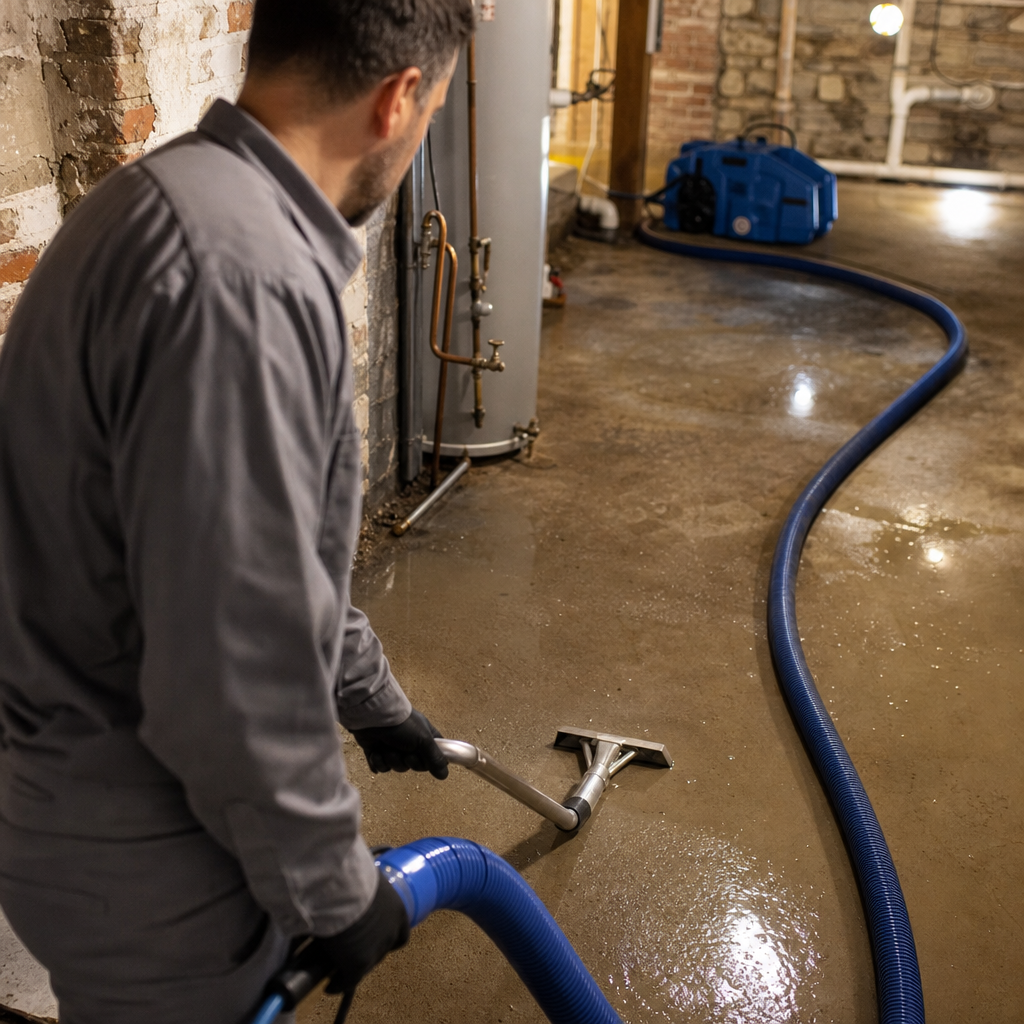
Professional water mitigation follows a systematic sequence to stop active losses and prepare the structure for drying.
1. High-Volume Water Extraction
Standing water must be removed physically before evaporation can work. Submersible pumps, extraction units, and wet vacuums pull water from flooring and subfloors.
2. Moisture Mapping
Water often travels beyond visible puddles. Technicians, including those at Wade’s Restoration, use moisture meters and thermal imaging to track moisture migration pathways behind walls, inside ceilings, and beneath flooring.
3. Controlled Removal of Non-Salvageable Materials
Porous materials exposed to contaminated water or saturated insulation that cannot dry in place are carefully removed to expose wet framing and accelerate drying.
Drying Walls, Ceilings, and Flooring
Different materials release moisture at different rates during burst pipe water damage restoration, requiring specialized air movers and dehumidifiers for flooring, drywall, and structural framing.
Mold Prevention After a Sudden Pipe Rupture
Need burst pipe water damage restoration?
We’re available now - call for a fast, free estimate.
The provided research supports drying or removing soaked carpets, padding, and upholstery within 24 to 48 hours to help reduce mold risk.
Handling Frozen Pipe Breaks in Winter
IBHS data shows that frozen pipes and leaking roofs are among the most common causes of cold-weather interior water claims. When exterior temperatures drop below freezing, uninsulated plumbing chases, crawl spaces, and exterior-facing walls lose heat rapidly. As water freezes within the pipe, it expands, increasing internal hydrostatic pressure until the pipe wall splits.[3]
When ice plugs melt during a thaw, pressurized water escapes into wall cavities and ceilings. According to the team at Wade’s Restoration, recovering from frozen pipe breaks requires leak isolation, moisture extraction, and thorough drying of wet framing.[2]
What Does Burst Pipe Water Damage Restoration Cost?
No reliable general price is established by the supplied research. Costs vary with water volume, affected materials, contamination, structural damage, and required repairs.
Navigating the Insurance Claim Process
Standard homeowners insurance generally covers resulting damage from a burst pipe, subject to policy terms and circumstances. Exclusions and commercial coverage require policy-specific review.[4]
Frequently Asked Questions
What should I do immediately after a pipe bursts?
Shut off your main water valve right away, switch off electricity to flooded rooms at the breaker panel if safe, and contact a professional water mitigation service. Protect furniture and belongings by moving them out of standing water, and document the damage with photos and video before cleanup begins.
Does property insurance cover burst pipe water damage restoration?
Standard homeowners insurance generally covers resulting damage from a burst pipe, subject to policy terms and circumstances. Exclusions and commercial coverage require policy-specific review.
How long does the structural drying process take?
Overall drying time varies with damage extent and affected materials, while certain soaked materials should be dried or removed within 24 to 48 hours.
Can mold grow after a burst pipe, and how fast does it spread?
The provided research supports drying or removing soaked carpets, padding, and upholstery within 24 to 48 hours to help reduce mold risk.
How do professionals dry walls and floors after a pipe break?
Professionals, such as the specialists at Wade’s Restoration, remove standing water and use drying equipment to address moisture across affected walls, floors, and structural materials.
Need burst pipe water damage restoration?
We’re available now - call for a fast, free estimate.
Sources
- 2023 AHS Infographic: Housing Quality – census.gov (2023)
- AHS-Housing Qualities-FINAL_pdf – census.gov (2019)
- Cityscape: A Journal of Policy Development and Research – Regulatory Reform and Affordable Housing – Data Shop: Musty Smells, Mold, and Moisture in the U.S. Housing Stock: Results from Two National Surveys – huduser.gov (2015)
- IBHS Winter Weather Ready guide provides easy-to-do … – ibhs.org
Frequently Asked Questions
How does Wade's Restoration handle insurance claims for burst pipe water damage?
Wade's Restoration works directly with your insurance provider, documenting all thermal moisture mapping, loss inventories, and structural drying logs to accelerate claim approvals. Our specialists manage the claim paperwork alongside you from the free on-site assessment through complete reconstruction.
What happens during a 24/7 emergency water extraction dispatch?
When you call Wade's Restoration for immediate emergency assistance, certified technicians arrive quickly to halt water migration using high-volume submersible pumps and wet extraction units. The crew performs instant moisture mapping behind walls and ceilings before deploying commercial dehumidifiers to safeguard structural assemblies.
Does burst pipe water damage restoration include full structural rebuilds?
Yes, complete burst pipe water damage restoration extends beyond water mitigation to full structural repair and finish replacement. Wade's Restoration manages the entire transition, replacing damaged drywall, insulation, and flooring to return your property to its original pre-loss condition.
About the author
 |
Sarah Miller Sarah Miller is a certified water damage restoration specialist with over eight years of experience helping property owners navigate the complexities of mitigation and recovery. She holds an associate degree in Construction Management from New York City College of Technology and has extensive knowledge of local building codes and insurance claim procedures. Through her writing, Sarah provides actionable advice to help property managers and homeowners in the Astoria area understand the true costs and critical steps involved in emergency water damage restoration. |
Water damage, flood, or mold emergency?
We’re available now - call for a fast, free estimate.
Call Now - Free Estimate