
Quick Summary
Basement flood cleanup cost typically ranges from $2,000 to $7,000 for standard extraction, but delayed mitigation or black water contamination can escalate expenses beyond $15,000 due to structural framing damage and secondary mold growth. Wade's Restoration delivers rapid 45-minute emergency mitigation and specialized structural drying to stabilize concrete, drywall, and subfloors before invasive material replacement is required. Property owners can schedule a free visual inspection with Wade's Restoration to receive an itemized, carrier-ready estimate that simplifies insurance claims and prevents inflated out-of-pocket restoration expenses.
Basement Flood Cleanup Cost: Act Quickly to Stop Damage
Porous concrete, structural framing, and interior finishes start soaking up water the minute a pipe bursts or storm runoff breaches a foundation. According to specialists like Wade’s Restoration, standard basement flood cleanup typically ranges from $2,000 to $7,000, with a national average of around $4,000 for basic extraction and structural drying. However, general industry estimates suggest that figures can climb past $10,000 to $15,000 if you are dealing with sewage, heavily finished living spaces, or structural moisture hidden behind walls.[1]
Every hour water sits, it travels deeper into subfloors, framing, and masonry. Fast extraction and controlled dehumidification stabilize the structure and help prevent secondary mold growth before repair bills escalate. See also Water Damage Restoration Cost – Call Now-10% Off – Same-Day Service – Free Estimate.
Basement Flood Cleanup Cost: General Breakdown and What to Expect
Restoration pricing reflects the specific labor, equipment, and disposal protocols needed to return a property to a dry, sanitary standard. Below is a look at how general estimates break down across typical scenarios:
- Unfinished Basement (Clean Water): Estimated around $1,500 to $3,500. Covers pumping out standing water, surface cleaning, and running industrial air movers and commercial dehumidifiers for several days.
- Finished Basement (Clean to Gray Water): Estimated around $3,500 to $8,500. Involves water extraction, removing saturated carpeting, pad, and baseboards, making flood cuts to wet drywall, and drying the underlying wall studs.
- Black Water or Sewage Backup: General estimates often range from $6,000 to $15,000 or more. Requires specialized containment, personal protective equipment (PPE), deep sanitization, removal of contaminated porous materials, and regulated disposal.
- Complete Reconstruction (Post-Drying): Broad estimates typically span $5,000 to $20,000 or more, depending on materials. Involves installing new insulation, hung drywall, trim, flooring, and paint once structural drying goals are certified.
What Does Basement Flood Cleanup Cost?
Need basement flood cleanup cost?
We’re available now - call for a fast, free estimate.
While square footage gives contractors a starting baseline, overall pricing is dictated by the volume of water, the rate of absorption, and the cleanliness of the water source. Water damage is generally categorized into three classes, each requiring different safety precautions, containment, and labor hours.
Pricing Factors
Several variables determine where your cleanup lands on the pricing scale:
- Depth and Volume: Pumping two inches of standing water requires different equipment than clearing three feet of submerged space.
- Material Porosity: Poured concrete slab dries relatively fast; hardwood, carpet pad, drywall, and plaster hold water deep within their pores and demand extended drying times or total removal.
- Accessibility: Tight crawl spaces, sub-basements, or shared utility areas complicate equipment placement and exhaust routing, increasing labor hours.
Water Categories and Impact on Cleanup Pricing
The origin of the water dictates the sanitization protocols technicians must follow:
- Category 1 (Clean Water): Sourced from broken supply pipes, failed water heater tanks, or rainwater entering directly. Because it poses minimal initial biological threat, Category 1 is typically the least expensive to remediate. As technicians at Wade’s Restoration note, structural framing and subfloors can be dried in place without tearing out building materials if addressed quickly.
- Category 2 (Gray Water): Originates from sump pump overflows, washing machine discharge, or dishwasher lines. This water contains chemical or biological residues that can cause illness. Porous items such as carpet pads must generally be discarded, and hard surfaces require antimicrobial treatments.
- Category 3 (Black Water): Comes from sewer mains, street runoff, or river flooding. This category carries dangerous pathogens, bacteria, and toxic waste. Porous materials it touches are typically cut out, bagged, and disposed of as contaminated waste. Labor and protective gear requirements make this the most expensive cleanup scenario.
Key Structural Cost Drivers: Subfloor, Joists, and Pre-War Walls
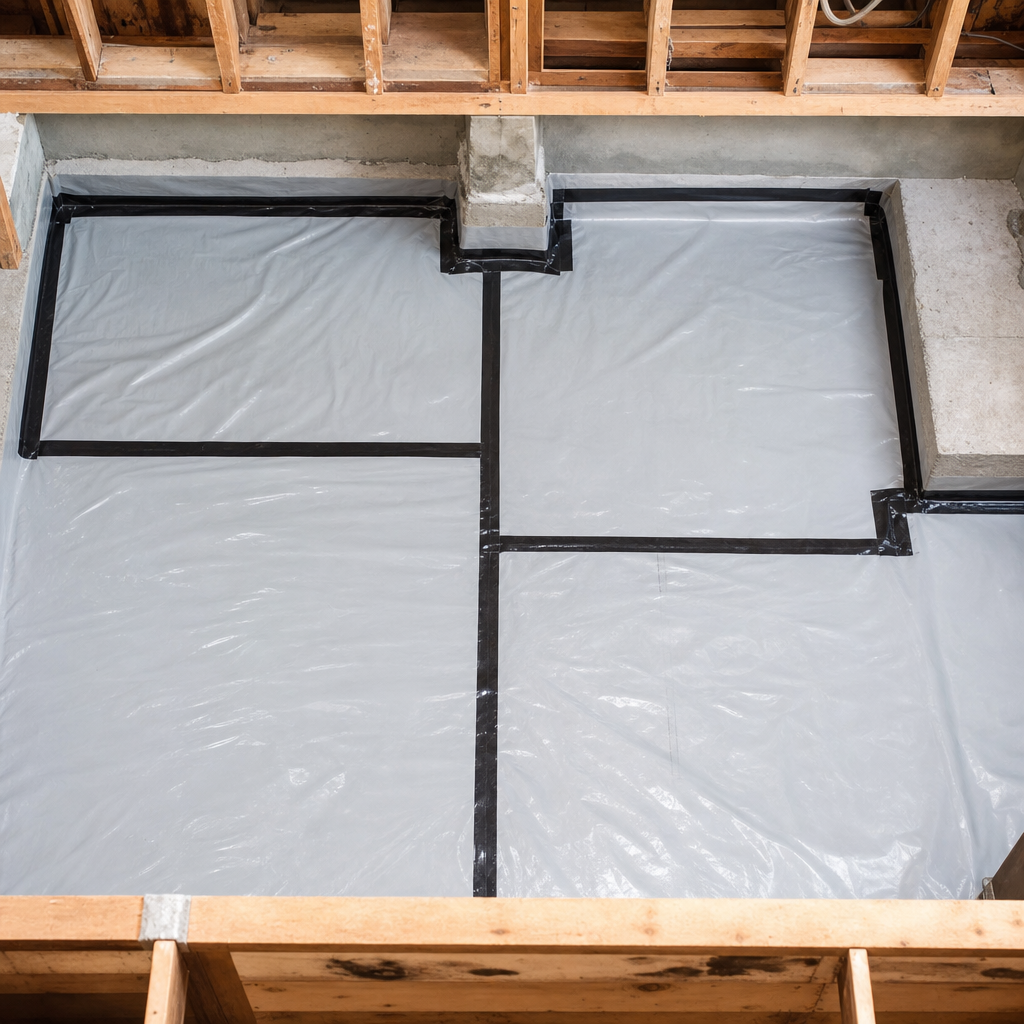
Significant cost variables often hide behind finished surfaces. When water sits, it travels horizontally and vertically through structural framing, driving up equipment run times and labor requirements.
Capillary Action in Plaster-on-Brick Party Walls
In older urban row houses and pre-war brick buildings, standard per-square-foot cleanup estimates often do not apply. Older plaster applied directly over interior brick party walls can create a wicking effect. Through capillary action, water from a basement floor can climb up the brick and plaster inside a shared wall.[3]
If drying focuses solely on the concrete floor while overlooking the party wall, moisture can remain trapped between the brick and the plaster. Over time, trapped dampness can degrade surrounding materials and promote mold growth. Identifying and drying this hidden moisture typically requires specialized moisture meters, thermal imaging, and targeted cavity drying equipment utilized by teams like Wade’s Restoration.
Subfloor and Structural Joist Restoration
When standing water reaches subflooring and floor joists above an unfinished basement or crawl space, structural integrity is a primary consideration. If addressed promptly, dimensional framing can often be dried back to safe moisture levels using high-velocity air movers and dehumidifiers. If left wet for prolonged periods, structural timbers can warp or deteriorate, potentially requiring costly structural replacement.
Basement and Crawl Space Moisture: Preventing Mold Remediation Costs
Need basement flood cleanup cost?
We’re available now - call for a fast, free estimate.
Basements naturally retain cooler air and higher relative humidity. When flooded, ambient humidity rises sharply. Unless dehumidification lowers indoor humidity in a timely manner, mold growth can potentially begin developing within 24 to 48 hours under favorable conditions, which can add significant remediation expenses to the final cost.
Drywall, Trim, and Insulation Replacement Costs
Standard gypsum drywall absorbs water readily. When water affects finished walls, technicians often make “flood cuts” (cutting the drywall 12 to 24 inches above the water line). Removing this lower section allows air to circulate inside the wall cavity to dry the framing studs while removing saturated insulation that traps moisture.
When Flood Damage Requires Mold Remediation
If water has remained unaddressed for an extended period, mold growth is likely. At that stage, simple drying is no longer sufficient. Work generally requires containment barriers, HEPA filtration units to capture airborne spores, physical removal of affected materials, and treatment of structural framing with antimicrobial solutions.
Does Insurance Cover Flooded Basement Cleanup Costs?
Whether insurance covers basement cleanup depends on the specific policy terms, endorsements, and the identified source of the water.
Water Source and Policy Language
Standard homeowners insurance policies (HO-3) generally cover sudden and accidental internal water damage, such as a burst supply line or a failed water heater, subject to policy terms and deductibles.
Standard policies commonly limit or exclude:
- Water from sewer or drain backups: Typically excluded unless an optional water backup endorsement has been added to the policy.
- Groundwater seepage: Water entering through foundation walls or slabs via hydrostatic pressure is frequently excluded under standard maintenance and ground movement clauses.
- Overland surface flooding: Flooding from external rising waters or storm surge generally requires a separate flood insurance policy, such as through the National Flood Insurance Program (NFIP) or a private flood insurer.
How Detailed Documentation Helps
When an adjuster evaluates a claim, comprehensive documentation is essential. Restoration professionals such as Wade’s Restoration generally record moisture readings, maintain daily drying logs, capture thermal images, and compile itemized scope sheets to support the claims process.
Frequently Asked Questions About Basement Flood Cleanup
How much does basement flood cleanup cost?
Most basic cleanup jobs fall between $2,000 and $7,000, averaging roughly $4,000 for standard water extraction and structural drying. Finished basements or situations involving sewage backup are generally estimated at higher ranges, often reaching $8,000 to $15,000 or more depending on severity.[2]
Can I clean up a flooded basement myself to save money?
You can remove minor surface water with a consumer wet/dry vacuum, but standard household equipment cannot extract bound moisture from deep within concrete slabs, framing, or wall cavities. Trapped moisture behind finished surfaces can lead to structural rot and hidden mold. For extensive flooding or contaminated water, professional extraction and industrial drying equipment are strongly recommended.
How quickly should emergency restoration begin?
Mitigation should start as soon as it is safe to do so. Moisture can begin damaging drywall and wood quickly, and mold spores may begin to colonize within 24 to 48 hours in damp environments. As emphasized by Wade’s Restoration, rapid response helps keep cleanup costs within lower standard ranges.
What certifications should a water damage restoration company hold?
Look for companies certified by the Institute of Inspection, Cleaning and Restoration Certification (IICRC). Common credentials include Water Damage Restoration Technician (WRT) and Applied Structural Drying (ASD), which demonstrate training in drying standards, contamination control, and structural assessment.
Need basement flood cleanup cost?
We’re available now - call for a fast, free estimate.
Sources
- Flood Restoration Cost and Cleanup Services (2026) – insidercost.com (2026)
- Flooded Basement Cleanup: Cost, Steps & Safety (2026) – foundationsage.com (2026)
- Flooded Basement Cleanup and Restoration Cost (2026) – repaircostledger.com (2026)
Related reading: Cost to Fix Water Damaged Ceiling – Call Now-10% Off – Same-Day Service – Free Estimate
Related reading: Ceiling Water Damage Repair Cost | 10% Off & Free Estimate | On-Site in 60 Minutes
Frequently Asked Questions
How does a carrier-ready basement flood cleanup estimate prevent out-of-pocket expenses?
Insurance adjusters require standardized, itemized scope sheets and continuous moisture logs to approve water damage claims without dispute. Wade's Restoration provides free visual inspections with carrier-ready documentation that outlines every extraction and drying line item, ensuring your insurer covers all necessary mitigation steps.
Why is a 45-minute emergency response critical for lowering basement flood cleanup costs?
Standing water saturates porous framing and drywall immediately, triggering secondary mold growth and structural warping within 24 to 48 hours. Wade's Restoration provides rapid 45-minute mitigation to extract water and stabilize indoor humidity, preventing clean water from degrading into costly contaminated categories.
How do restoration specialists detect trapped moisture in finished walls and subfloors?
Hidden moisture behind drywall, under subflooring, or inside brick party walls cannot be identified through visual checks alone. Wade's Restoration utilizes infrared thermal imaging cameras and specialized moisture meters to pinpoint trapped dampness and deploy targeted cavity drying systems before structural rot develops.
About the author
 |
David Harrison David Harrison is a certified water damage restoration technician with over 8 years of experience in the field. He holds a degree in Construction Management from Pratt Institute and specializes in providing practical advice for navigating property emergencies and insurance claims. |
Water damage, flood, or mold emergency?
We’re available now - call for a fast, free estimate.
Call Now - Free Estimate