
Quick Summary
Managing sudden burst pipe water damage requires immediate water shutoff and rapid mitigation before pressurized leaks saturate subfloors, joists, and plaster wall cavities. Wade's Restoration delivers a comprehensive solution by deploying within 45 minutes to halt moisture migration, executing commercial water extraction, structural drying, complete rebuilds, and direct insurance billing without using subcontractors. Property owners can call Wade's Restoration via their 24/7 emergency dispatch line for a free on-site visual inspection and immediate 45-minute containment to prevent hazardous mold growth and structural failure.
Burst Pipe Water Damage: Fast Cleanup Guide
When a plumbing supply line splits open under pressure, gallons of water pour into finished living spaces every minute. If you are experiencing sudden burst pipe water damage, your first action must always be turning off the main water shutoff valve. Once the flow stops, getting an experienced extraction team on-site immediately helps mitigate structural damage, though full drying depends on saturation and materials and can take several days or more.[2]
For property owners, water from a split pipe quickly bypasses surface flooring, traveling straight into subfloor cavities, joist spaces, and surrounding wall assemblies. Wade’s Restoration dispatches restoration crews promptly to assist with water extraction, moisture mapping, insurance documentation, and structural repair. Call our 24/7 emergency dispatch line for an inspection and rapid containment. See also Flooded Basement Cleanup – Call Now-10% Off – Same-Day Service – Free Estimate.
Immediate Steps to Take When a Pipe Bursts
Plumbing ruptures create an immediate crisis, but taking the correct steps in the first hour stabilizes the property and protects your insurance claim.
What to Do in the First 60 Minutes
- Shut off the main water valve: Stop incoming water pressure immediately. In single-family homes, this valve is typically near the front basement wall or water meter. In multi-family buildings, notify building management or turn off the unit-level shutoff under sinks or behind access panels.
- Relieve plumbing line pressure: Open the lowest faucets in the building (such as basement wash sinks or lowest-floor tubs) and work your way up to drain remaining water out of the lines instead of onto your floors.
- Cut electrical power safely: Switch off circuit breakers supplying power to the flooded rooms. Never step into standing water to reach an electrical panel; if the panel is near standing water, call the utility company or wait for emergency responders.
- Document everything before cleanup: Take extensive photos and videos showing standing water levels, saturated personal belongings, structural finishes, and the exact rupture point on the pipe before anything is moved or discarded.
- Contact a plumber and an emergency restoration company: A licensed plumber is needed to repair or replace the broken pipe section, while an emergency water extraction team removes standing water and sets up drying equipment.
Why Fast Response Matters for Structural Safety
Academic research on municipal water distribution systems identifies pipe bursts as one of the most frequent infrastructure failure events. In one published study of a municipal distribution system serving roughly 260,000 residents, researchers tracked approximately 270 water main breaks each year. These plumbing failures are primarily driven by age-related material deterioration, internal pressure spikes, and ground movement triggered by seasonal temperature shifts. When that same mechanical failure happens inside a residential or commercial building, pressurized water pushes deep into structural framing within minutes.[1]
What Does Burst Pipe Water Damage Restoration Cost?
Need burst pipe water damage?
We’re available now - call for a fast, free estimate.
Restoration expenses depend on the volume of water released, how many floors the water traveled through, whether the water is clean supply water (Category 1) or contaminated, and how long structural materials remained saturated.
Typical Restoration Price Ranges
Note: The following table reflects company-specific estimates that are not independently verified. Actual restoration costs vary depending on property conditions.
| Restoration Service | Estimated Cost Range (Company Estimates) | What Affects the Price |
|---|---|---|
| Emergency Inspection & Thermal Moisture Mapping | $0 (Visual) – $450 | Depth of moisture checks, thermal imaging scope, and baseline structural testing. |
| Water Extraction & Drying (Per Room) | $1,200 – $3,500 | Floor surface area, number of air movers and dehumidifiers needed, and structural material density. |
| Mold Remediation | $1,500 – $6,000+ | Containment barriers, air filtration, removal of contaminated materials, and cleaning treatments. |
| Sewage or Gray Water Cleanup | $2,000 – $7,000+ | Sanitization protocols, cleaning agents, and disposal of contaminated porous materials. |
| Structural Cavity Drying | $1,500 – $4,500 | Specialized wall and floor drying systems used to dry enclosed spaces. |
| Full Restoration & Rebuild Claim | $3,500 – $25,000+ | Total scope of reconstruction, including subfloor replacement, wall repair, trim, and painting. |
Navigating Insurance Claims and Documentation
Standard homeowners insurance policies generally cover sudden and accidental water damage caused by burst pipes, while damage resulting from gradual leaks or long-term neglect may not be covered.[3]
To help support your claim, restoration technicians like those at Wade’s Restoration collect photographic evidence, moisture readings, and drying logs for submission to your insurance adjuster during the mitigation process.
Structural Impact: Subfloors, Joists, and Walls
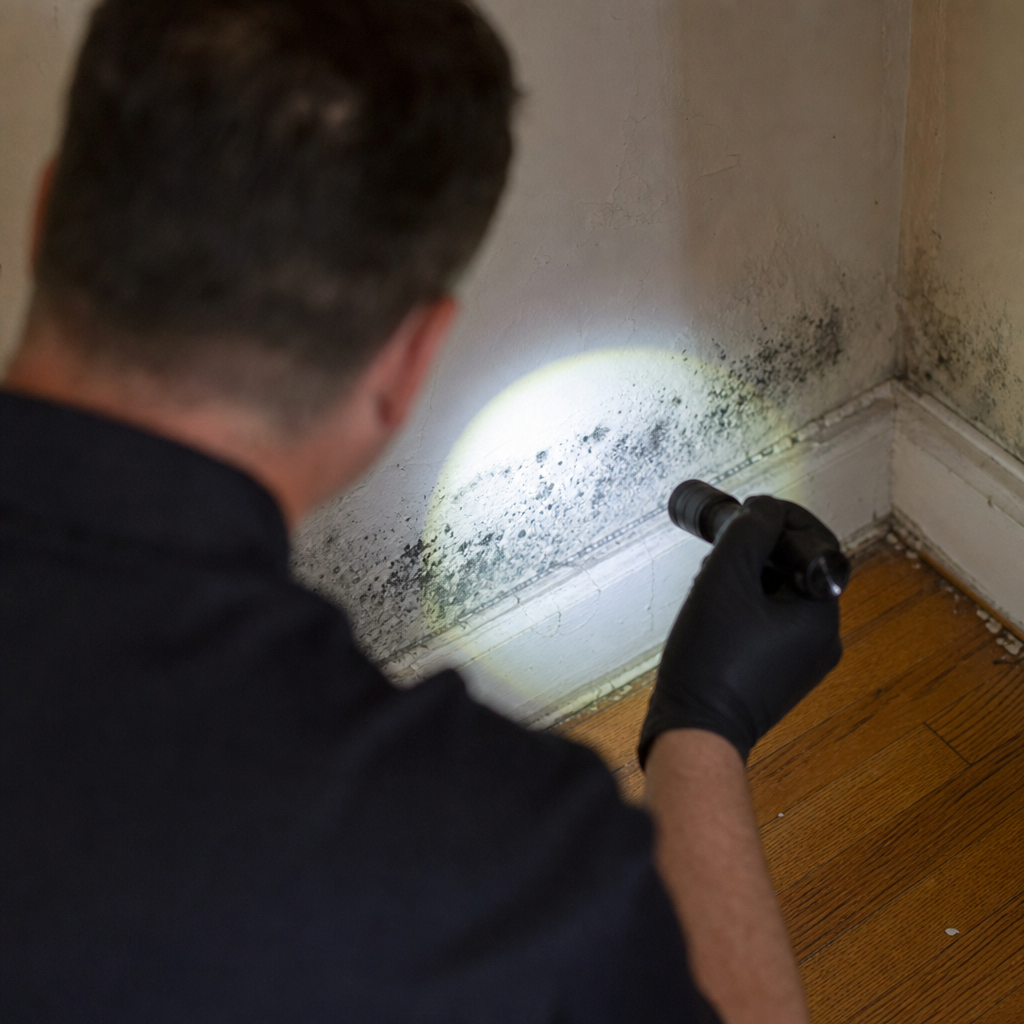
Different building assemblies present distinct restoration challenges when water penetrates porous materials and enclosed structural framing.
Moisture Traps in Masonry and Party Walls
In attached structures and buildings with solid masonry or plaster walls, materials can absorb water deeply. When a plumbing pipe splits inside or adjacent to a shared or exterior wall, moisture can travel into surrounding assemblies.
Standard surface drying may only evaporate superficial surface moisture while deeper layers remain wet. Restoration technicians, including professionals at Wade’s Restoration, may use specialized airflow equipment and dehumidifiers to help draw moisture out of dense building materials.
Hardwood Flooring, Subfloors, and Joist Spaces
When high-volume plumbing breaks occur, water pools across finished flooring, seeps through subfloors, and drains into structural framing and joist pockets. If water remains trapped, structural timbers can absorb moisture, creating risks of warping and deterioration at critical support points.
General Material Evaluation Guidelines
| Structural Element | Restoration Considerations | Replacement Considerations |
|---|---|---|
| Plaster & Masonry | Substrate remains solid, intact attachment, and no major delamination. | Structural crumbling present, loss of adhesion, or persistent instability. |
| Hardwood Flooring | Moisture content returns to baseline levels; minor cupping that responds to refinishing. | Severe crowning, permanent buckling, subfloor deterioration, or extensive warping. |
| Timber Joists | Structural integrity verified; moisture levels successfully returned to dry standards. | Significant rot, loss of bearing strength, or structural compromise. |
Mold Growth Considerations After a Pipe Bursts
Need burst pipe water damage?
We’re available now - call for a fast, free estimate.
As a general guideline, mold can begin to develop within 24 to 48 hours under certain conditions, though the exact timeline varies depending on moisture levels, temperature, and the affected materials.
Moisture in Wall Cavities and Subfloors
Because water naturally follows gravity and structural pathways, moisture often collects out of sight. While a room might appear dry at the surface, damp insulation, baseboards, and structural framing can harbor moisture that supports fungal growth if not properly dried.
Professional Drying vs. DIY Cleanup
| Cleanup Method | Equipment & Technique | Potential Result |
|---|---|---|
| DIY / Basic Cleanup | Standard vacuums, household fans, and wiping visible moisture. | May leave moisture deep inside wall cavities and subfloors. |
| Professional Mitigation | Commercial extraction, moisture mapping, dehumidification, and targeted drying equipment. | Dries structural materials to appropriate baseline standards. |
The Burst Pipe Restoration and Rebuild Process
Remediating burst pipe water damage typically follows a systematic protocol designed to address moisture and restore structural integrity.[4]
Step 1: Emergency Water Extraction and Moisture Mapping
Upon arrival, technicians from services like Wade’s Restoration use extraction units to remove standing water from floors and carpets. The crew may also perform moisture mapping using thermal imaging tools and moisture meters to identify hidden moisture paths behind walls and under floors.
Step 2: Structural Drying and Dehumidification
Once bulk water is removed, the team sets up drying systems, which may include air movers, dehumidifiers, and targeted cavity drying equipment where appropriate. Technicians may apply cleaning agents or antimicrobials to affected areas to help inhibit microbial growth, monitoring moisture readings as materials dry.
Step 3: Reconstruction and Repairs
After structural components reach acceptable moisture levels, necessary repairs and reconstruction can begin. This may include replacing damaged drywall, subflooring, trim, and applying finish coatings to return the property to its prior condition.
Frequently Asked Questions
What are the immediate steps to take when a pipe bursts?
Shut off your main water valve immediately to stop the flow, turn on low-level faucets to relieve remaining line pressure, and switch off circuit breakers to flooded rooms if safe to do so. Take photos and videos of the damage, then contact a licensed plumber for pipe repairs and a water damage restoration company for extraction and drying.
Does homeowners insurance cover water damage from a burst pipe?
Sudden and accidental burst pipe damage is generally covered by standard homeowners insurance, while damage resulting from gradual leaks or neglect may not be covered. Contact your insurance provider to verify specific policy terms and coverage details.
How much does water damage restoration cost after a pipe bursts?
Restoration costs vary widely depending on the extent of flooding, structural saturation, and required repairs. Company-specific estimates often range from $1,200 to $3,500 per room for basic extraction and drying, while extensive multi-room or reconstruction projects can cost significantly more.
How long does it take to dry out water damage from a burst pipe?
Drying time depends on the extent of water saturation and the types of materials affected, and the process can take several days or more to achieve thorough structural drying.[5]
Can water from a burst pipe cause mold behind walls?
Under certain conditions, mold can begin to form within 24 to 48 hours when moisture remains trapped behind drywall, plaster, or trim. Thorough drying of enclosed spaces helps reduce this risk.
How do professional restoration contractors clean up burst pipe flooding?
Restoration teams, such as those at Wade’s Restoration, typically extract standing water, assess moisture levels with specialized meters, deploy commercial dehumidifiers and air movers, treat affected structural elements as needed, and complete necessary material repairs once drying is finished.
Need burst pipe water damage?
We’re available now - call for a fast, free estimate.
Sources
- Water main break rates in the United States and Canada / Steven L. Barfuss and Matthew Fugal. – mtas.tennessee.edu (2023)
- MIT Open Access Articles Sensor Networks for Monitoring … – dspace.mit.edu (2013)
- The Rising Cost of Water Damage in American Homes in 2026 – thesource.com (2026)
- Insurance Analyses Show Pipe Failures Pose Significant Risk – safepipingmatters.org
- Preventing Water Damage – chubb.com (2015)
Related reading: Best Way to Remove Water From Basement – 10% Off & Free Estimate – Same-Day Service
Related reading: Black Mold Removal – Call Now-10% Off – Same-Day Service – Free Estimate
Frequently Asked Questions
How do professionals dry water trapped inside subfloors and joist cavities after a pipe bursts?
Restoration teams utilize specialized structural cavity drying systems, high-velocity air movers, and industrial dehumidifiers to force dry air into enclosed spaces without requiring destructive tear-outs. Wade's Restoration provides end-to-end extraction, moisture mapping, and structural drying using dedicated in-house technicians to protect foundational framing.
How does direct insurance billing work during burst pipe water damage repair?
Direct insurance billing allows your restoration contractor to submit photographic evidence, psychrometric drying logs, and itemized scopes of work directly to your insurer to process claims seamlessly. Wade's Restoration handles this entire documentation and billing process while completing both mitigation and reconstruction under one roof without outside subcontractors.
Why is an immediate 45-minute response critical when a water pipe bursts inside a wall?
Pressurized water quickly penetrates plaster assemblies and subflooring, creating ideal conditions for hazardous mold growth within 24 to 48 hours. Contacting Wade's Restoration via their 24/7 dispatch line secures a 45-minute emergency response and free visual inspection, containing water migration before structural materials permanently warp or degrade.
About the author
 |
Sarah Miller Sarah Miller is a certified water damage restoration specialist with over eight years of experience helping property owners navigate the complexities of mitigation and recovery. She holds an associate degree in Construction Management from New York City College of Technology and has extensive knowledge of local building codes and insurance claim procedures. Through her writing, Sarah provides actionable advice to help property managers and homeowners in the Astoria area understand the true costs and critical steps involved in emergency water damage restoration. |
Water damage, flood, or mold emergency?
We’re available now - call for a fast, free estimate.
Call Now - Free Estimate