
Quick Summary
Understanding the true cost to fix water damaged ceiling is crucial for property owners, as estimates typically range from $45 to $55 per square foot or $311 to $472 per patch depending on drywall saturation, insulation damage, and hidden framing moisture. Wade's Restoration addresses these variables by providing complete water extraction, structural cavity drying, and ceiling reconstruction under one roof with transparent pricing and full insurance claim support. Readers will understand the primary cost drivers behind ceiling repairs and can call Wade's Restoration 24/7 to schedule a free visual inspection and upfront written cost assessment.
Cost to Fix Water Damaged Ceiling – Fast Pricing Guide
Fixing a water-damaged ceiling varies significantly depending on the project scope. Repair estimates commonly cluster around $45 to $55 per square foot, while smaller patch repairs may be around $311 to $472 per patch. Total project costs depend on the severity and scope of the damage, including the amount of drywall or plaster removed, whether insulation is damaged, and whether texture matching or repainting is required.[1]
When overhead water breaks through your ceiling, taking prompt action is critical. Professional restoration services from providers like Wade’s Restoration typically include water extraction, moisture mapping, cavity drying, and ceiling reconstruction. Addressing active leaks or moisture early helps prevent progressive structural damage and microbial growth. See also Water Damage Restoration Cost – Call Now-10% Off – Same-Day Service – Free Estimate.
Water Damaged Ceiling Repair Costs: Overview and Quick Summary
Quick Summary: Ceiling repair estimates commonly cluster around $45 to $55 per square foot, with smaller patch repairs typically costing around $311 to $472 per patch. The final cost depends heavily on project scope and severity, including the amount of drywall or plaster removed, whether insulation is damaged, and whether texture matching or repainting is required.
The total cost to repair a ceiling after a leak depends on whether moisture remained on the surface or penetrated the structural cavity above. Surface issues are generally simpler to address, while water trapped between floors may require material removal, targeted drying, and dehumidification before repairs can be completed.
Key Takeaways at a Glance
- Minor surface stains: Isolated drywall discoloration without framing moisture generally involves stain-blocking primer, texture matching, and painting.
- Active leaks with cavity drying: Saturated drywall, wet insulation, and damp joists require controlled removal of wet materials, mechanical drying, and replacement drywall.
- Plaster ceiling damage: Saturated plaster may lose adhesion to the underlying lath, requiring stabilization or section replacement depending on the extent of damage.
Price Factors by Damage Severity
While square-foot estimates commonly cluster around $45 to $55 per square foot and small patches may range from $311 to $472 per patch, restoration work generally varies by damage category:
- Small Patch: Minor localized cut-outs, backing support, replacement drywall, taping, and spot painting.
- Medium Room Section: Extraction of affected insulation, drying of the ceiling cavity, drywall hanging, finishing, and painting.
- Large or Full-Room Replacement: Extensive material removal, structural drying, containment, comprehensive drywall or plaster repair, and complete repainting.
What Really Drives the Cost to Fix a Water-Damaged Ceiling?
Generic square-foot estimates may not reflect all project variables. Older residential buildings and multi-family structures often feature assemblies that require additional labor and specialized materials.
Cost Range Breakdown and Assessment Methods
As specialists at Wade’s Restoration emphasize, accurate restoration estimates require evaluating moisture levels inside the ceiling cavity rather than assessing visible surface stains alone.
| Evaluation Factor | Basic Drywall Handyman | Online Square-Foot Calculator | Professional Restoration Team |
|---|---|---|---|
| Cavity Moisture Check | Ignored | Not Factored | Moisture mapping and structural assessment |
| Plaster Adhesion Check | Overlooked | Underquoted | Structural bond and backing evaluation |
| Insulation and Moisture Risk | Covered up | Rough material only | Removal of wet materials and controlled drying |
| Insurance Documentation | Handwritten slip | None provided | Itemized scopes and drying documentation |
Understanding the Main Cost Drivers
The final cost depends on several key variables:
- Material Type (Drywall vs. Plaster): Standard drywall is straightforward to remove and replace, whereas plaster on wood or wire lath requires additional labor to remove and restore.
- Amount of Drywall or Plaster Removed: The overall dimensions of the damaged area directly influence labor and disposal needs.
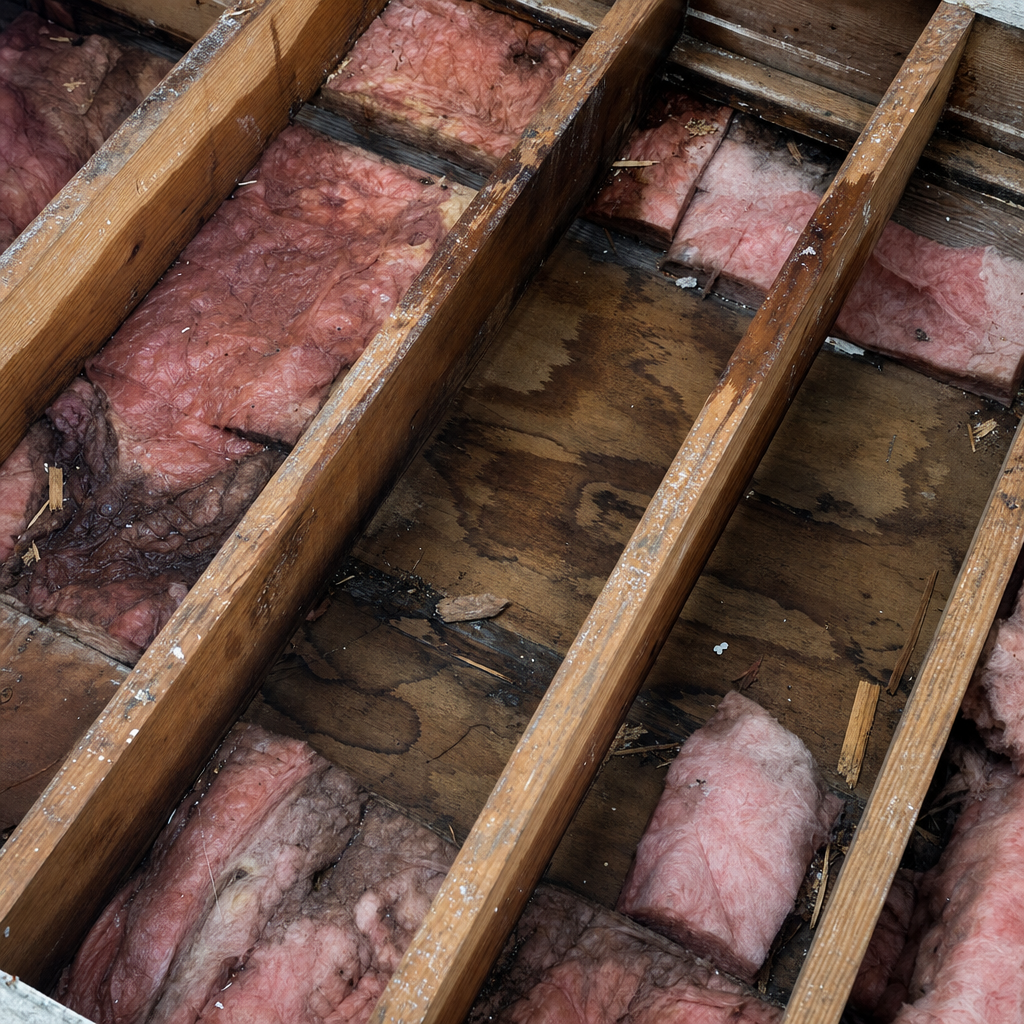
- Damaged Insulation: Saturated insulation traps moisture in the cavity, loses effectiveness, and must be removed and replaced.
- Structural Joist Drying: Damp framing must be thoroughly dried before closing the ceiling to prevent long-term structural decay.
- Texture Matching and Repainting: Blending textured finishes or repainting entire ceiling planes increases finishing time and material costs.
Drywall and Plaster Ceilings: Repair vs. Full Replacement
Need cost to fix water damaged ceiling?
We’re available now - call for a fast, free estimate.
Deciding whether to patch or replace materials depends on the extent of moisture absorption and structural integrity.
Drywall Ceilings: Stains, Sagging, and Cut-Out Rules
If water has caused minor surface discoloration without degrading the gypsum core, applying a stain-blocking primer and repainting may suffice. However, if drywall is soft, sagging, or bowed, affected sections must be cut back to sound framing, wet insulation removed, and new drywall installed.
Plaster Ceilings and Structural Adhesion
Plaster ceilings adhere to lath backing. When water collects above plaster, the bond between the plaster and lath can weaken. Even if the surface appears dry, compromised plaster may separate from the lath over time. An inspection is necessary to determine whether the plaster can be stabilized or if full removal of the damaged section is required.
| Ceiling Assembly | Primary Failure Indicator | Restoration Approach |
|---|---|---|
| Standard Drywall | Soft gypsum core, bubbling tape, sagging seams | Cut out damaged material past wet zone, dry framing, install new drywall |
| Plaster and Lath | Deflection, cracking, loss of adhesion to lath | Re-securing plaster to lath where feasible, or full removal and replacement |
Subfloor, Joists, and Insulation: Cavity Moisture
When overhead leaks occur, water often enters subfloors and joist cavities before showing visible signs below. A complete repair scope accounts for trapped moisture above the ceiling line.
Trapped Water in Joist Bays
Structural framing absorbs moisture during a leak. Enclosing wet framing with new drywall can lead to decay and microbial issues. Restoration technicians, such as those at Wade’s Restoration, use commercial air movers and dehumidifiers to return framing moisture to safe baseline levels before reconstruction begins.
Handling Saturated Insulation
Wet insulation inside ceiling cavities presents several issues:
- Weight Hazards: Saturated insulation adds weight to the ceiling assembly.
- Loss of Thermal Performance: Saturated insulation permanently loses its insulating properties.
- Moisture Retention: Damp insulation keeps structural framing wet if not removed.
Damaged, wet insulation should be removed and replaced once the cavity is fully dry.
Does Homeowners Insurance Cover Water Damaged Ceiling Repairs?
Property insurance policies typically cover ceiling repairs if the water damage resulted from a sudden and accidental event.
Sudden and Accidental vs. Gradual Damage
- Typically Covered: Burst plumbing pipes, sudden water heater failures, failed supply lines, and storm-related openings.
- Typically Denied: Long-term unresolved leaks, deferred maintenance, deteriorated grout, or continuous seepage.
What Adjusters Need for Claim Approval
According to the team at Wade’s Restoration, insurance claims generally require thorough documentation of the moisture intrusion and the necessary restoration steps:
- Moisture Documentation: Records showing the location and extent of moisture within building assemblies.
- Drying Logs: Verification that structural materials reached dry standards.
- Itemized Repair Scopes: Detailed line-item estimates covering material removal, drying, drywall installation, texture matching, and painting.
Frequently Asked Questions About Water Damaged Ceiling Costs
How much does it cost on average to repair a water-damaged ceiling?
Estimates commonly cluster around $45 to $55 per square foot, while smaller patch repairs may cost around $311 to $472 per patch. Total costs depend on the severity and scope of the repair, including the amount of drywall or plaster removed, whether insulation is damaged, and whether texture matching or repainting is needed.
Can a water-damaged ceiling just be painted over?
A ceiling should only be painted over if the leak has been fixed, the framing cavity is completely dry, and the drywall or plaster remains structurally sound. Painting over damp materials can trap moisture and cause paint failure or mold growth.
When is a leaking ceiling dangerous enough to require emergency service?
A ceiling that exhibits significant sagging, heavy water accumulation, or water leaking through light fixtures presents safety hazards. In such cases, occupants should avoid the area below and contact a qualified professional immediately to evaluate and secure the structure.
How long does the ceiling drying and restoration process take?
Drying the structural cavity typically requires several days of continuous dehumidification and air movement. Once framing is confirmed dry, drywall patching, taping, finishing, texturing, and painting can proceed.
How do I get an accurate repair estimate for my property?
According to Wade’s Restoration, an accurate estimate requires an on-site inspection to assess the source of the leak, check for moisture inside the cavity, evaluate insulation and structural framing, and define the necessary scope of repair.
Need cost to fix water damaged ceiling?
We’re available now - call for a fast, free estimate.
Sources
- Cost to Repair Ceiling Water Damage – homewyse.com (2026)
Frequently Asked Questions
How can I ensure my insurance covers the full cost to fix a water-damaged ceiling?
Insurance adjusters require technical proof of sudden damage, including comprehensive moisture mapping logs and itemized scopes for structural drying and repairs. Wade's Restoration manages both cavity drying and reconstruction under one roof while providing detailed, claim-ready documentation directly to your carrier. Property owners can call Wade's Restoration 24/7 to schedule a free visual inspection and get an accurate written cost assessment for their claim.
Why is structural cavity drying necessary before repairing ceiling drywall?
Patching over damp ceiling joists or wet subflooring traps moisture inside the hidden cavity, leading to framing rot, structural weakening, and mold growth. Professional technicians at Wade's Restoration use industrial dehumidifiers and precision moisture meters to verify the framing is fully dry before reconstruction begins. Ensuring complete cavity drying prevents recurring damage and eliminates the need for costly secondary repairs.
Does fixing a water-damaged plaster ceiling cost more than standard drywall?
Yes, water-damaged plaster ceilings generally require higher labor costs because technicians must evaluate whether the plaster has detached from the underlying wood or wire lath. If the key bond is compromised, the ceiling must be safely stabilized or completely removed to prevent sudden collapse. Wade's Restoration provides thorough structural evaluations to determine whether re-securing the plaster or transitioning to modern drywall is the most cost-effective solution.
About the author
 |
Sarah Miller Sarah Miller is a certified water damage restoration specialist with over eight years of experience helping property owners navigate the complexities of mitigation and recovery. She holds an associate degree in Construction Management from New York City College of Technology and has extensive knowledge of local building codes and insurance claim procedures. Through her writing, Sarah provides actionable advice to help property managers and homeowners in the Astoria area understand the true costs and critical steps involved in emergency water damage restoration. |
Water damage, flood, or mold emergency?
We’re available now - call for a fast, free estimate.
Call Now - Free Estimate