
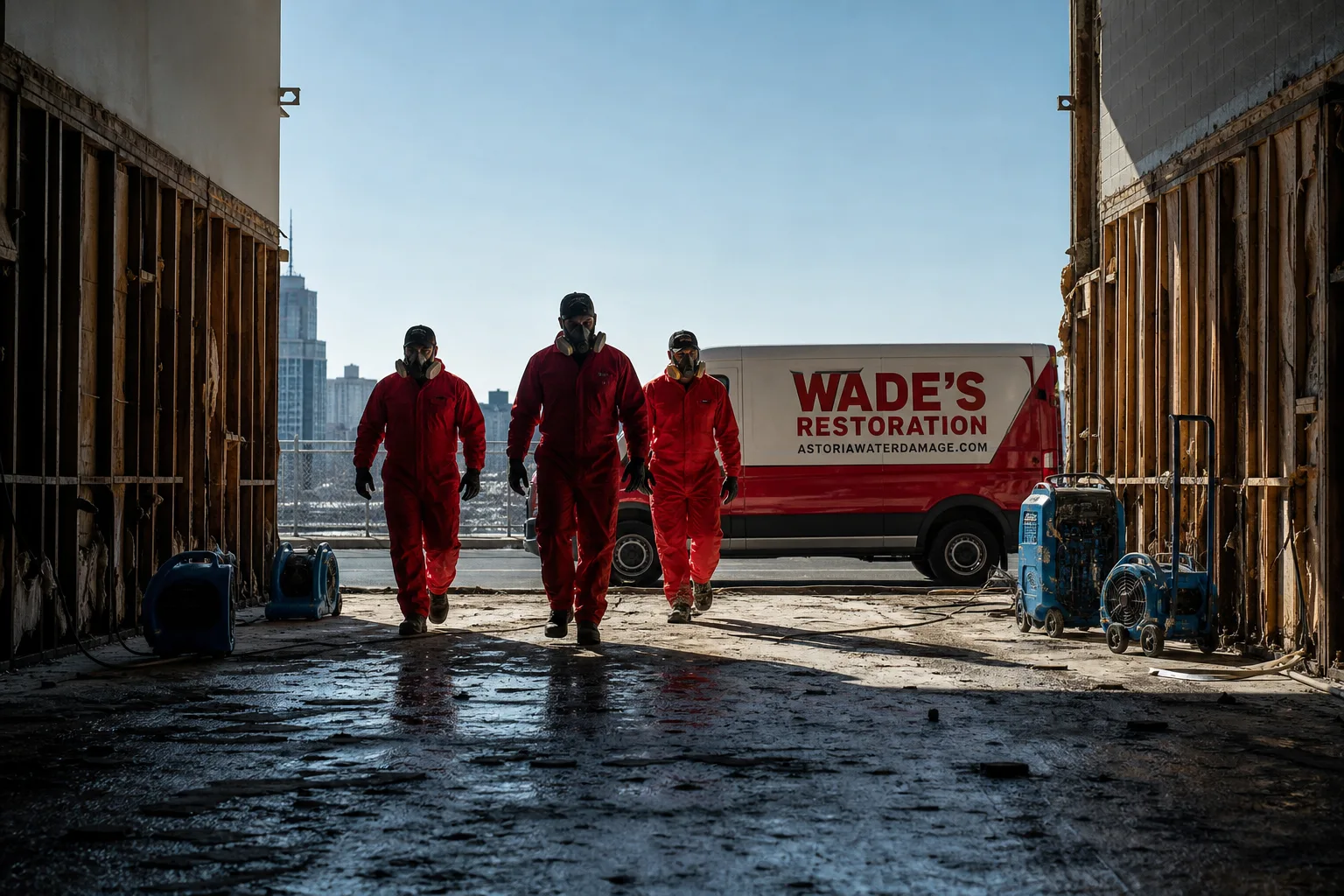
Free visual inspection and a written scope of work before any mitigation begins - photos, moisture readings, and drying logs go in your claim file
The scope we write is the scope we bill. Anything new gets shown to you, in writing, before we touch it.
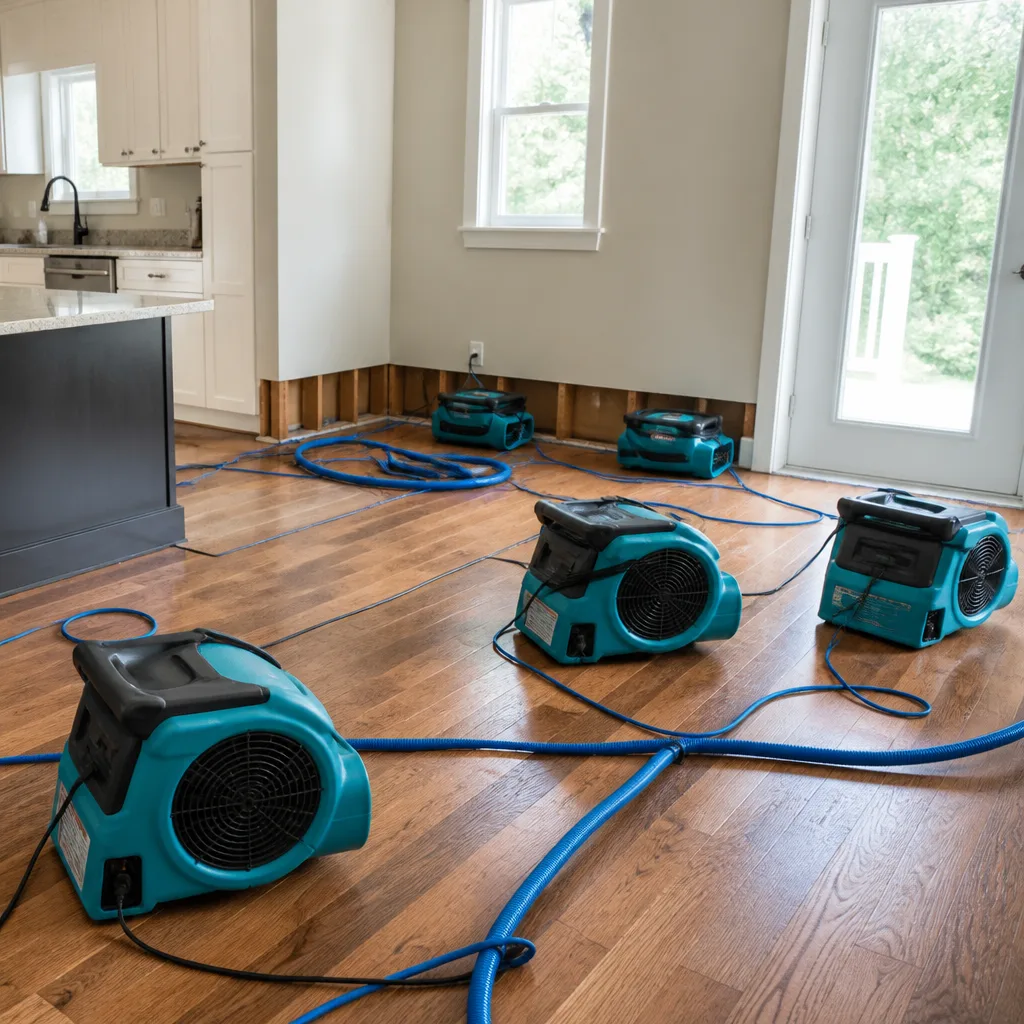
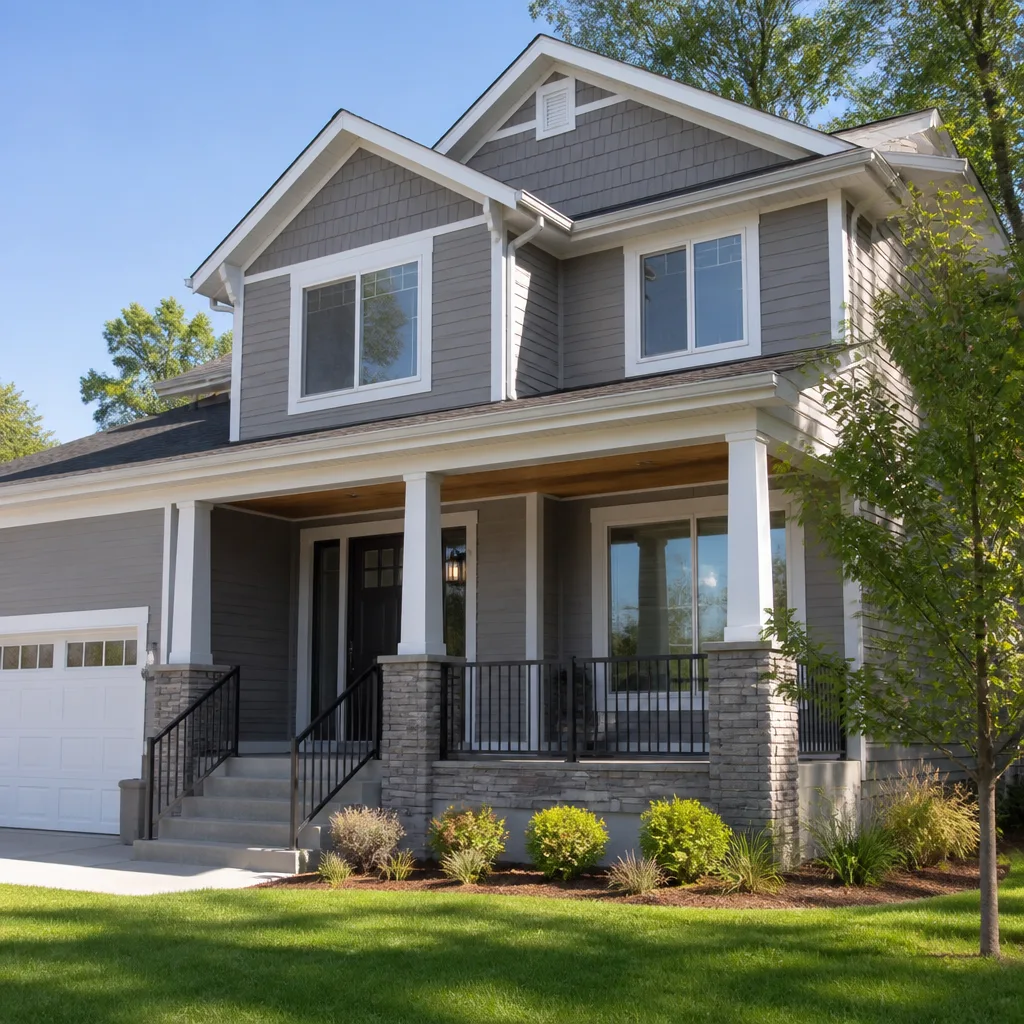
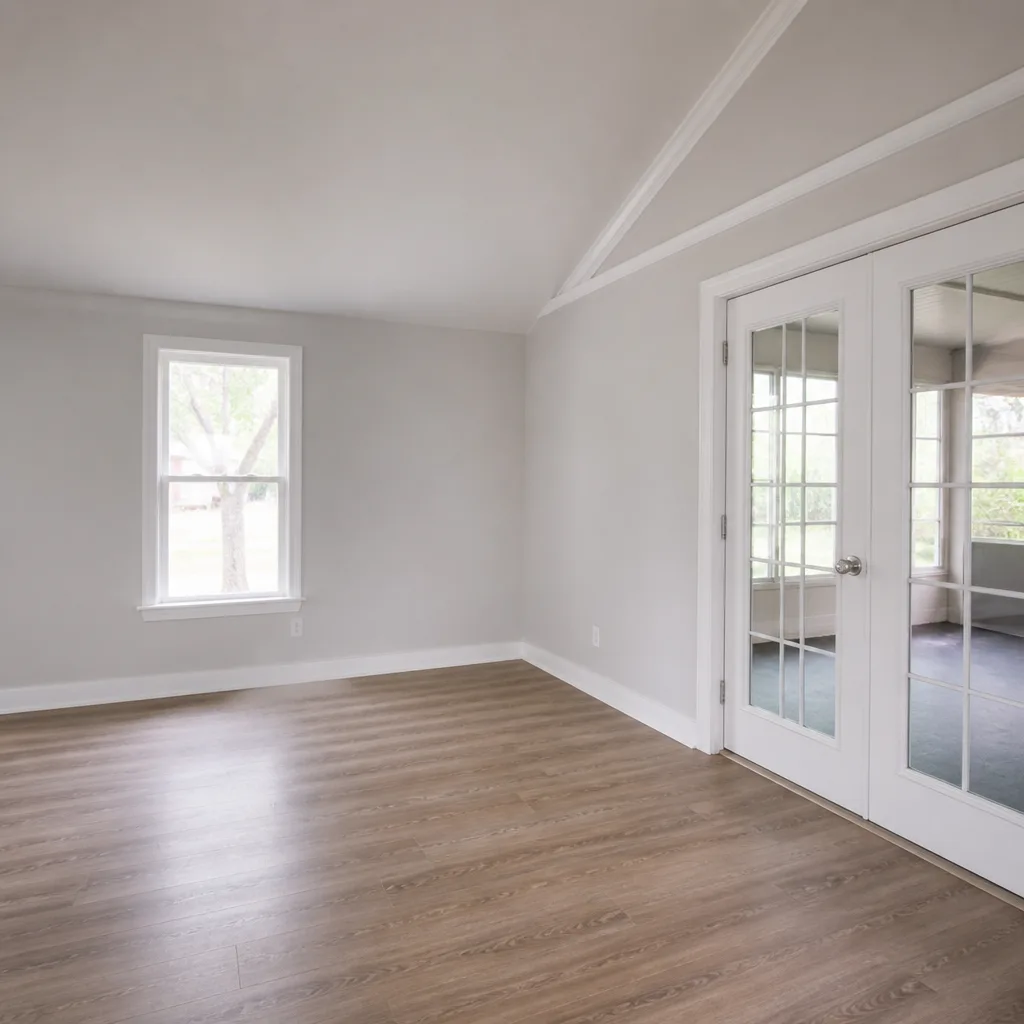
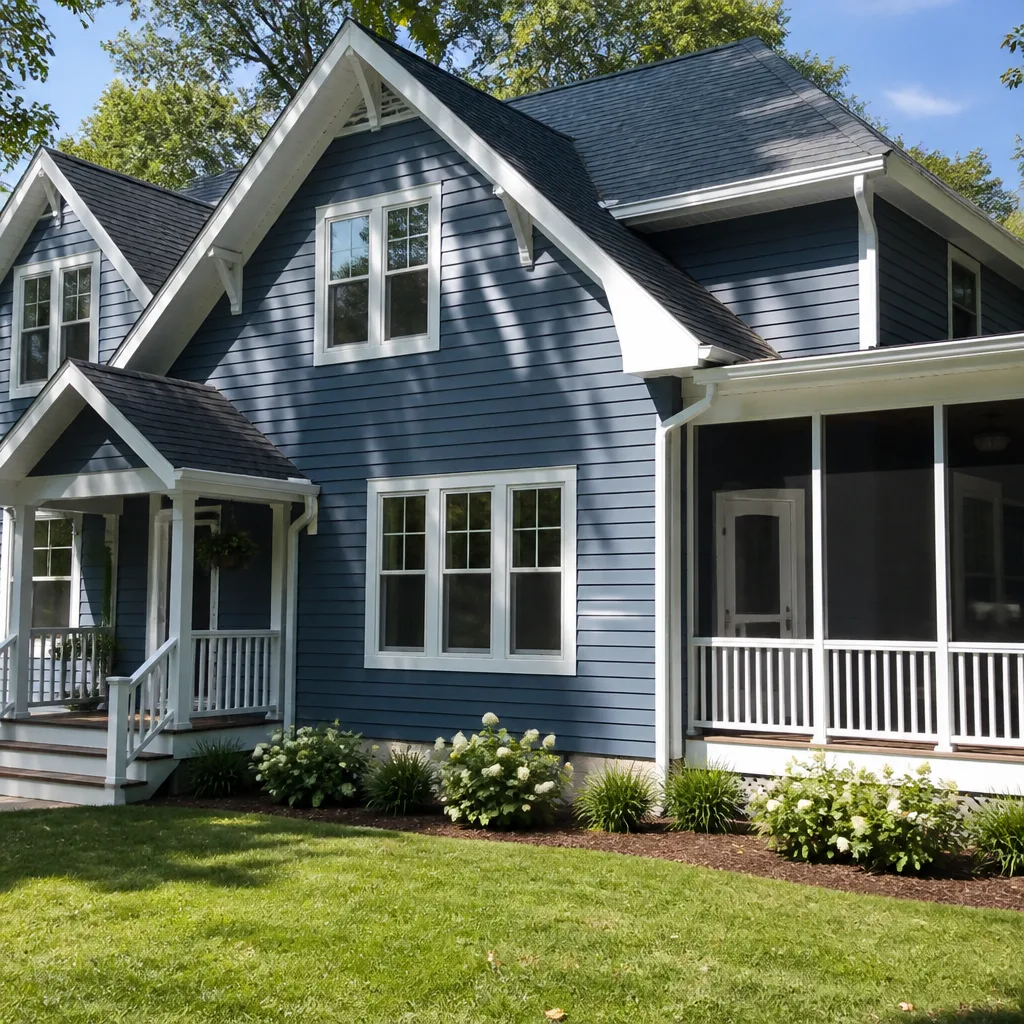
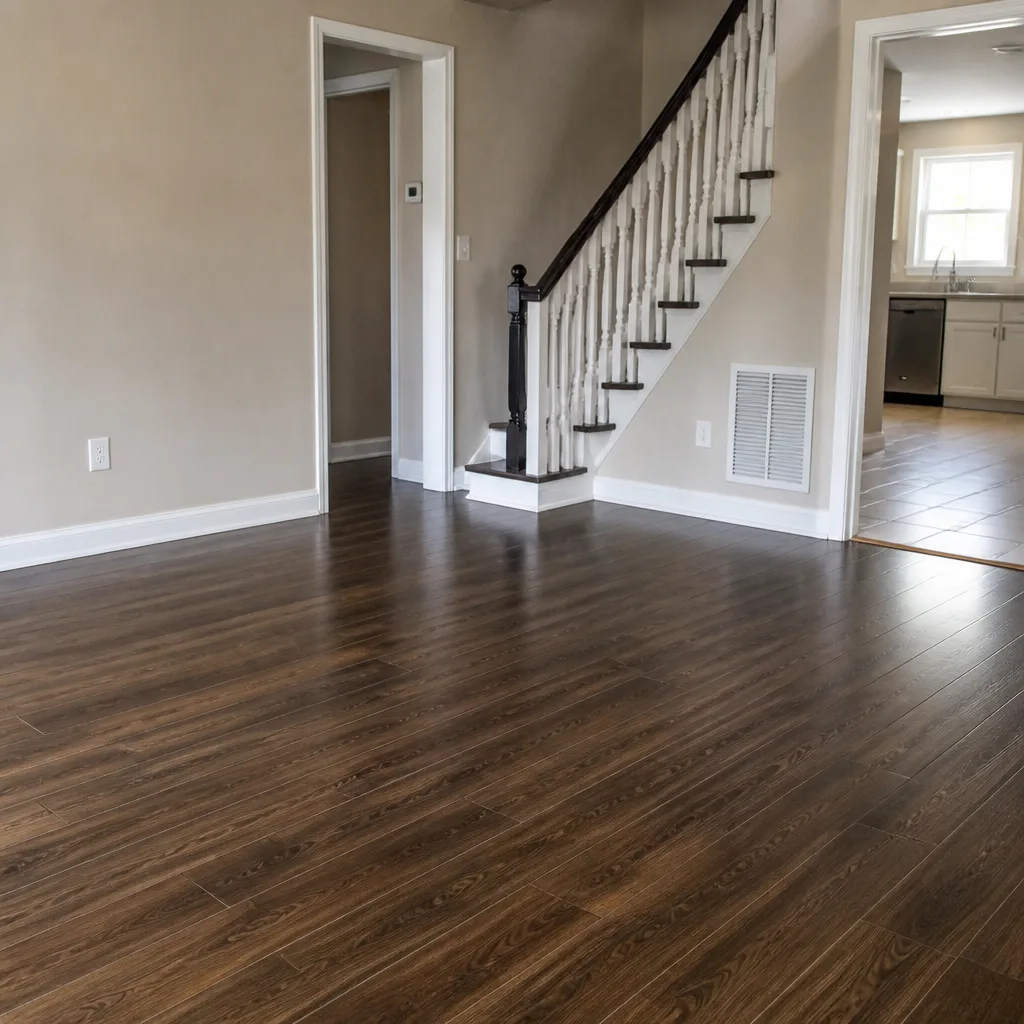
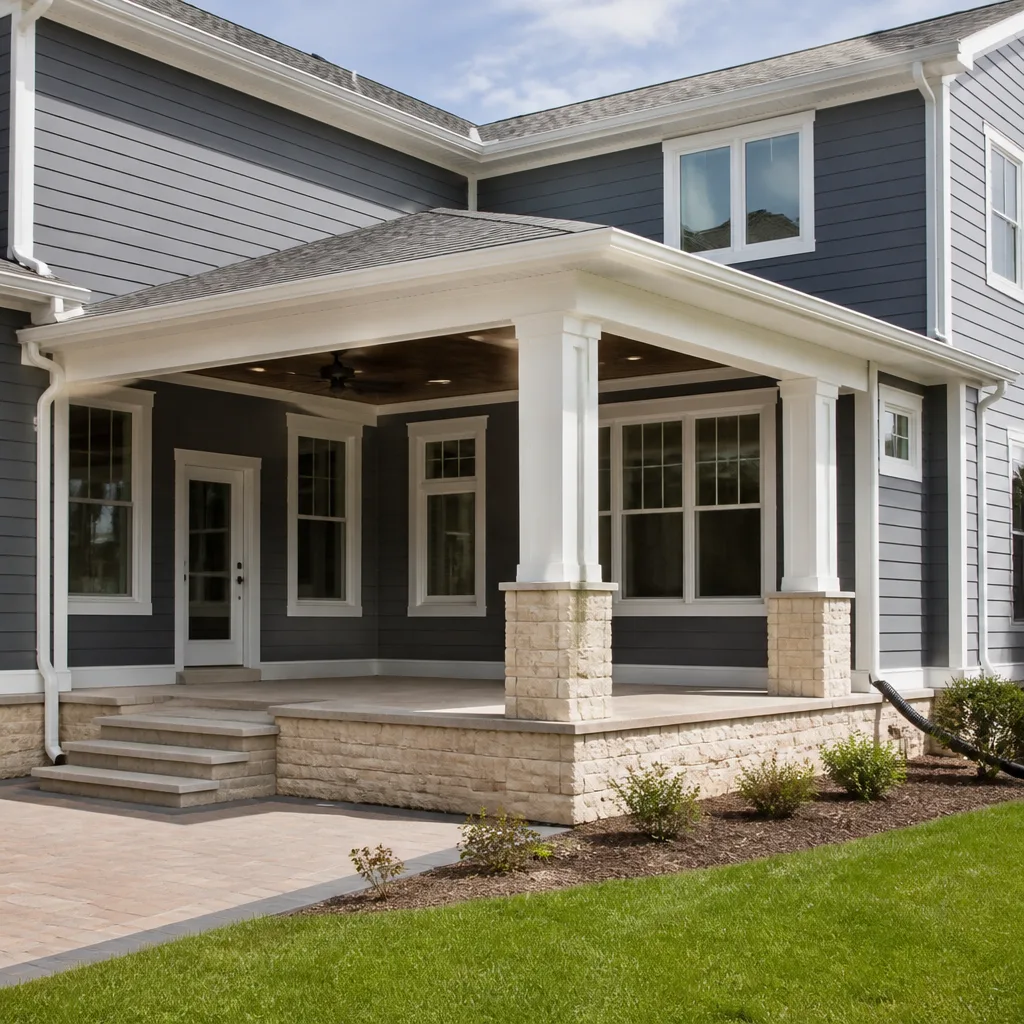
 Before
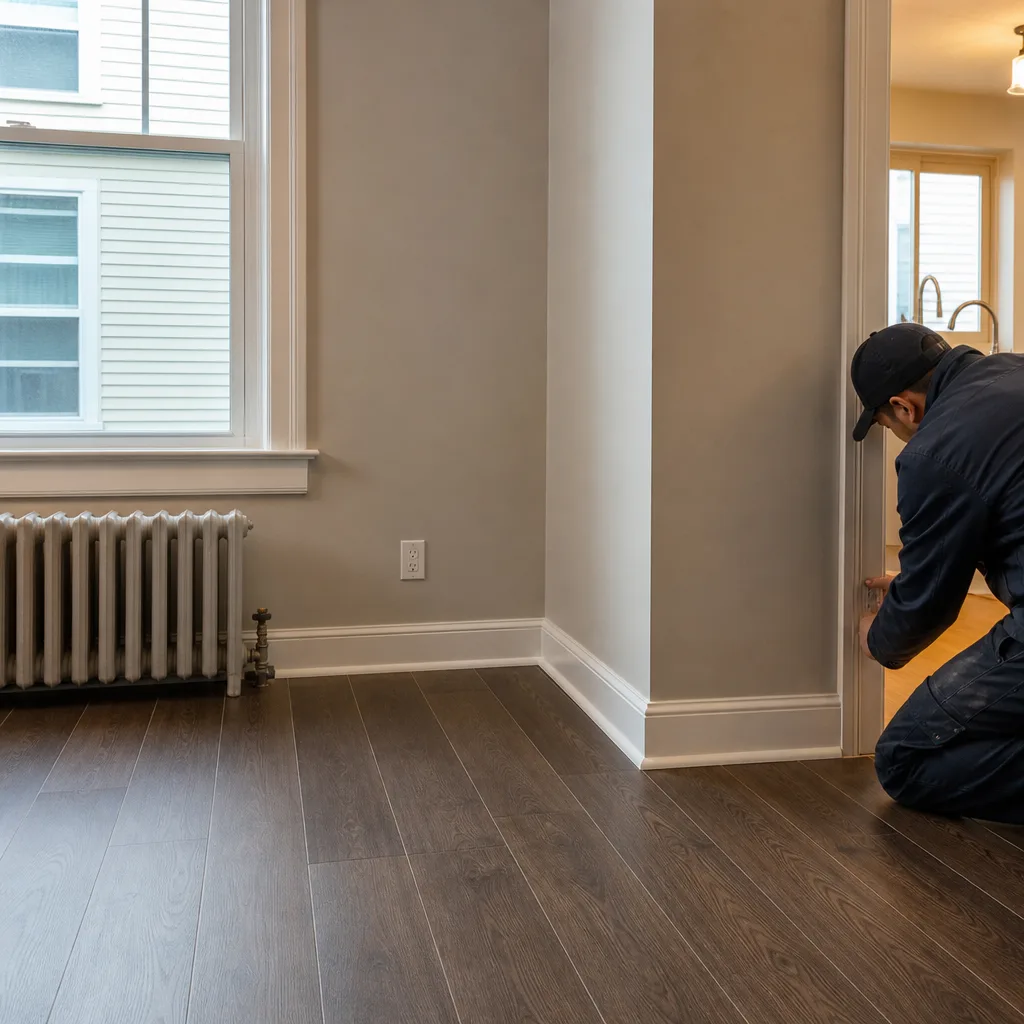 After
After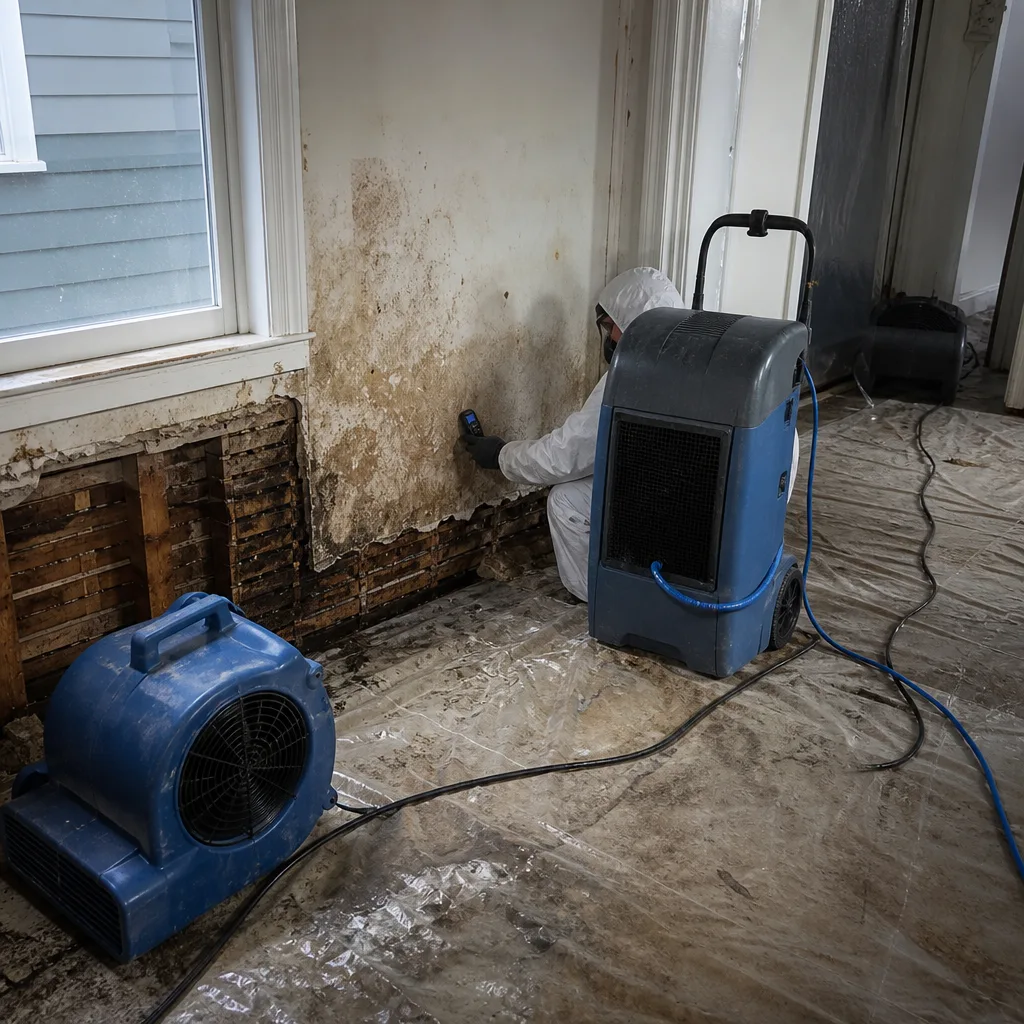 Before
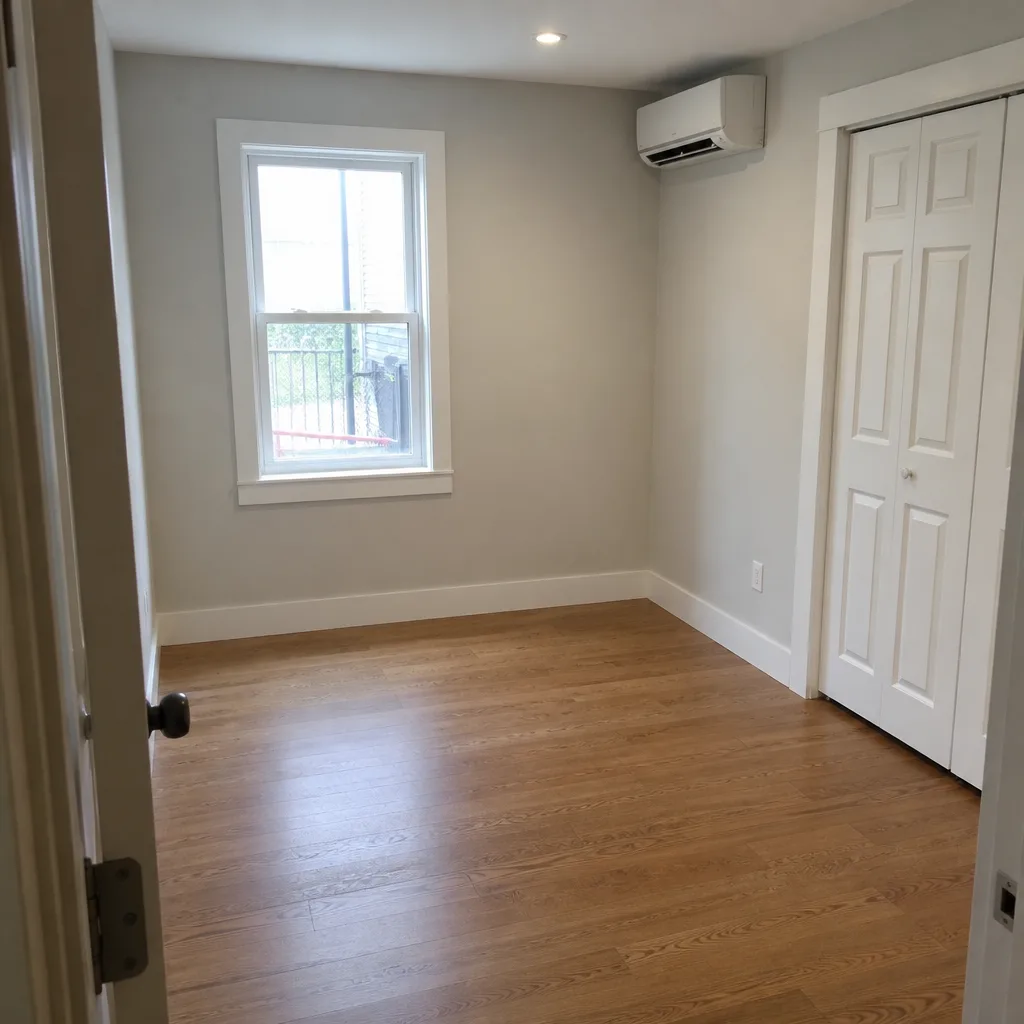 After
After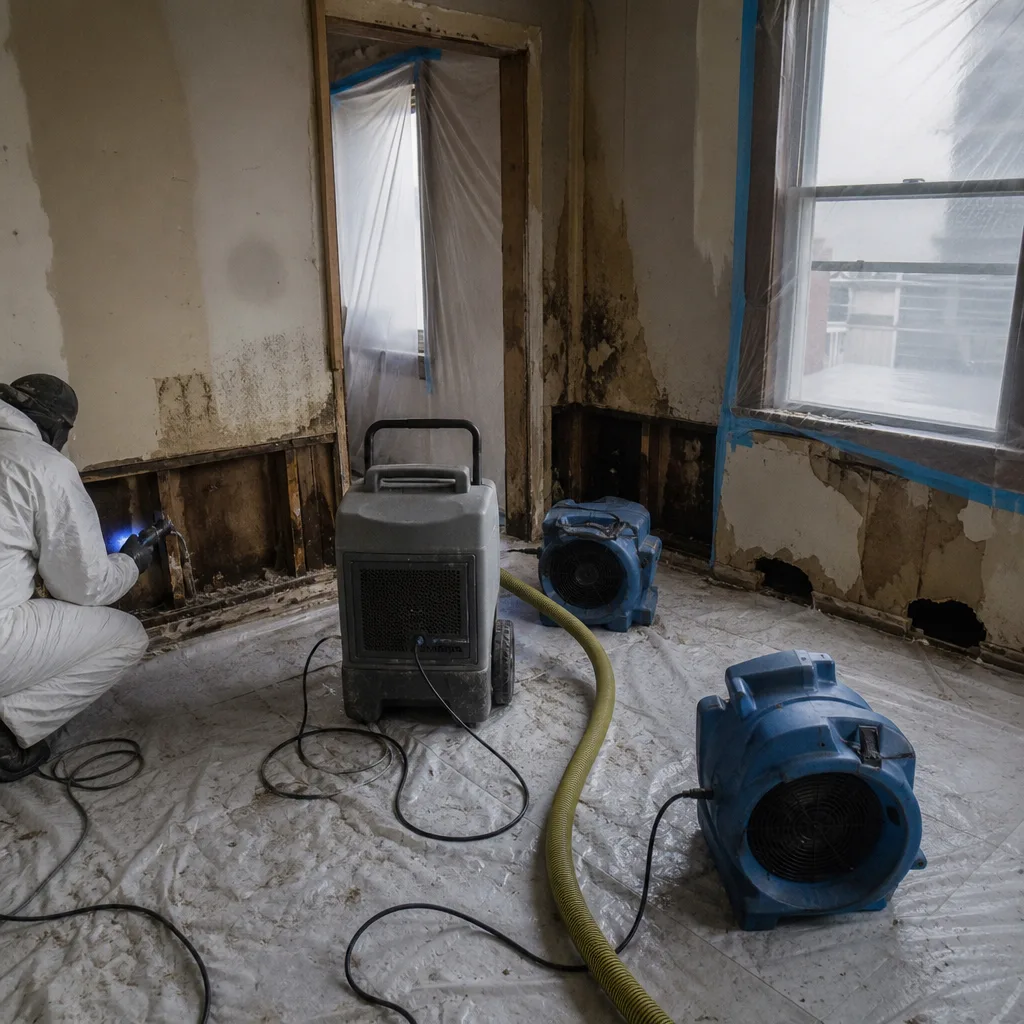 Before
 After
After24/7 Emergency Water Damage Restoration in West New York
A burst supply line in a fifth-floor walk-up on Bergenline Avenue doesn’t wait for regular business hours, and neither do we. Water damage restoration in West New York runs around the clock because water doesn’t check the clock before it starts moving through three floors of plaster and lathe. Call (363) 208-1526 and you get a live person, not a voicemail tree. Wade heads out fast because the first hour determines whether you’re drying sheetrock or tearing out entire wall cavities. We serve all of West New York, from the Hudson waterfront towers down to the pre-war brick blocks inland, with extraction crews that can be on-site and pulling water within that first hour.
Understanding Water Damage Restoration Severity in West New York Properties
Water damage gets classified three ways, and knowing which one you’re dealing with changes everything about the job. Category 1 is clean water, straight from a supply line or faucet. Category 2 carries contaminants from washing machines or dishwashers. Category 3 is the serious one: sewage, river water, or anything that backed up from a drain. In West New York, we see a lot of Category 2 and 3 because moisture travels through shared building systems. A clean-water leak from one unit picks up fifty years of dust, rust, and debris as it moves through the cast-iron stack, so by the time it hits the apartment below it’s not clean anymore. Moisture mapping tells us where the water actually went, not just where it’s showing. In these older buildings, water follows gravity through utility chases and along floor joists, pooling in places nobody sees until we get thermal imaging on it.
The age of West New York’s housing stock makes structural drying harder. Pre-WWII brick and 1950s masonry hold moisture in ways modern drywall doesn’t. You can’t just point an air mover at a wall and call it done. We take daily moisture readings from inside wall cavities and hand you the log when we’re finished. Most companies won’t do that, or won’t do it honestly. We do it because you should know the wall is actually dry, not just that someone said so.
Why West New York Property Owners Choose Wade’s Restoration
- 45-minute response commitment for emergency water extraction anywhere in West New York, from the waterfront to the North Bergen line.
- 24/7 live answer. Wade answers his own phone. No answering service, no call center, no callback tomorrow.
- IICRC-certified crews holding WRT and AMRT certifications, running professional-grade extraction and drying equipment.
- Free visual inspection with no trip charge anywhere inside Hudson County, so you know what you’re dealing with before you spend a dollar.
- Direct insurance billing and direct adjuster communication, so you’re not relaying messages between two parties.
- One team from extraction to reconstruction. You won’t get handed off to a subcontractor who never saw the original damage.
Our Water Damage Restoration Process
Inspection & Assessment
We show up, walk the affected area, and run thermal imaging plus moisture meters to map exactly where the water went. In West New York’s older buildings, that almost always includes checking the units above and below, because water doesn’t respect property lines. You get a written scope before any work starts.
Extraction / Stabilization
We pull standing water with truck-mounted and portable extraction units, then remove saturated materials that can’t be saved. In a flooded basement on Park Avenue, that might mean carpet, pad, and the bottom two feet of drywall. Speed here stops the migration into neighboring units.
Drying & Dehumidification
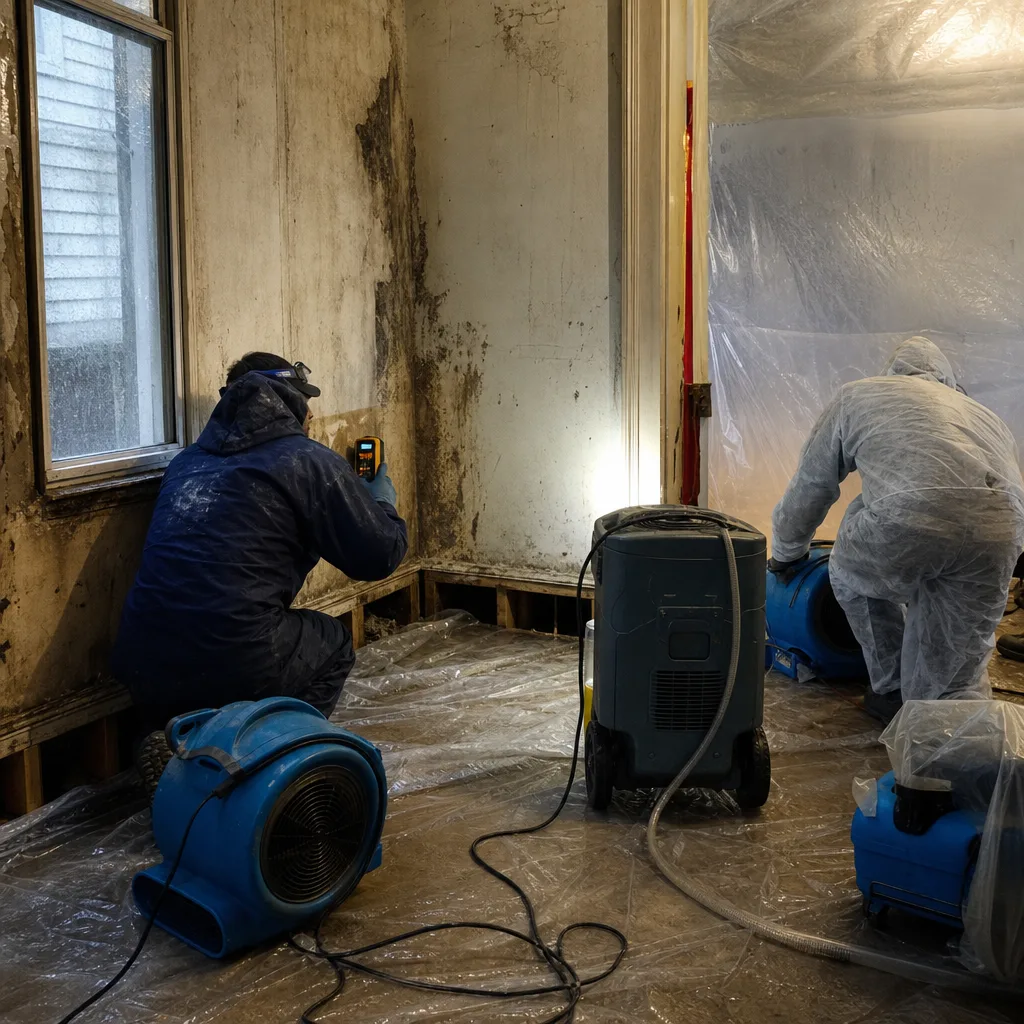
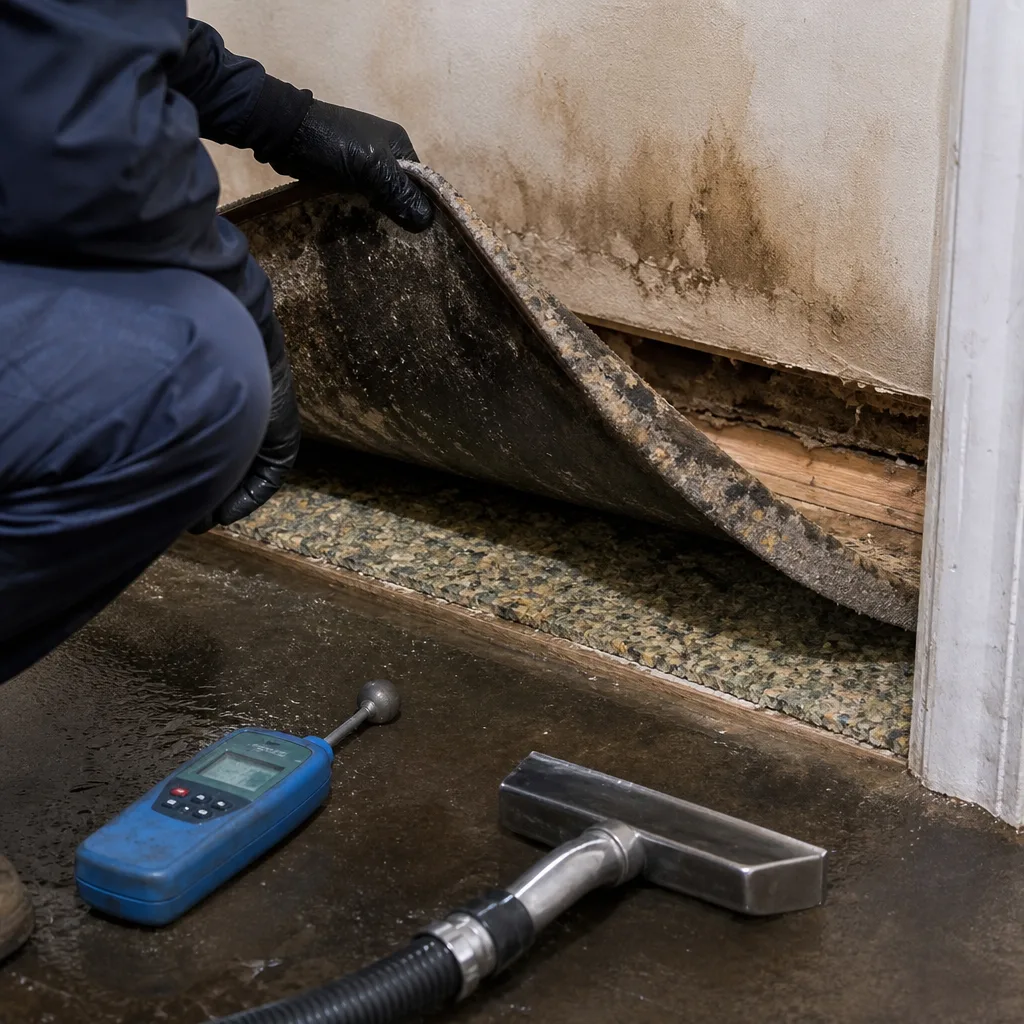
Professional-grade air movers and dehumidifiers from Dri-Eaz and Phoenix go in, positioned to create cross-flow through wall cavities and under floors. We take moisture readings every single day and adjust equipment placement until the structure hits its dry standard.
Cleaning & Sanitization
Everything that got wet gets cleaned with antimicrobial treatments appropriate for the water category. In high-humidity riverfront buildings, this step is non-negotiable. Skip it and you’ll be fighting mold inside a week.
Mold Prevention & Treatment
West New York’s persistent river humidity means we treat for mold prevention even on clean-water losses. HEPA air scrubbers run during demo to keep spores from spreading, and we apply EPA-registered antimicrobials to all affected framing and masonry.
Repairs & Restoration
Once the structure is dry and verified with documented readings, we rebuild. New drywall, plaster repair, flooring, paint, trim. You get one crew that saw the damage from hour one, so nothing gets lost between an extraction tech and a reconstruction crew that never spoke to each other.
Need Emergency Water Damage Restoration in West New York Now?
Crews minutes away, answering live 24 hours a day. The sooner we start, the less it costs.
Working With Your Insurance Company
Insurance claims for water damage in West New York get complicated fast, especially in multi-unit buildings where liability crosses property lines. We handle the documentation from the first hour so your claim doesn’t stall. Our team provides your adjuster with industry-standard estimates and talks to them directly about what we found, what it costs, and why each line item is necessary. You shouldn’t have to explain to your carrier why a baseboard in the unit below you had to be pulled. That’s our job.
What We Provide Your Insurer
- Thorough documentation of the loss
- Photos of all damage, room by room
- Moisture readings and drying logs
- A detailed, line-item scope of work
- Direct coordination with your carrier
Built for West New York’s Loss Calendar
West New York’s water damage season runs all twelve months, but the flavor changes. January and February bring deep freezes that burst supply lines in uninsulated exterior walls, especially in those 1950s brick walk-ups with original plumbing. March and April thaw the ground and send groundwater seeping into older basements and sub-grade storage rooms. July and August thunderstorms dump rain faster than the town’s combined storm sewers can handle it, backing water into ground-floor units along the lower streets near the waterfront. Nor’easters push Hudson River surge against the shoreline from October through December. The pre-war buildings along Bergenline Avenue and surrounding blocks carry the highest year-round risk because their cast-iron drain stacks are eighty years old and nobody knows they’re failing until a ceiling gives way on someone’s dining table.
Water Damage Restoration Across West New York’s Neighborhoods
The waterfront towers along River Road and Port Imperial Boulevard are a different job than the brick walk-ups inland. High-rise condos mean working under condo-board protocols, scheduling service elevators, and coordinating with building management on containment placement. The older blocks north of 60th Street along Bergenline Avenue, with their pre-war masonry construction and original piping, produce the slow-bleed leaks that turn into three-floor remediation jobs. Down by the southern end of town near the Weehawken border, the dense apartment corridors off Palisade Avenue pack units tight enough that water from one overflowing tub reaches two neighbors by morning. Over toward Donnelly Park, the mid-century buildings have slightly more modern drainage but still run cast-iron stacks that have been failing on a schedule for a decade now.
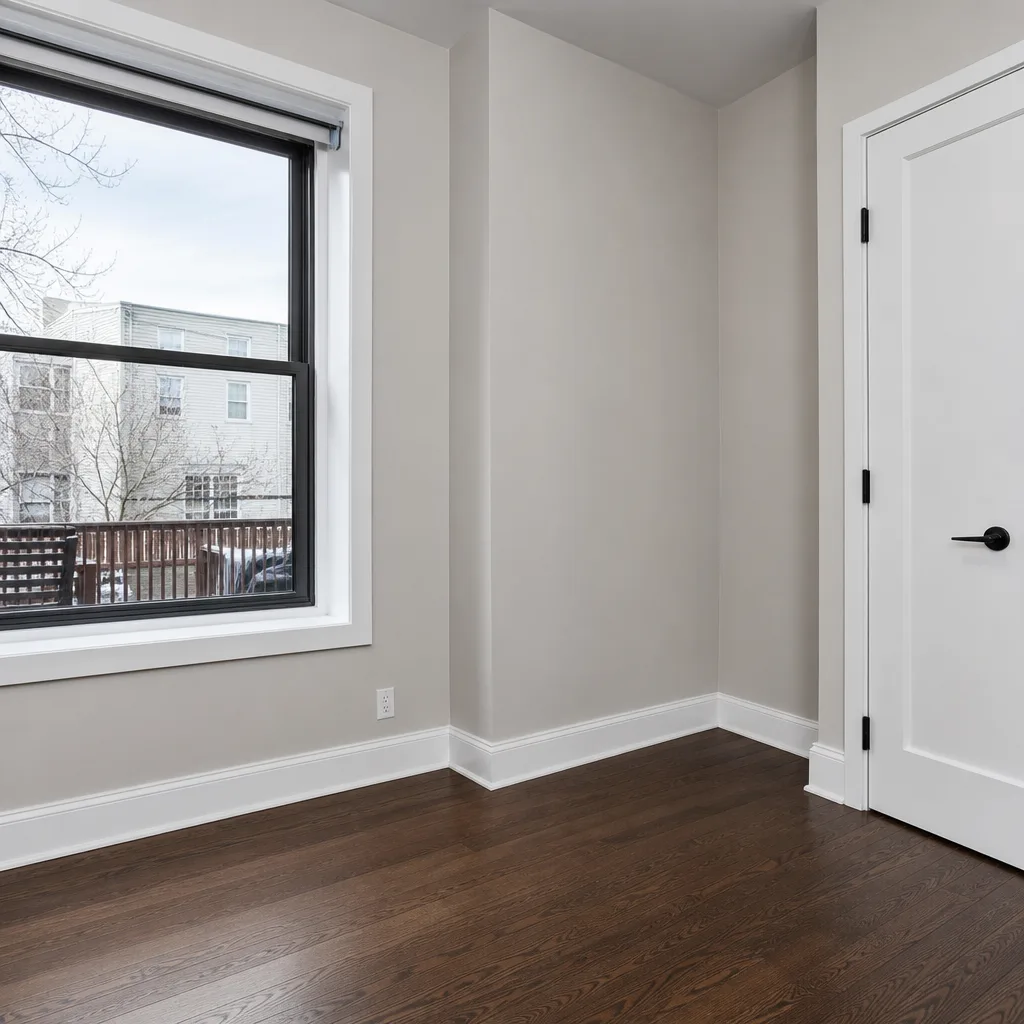
In a pre-war brick walk-up off Bergenline Avenue, a slow cast-iron drain-stack leak went unreported until ceiling plaster collapsed on two floors. Our team used moisture mapping to trace the water through shared utility chases, set up containment and air movers in three stacked units, coordinated pack-out with the landlord, and replaced saturated plaster and lathe before antimicrobial treatment, restoring pre-loss condition across the full vertical stack. That’s what this town’s water damage actually looks like. It’s not one apartment with a wet floor. It’s a building-wide problem, and you need someone who treats it that way.
Specialized Water Damage Restoration Services We Offer in West New York
Here’s where we put boots on the ground. Our full Water Damage Restoration service line covers every category, but these are the calls we run most often here in West New York.
Emergency Water Extraction
Standing water in a West New York apartment doesn’t stay put. Within minutes it’s moving through floorboards, along joists, and down into the unit below. We extract fast, using truck-mounted pumps for basement-scale floods and portable units for upper-floor apartments where weight and access matter. Every hour of standing water in one of these older buildings pushes the repair bill up and spreads the damage footprint.
Structural Drying & Dehumidification
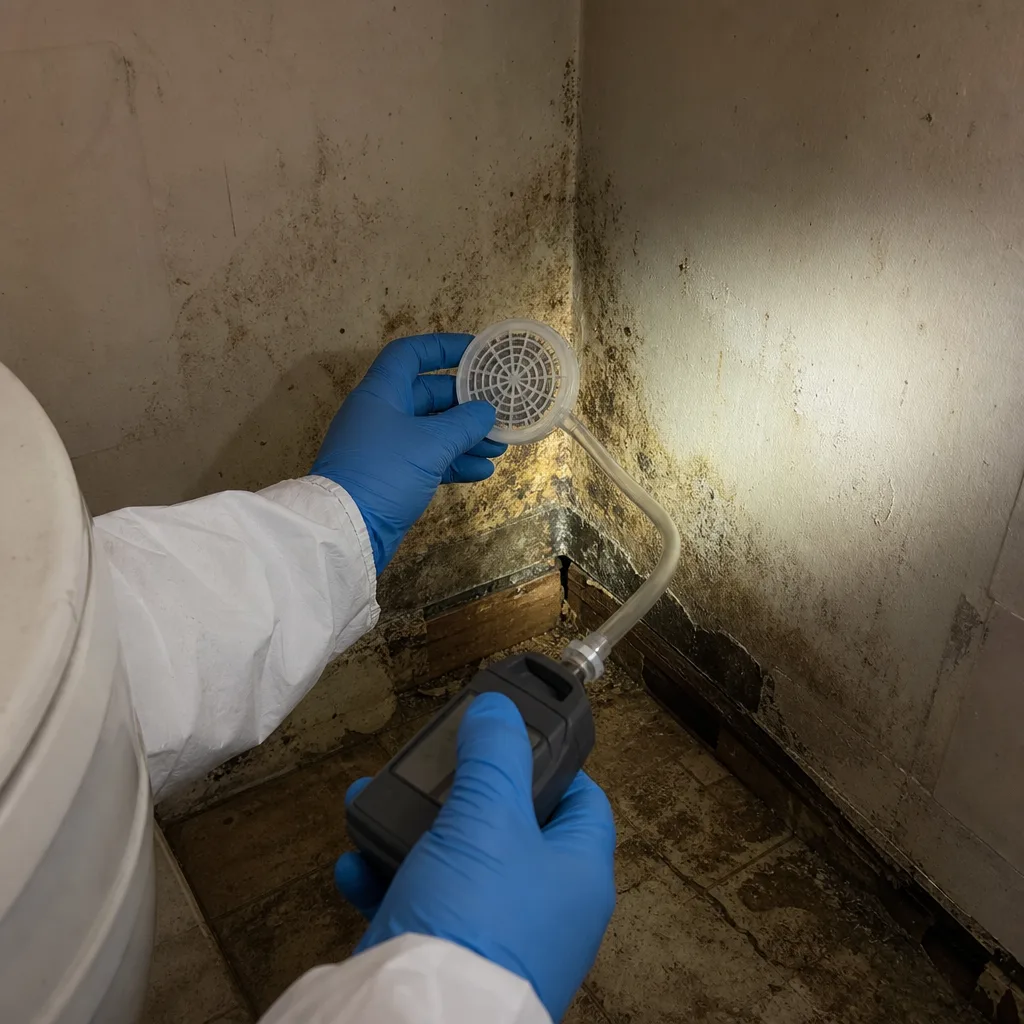
Drying a 1950s brick building isn’t like drying a newer wood-frame house. Masonry holds moisture, and the walls often don’t have accessible cavities for equipment. We open what needs opening, place Dri-Eaz air movers and Phoenix dehumidifiers strategically, and document daily moisture readings until the structure meets its dry standard. You get the log. Not many companies hand that over, but you’re paying for drying, not for someone’s word that it’s dry.
Flood Cleanup
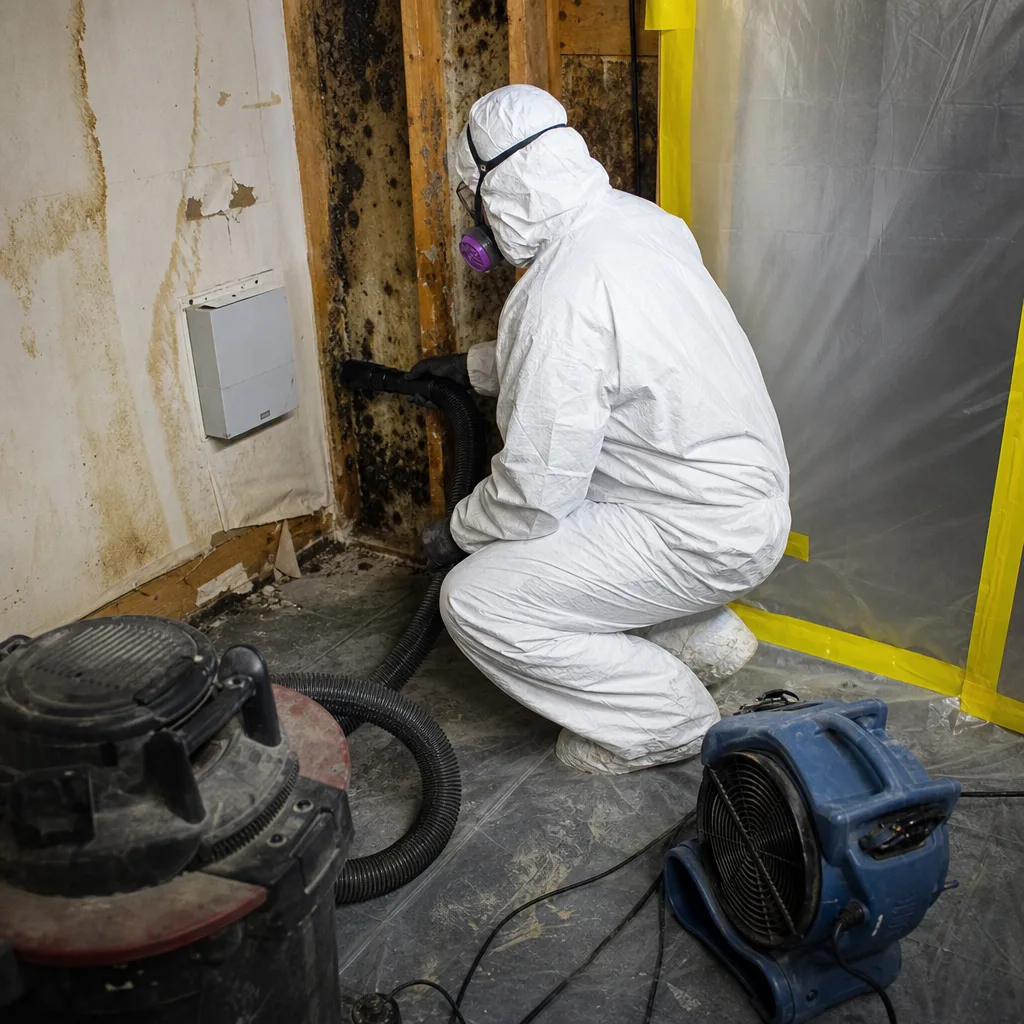
When the Hudson rises or a nor’easter pushes storm surge into ground-floor units, the water isn’t clean. Floodwater carries river sediment, fuel residue, and sewage. We treat it as Category 3 from the first step, with containment, HEPA air scrubbing, full removal of saturated porous materials, and antimicrobial treatment on every structural surface. In this town’s humidity, half-measures get you mold inside a week.
Burst Pipe Restoration
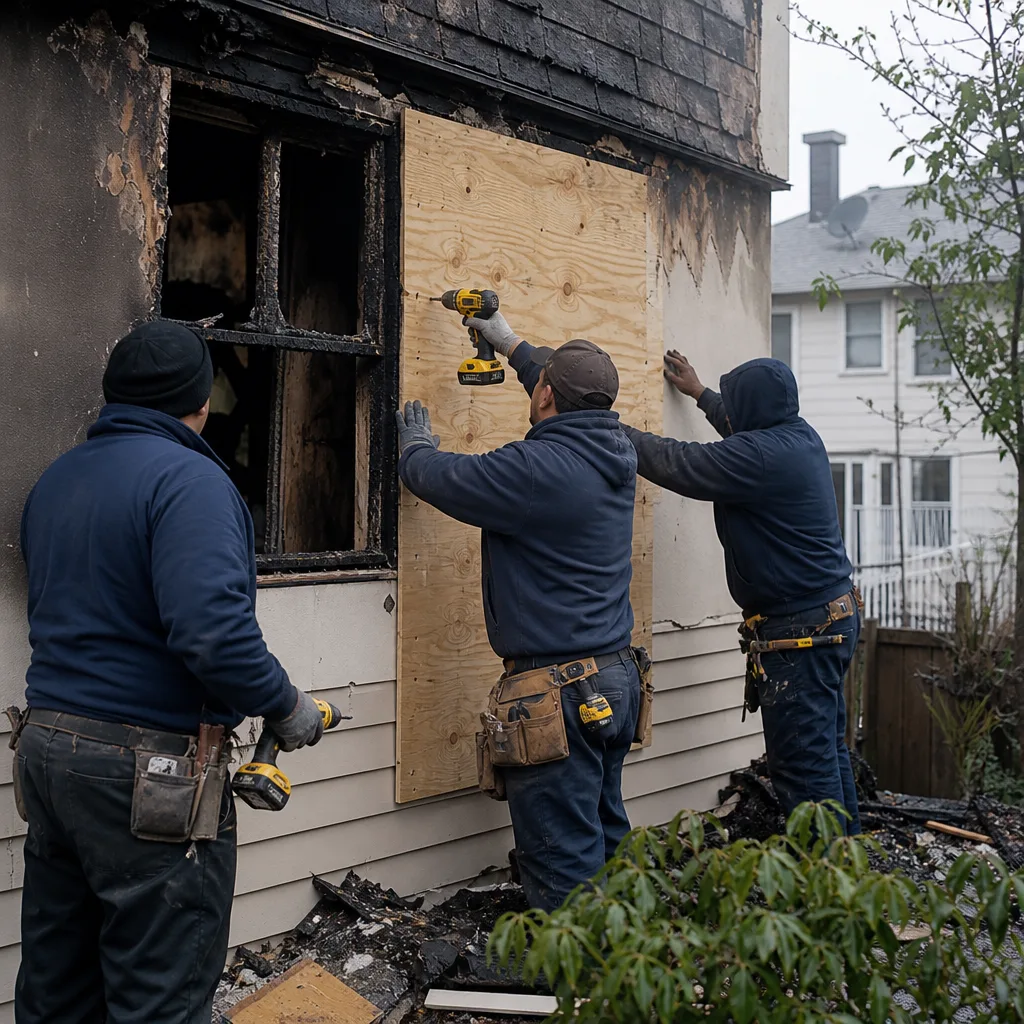
January in West New York bursts pipes regularly. Supply lines freeze in exterior walls, thaw, and dump water into units below. We stop the source, extract the water, dry the structure, and rebuild. Because we coordinate directly with building management and adjacent unit owners, the job gets done without you playing middleman between your landlord and your upstairs neighbor’s insurance.
Basement Water Removal
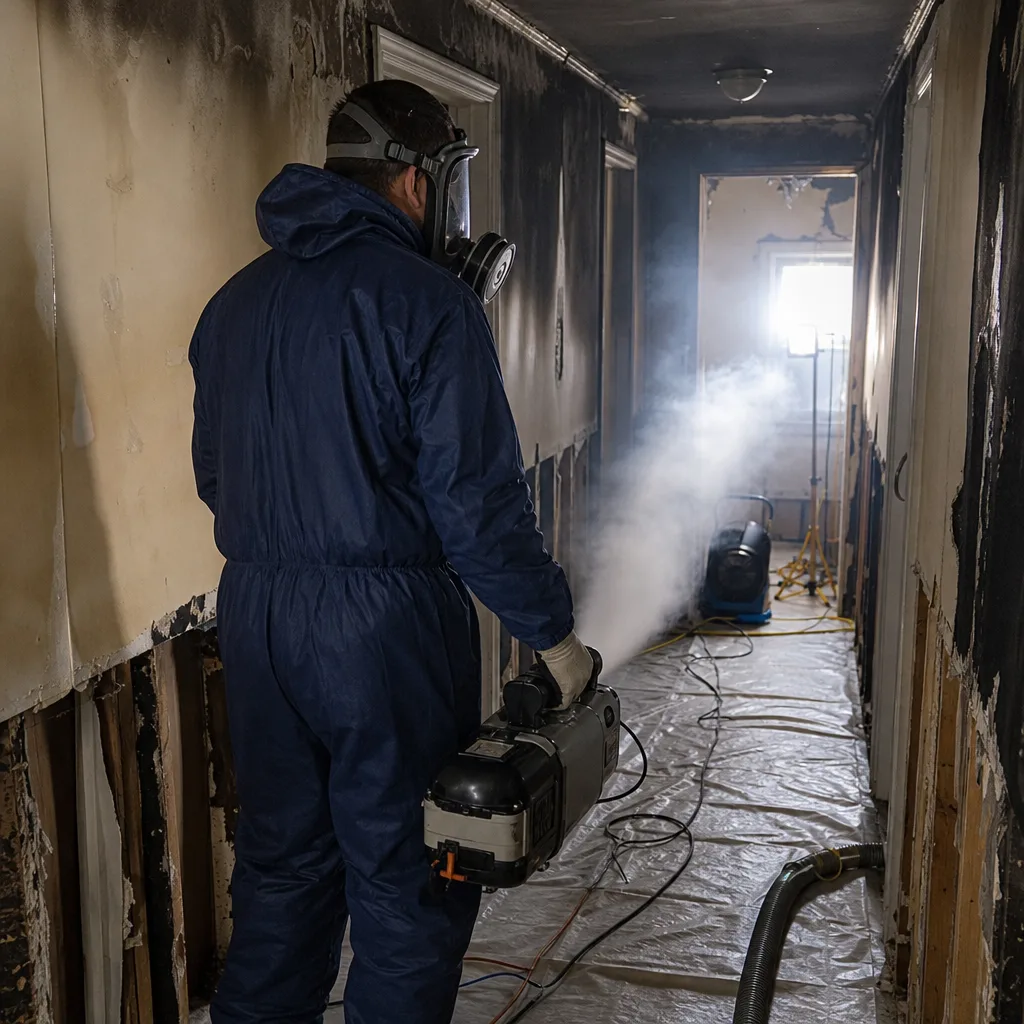
Older buildings in West New York that still have basements deal with groundwater seepage every spring. We pump, extract, dry, and treat. Then we tell you honestly what needs to happen next, whether that’s a sump pump, a French drain, or just fixing a grade problem at the foundation. No upsell, just what the building actually needs.
Ceiling & Roof Leak Water Damage
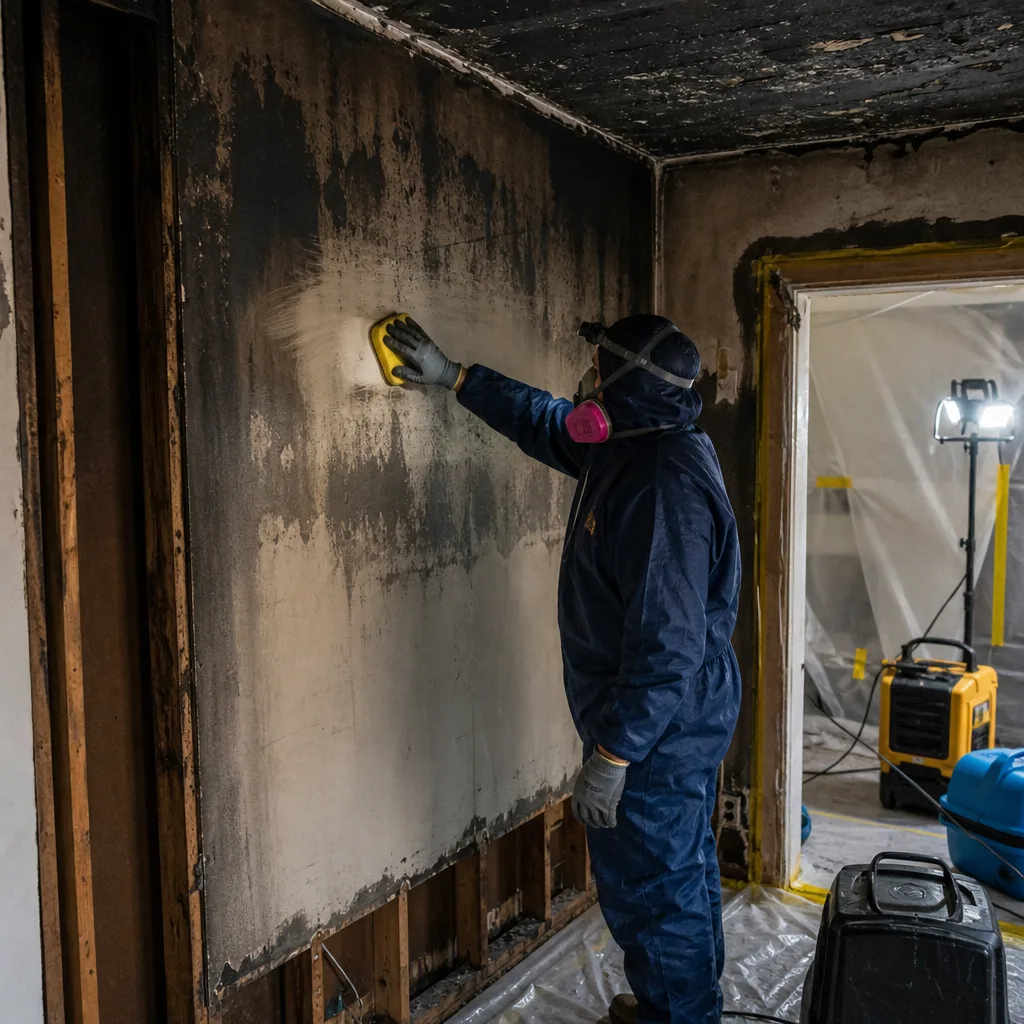
Flat-roof buildings throughout West New York leak during heavy rain, sending water down through ceiling cavities into top-floor units. We extract, dry the ceiling assembly, repair the plaster or drywall, and treat for mold. If the roof itself is the problem, we’ll tell you that plainly and help you get the right roofer on the job before we rebuild.
What happens when you call
- 1
A real person answersNo phone trees - you reach a local pro.
- 2
You get an upfront price rangeHonest numbers before anyone is dispatched.
- 3
A background-checked tech heads outLicensed & insured, dispatched right away.
- 4
You approve before work beginsNothing starts until you say go.
Water Damage Restoration Costs in West New York, NJ
Honest numbers: a small clean-water extraction from a burst supply line in a single West New York apartment typically runs $800 to $2,500, assuming we get there fast and the water stayed contained. A three-floor migration through a pre-war building’s utility chases, where we’re pulling plaster, drying multiple units, and coordinating with a landlord, runs $4,000 to $12,000 or more depending on square footage and materials. Category 3 flood cleanup from river surge or sewage backup adds containment and antimicrobial treatment, typically starting around $3,500 for a single ground-floor unit and climbing from there. What moves the price: how much material has to come out, how many units are involved, what category the water is, and how fast we got called. Insurance covers most sudden and accidental water damage, and we bill carriers directly. The free visual inspection gets you a written scope with line-item pricing before you commit to anything. Call (363) 208-1526 and we’ll come look.
We Also Serve Cities Near West New York
Our crews cover Hudson County from the river inland. We serve Hoboken, Weehawken, North Bergen, and Union City with the same 24/7 response and the same written-scope-before-work policy.
Serving West New York, NJ - Our Local Coverage Area
We’re based in the West New York area and know this community well. Use the map below to see our service coverage - if you’re nearby, we can almost certainly help.
West New York Water Damage Restoration Questions, Answered
How does water damage spread between apartments in West New York’s pre-war brick buildings?
Water moves through shared masonry party walls, utility chases, and cast-iron drain stacks that run vertically through the entire building. A leak in a fifth-floor kitchen follows the stack downward, saturating floor assemblies and wall cavities on every floor below. By the time you see water, the moisture map often spans the full vertical height of the building.
What category of water is typical from a burst pipe in a West New York high-rise?
A burst supply line starts as Category 1 clean water, but in a high-rise it picks up decades of dust, debris, and rust as it travels through chases and between floors. We treat it as contaminated after migration and adjust our cleaning protocol accordingly.
Why does flood cleanup near the Hudson waterfront require different techniques than inland North Bergen?
Waterfront floodwater carries river sediment, fuel residue, and often sewage backflow. It’s Category 3 from the start. Inland North Bergen sees more groundwater seepage and storm-drain backup. The techniques differ: waterfront jobs need full containment, HEPA scrubbing, and aggressive antimicrobial treatment from hour one.
Can you dry out a 1950s brick walk-up without tearing out all the plaster?
Sometimes. If we catch it early and the water was clean, we can drill targeted drying holes and run drying equipment without full plaster removal. But if the plaster is saturated through and the cavity behind it is filling with water, that plaster has to come out so the structure behind it can dry. We’ll tell you straight which situation you have.
How fast will mold start in a West New York apartment after a leak?
Given the persistent humidity near the Hudson, mold colonization starts within 24 to 48 hours on wet organic materials. That’s faster than inland. We treat every water job with antimicrobials from the first day, not after we see mold. If you’ve had standing water for more than a day, call (363) 208-1526 now.
How quickly can you actually get to my building?
We commit to a 45-minute response anywhere in West New York. Live answer, 24/7. Wade is on the road as soon as the call ends, not after a dispatcher files a ticket.
Do I really need full remediation or just a cleanup?
If the water was clean, caught fast, and didn’t migrate into walls or floors, a thorough extraction and drying may be enough. If it sat overnight, touched multiple units, or came from a drain or the river, you need remediation. The free inspection gives you an honest answer either way, with no pressure to do more than the building needs.
Who deals with my landlord, my neighbors, and my adjuster?
We do. We coordinate directly with property managers on access and containment, keep adjacent unit owners informed about what’s happening on their side of the wall, and talk to your insurance adjuster with documentation in hand. You shouldn’t be the one running messages between four parties.
If you’ve got water moving through your West New York apartment or building right now, don’t wait. Every hour it spreads, the bill climbs and the rebuild gets bigger. Call (363) 208-1526 for a free inspection and a straight answer about what you’re dealing with. We answer live, day or night, and we’ll be there fast.
Written by Wade Ferris, Owner at Wade’s Restoration, serving West New York with 24/7 water damage response.