
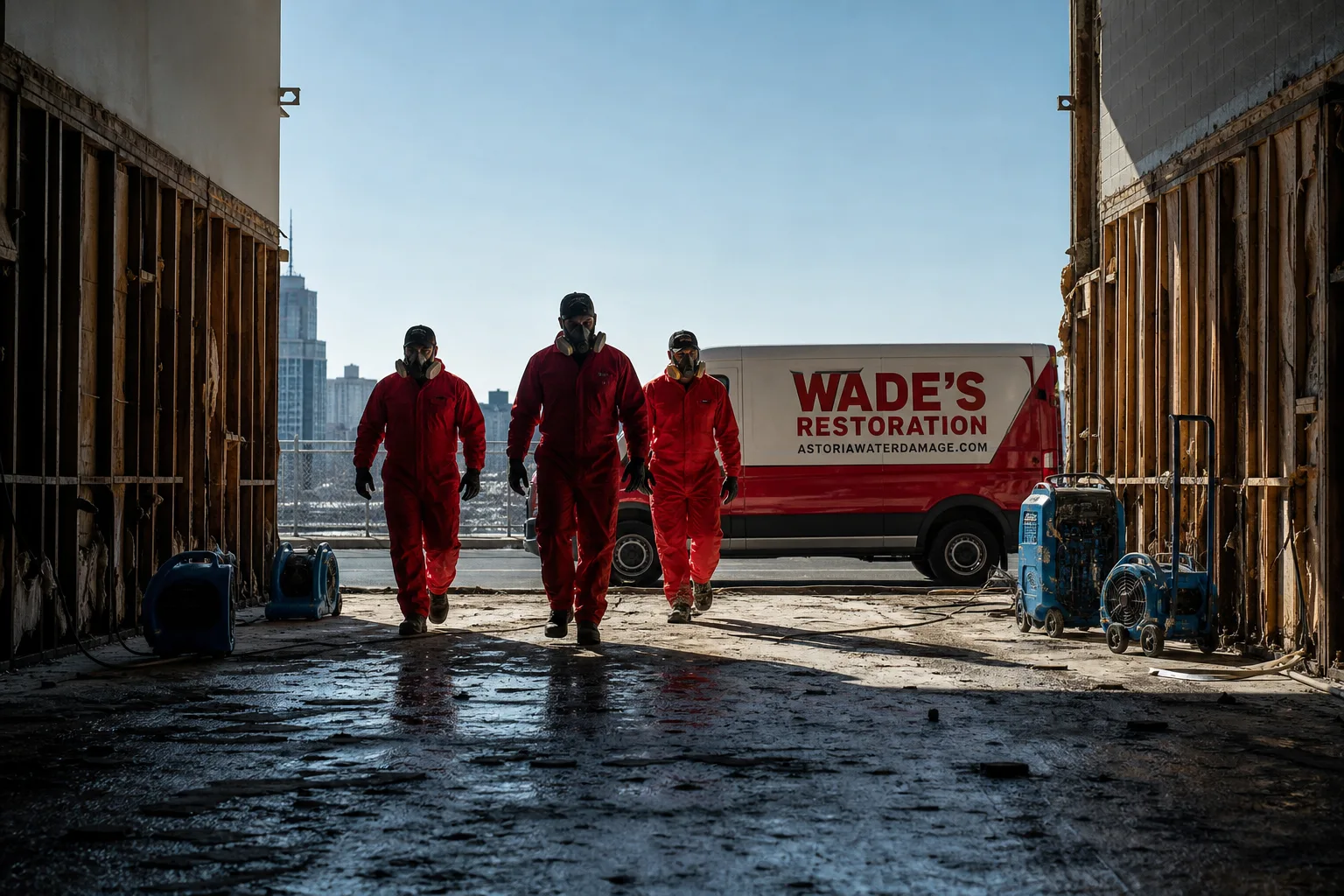
Free visual inspection and a written scope of work before any mitigation begins - photos, moisture readings, and drying logs go in your claim file
The scope we write is the scope we bill. Anything new gets shown to you, in writing, before we touch it.
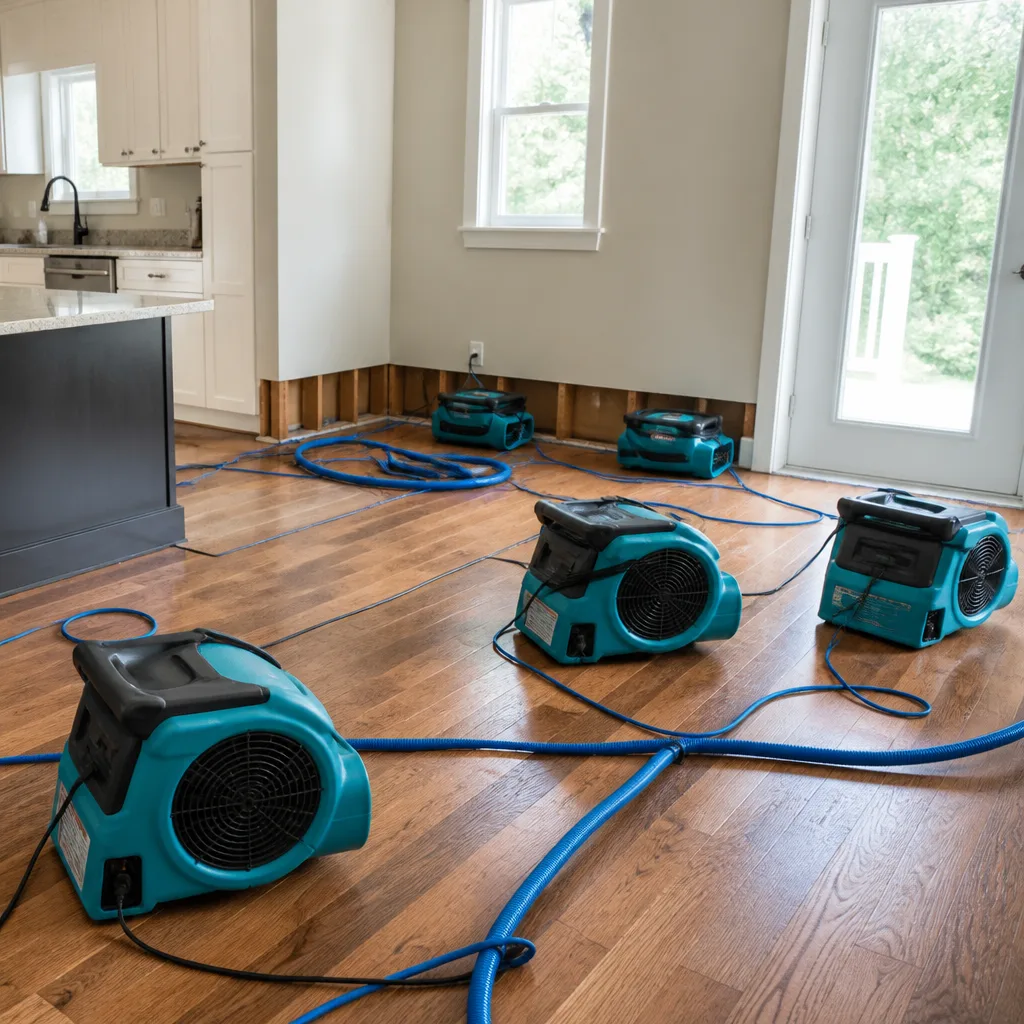
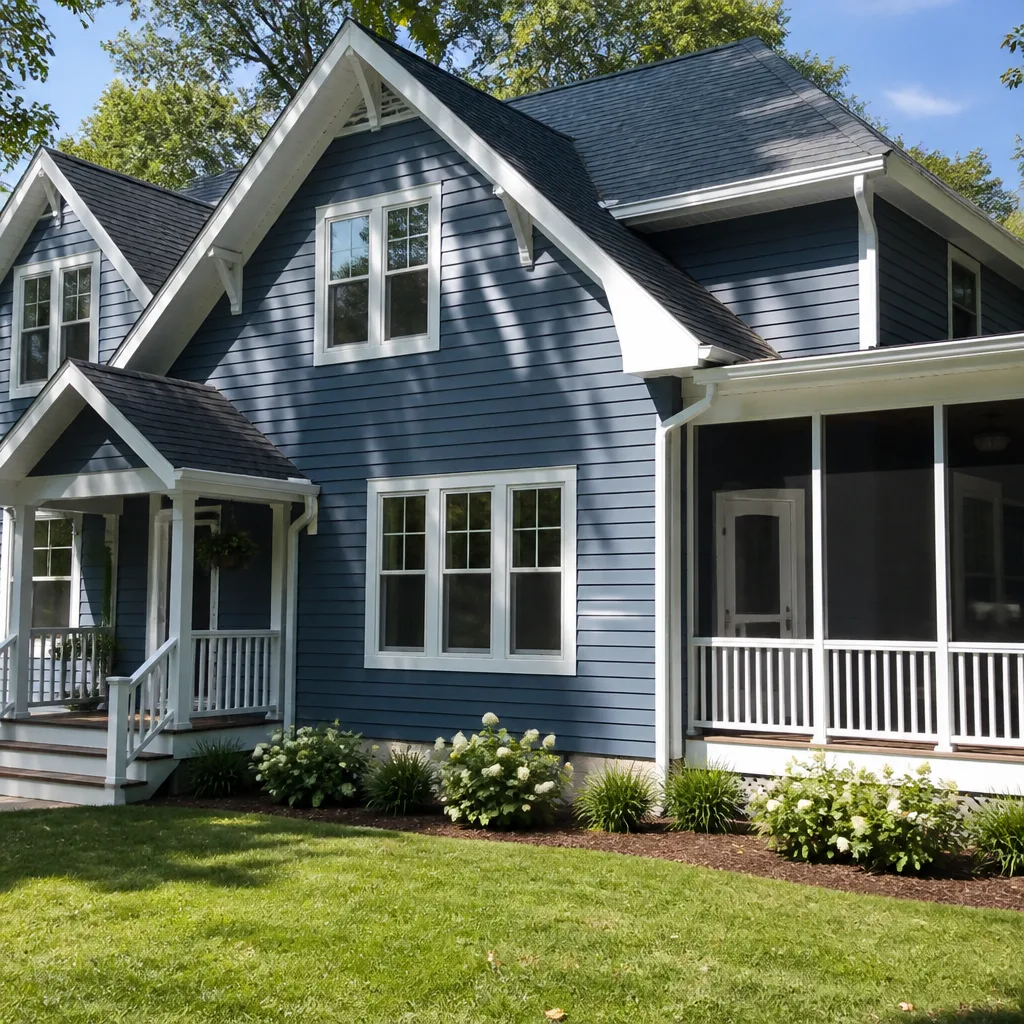
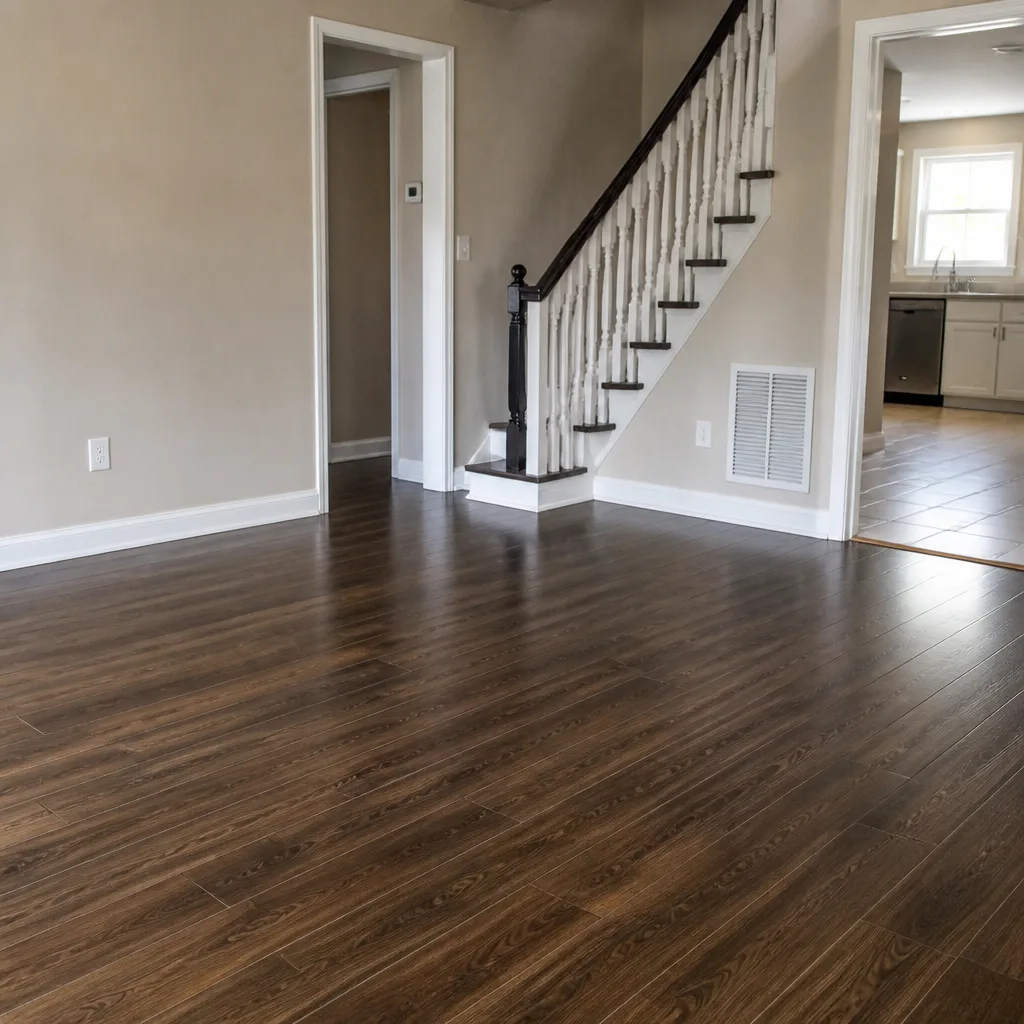
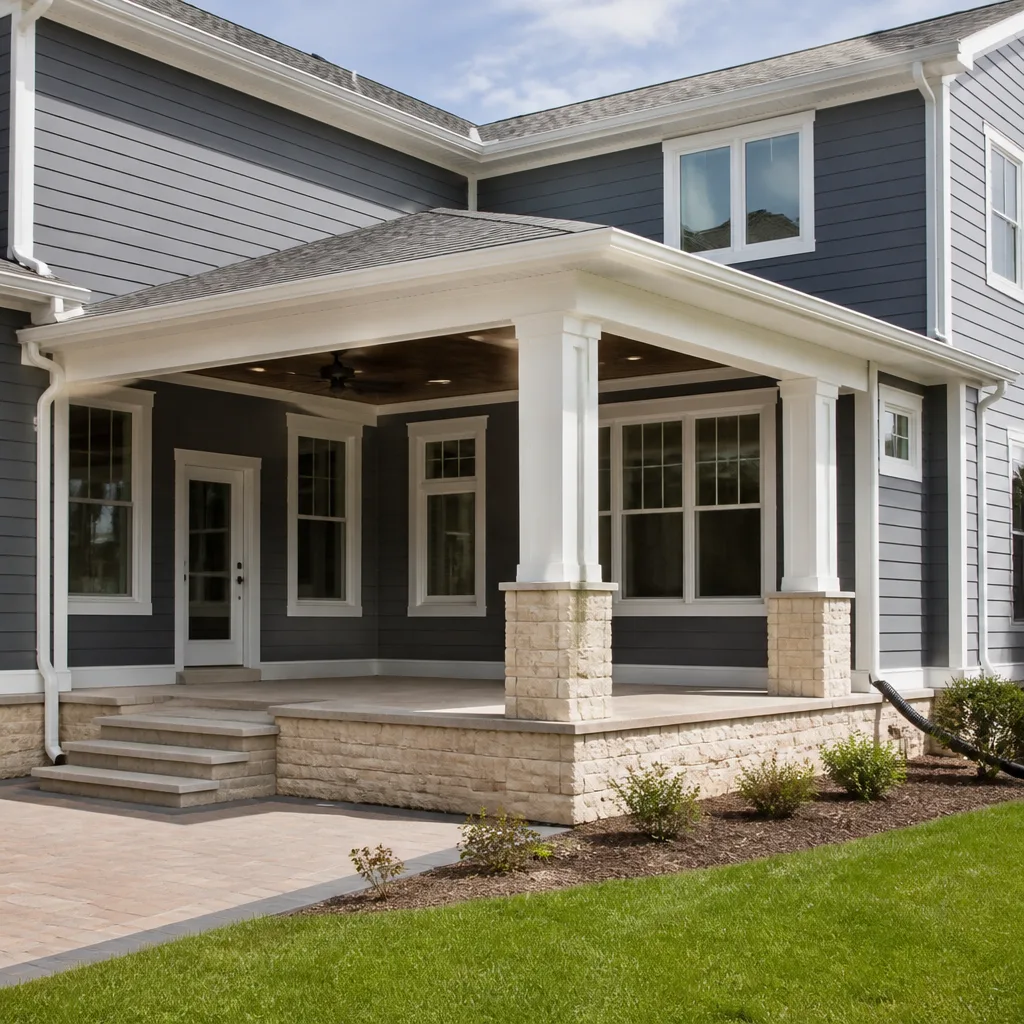
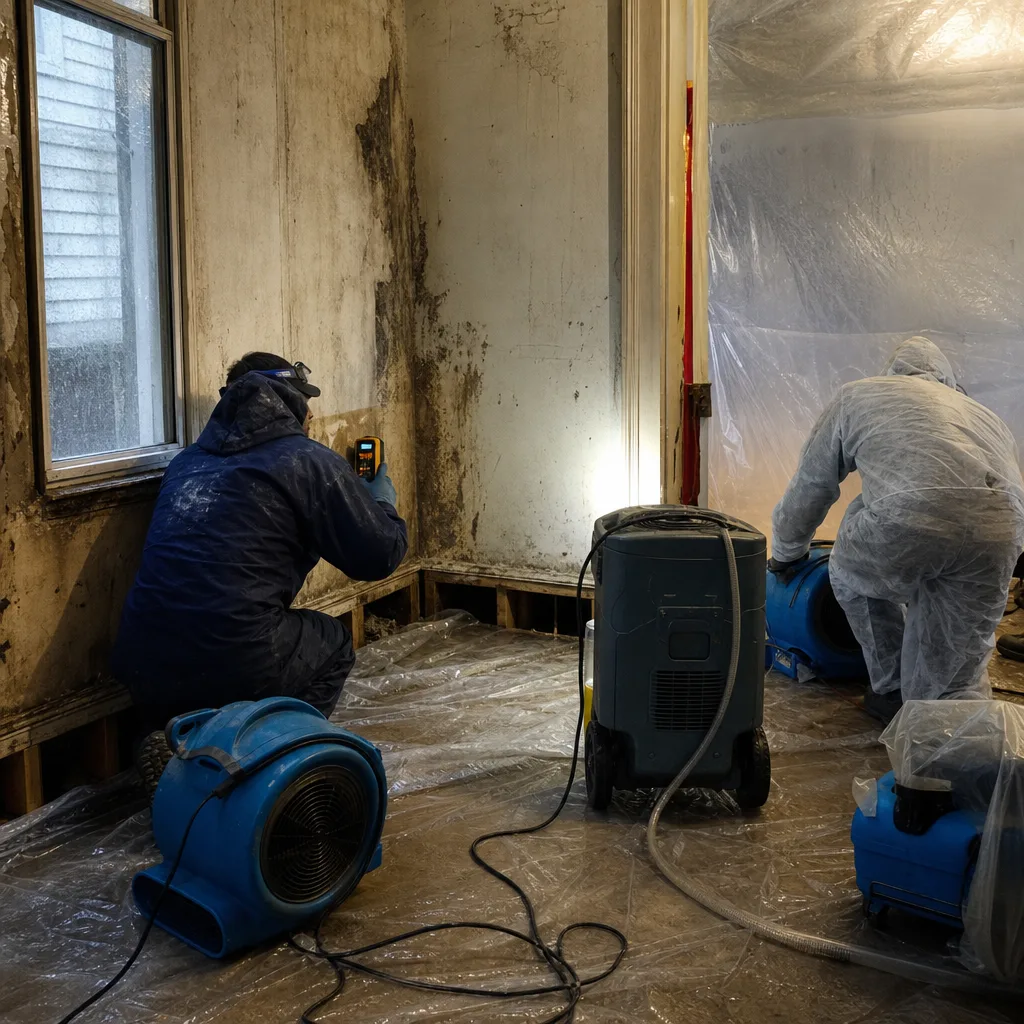 Before
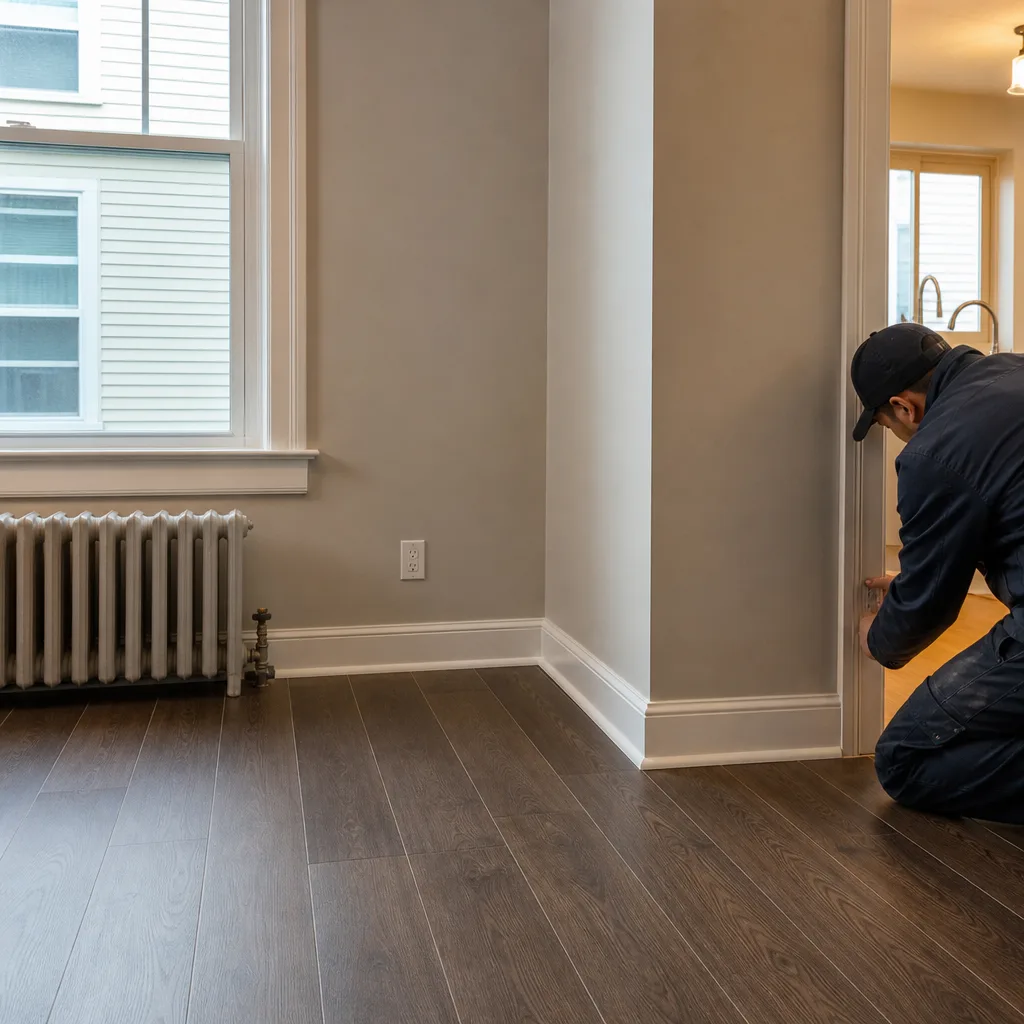 After
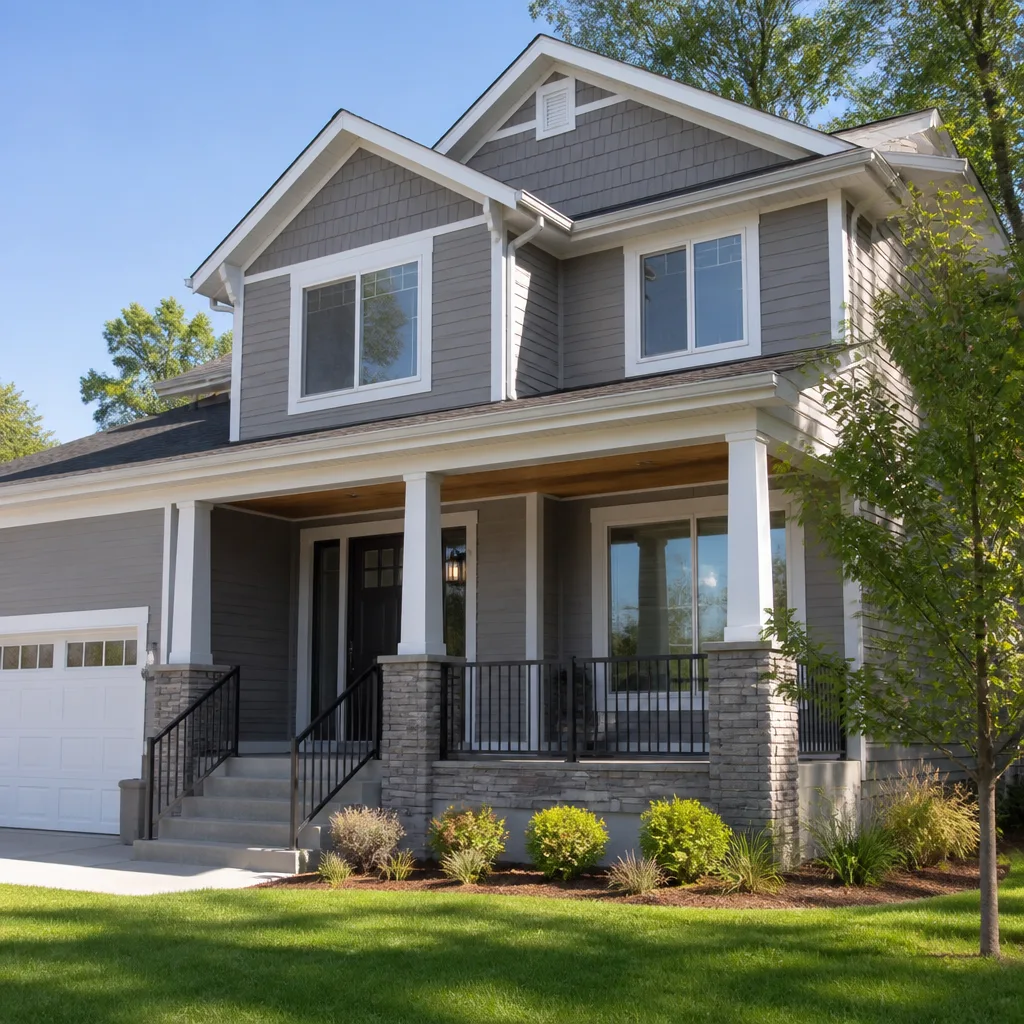
After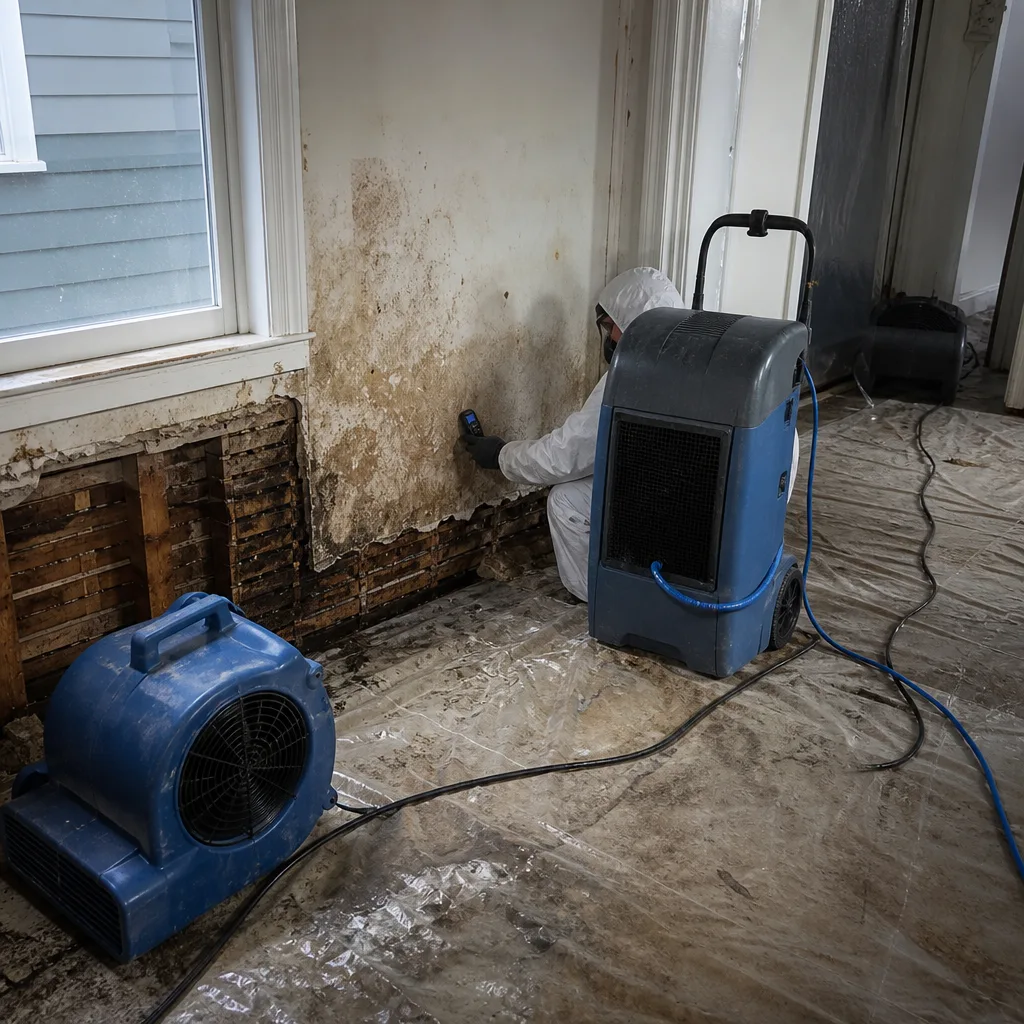 Before
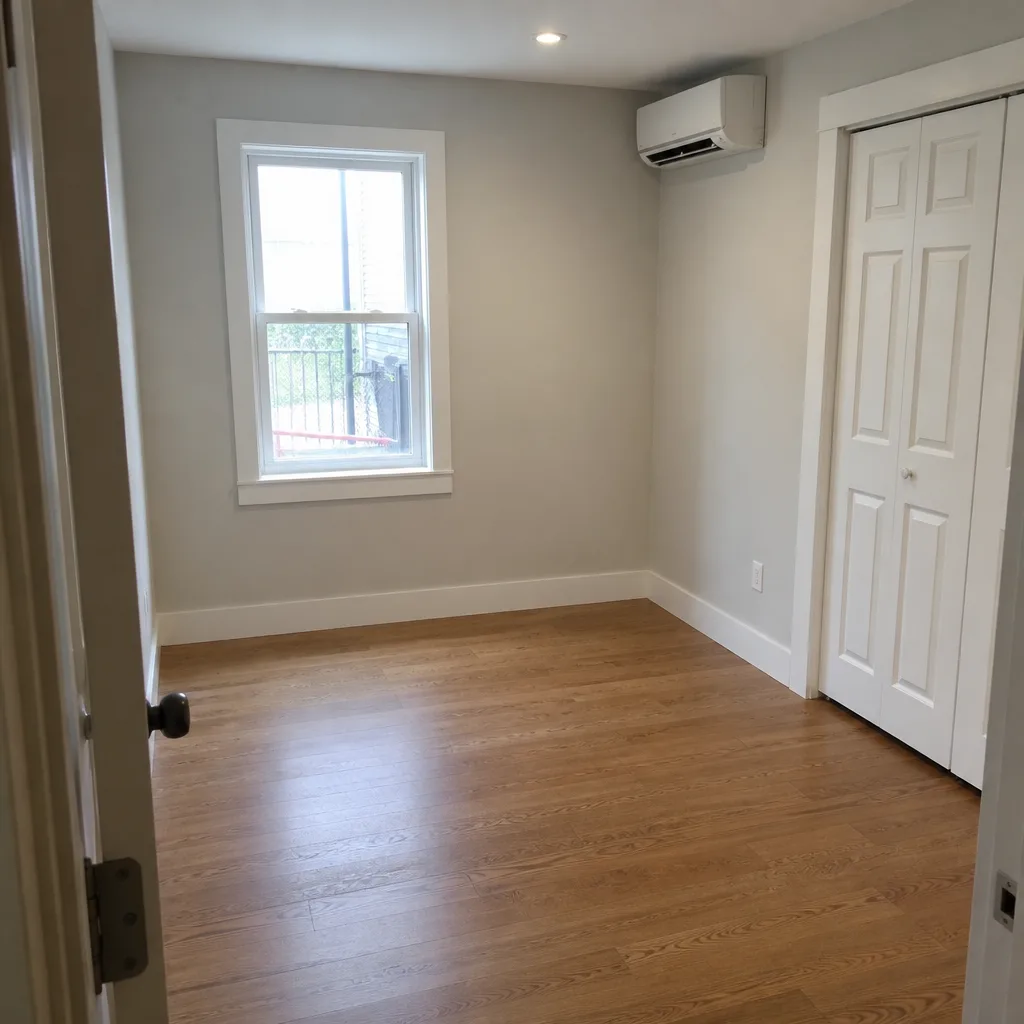 After
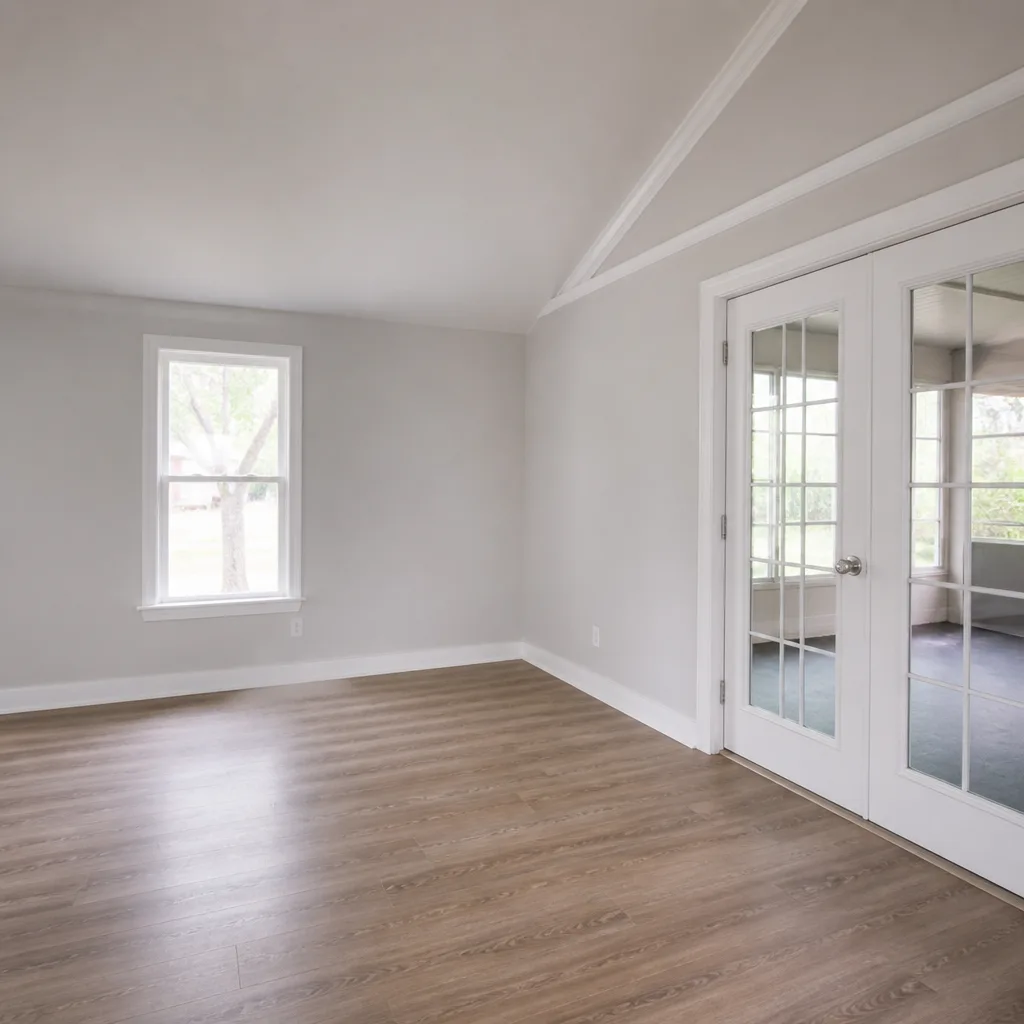
After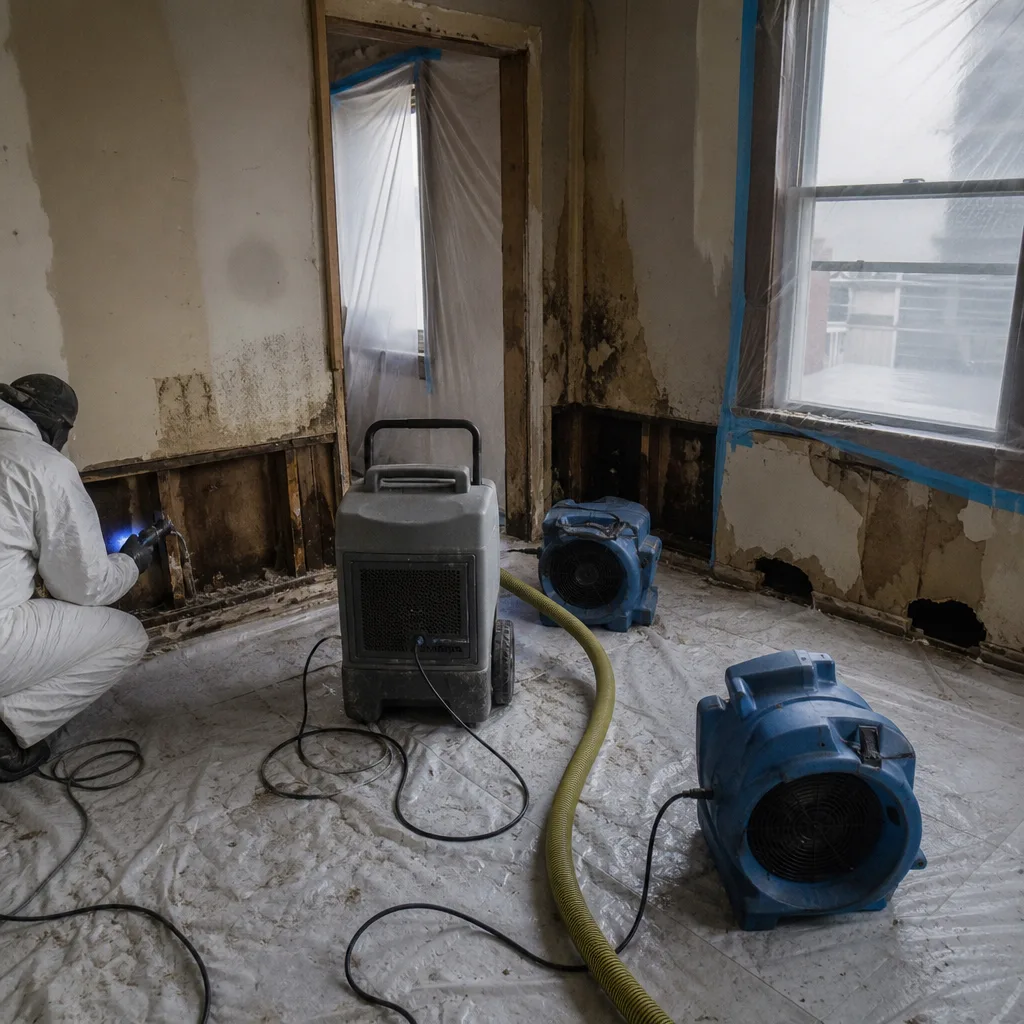 Before
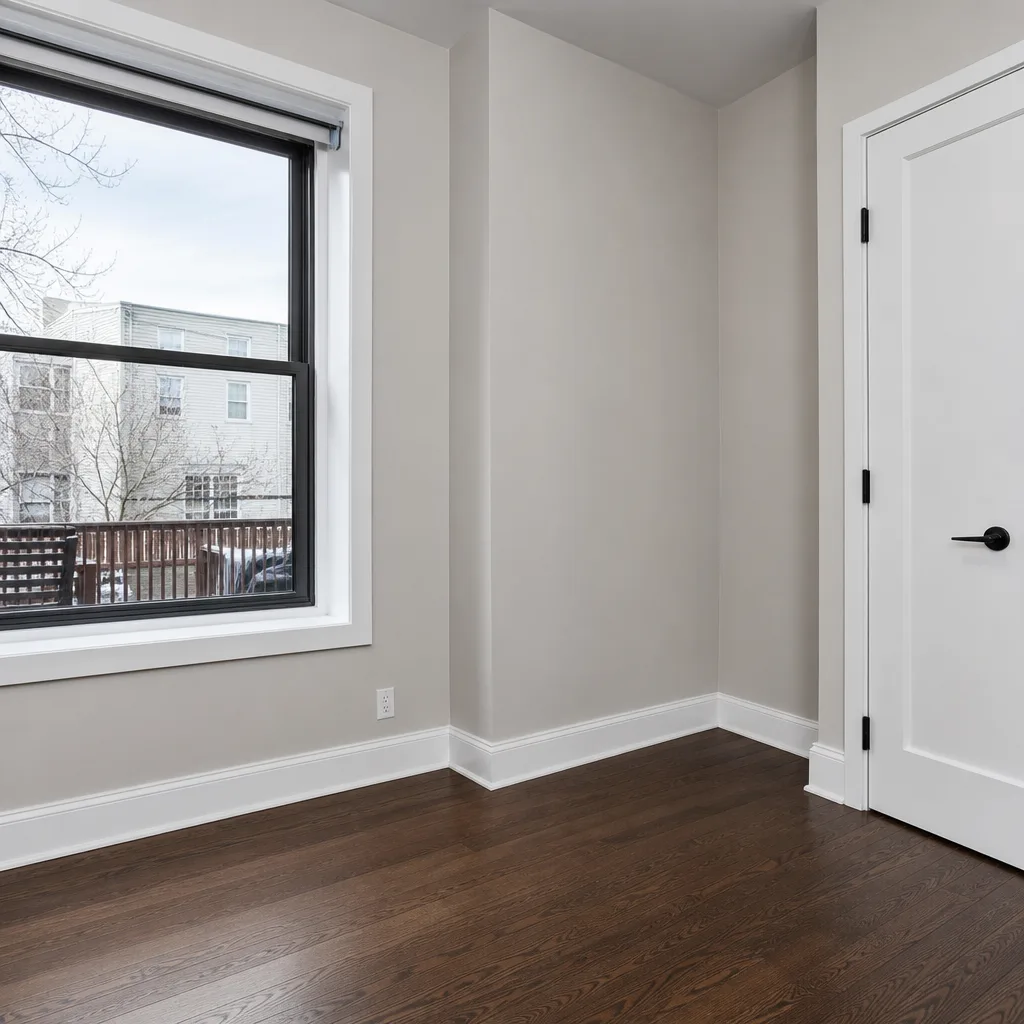 After
After24/7 Emergency Mold Remediation in Hoboken
Mold remediation in Hoboken typically costs between $1,800 and $6,500 depending on how far the contamination has spread into framing, drywall, and shared walls. The work is usually started within 24 to 48 hours of your call. If you’re standing in a basement that just took on sewer water near Washington Street or anywhere south of 4th, call (363) 208-1526 right now. Mold colonization in Hoboken’s tidal humidity starts fast, and every hour of delay widens the containment zone we’ll need to build.
Wade Ferris answers his own phone, day or night. He’ll tell you straight whether you need a full Mold Remediation scope or whether a targeted cleaning and drying plan will get the job done. We don’t charge for a visual assessment, and we don’t send a salesperson. We send the owner or one of his long-term crew leads. That’s how it works here in Hoboken, where a four-story brick row house and a garden apartment in the same building can have completely different mold problems.
Understanding Mold Remediation Severity in Hoboken Properties
The first question is always: what kind of water caused this? Category 1 is clean supply water from a burst pipe. Category 2 carries significant contamination from washing machines or sump overflows. Category 3 is sewage, and in Hoboken, a lot of basement mold starts as Category 3 because the city’s combined sewer system backs up through floor drains during heavy rain and storm surges. Once that contaminated water wicks into drywall, baseboards, and the bottom plates of framing, we’re not just drying a room. We’re doing containment, HEPA air scrubbing, antimicrobial treatment, and often removing saturated building materials entirely.
Hoboken’s housing stock makes this harder than it looks. Most residential buildings are 4-to-6-story attached brick and masonry rowhouses built between 1880 and 1920. Shared party walls mean mold spores don’t respect property lines. A mold bloom behind one neighbor’s baseboard can push spores into the stud cavities of the apartment next door. That’s why proper containment matters so much more here than in a detached suburban house. We build negative-air containment per IICRC S520 standards before we start disturbing contaminated materials, and we use HEPA-filtered air scrubbers throughout the job. Clearance testing at the end confirms the indoor spore count is back to normal background levels for the building.
Why Hoboken Property Owners Choose Wade’s Restoration
- 45-minute response commitment: When you call, Wade heads out. He’s not calling a dispatch center. He’s the one on the road toward your block.
- 24/7 live answer, always a person: No voicemail tree, no answering service. You get Wade or a crew lead who knows Hoboken’s buildings.
- IICRC-certified crews: Our people carry WRT, ASD, and AMRT certifications, and we use Dri-Eaz, Phoenix, and Injectidry equipment on every water and mold job.
- Free visual inspection: No charge to come look. We’ll tell you what we’d do, what it costs, and what you can safely skip.
- Direct insurance billing: We document everything from hour one and bill your carrier directly. You’re not stuck playing middleman.
- One team from water extraction to reconstruction: No handoffs to a subcontractor you’ve never met. Same crew, same accountability, start to finish.
Our Mold Remediation Process
Inspection & Assessment
We walk the property and map moisture with thermal imaging and penetrating meters. We identify the water source, classify the contamination, and mark the containment boundary. You get a written scope before any work starts.
Extraction & Stabilization
If standing water is present, we extract it with truck-mounted or portable units. We remove saturated materials that can’t be dried economically: carpet, pad, wet drywall, and insulation.
Drying & Dehumidification
We set Dri-Eaz dehumidifiers and Phoenix air movers in a drying configuration matched to Hoboken’s humidity load. We take moisture readings daily, not just on day one and done. You see the log.
Cleaning & Sanitization
Surfaces get treated with EPA-registered antimicrobials. HEPA air scrubbers run throughout the process, and we vacuum all porous surfaces with HEPA-filtered equipment before containment comes down.
Specialty Treatment for Hoboken’s Buildings
For row houses and garden apartments, we inspect shared wall cavities and common basement spaces. If spores migrated through party walls, we treat those cavities before finishing and run clearance air sampling to confirm the space is safe.
Repairs & Restoration
Once the moisture meter says the framing is back to pre-loss condition, we rebuild what we removed. Drywall, trim, paint, flooring: one crew handles it all.
Need Emergency Mold Remediation in Hoboken Now?
Crews minutes away, answering live 24 hours a day. The sooner we start, the less it costs.
Working With Your Insurance Company
Mold claims are different from water claims. Most homeowners policies in New Jersey cover mold remediation only when it’s tied to a covered water loss: a burst pipe, storm surge, or sewer backup if you carry that endorsement. The key is proving the chain of causation. We document the water event, the moisture conditions, and the mold growth with photos, thermal images, and daily moisture logs. That’s the record your adjuster needs to approve the full scope instead of a reduced cleaning. We talk to your adjuster directly. You shouldn’t have to translate moisture readings over the phone: you’ve got enough to deal with.
What We Provide Your Insurer
- Thorough documentation of the loss
- Photos of all damage, room by room
- Moisture readings and drying logs
- A detailed, line-item scope of work
- Direct coordination with your carrier
Built for Hoboken’s Loss Calendar
January and February bring deep freezes that split supply lines in uninsulated exterior walls of pre-war masonry buildings. The water runs down through multiple floors before anyone notices, feeding mold inside wall cavities for days. March through May brings spring rain and the first serious combined sewer backups as the aging system gets overwhelmed. July and August mean sudden downpours that push the Hudson’s tidal influence up through floor drains in low-lying blocks near the waterfront. September through November is nor’easter season, when storm surge drives Category 3 water into basements and garden apartments across the mile-square city. December brings freeze-thaw cycles that stress old iron waste pipes and copper supply lines alike. None of this respects the calendar, of course. A mold problem that starts in February might not show visible signs until May. That’s why a moisture issue in a Hoboken basement always deserves an inspection, not a wait-and-see.
Mold Remediation Across Hoboken’s Neighborhoods
Downtown Hoboken along Washington Street and below 4th Street deals with tidal water pushing up through floor drains before rain even accumulates. These blocks sit lowest in the bowl between the Hudson and the Palisades, so a moderate nor’easter can put Category 3 water into a basement sump pit with zero rainfall. Garden apartments in this zone are the most vulnerable mold sites in the city: below grade, humid, hemmed in by masonry that holds moisture.
Uptown near 14th Street and along the viaduct, the row houses sit slightly higher, but the building stock is the same 1880s-to-1920s brick and brownstone. Here we see more Category 1 and 2 losses from aging plumbing in shared walls, where a slow leak behind a neighbor’s shower can grow mold in the cavity for months before it shows on your side. The 07030 ZIP covers the whole city, but the building-by-building variation is enormous. The Housing Authority blocks between Jackson and Adams have their own water issues: common basement spaces that flood during heavy rain, and shared mechanical rooms that hold humidity year-round.
Southwest Hoboken, around Observer Highway and the train station, sits near the old tidal flats. These blocks flood during sustained rain events, and the soil holds groundwater close to foundation level. Crawl spaces and basement slabs here take on moisture from below, not just from above. That’s a different drying problem, one that demands extended dehumidification and often slab sealing before you can close the walls back up.
Specialized Mold Remediation Services We Offer in Hoboken
Mold Inspection & Testing
If you smell something musty but can’t see mold, don’t start tearing into walls. We run air sampling and surface swabs to confirm what’s present, then use thermal imaging and moisture meters to find where it’s hiding. In a Hoboken row house, that often means checking shared wall cavities and the common basement, not just your own unit.
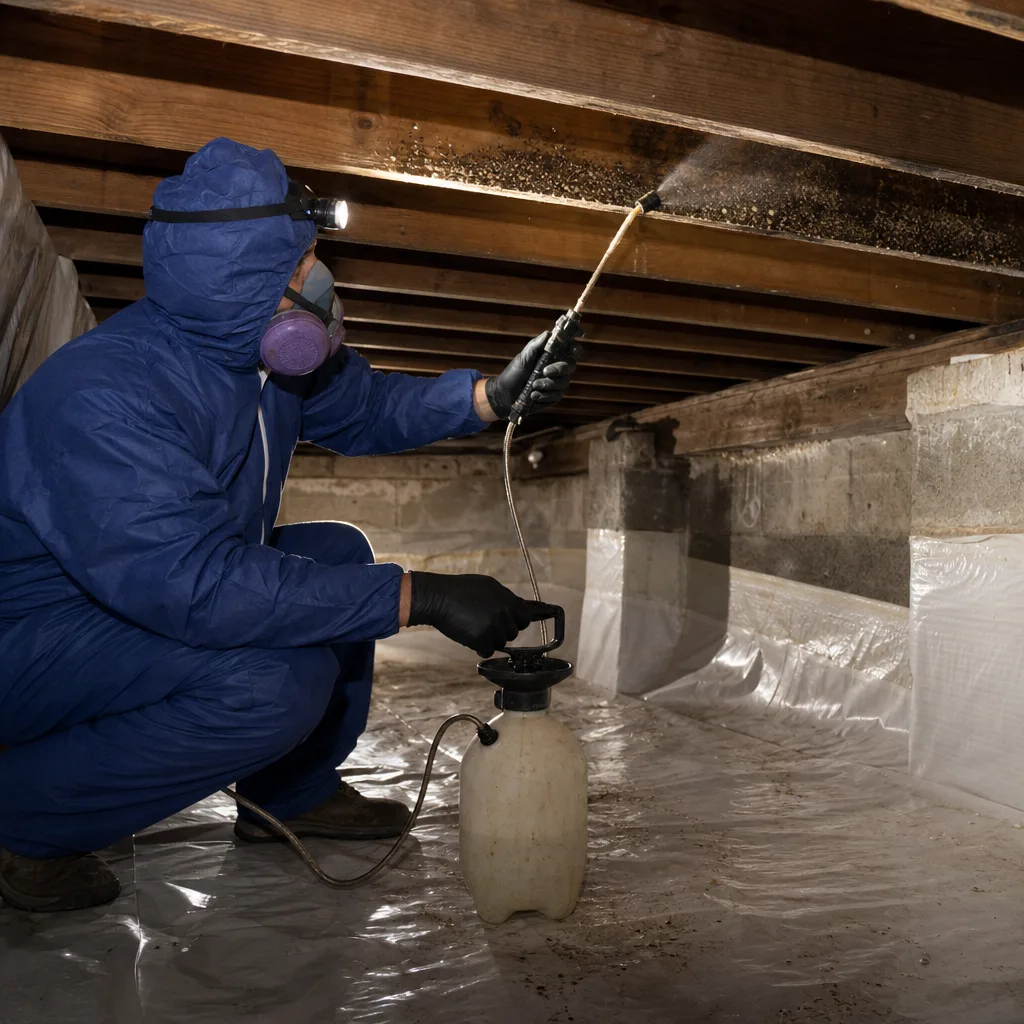
Mold Removal
This is the physical removal of mold-contaminated building materials under containment. In Hoboken’s older buildings, that frequently means removing original plaster or drywall from 100-year-old lath, plus flooring layers that may include asbestos-containing tiles. We coordinate abatement when needed and don’t cut corners on disposal requirements.
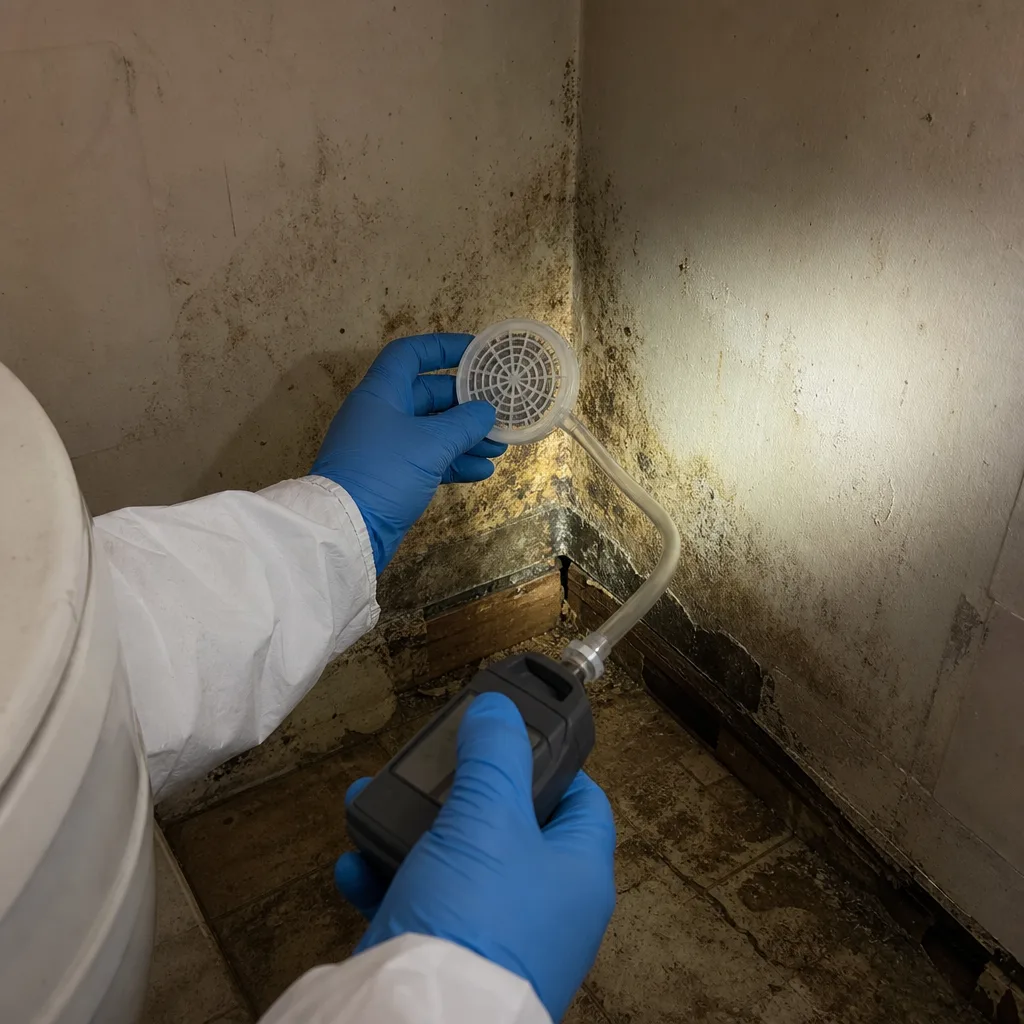
Black Mold Remediation
Stachybotrys chartarum, the “black mold” you’ve read about, thrives on water-damaged cellulose: drywall paper, ceiling tiles, old wood. Hoboken’s humid microclimate and frequent water events create ideal conditions for it. We treat every suspected black mold job as a full containment scope with clearance testing, because that’s the only way to know it’s actually gone.
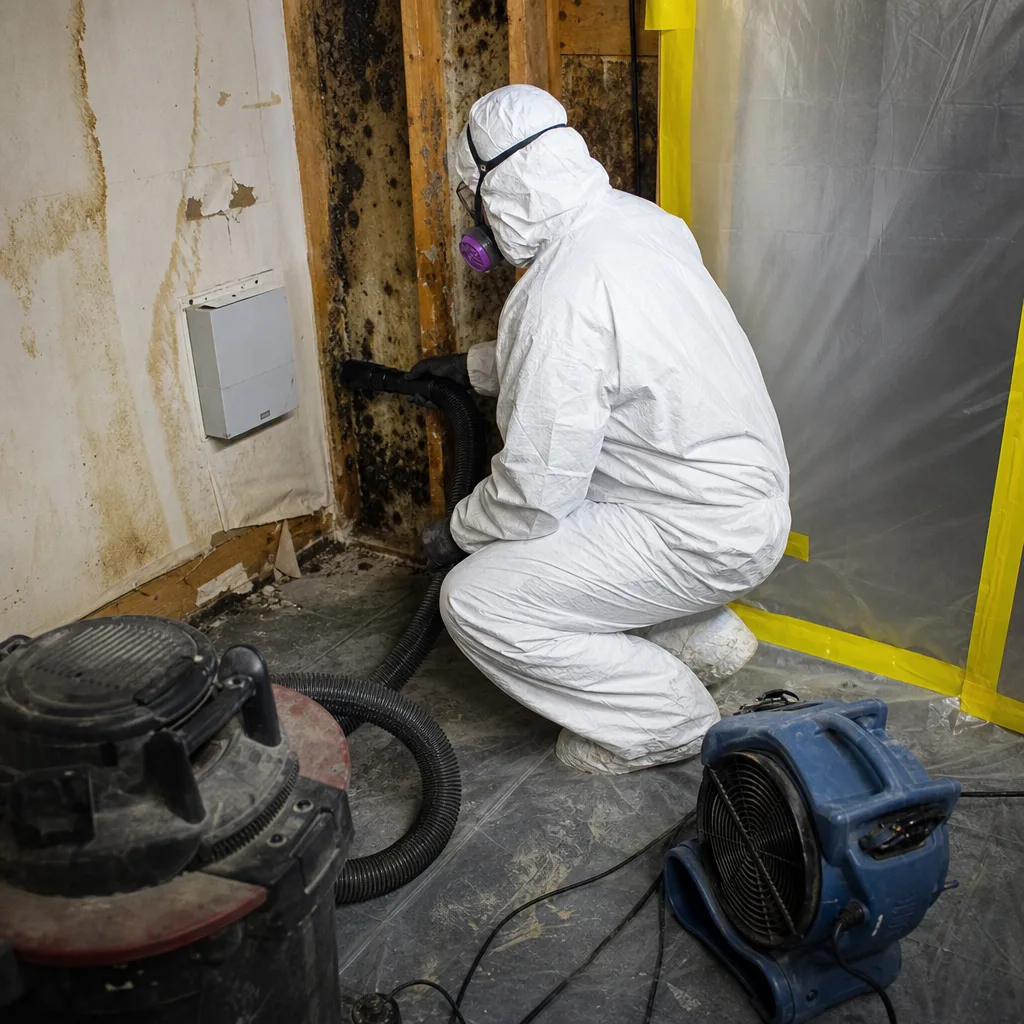
Air Quality Restoration
After remediation, the air in the space has to be cleaner than it was before the water event. We run HEPA air scrubbers during the job, then conduct post-remediation verification. If you’re dealing with respiratory symptoms or planning to re-rent a unit, this step matters. A lot of outfits skip it. We don’t.
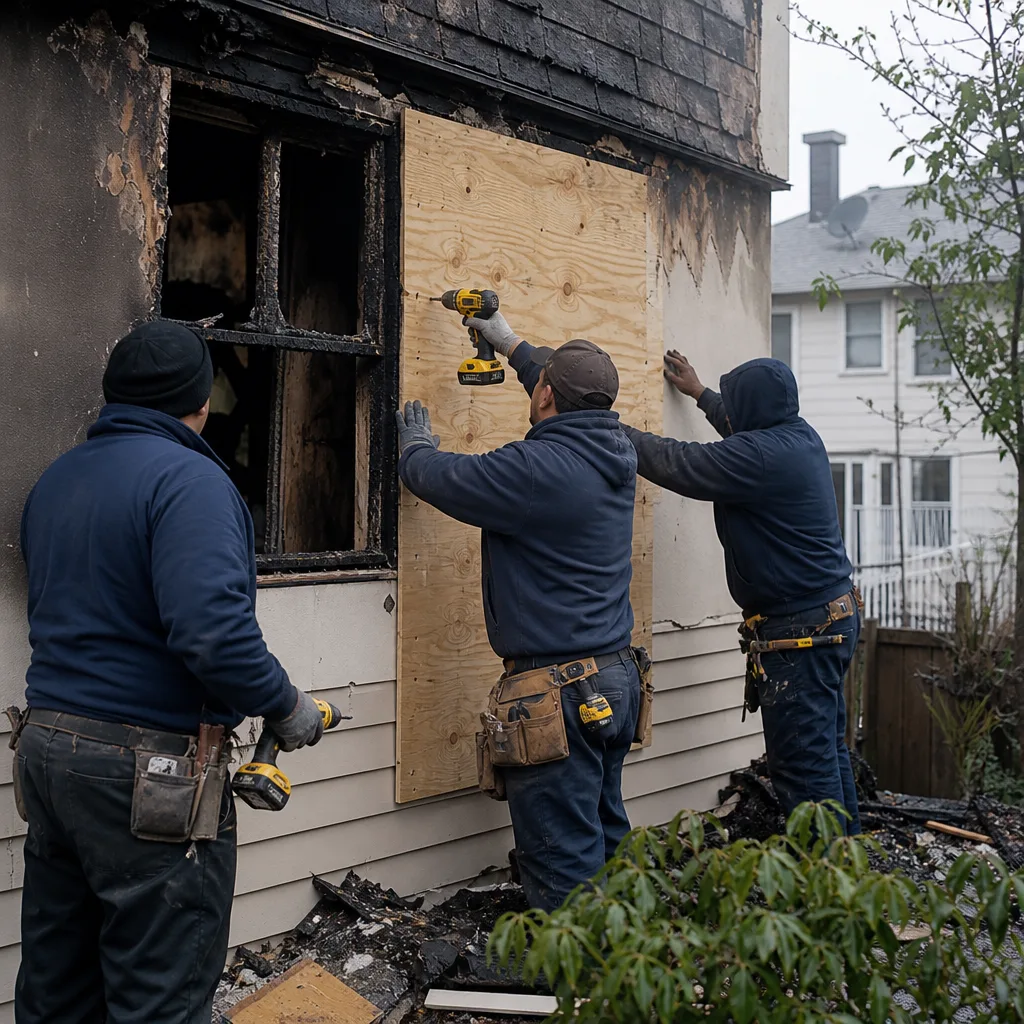
Crawl Space Treatment
Below-grade garden apartments and the shallow crawl spaces under Hoboken’s older buildings trap humidity. We install vapor barriers, seal foundation vents where appropriate, and run dehumidifiers sized for the space. The goal is to keep indoor humidity below 60% relative humidity, which is the threshold where mold stops growing.
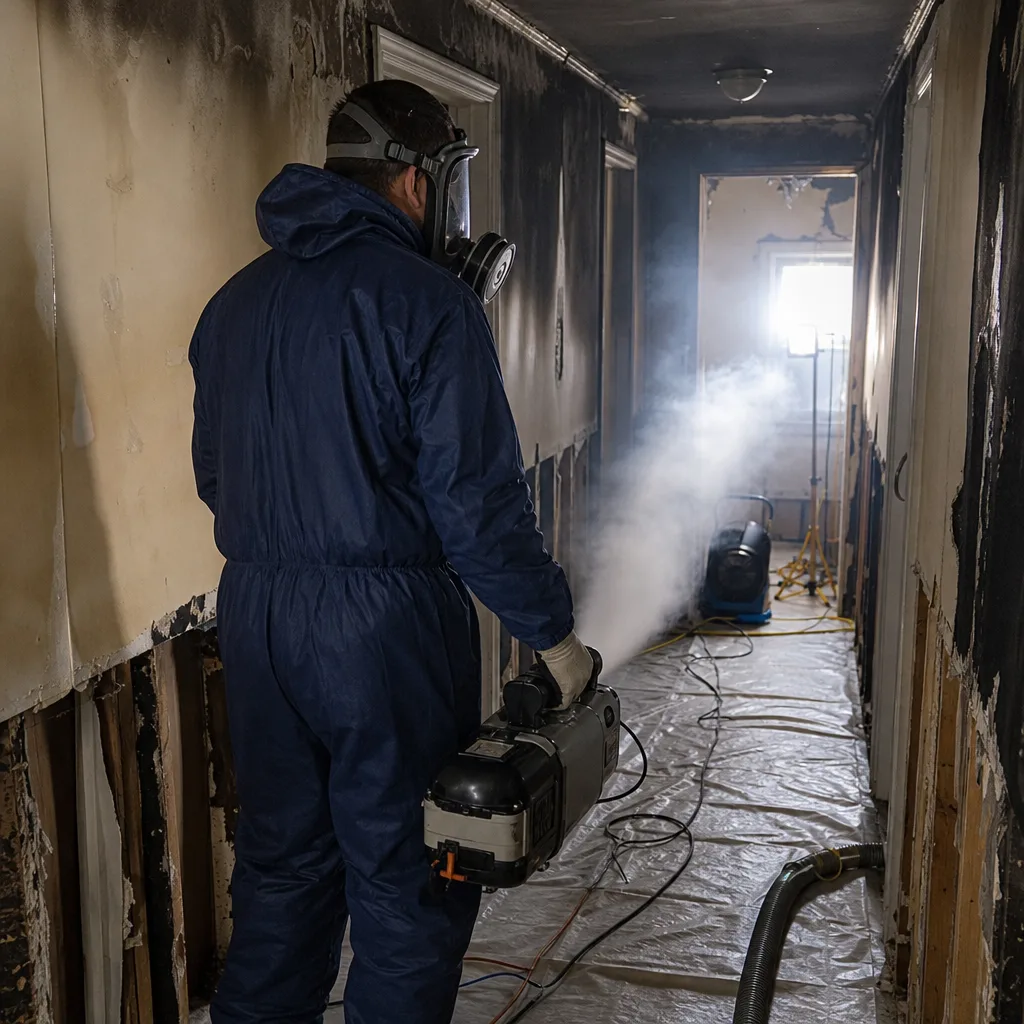
What happens when you call
- 1
A real person answersNo phone trees - you reach a local pro.
- 2
You get an upfront price rangeHonest numbers before anyone is dispatched.
- 3
A background-checked tech heads outLicensed & insured, dispatched right away.
- 4
You approve before work beginsNothing starts until you say go.
Mold Remediation Costs in Hoboken, NJ
A simple localized mold cleanup on a small bathroom wall in Hoboken runs $1,200 to $2,500. A full basement remediation after a sewer backup, with containment, material removal, drying, antimicrobial treatment, and clearance testing, lands between $4,000 and $8,000 in most of the city’s older row houses. Garden apartments that take Category 3 water from the combined sewer system often hit $6,000 to $12,000 once you count the saturated drywall, carpet, baseboards, and lower wall sections of multiple rooms. What moves the price: square footage of contaminated material, whether shared wall cavities need treatment, whether asbestos abatement is required on old flooring or pipe insulation, and how long drying takes in Hoboken’s humidity. Most water-tied mold claims are covered by insurance if the loss was sudden and accidental. We write the scope, bill the carrier, and you approve nothing until the estimator hands you a line-item plan and a firm number. Call (363) 208-1526 for a free visual inspection and we’ll tell you honestly whether you’re looking at a cleaning or a full remediation.
We Also Serve Cities Near Hoboken
Beyond Hoboken, our crews regularly work Union City, Weehawken, and North Bergen. Union City’s hillside buildings and Weehawken’s waterfront condos have different loss patterns, but the same need for honest documentation and proper drying. If you’re across the city line, call and ask.
Hoboken Mold Remediation Questions, Answered
Why does mold grow so much faster in Hoboken basements than in other New Jersey towns after a water leak?
Hoboken sits at or below mean high water in a bowl between the Hudson River and the Palisades. The tidal atmosphere means ambient humidity stays high, and masonry walls from the 1880s-1920s hold moisture long after an inland drywall-and-stick home would be dry. Recurring Category 3 sewer backups deliver wet, contaminated material into the same spaces again every time it rains. The result: mold that colonizes in 24 to 48 hours instead of the 3 to 5 days you’d see in an inland NJ basement. Call (363) 208-1526 if you’ve got standing water or a persistent musty smell.
If water backs up from the sewer into my Hoboken basement, is it safe to just dry it out with fans?
No. Water from a combined sewer overflow during a storm is Category 3: it contains sewage, bacteria, and whatever the street system carried. Drying it with box fans spreads contaminated moisture into your air and into any porous materials it touches. The right response is extraction, removal of saturated drywall and carpet, antimicrobial treatment, and proper structural drying with professional dehumidifiers. In a Hoboken row house, doing it wrong means mold behind baseboards you won’t see until it smells. Call us first.
Does mold remediation in a Hoboken row house affect my neighbors?
It can. Shared party walls and common basements mean spores from a contaminated cavity in your unit can migrate into the neighboring unit. That’s why we build negative-air containment and run HEPA air scrubbers during the job. We also check the shared wall cavities as part of the inspection. If mold has already crossed the party wall, that’s a different scope, and your neighbor’s insurance may need to get involved. We’ll tell you straight what we see.
Why do I need a mold inspection after a flood in Hoboken if I don’t see any mold inside my walls?
Because in Hoboken, you can’t see what’s inside a brick party wall or behind a baseboard in a 1905 rowhouse. Moisture wicks up through plaster and lath, and mold grows in the cavity before it ever shows itself. A proper inspection uses moisture meters and thermal imaging to find hidden water. If we find elevated moisture in the framing after a flood, you need drying and possibly removal even if the wall looks fine. Visible mold is the last stage, not the first.
Can my Hoboken garden apartment be fully dried and restored after a sewer backup, or does everything need to be torn out?
Depends on the materials and how long the water sat. Drywall, carpet, and padding that absorbed Category 3 water always come out. Studs and subflooring can often be dried in place if the water didn’t sit for days and the framing is sound. In garden apartments near the Washington Street corridor, we’ve dried units fully after sewer backups by extracting quickly, removing the saturated finish materials, and running Dri-Eaz dehumidifiers for five to seven days until moisture mapping showed pre-loss condition. It’s not always a gut job. We’ll show you the moisture readings before you approve any removal.
How fast can you actually get to my Hoboken place?
If you call during business hours, we’re usually inside 45 minutes. Nights and weekends, Wade heads out as soon as he gets the call. He answers his own phone at (363) 208-1526. In a city where a nor’easter can flood blocks within an hour, that speed matters.
Will my homeowner’s insurance cover mold remediation in Hoboken?
It depends on the cause. Sudden and accidental water losses, like a burst supply line or a documented storm surge, are generally covered, including the resulting mold remediation. Gradual leaks, neglected maintenance, or flood water from Hoboken’s combined sewer overflows may fall outside standard coverage unless you carry specific endorsements. We photograph everything from hour one and speak directly with your adjuster to establish causation. Call us and we’ll walk you through what your policy likely covers before you commit to anything.
What should I do in the first 30 minutes after discovering water or mold in my Hoboken home?
Turn off water at the source if you can find it. Don’t run fans. Don’t touch the mold. Don’t disturb contaminated drywall or baseboards because that releases spores into the air. If there’s standing sewage water, stay out of the room entirely. Then call (363) 208-1526. We’ll tell you what to photograph for insurance, what to move or not move, and whether we need to get there right now or can schedule an inspection.
Serving Hoboken, NJ - Our Local Coverage Area
We’re based in the Hoboken area and know this community well. Use the map below to see our service coverage - if you’re nearby, we can almost certainly help.
Why This Page Exists
Hoboken’s flood-prone geography and combined sewer system make mold remediation here a different job than anywhere else in northern New Jersey. The bowl-shaped topography holds water against foundations, the tidal Hudson pushes groundwater up through drains before rain even falls, and the attached rowhouse fabric means every mold problem is potentially your neighbor’s problem too. Standard drying timelines that work in Summit or Montclair fail here. Standard contamination assumptions don’t hold when the water came from a combined sewer overflow rather than a burst pipe. This page exists to explain what that means for your building, your insurance claim, and your timeline, because most mold remediation websites never mention the sewer system, the tidal influence, or the party walls. We work in those buildings every week. We know what’s behind the baseboard.
Written by Wade Ferris, Owner at Wade’s Restoration, proudly serving Hoboken since 2007.
Call Wade directly: (363) 208-1526. He answers his own phone, 24 hours a day. Free visual inspection. No trip charge inside Hudson County. Senior and veteran discount: 10% off, always.