
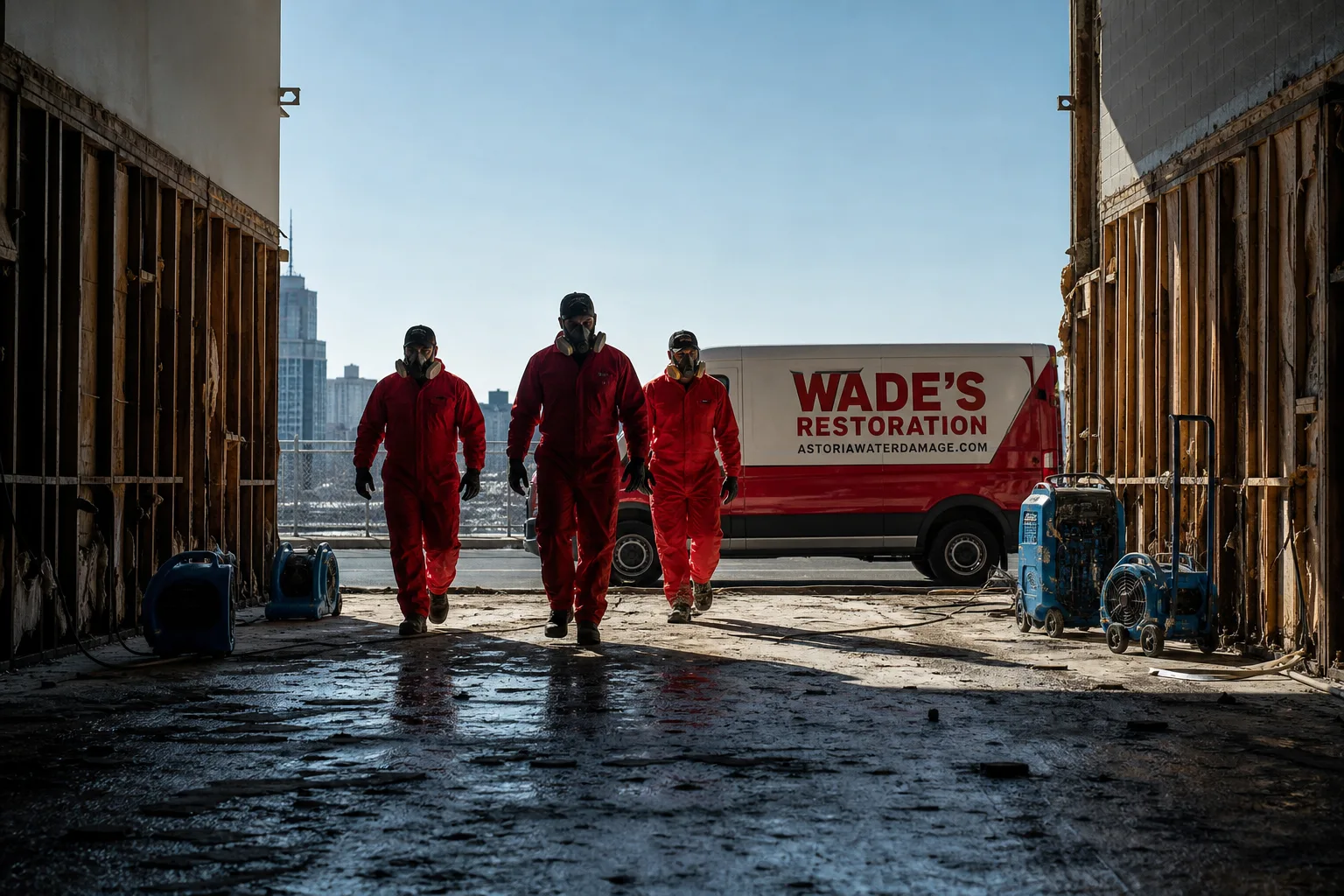
Free visual inspection and a written scope of work before any mitigation begins - photos, moisture readings, and drying logs go in your claim file
The scope we write is the scope we bill. Anything new gets shown to you, in writing, before we touch it.
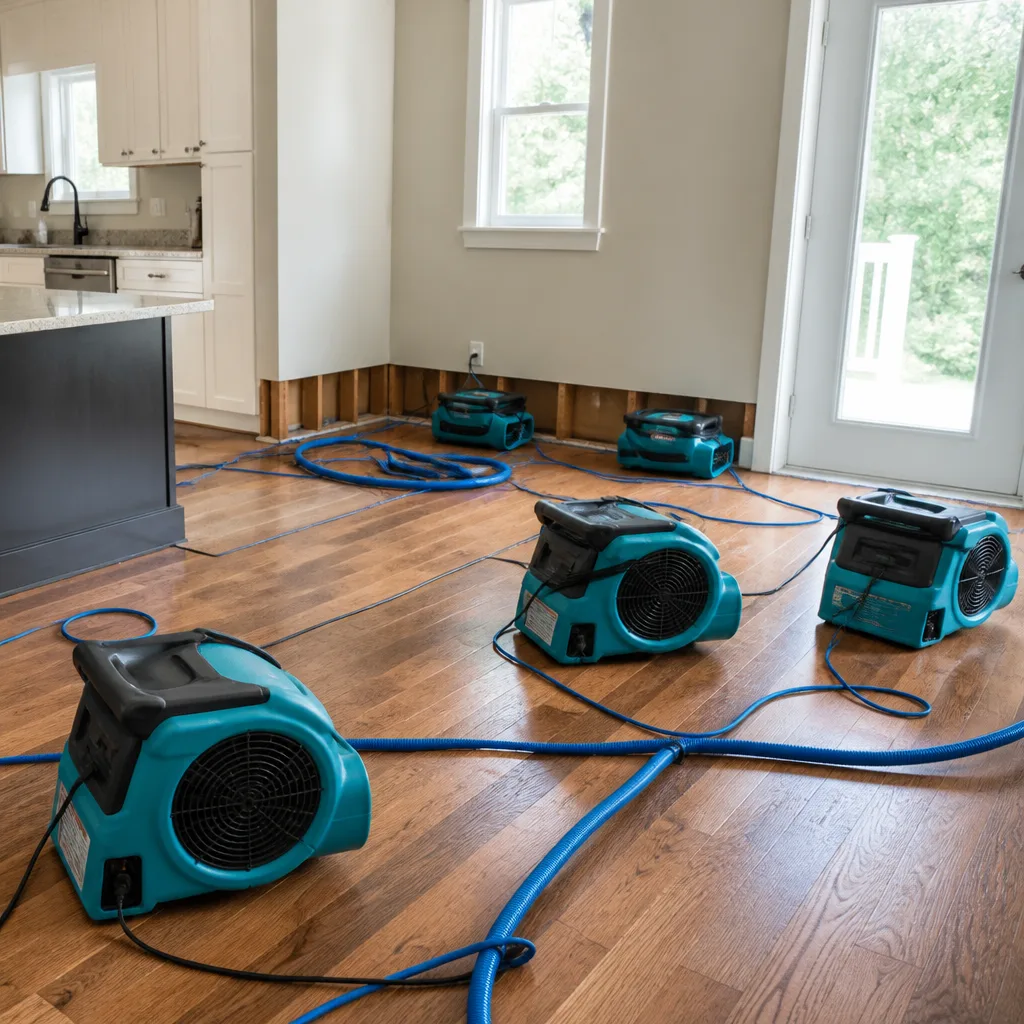

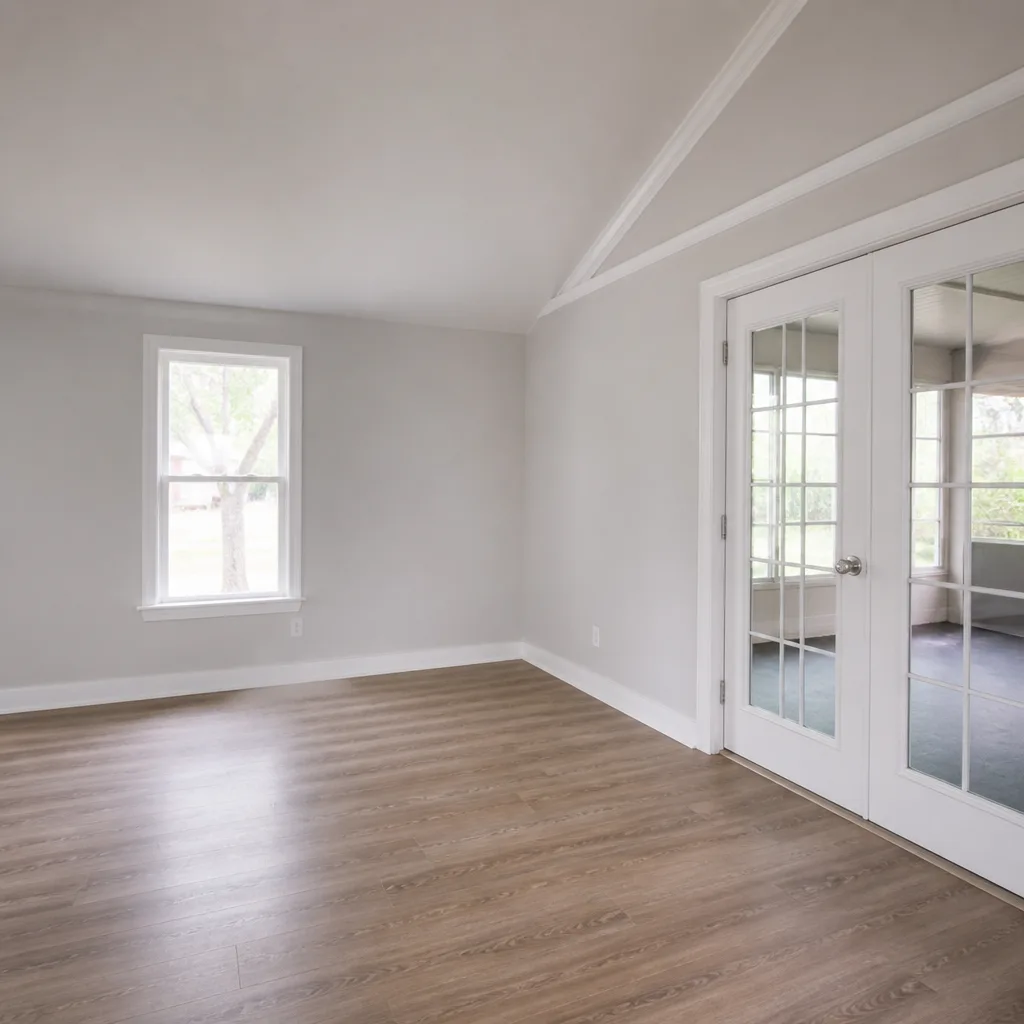


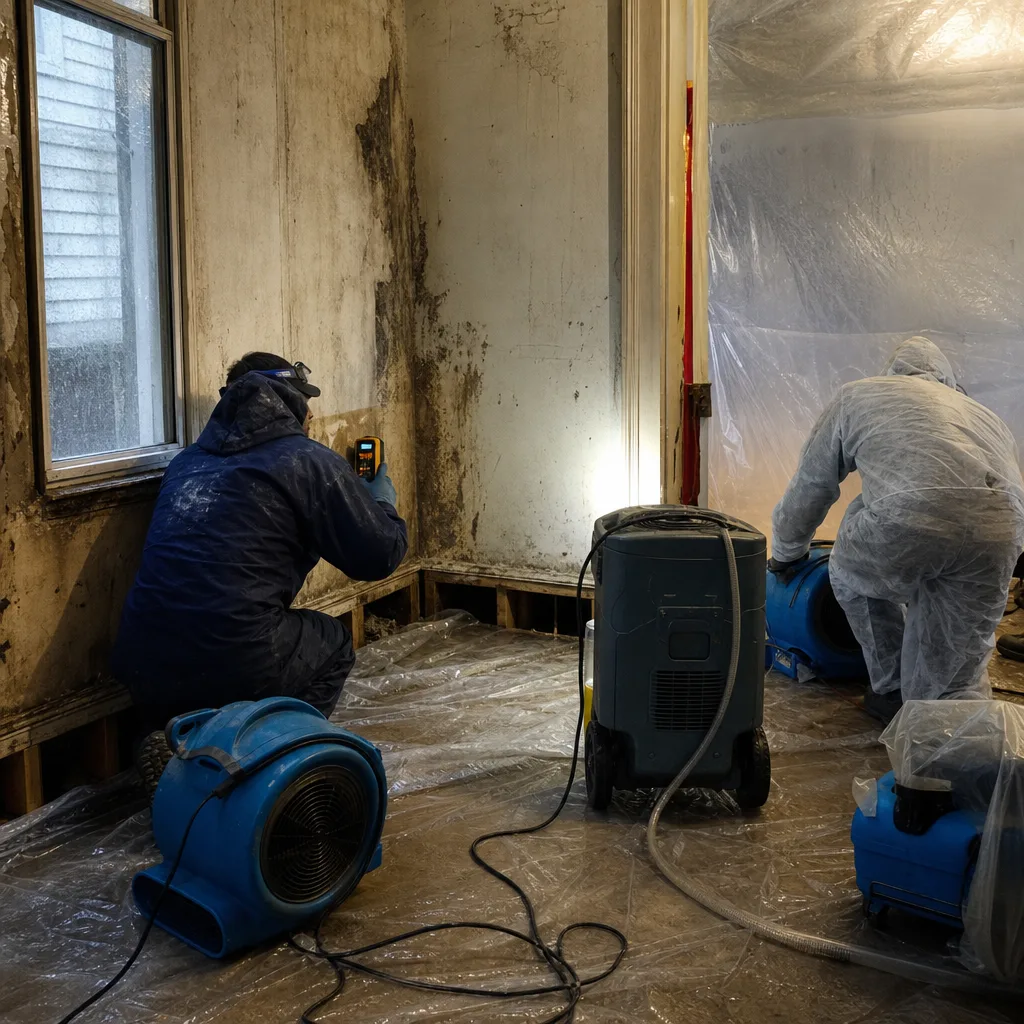 Before
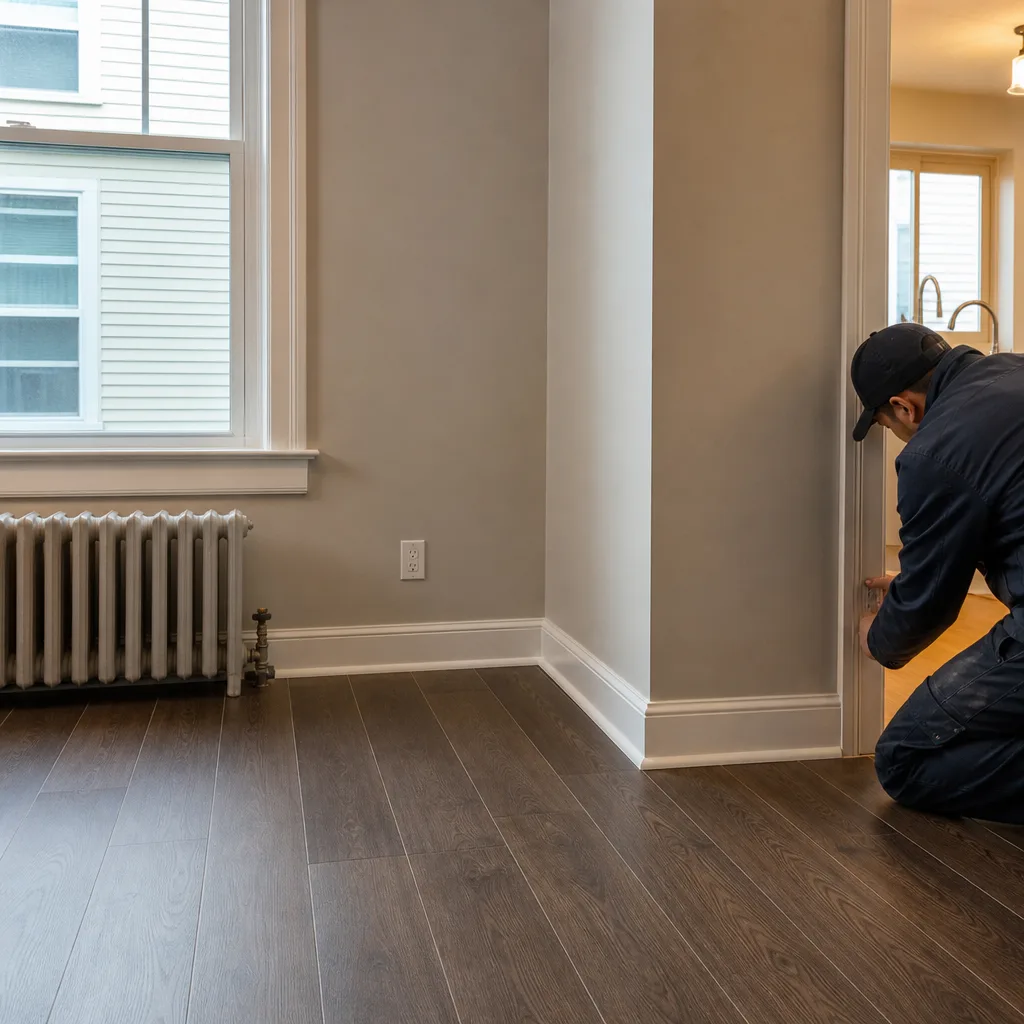 After
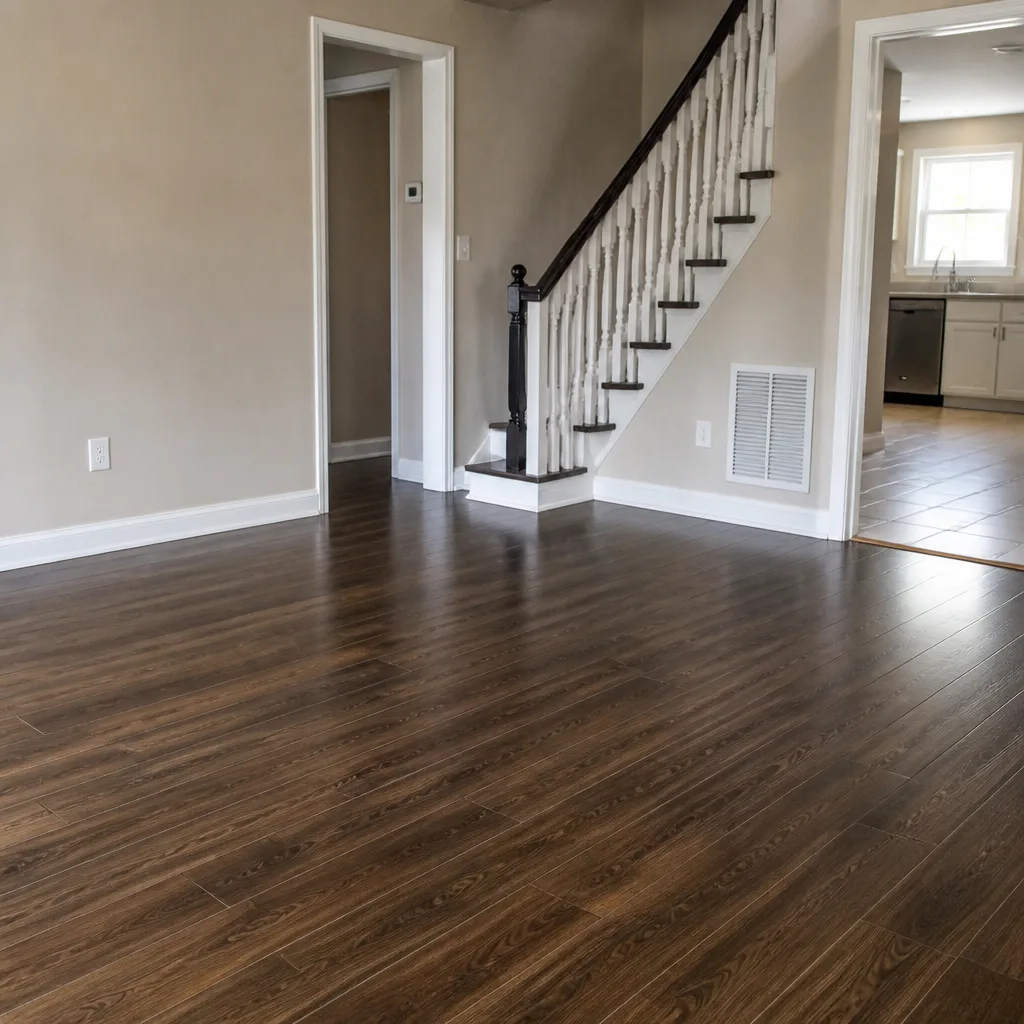
After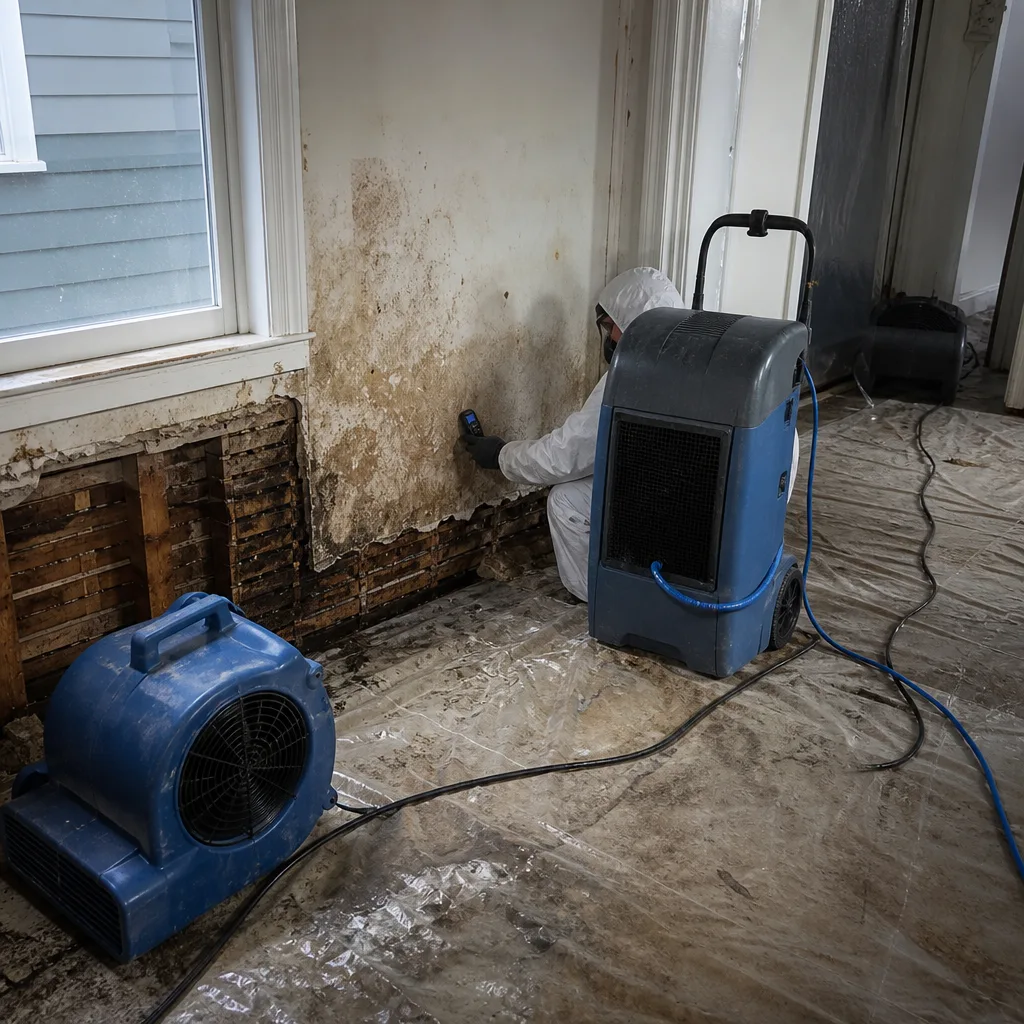 Before
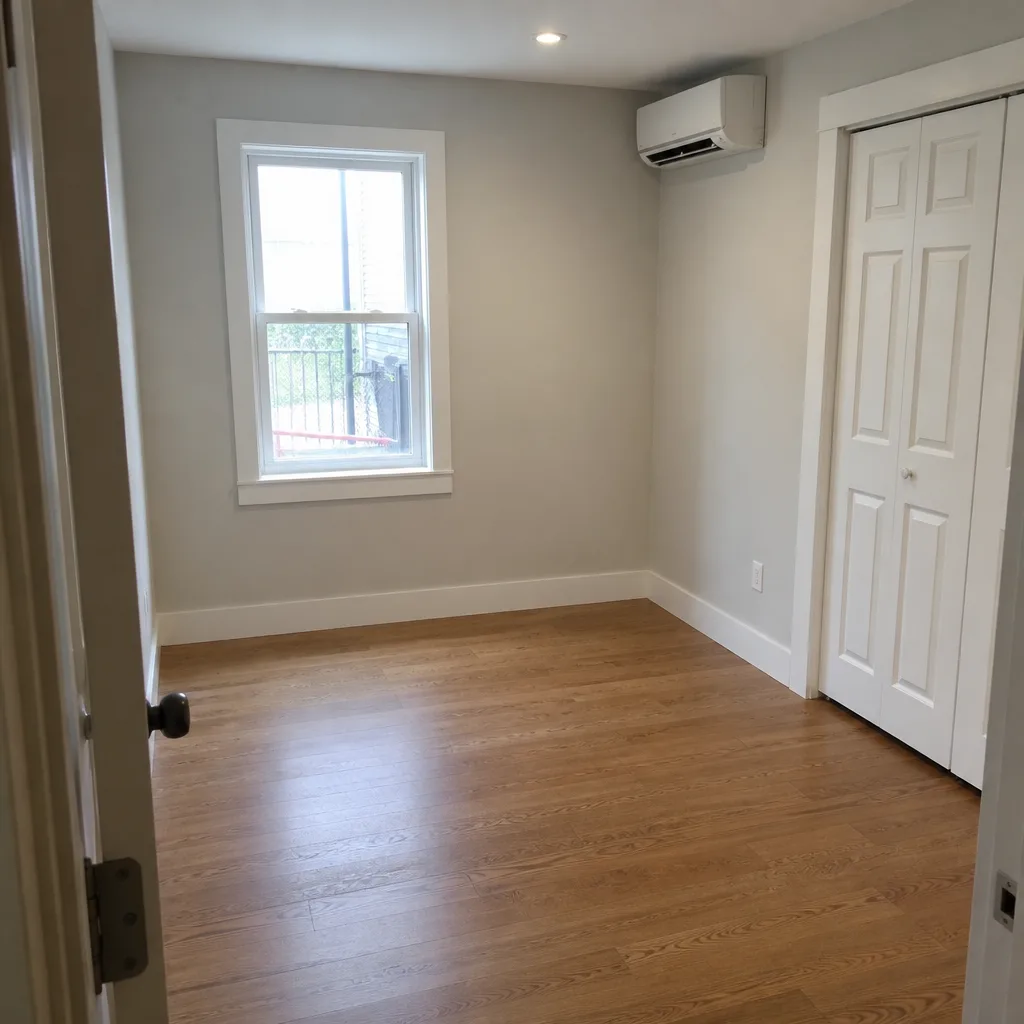 After
After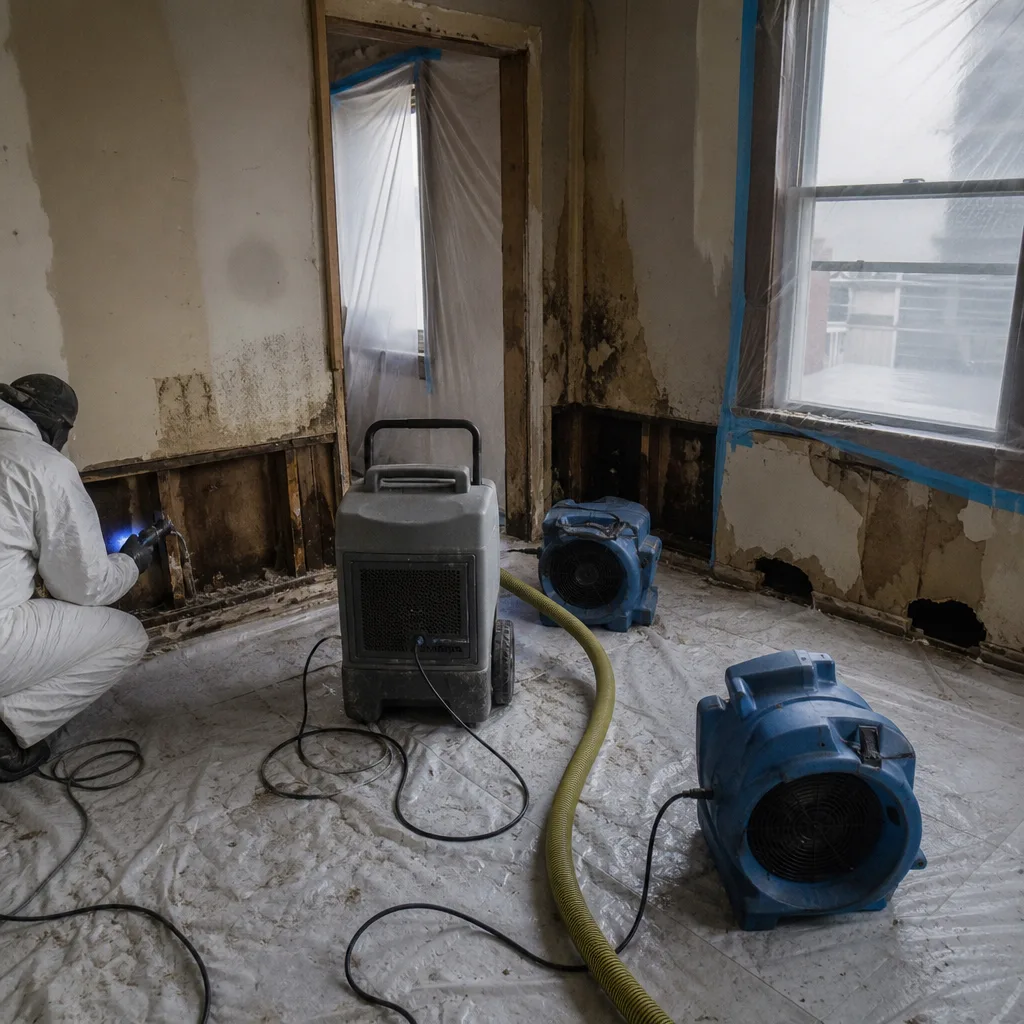 Before
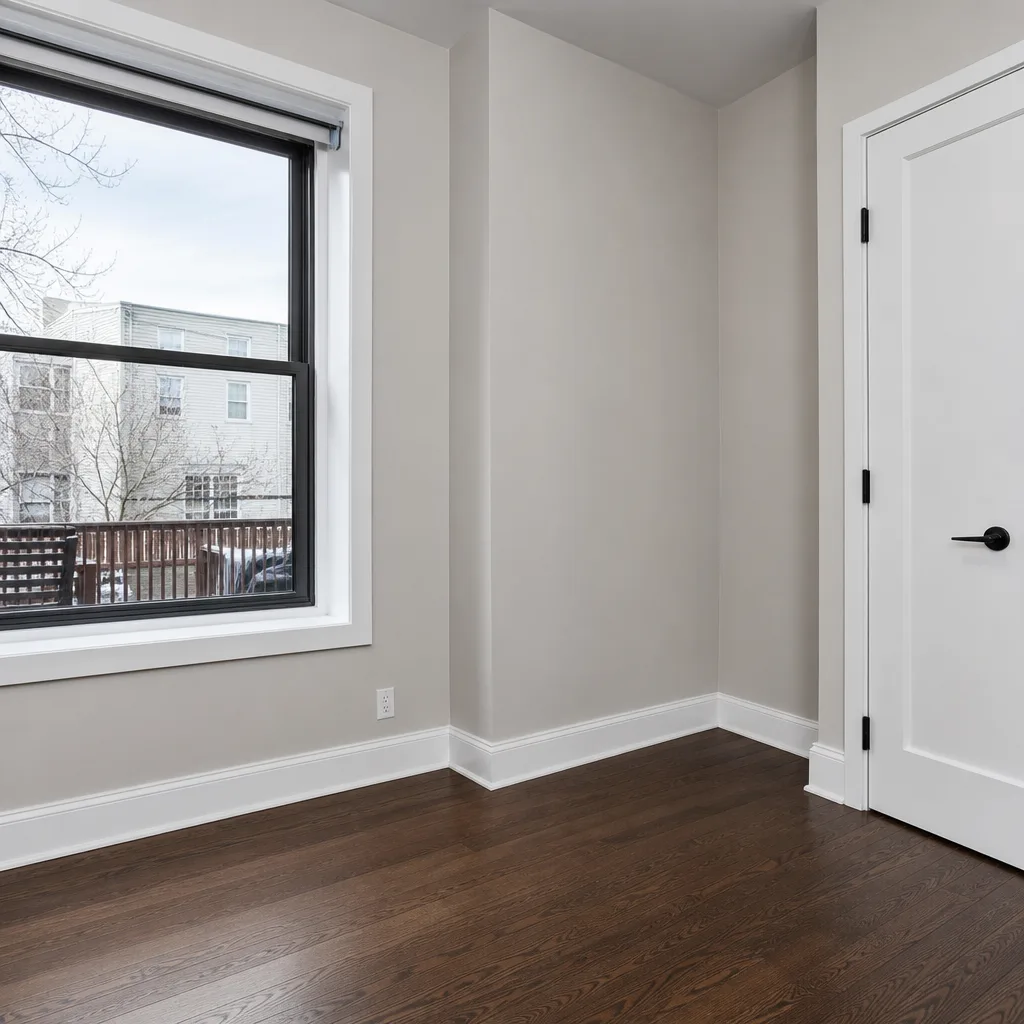 After
After24/7 Emergency Storm & Disaster Restoration in Hoboken
Storm and disaster restoration in Hoboken typically runs $2,800 to $11,500 depending on whether you’re dealing with a combined sewer backup in a garden apartment or a full tidal-surge intrusion through floor drains on a Washington Street brownstone. Most jobs start with emergency water extraction, and crews can usually be on site within 45 minutes of your call.
We answer the phone live at (363) 208-1526, any hour, any weather. When a nor’easter pushes the Hudson over the bulkhead or a July thunderstorm overwhelms the combined sewer system, the first hour matters more in Hoboken than almost anywhere else in New Jersey. Wade Ferris heads out personally, and our Storm & Disaster Restoration crews stage equipment near the low-lying blocks south of 4th Street before the worst of a predicted storm even hits. The faster water comes out and drying starts, the less the loss costs you, both in dollars and in demolition.
Understanding Storm & Disaster Restoration Severity in Hoboken Properties
Not all storm water is equal, and in Hoboken the difference between a Category 1 and Category 3 loss often comes down to which way the water entered. Category 1 starts as clean water, a burst supply line or rain coming through an open window. Category 2 carries significant contamination, think sump pit overflow or roof runoff mixed with debris. Category 3 is grossly contaminated, and that’s the one Hoboken sees more than its share of, because storm surge pushing up through floor drains and combined sewer backups both carry raw sewage.
Why that matters with your specific building: Hoboken’s housing stock is overwhelmingly pre-war attached brick row houses and tenement walk-ups, built mostly between 1880 and 1920. Those buildings have original horsehair plaster over wood lath, shared party walls, and common basement spaces. Water doesn’t respect property lines here. A Category 3 loss in one unit migrates laterally through the party wall and into the neighboring building within hours. Moisture mapping is non-negotiable. We take thermal imaging readings and measure moisture content in the plaster, the joists, the subfloor, and the masonry before we ever write a drying plan, because hidden moisture behind horsehair plaster is where mold gets its start in Hoboken, and mold moves fast in this humidity.
Why Hoboken Property Owners Choose Wade’s Restoration
- 45-minute response commitment. When a basement is taking on water, every minute adds to the demolition bill. Wade’s crews average 45 minutes to arrival anywhere in Hoboken, from Monroe Street to the waterfront.
- 24/7 live answer, every single call. You’ll never reach a voicemail or an answering service. Wade answers his own phone at 2 a.m. during a nor’easter because that’s when people in Hoboken need a real person.
- IICRC-certified crews. Our technicians hold WRT, FSRT, and AMRT certifications, and we follow the S500 standard for water damage restoration, including Category 3 protocols that generic storm-chaser outfits skip.
- Free visual inspection. We’ll come look, tell you honestly what you’re dealing with, and hand you a written scope before any work starts. No charge for that.
- Direct insurance billing. We bill your carrier directly and talk to your adjuster ourselves, so you’re not the one relaying moisture readings between two parties at midnight.
- One team from extraction to reconstruction. The same crew that pumps out your basement is the crew that rebuilds it. No handoffs, no subcontractors you’ve never met, no lost information.
Our Storm & Disaster Restoration Process
Inspection & Assessment
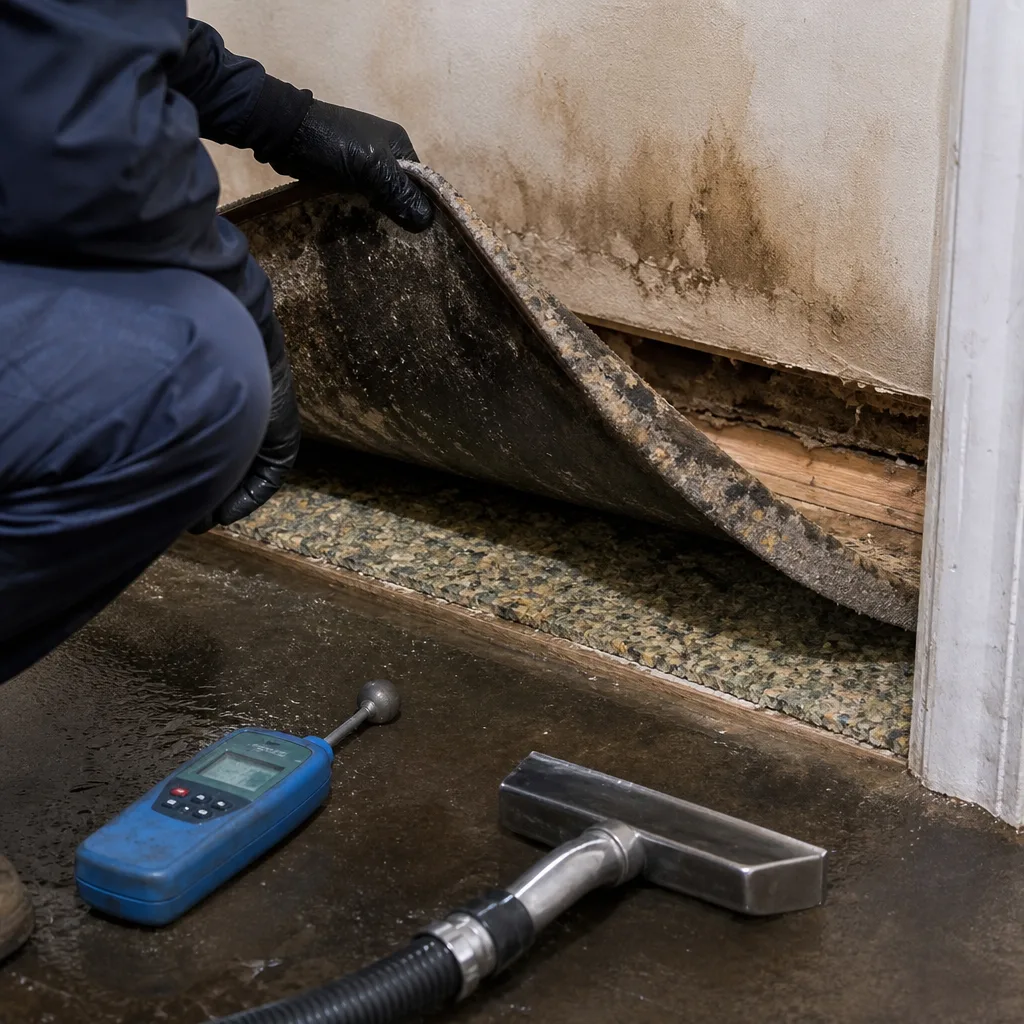
Wade or a senior tech walks the property with a thermal imaging camera and moisture meters. We classify the water, map the migration through party walls and common spaces, and document everything with photos from the first minute. You get a written scope before anything gets torn out.
Extraction & Stabilization
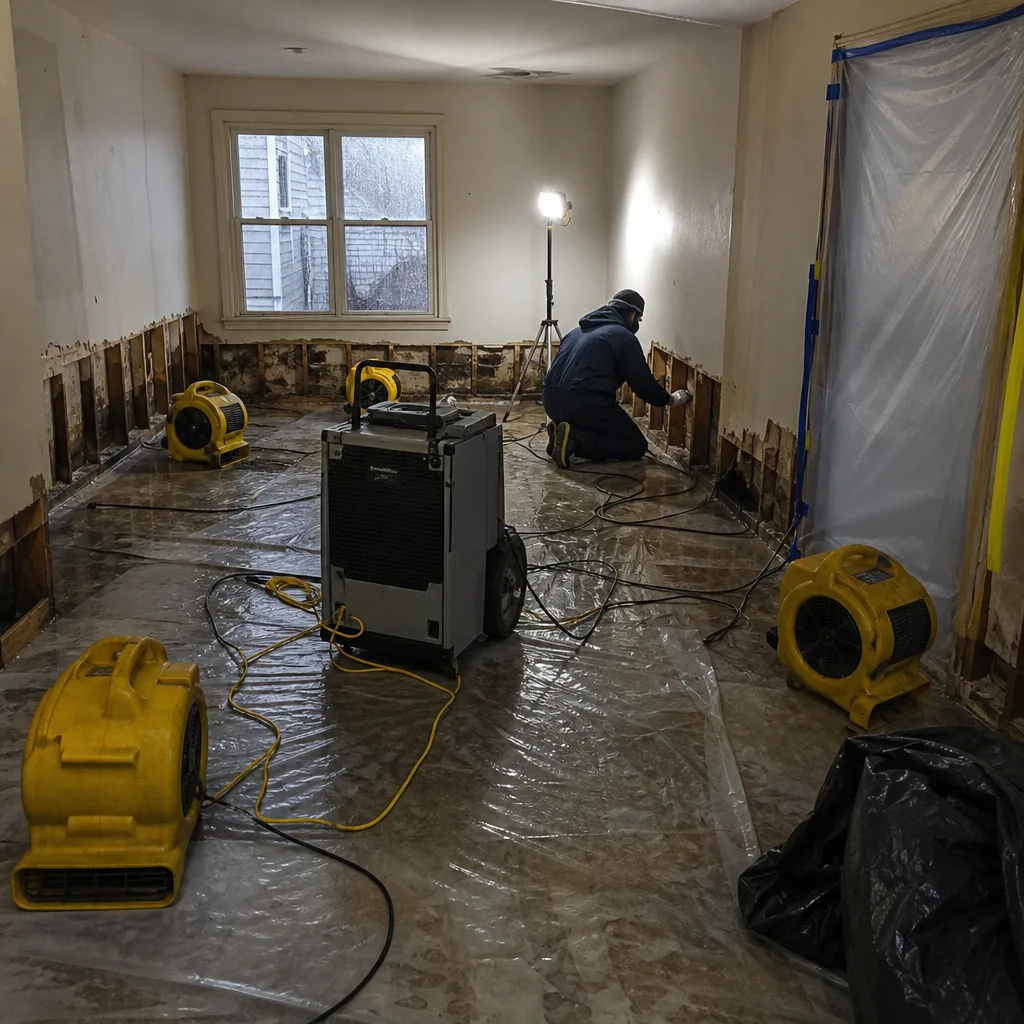
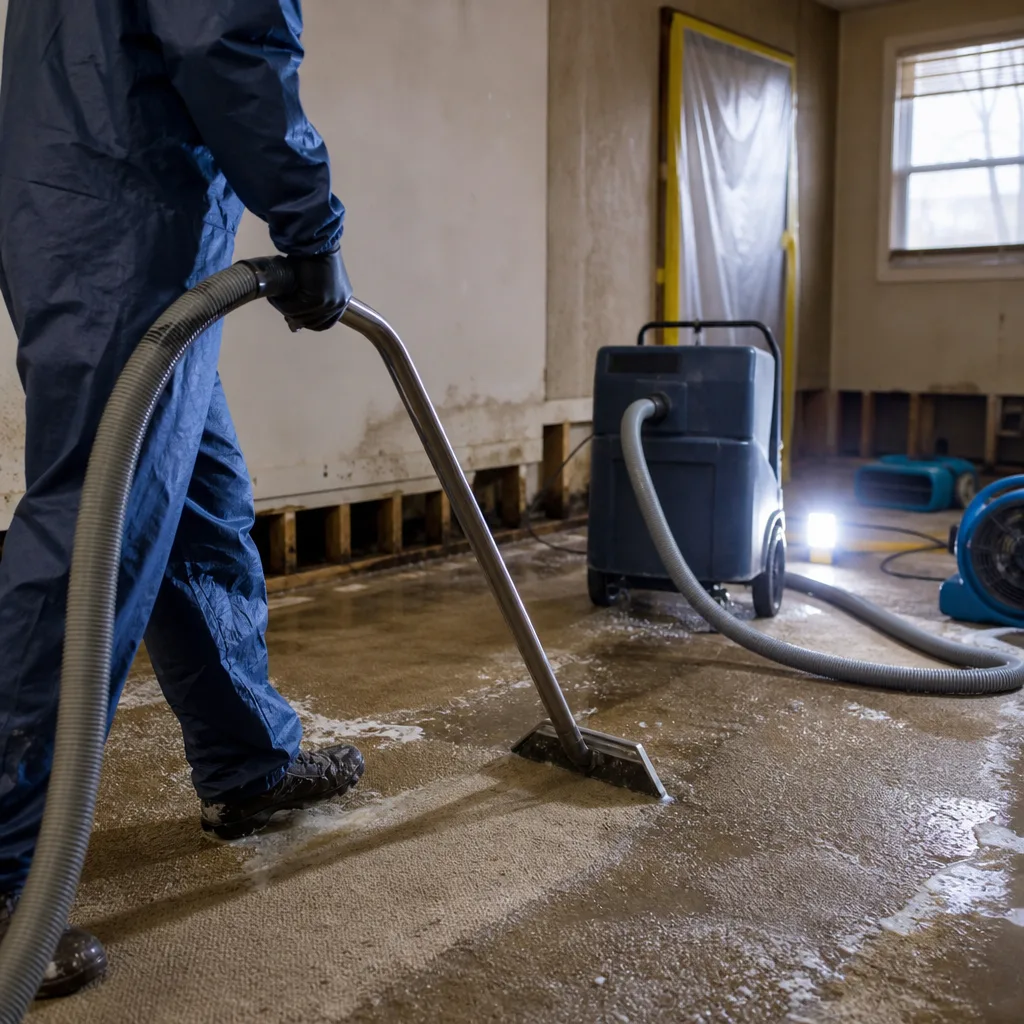
Submersible pumps and truck-mounted extraction units come out first. On storm-surge jobs near the Hudson, we also set up containment zones to keep contaminated air from spreading through attached row houses. Emergency board-up and roof tarping happen here if the storm opened the envelope of the building.
Drying & Dehumidification
Hoboken’s humidity at the base of the Palisades slows drying significantly. We run Dri-Eaz dehumidifiers and XPOWER air movers longer and harder than an inland crew would, and we take moisture readings every single day, not just at setup. You get the full drying log when we’re done.
Cleaning & Sanitization
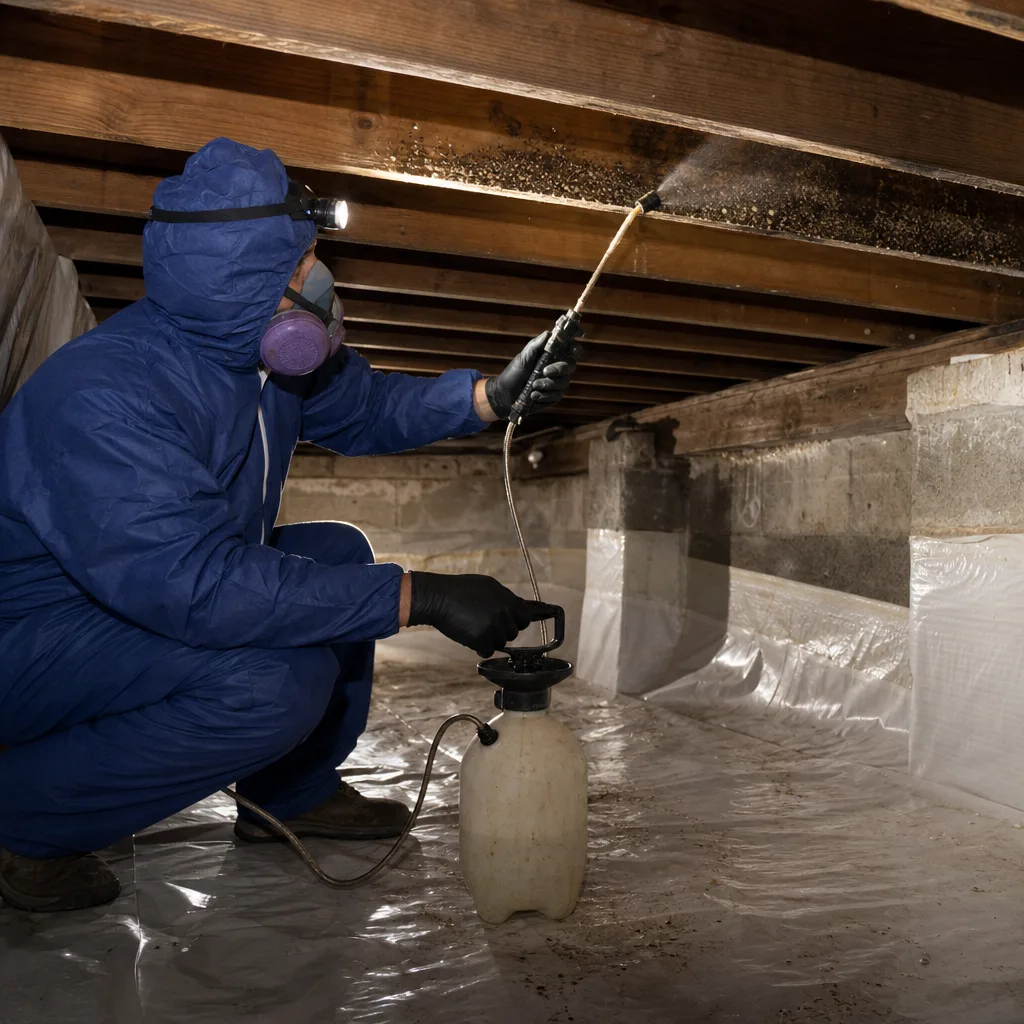
Category 3 water drives antimicrobial treatment on every affected surface. We remove contaminated drywall and insulation, treat structural wood and masonry, and run HEPA air scrubbers to pull mold spores and sewage particulates out of the air before rebuilding starts.
Storm-Specific Specialty Treatment
In Hoboken, this often means lead paint and asbestos assessment on pre-war plaster and flooring before we open walls, plus masonry drying for the brick party walls that absorbed water laterally. We coordinate licensed abatement when it’s required, and we don’t skip it.
Repairs & Restoration
We rebuild to match the period character of your brownstone or walk-up. New plaster, new joists where needed, new flooring, paint. You get your home back, not a patch job that’ll fail on the next storm.
Need Emergency Storm & Disaster Restoration in Hoboken Now?
Crews minutes away, answering live 24 hours a day. The sooner we start, the less it costs.
Working With Your Insurance Company
Most Hoboken homeowners are dealing with their insurance carrier within hours of a storm loss, and the quality of documentation from the first day usually determines how the claim settles. We photograph every wall, every floor, every piece of damaged equipment before we move anything. We log moisture readings room by room, every day, and we keep a running record of equipment runtime. That’s the kind of documentation adjusters need, and it’s the kind most restoration outfits don’t bother to provide.
When your adjuster calls, Wade talks to them directly. You’re not stuck in the middle interpreting drying standards or scope arguments. We write our estimates in the same format insurers use, which speeds approval. And if you have a written estimate from another company, we’ll give you a free second opinion on it. No charge for that either.
What We Provide Your Insurer
- Thorough documentation of the loss
- Photos of all damage, room by room
- Moisture readings and drying logs
- A detailed, line-item scope of work
- Direct coordination with your carrier
Built for Hoboken’s Loss Calendar
Hoboken’s storm restoration calendar doesn’t look like the rest of New Jersey’s. January and February bring deep freezes that burst supply lines in uninsulated basement spaces of pre-war row houses, and when that water sits in a shared basement, it becomes three neighbors’ problem. March and April bring snowmelt and spring rain that percolates into below-grade garden apartments along the low streets west of Washington Street. Summer thunderstorms dump inches of rain in an hour, and a city built on filled tidal marsh with an aging combined sewer system has nowhere for that water to go, so it comes up through the floor drains.
Then there’s hurricane season. Any storm that tracks up the coast and pushes water into New York Harbor pushes it into Hoboken too. The city’s storm surge vulnerability isn’t theoretical, it’s the lived reality of every block south of 4th Street and everything along the Hudson waterfront. We stage equipment before major weather events. When the National Weather Service issues coastal flood warnings for the New York Harbor, our crews are already positioning pumps and drying equipment in Hoboken, not waiting for calls to come in.
Storm & Disaster Restoration Across Hoboken’s Neighborhoods
The response route into the Washington Street corridor is the same corridor where tidal surge hits first. Buildings from 1st Street up past 6th Street sit low, some below mean high water, and nor’easters push the Hudson through storm drains and up through basement floor drains there before rain even accumulates. South of 4th Street, the blocks between Garden Street and Hudson Street have some of the oldest attached brick row houses in the city, with shared basements and party walls that make a single loss a multi-unit event within hours.
West of Willow Avenue, up toward the base of the Palisades, the buildings sit slightly higher, but the run-off from the cliff face channels water down toward Observer Highway and the low streets near the PATH tracks. Those blocks see more storm water pooling from uphill than from tidal surge. Around Stevens Institute of Technology and the neighborhoods near 8th and 9th Streets, larger multi-family buildings and converted tenements mean bigger basements with more square footage to dry, and more mechanical systems at risk. Every one of these areas has a different loss pattern, and our crews know the difference because we’ve worked all of them since 2007.
Specialized Storm & Disaster Restoration Services We Offer in Hoboken
Flood Damage Restoration
This is the dominant storm service in Hoboken for a reason. When water rises through floor drains on a Garden Street block south of 4th during an ordinary heavy rain, that’s Category 3 water carrying sewage from the combined system. We run full extraction, antimicrobial treatment, contaminated material removal, and structural drying with the extended timeline Hoboken’s humidity demands.
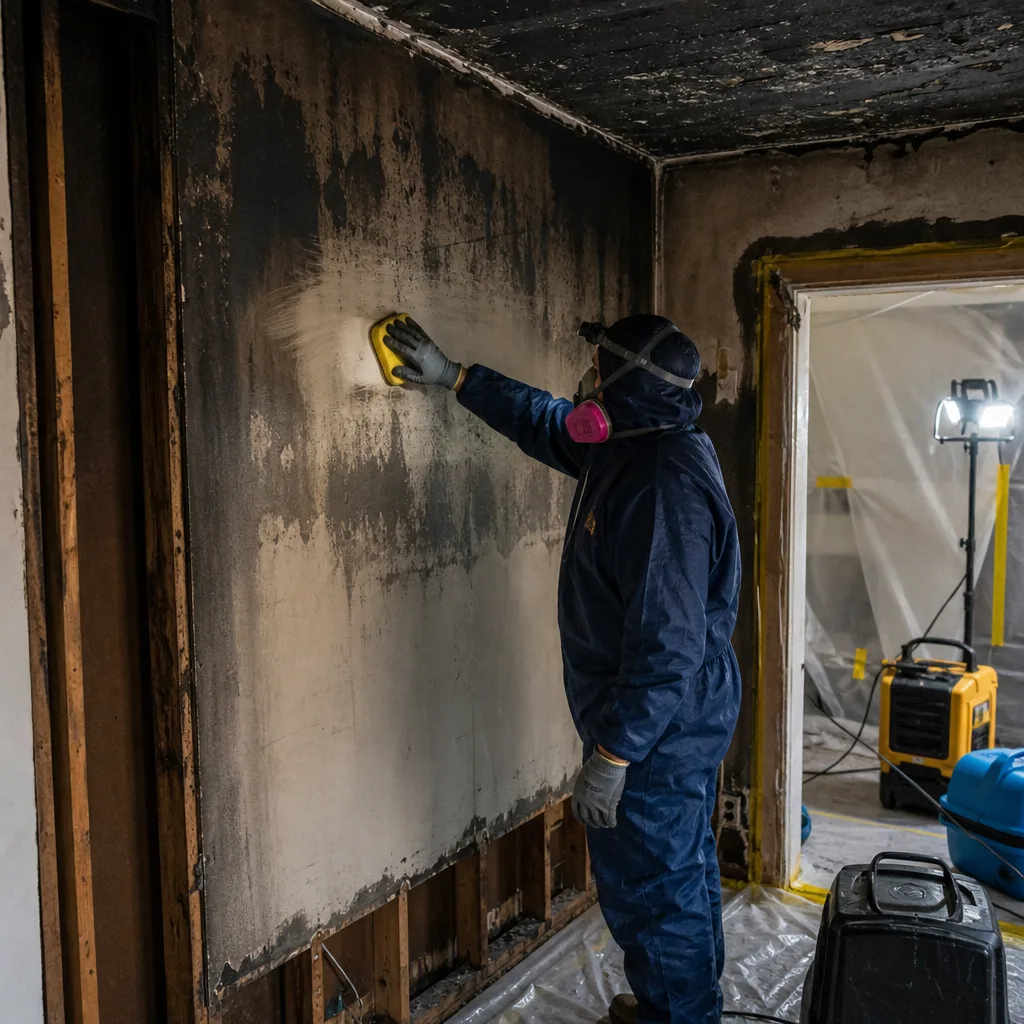
Storm Damage Cleanup
Wind-driven rain, downed trees, and flying debris all open buildings up. After the storm passes, the cleanup determines whether you’re facing a simple repair or a restoration. We remove mud and debris, assess what absorbed water and what just needs cleaning, and document everything for your claim.
Emergency Board-Up
A broken window on the Washington Street corridor isn’t just a security issue, it’s an invitation for rain and rodents. We board up with plywood or polycarbonate within hours, seal gaps, and keep the property weather-tight until permanent repairs are scoped and approved.
Roof Tarping
Pre-war Hoboken row houses have flat or low-slope roofs, and wind damage or falling branches tear through them fast. We tarp with heavy-duty reinforced polyethylene, secured to withstand Hudson River winds, so the interior doesn’t keep taking on water while your claim processes.
Debris Removal
After a storm, the sidewalks and basement entries along Hoboken’s narrow streets fill with branches, mud, broken glass, and God knows what the river carried in. We haul it, sort it, and dispose of contaminated material properly, which matters when that material holds sewage residue.
What happens when you call
- 1
A real person answersNo phone trees - you reach a local pro.
- 2
You get an upfront price rangeHonest numbers before anyone is dispatched.
- 3
A background-checked tech heads outLicensed & insured, dispatched right away.
- 4
You approve before work beginsNothing starts until you say go.
Storm & Disaster Restoration Costs in Hoboken, NJ
Hoboken’s storm restoration costs run higher than inland New Jersey for a few reasons you should know about. A typical basement extraction and dry-out in a Hoboken row house runs $2,800 to $5,500. Add Category 3 contamination protocols, which most surge and sewer backup jobs require, and you’re at $4,500 to $8,000. Full flood restoration with drywall replacement, plaster repair, flooring, and finish work in a garden apartment typically lands between $8,000 and $15,000. Emergency board-up runs $400 to $900 per opening. Roof tarping averages $500 to $1,200 for a typical Hoboken flat roof section.
What moves the price: how much of the Category 3 water sat in the space, whether party walls absorbed water laterally, how many floors of pre-war plaster need to come out, and whether asbestos abatement is required. Insurance covers most storm losses, subject to your policy’s flood coverage limits. If your sump pit failed or your sewer line backed up, check your endorsements. Call (363) 208-1526 for a free visual inspection and a written scope before you commit to anything.
We Also Serve Cities Near Hoboken
Our crews regularly respond across the Hudson County lowlands, including Union City, Weehawken, and North Bergen. The terrain changes fast here, above the Palisades the flood dynamics are completely different, and we adjust our restoration protocols accordingly. If you’re in a neighboring town and watching water rise, call us. We’ll head out just the same.
Hoboken Storm & Disaster Restoration Questions, Answered
How does Hoboken’s combined sewer system affect whether my basement flood is a Category 2 or Category 3 water loss?
If water entered through floor drains or a sump pit during heavy rain, assume it’s Category 3 until proven otherwise. Hoboken’s combined system carries both storm water and raw sewage in the same pipes, so any backup through a drain likely contains sewage. Category 3 requires antimicrobial treatment, contaminated material removal, and containment, none of which are optional. Call (363) 208-1526 and we’ll classify it correctly and document it for your carrier.
Will my pre-1978 Hoboken row house with original horsehair plaster need special abatement after a storm flood?
Possibly, and it’s better to know before demolition starts. Pre-1978 Hoboken housing stock often contains lead paint on trim and walls, and many pre-war buildings have asbestos in floor tiles, pipe insulation, or plaster. If we’re cutting into those materials, Hoboken regulations and EPA rules require licensed abatement. We coordinate that with licensed firms and build it into your scope so the claim covers it. This is one of the costs that surprises homeowners who hire out-of-town crews that don’t know Hoboken’s building stock.
Can tidal surge push water into my basement even before it starts raining in Hoboken?
Yes, and this is the single most Hoboken-specific fact on this page. The blocks along Washington Street and south of 4th Street sit so low, some at or below mean high water, that a nor’easter pushing water up the Hudson can force tidal water through floor drains, sump pits, and storm sewer outlets before any rain falls. Water that comes up that way is saltwater carrying harbor contamination. It’s classified Category 3 and has to be handled as sewage-contaminated, with full disposal protocols. This does not happen in Weehawken or in the Heights above the Palisades, and a crew that doesn’t know the difference will dry your basement wrong. Our crews know.
Why does mold seem to appear faster in Hoboken basements after a flood than in neighboring inland towns?
Hoboken sits at the base of the Palisades, just off the Hudson, in a tidal marsh that was filled in. The localized humidity here runs higher than towns five miles inland, and that moisture in the air accelerates mold colonization after any water intrusion. Mold that might take 72 hours to appear in a Paramus basement can show up in 36 to 48 hours in a Hoboken brownstone. That’s why we run Dri-Eaz dehumidifiers longer, take moisture readings daily, and don’t declare a space dry until the readings meet IICRC S500 standards for this specific climate zone, not a generic inland standard.
If my Hoboken garden apartment floods from a sewer backup, can any of my belongings be saved, or does everything have to go?
Hard, non-porous items can usually be cleaned and saved with antimicrobial treatment: metal furniture, glass, some plastics, tile. Porous items that soaked up Category 3 water, upholstered furniture, mattresses, rugs, cardboard boxes, most wood furniture, should be disposed of. The sewage contamination penetrates and colonizes. Photograph everything before disposal for your claim. We’ll help you sort salvageable from unsalvageable and document every item, so your adjuster sees exactly what happened. Call (363) 208-1526 and we’ll walk through it with you.
How fast can you actually get to my Hoboken address during a major storm event?
During a nor’easter or hurricane, when every restoration company in the metro area is stretched thin, our average Hoboken response is still 45 minutes from your call, because we pre-stage crews and equipment in the low-lying neighborhoods before the storm hits. Wade lives the same reality you do on these blocks, and he positions pumps south of 4th Street and along Washington Street before coastal flood warnings turn into actual flooding. Call (363) 208-1526 and a live person answers, not a queue.
What should I do in the first 30 minutes after water starts rising in my Hoboken basement?
Turn off electricity at the breaker if you can do so safely without stepping in water. Don’t enter standing water if you suspect sewage is in it. Call (363) 208-1526. Move what you can to higher ground, but don’t waste time hauling furniture up stairs when contaminated water is actively rising through floor drains. Photograph the water level and the entry points, those photos matter for your claim. Then stay out of the water and wait for our crew. We’ve seen enough Hoboken basements to know the difference between a clean rain leak and a Category 3 surge, and we’ll tell you honestly what you’re dealing with when we get there.
Does your team handle the insurance adjuster directly, or am I stuck in the middle?
Wade talks to your adjuster directly. You don’t relay moisture readings, scope justifications, or drying logs. We provide daily documentation, photos, and drying logs in the format carriers expect, and we bill your insurer directly where your policy allows. If the adjuster lowballs, Wade pushes back with the documentation, not you. That’s part of why Hoboken homeowners who’ve been through a loss once call us first the second time.
Serving Hoboken, NJ - Our Local Coverage Area
We’re based in the Hoboken area and know this community well. Use the map below to see our service coverage - if you’re nearby, we can almost certainly help.
Call Wade’s Restoration for Storm & Disaster Restoration in Hoboken
When water is rising through your floor drains on a Garden Street block at midnight, you need someone who picks up the phone and actually comes. Wade Ferris answers his own phone, keeps his name and address published, and runs into his customers at the same Hoboken hardware store on Saturdays. That’s the accountability a national chain can’t fake, and it’s the reason we’ve been trusted in Hoboken since the day we opened.
We’re the storm restoration crew that knows what a tidal surge through a Washington Street floor drain means, knows how to dry horsehair plaster behind a party wall, and hands you a moisture log on the last day instead of hiding it. We carry the IICRC, RIA, and IFA credentials, we run Dri-Eaz and XPOWER equipment, and we back every water, fire, and mold restoration job with the 90-Day Done Right Promise, in writing. If it’s not done right, Wade makes it right.
Call (363) 208-1526 now. A live person answers. A free visual inspection costs nothing. And the sooner we start, the less of your Hoboken home has to come out.
Written by Wade Ferris, Owner at Wade’s Restoration. Serving Hoboken’s storm and flood restoration needs since 2007, with crews on call 24 hours a day, 7 days a week.