
Last updated August 26, 2026
Free visual inspection and a written scope of work before any mitigation begins - photos, moisture readings, and drying logs go in your claim file
The scope we write is the scope we bill. Anything new gets shown to you, in writing, before we touch it.
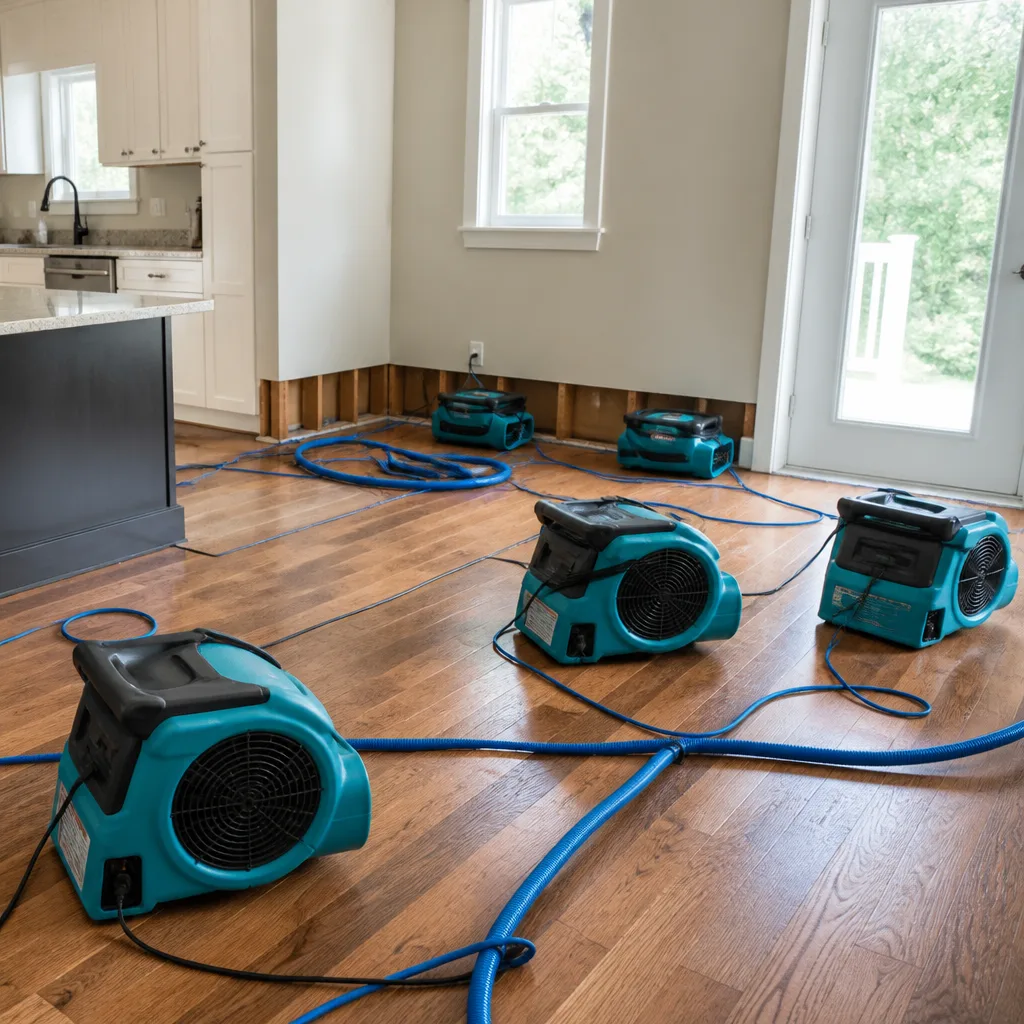

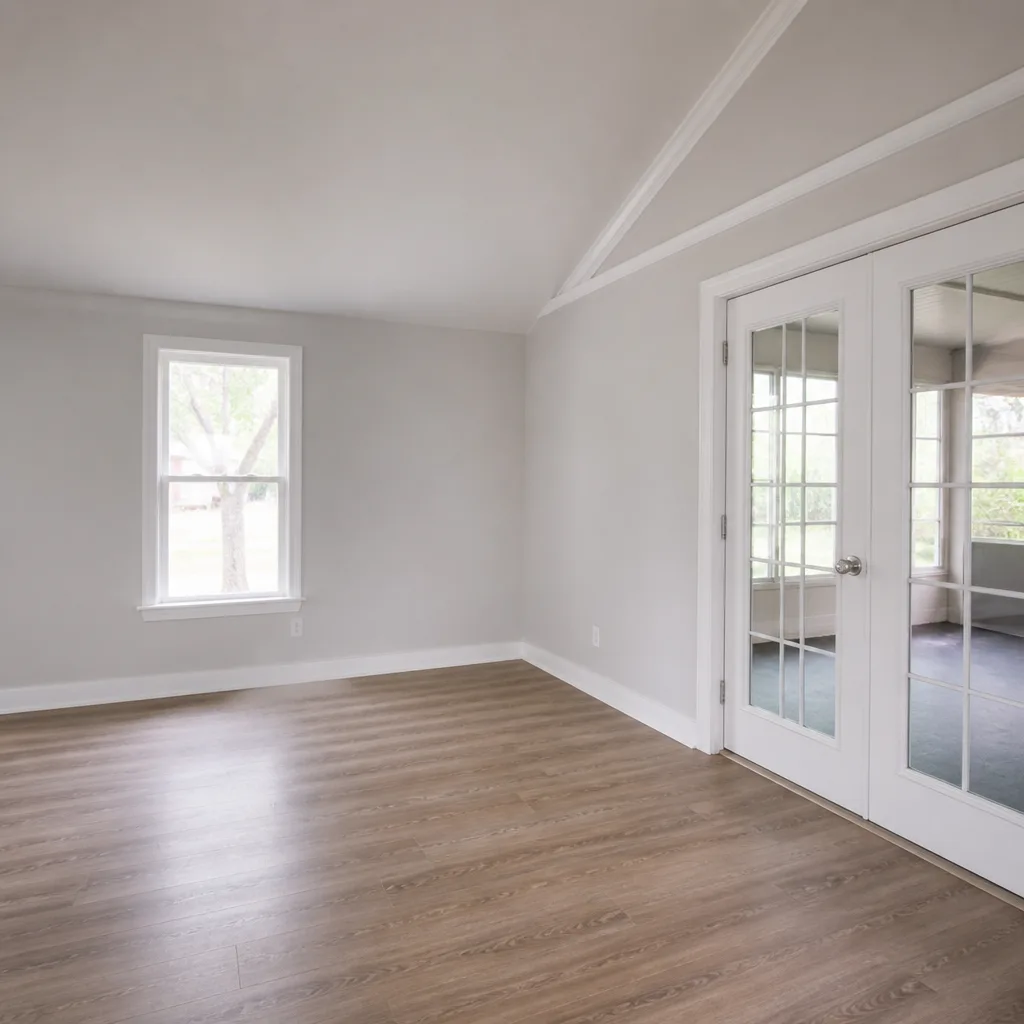

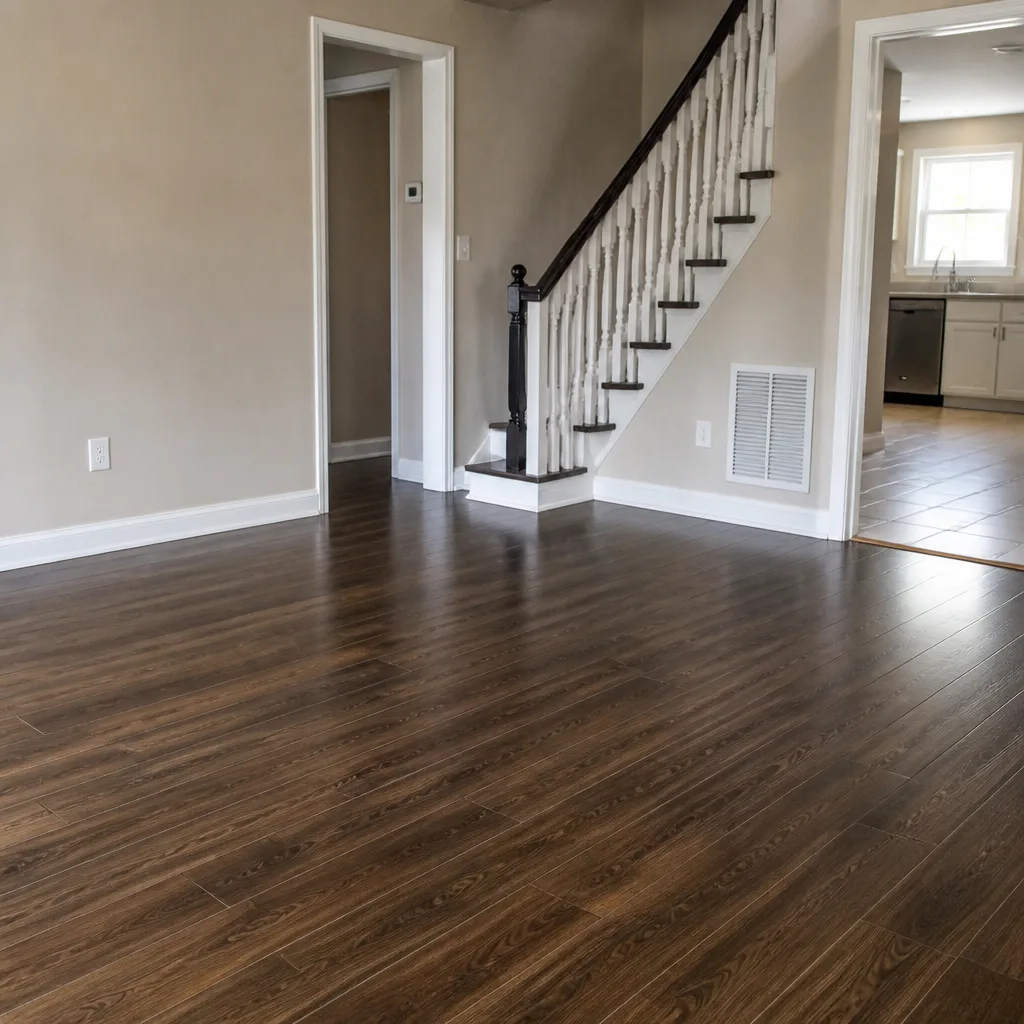

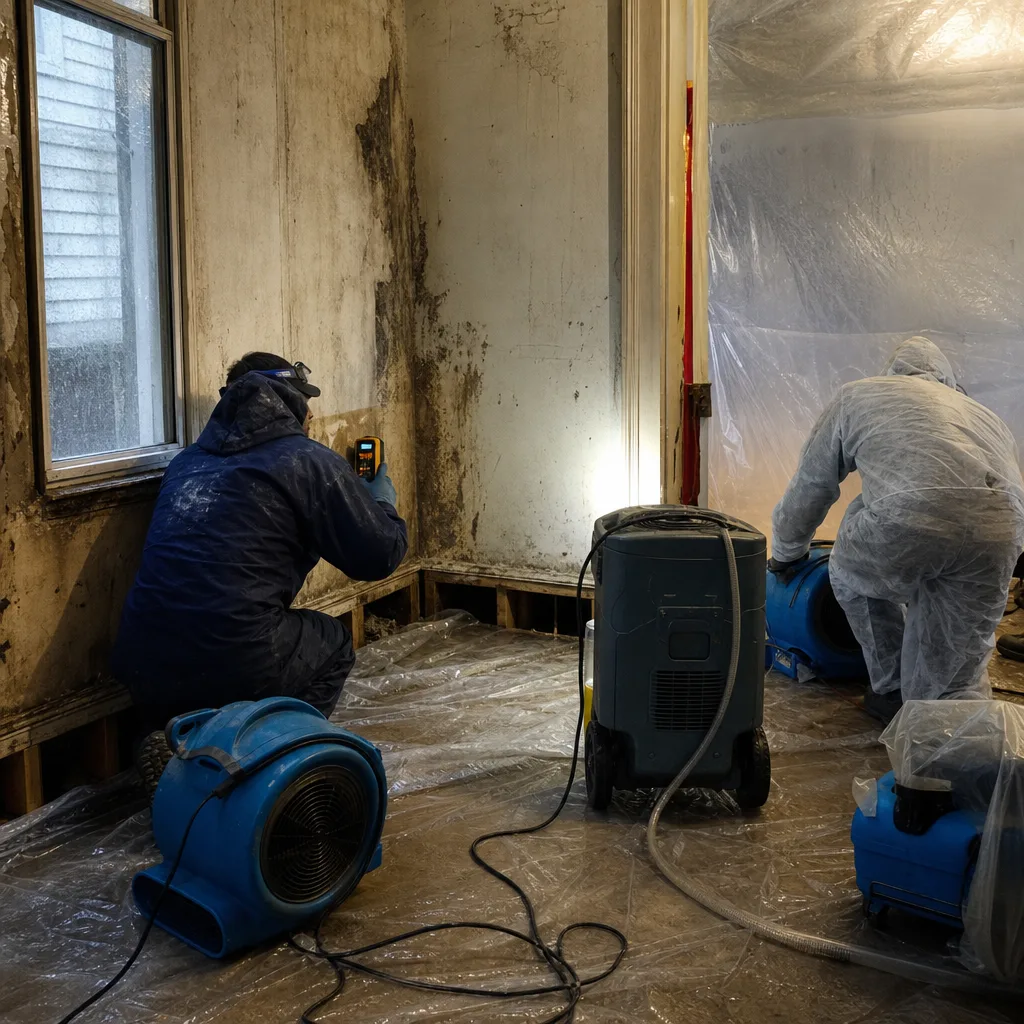 Before
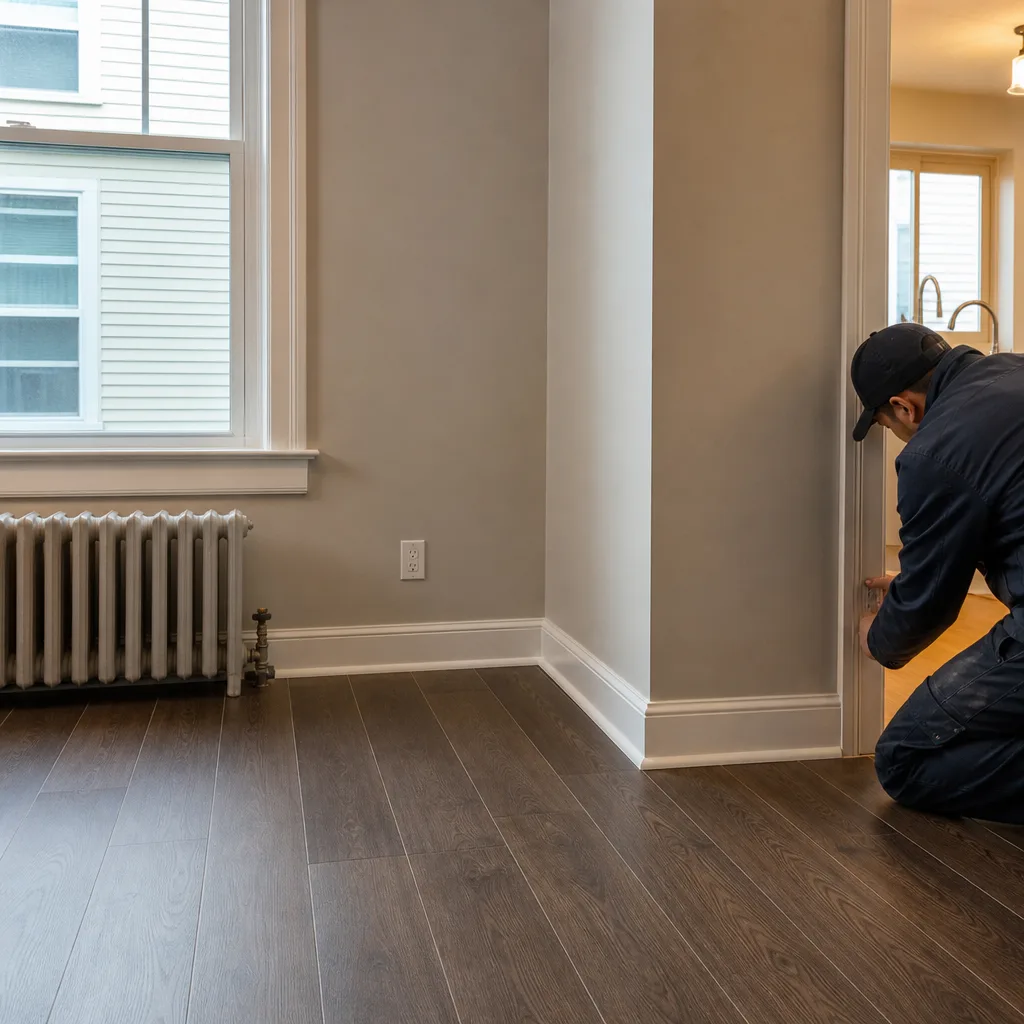 After
After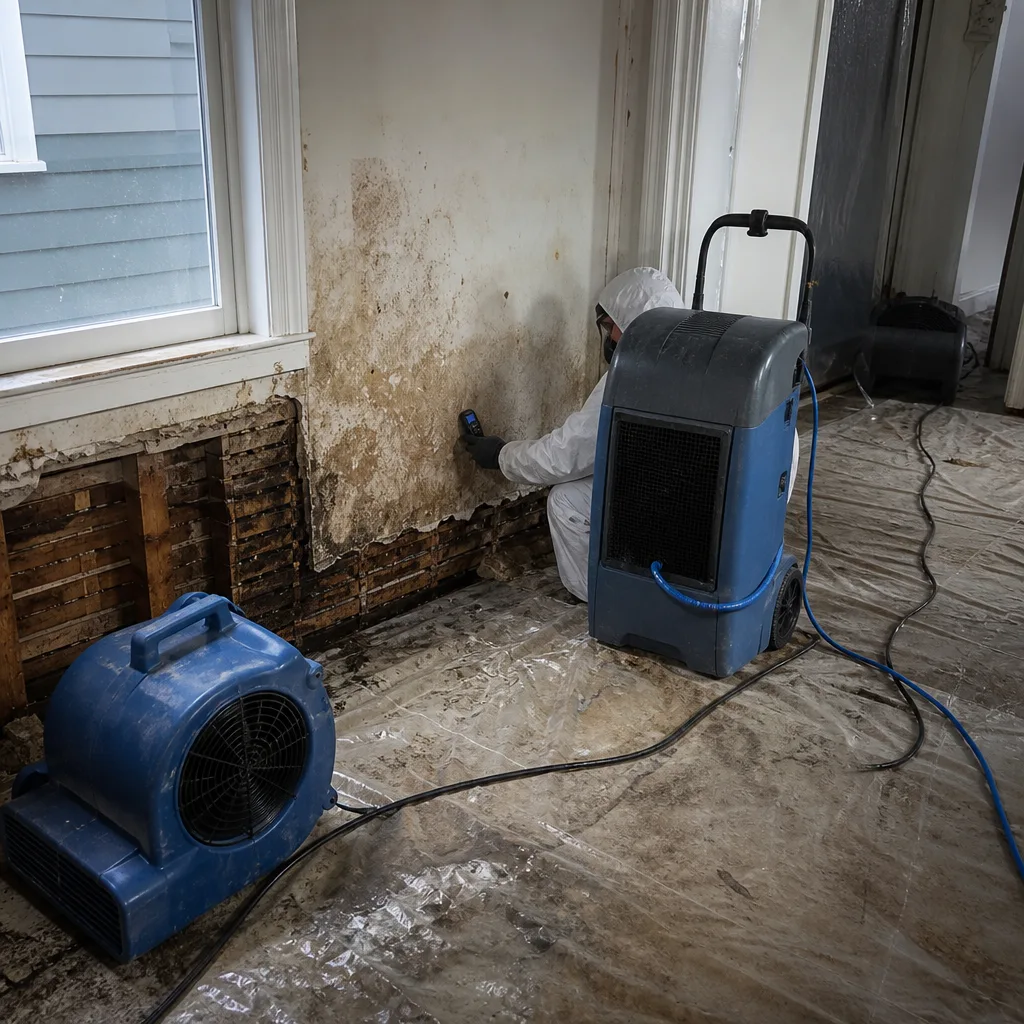 Before
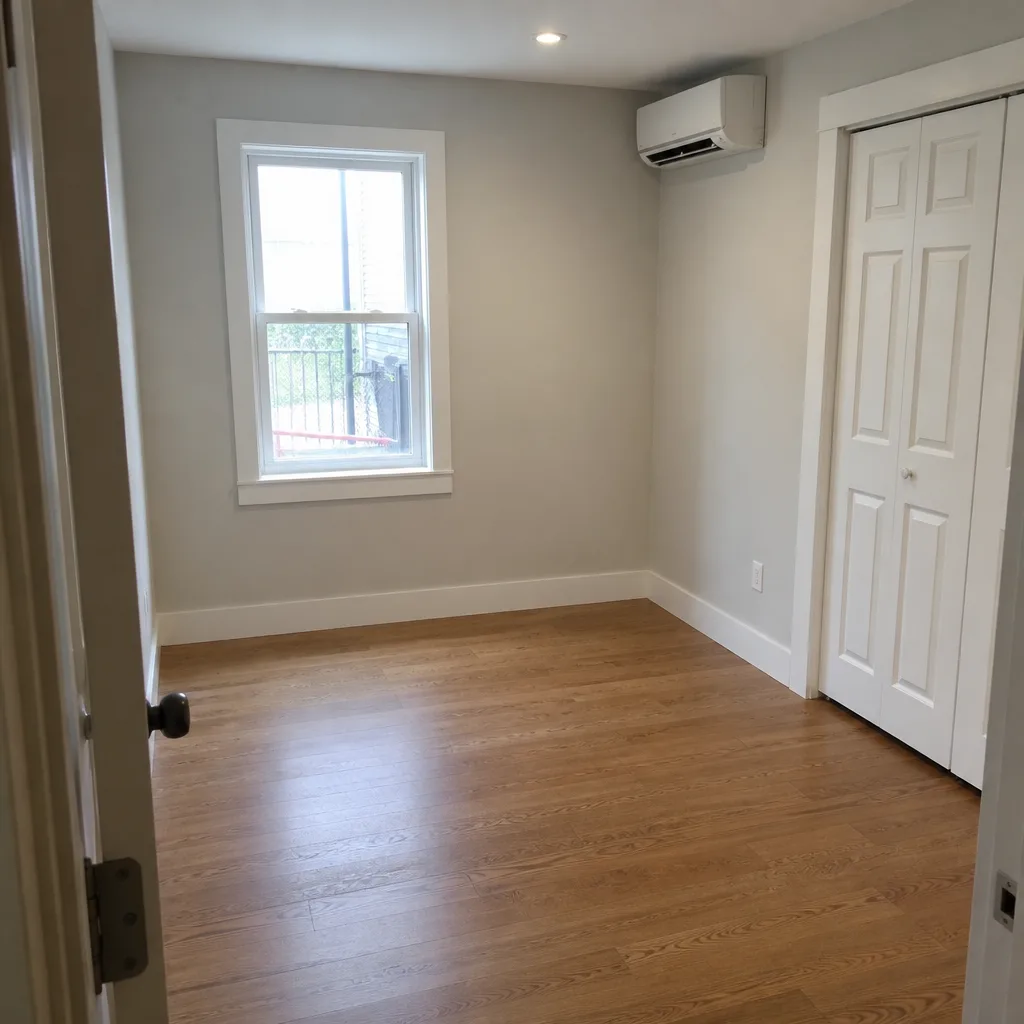 After
After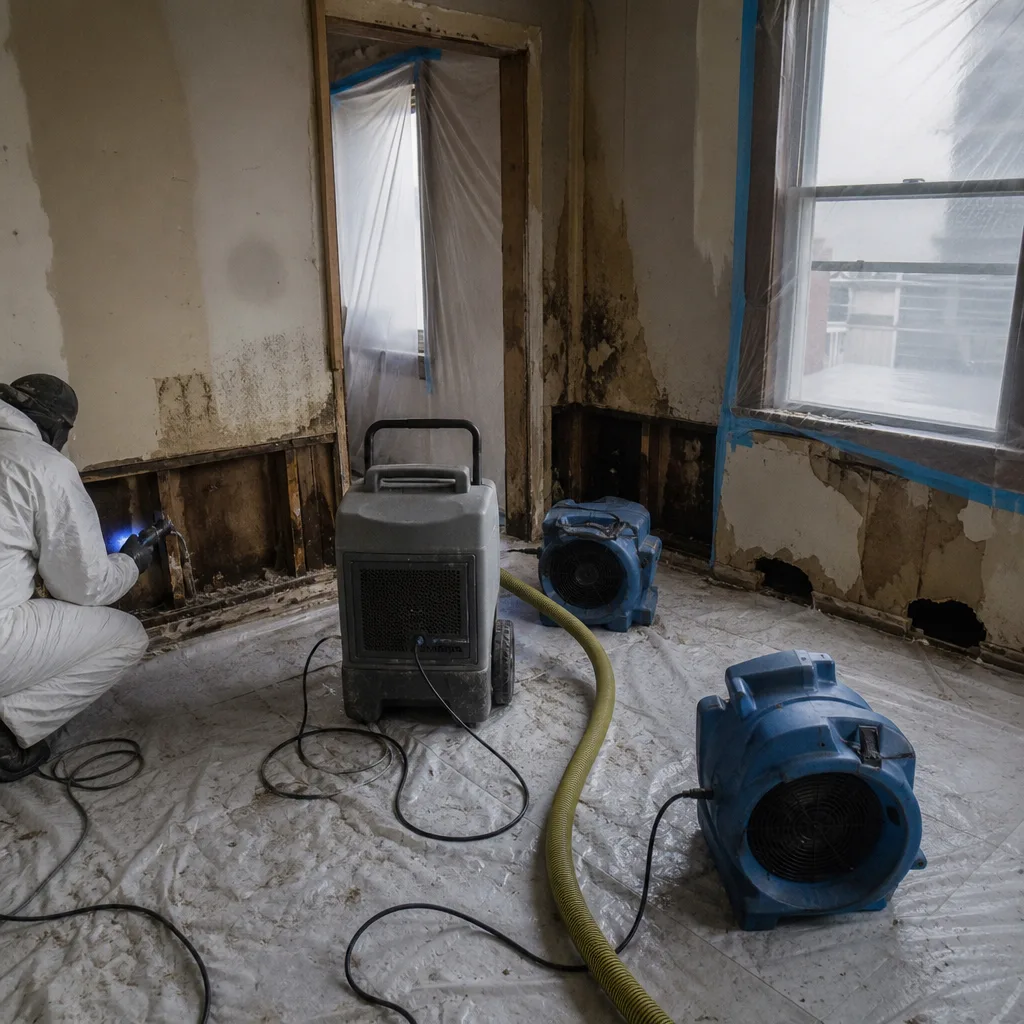 Before
 After
AfterDamage Restoration Warning Signs: A Astoria Homeowner’s Reference Guide
Here’s something that surprises most Astoria homeowners when they hear it: the most expensive water damage we see almost never starts with a dramatic burst pipe. It starts with a door that sticks in July, a faint sour note near the baseboard, or a chalky white crust on the basement wall that gets dismissed as an old-house quirk. Astoria’s housing stock is denser and older than almost anywhere else in Queens, and that changes what early warning signs actually look like. This guide will teach you how to read the signals that matter in a pre-war rowhouse or a 1920s apartment building, before a $900 fix becomes a $27,000 gut renovation, and you can find more guides & resources on our blog.
Quick Answer
The earliest signs of hidden water damage in Astoria homes are usually structural, not cosmetic: doors and windows that suddenly stick in humid weather, plaster that feels cold or damp in specific spots, wood floors that cup or crown in one room but not the next, and efflorescence on basement masonry that keeps returning after you brush it off. A persistent musty smell in a finished basement almost always points to moisture behind drywall or under flooring, not the carpet itself. If you notice any of these, call (363) 208-1526 for a free assessment before the damage spreads behind walls and into framing.
Table of Contents
- Sticking Doors and Sagging Floors: Settling vs. Moisture Movement
- Basement Efflorescence: What That White Crust Actually Tells You
- The Musty Smell in a Finished Basement: Why It’s Rarely the Carpet
- The Boiler Room Nose Test: Detecting Slow Drain Line Seepage
- The HVAC Condensate Line: Astoria’s Most Overlooked Moisture Source
- Plaster Walls and Wood Floors: Reading the Material, Not the Stain
- Documenting Damage: What Your Insurance Adjuster Needs to See
- Common Mistakes to Avoid
- When to Call a Professional
- Frequently Asked Questions
Sticking Doors and Sagging Floors: Settling vs. Moisture Movement
Every pre-war building in Astoria has settled. That’s normal. What’s not normal is a door that starts sticking in June and loosens up again in November. Seasonal sticking that tracks with humidity, not temperature, is one of the most reliable early indicators of moisture in the subfloor or door framing, as we explain in our guide to Seasonal Damage Restoration Care for Astoria: Year-Round Homeowner’s Guide. Wood expands when it absorbs water. If the humidity in your apartment hasn’t changed but your bedroom door suddenly needs a hip-check to close, something is feeding moisture into the wood around that doorway.
Here’s how to tell the difference between old-house character and an active water problem:
- Settling is static. A door that has stuck in the same spot for 20 years is just an old door in an old frame.
- Moisture movement is progressive. A door that gets harder to close month over month, or one that sticks at the top in summer and the bottom in winter, is moving because the wood is changing shape.
- Settling is uniform. Moisture problems are localized. If one floorboard is cupped while the ones next to it are flat, that’s water, not age.
- Settling doesn’t smell. Moisture does. Get low, near the threshold or baseboard, and take a breath. A sour, earthy note means water is present.
In Astoria’s attached rowhouses, we regularly see moisture migrating through shared party walls. You can have a perfectly dry basement and still get water in your front parlor floor because the neighbor’s downspout is dumping against the shared foundation wall. This is why we tell homeowners to look at the whole picture: one sticking door plus one musty corner plus a new crack in the plaster is not three separate problems. It’s one water problem expressing itself in three places.
Basement Efflorescence: What That White Crust Actually Tells You
Efflorescence is that chalky white or grayish crust that forms on basement masonry walls. Most Astoria homeowners brush it off, paint over it, or assume it’s just cosmetic. It’s not. Efflorescence is mineral salt left behind when water moves through the masonry, evaporates on the surface, and deposits what it was carrying. In plain language: if you have efflorescence, water is actively moving through your foundation wall.
The key detail most guides miss is that efflorescence tells you about water pressure, not just surface moisture:
- Light, powdery efflorescence that brushes off easily usually means water is moving slowly through the wall via capillary action. This is early-stage. You have time, but you don’t have forever.
- Thick, crusty, or recurring efflorescence that comes back within weeks of cleaning means there’s a consistent supply of water behind that wall. In Astoria, this is often groundwater pressure after heavy rain, or a leaking waste line in the soil behind the foundation.
- Glossy or crystalline deposits suggest water is moving through fast enough to leave heavier mineral concentrations. This is usually paired with visible dampness on the wall after rain.
Here is the sequence we recommend for any Astoria homeowner who finds efflorescence: photograph it, mark the boundary with painter’s tape and a date, then check back after the next heavy rain. If the efflorescence has spread past your tape line, water is actively moving through that wall. If the wall feels damp to the touch within 48 hours of rain, you have hydrostatic pressure against the foundation. This is the point where a Water Damage Restoration in Astoria assessment pays for itself. Waiting until you see standing water means the water has already saturated whatever is on the other side of that wall.
The Musty Smell in a Finished Basement: Why It’s Rarely the Carpet
When a finished Astoria basement smells musty, the first instinct is to shampoo the carpet or run a dehumidifier. Neither fixes the real problem. That smell is almost always coming from behind the finished surfaces: inside the wall cavities, under the subfloor, or behind the drywall where moisture has been trapped against organic material for weeks or months.
Here’s what we actually investigate first when we get a call about a musty finished basement:
- The baseboards. Pull the shoe molding back in a small test spot if you can. If the back of the baseboard or the drywall behind it is stained, spongy, or smells stronger when exposed, that’s mold or rot behind the wall.
- The floor perimeter. Water seeks the lowest point. In a finished basement, that’s the seam where the wall meets the floor. Carpet tack strips are metal and will rust; if you see rust staining on the tack strip or the carpet edge near the wall, water is wicking up from below.
- The ceiling corners of the basement. In Astoria rowhouses, supply and waste lines from the floors above run through basement ceiling cavities. A slow leak in a drain line above will drip onto the top plate of a finished basement wall and spread horizontally before showing up as a stain. The smell often presents before any visible water.
One of our biggest frustrations in this trade is watching a homeowner spend $400 on carpet cleaning when the real problem is a slow waste line leak behind the wall. The carpet company cleans, the smell fades for a week, then returns because the source was never addressed. If you have a persistent musty smell in a finished basement, the honest move is to investigate what’s behind the finished surfaces before spending money on the finished surfaces themselves. For more on this topic, see our guide on Mold Remediation in Astoria.
The Boiler Room Nose Test: Detecting Slow Drain Line Seepage
Your utility room has a smell. Every boiler room does: a little oil, a little dust, a little heat. What it should not have is a sweet, organic smell like wet leaves, or a sharp, sour smell like urine. Both are telltale signs of slow drain line seepage, and in Astoria’s older buildings, this is one of the most common sources of hidden water damage we encounter.
Here’s the nose test, step by step:
- Stand in the boiler room for 60 seconds before checking anything visually. Your nose adjusts to ambient smells quickly. What you smell in the first minute is the truest reading.
- Note any sweet or organic smell. This is often decomposing organic matter in a slow-draining line, or water that has been sitting long enough to grow bacteria. In plumbing terms, this is a step toward category 2 contamination.
- Note any sharp, ammonia-like smell. This can indicate urine, sewage seepage, or water that has sat long enough to degrade into graywater. This is a health concern, not just a house concern.
- Check the floor around the base of the boiler and water heater. A slow leak from a condensate line, a relief valve, or a drain connection will leave a mineral ring, a rust stain, or a permanently damp spot. In a dusty boiler room, the floor should be dry and dusty everywhere. Any spot that looks cleaner, darker, or shiny is a wet spot.
We worked on an Astoria rowhouse last year where the homeowner had been noticing a faint smell in the boiler room for months. What we found was a slow leak at a cast iron drain line connection that had been seeping into the floor joists above the basement for long enough to rot a four-foot section of the joist. The repair cost more than ten times what a simple plumber’s visit would have cost a year earlier. The nose knows. Trust it.
The HVAC Condensate Line: Astoria’s Most Overlooked Moisture Source
In Astoria’s apartments and co-ops, the HVAC condensate line is one of the most common sources of hidden moisture damage we see, and almost nobody checks it until drywall starts sagging. Here’s how it works: your air conditioner pulls moisture out of the air as it cools. That moisture drips into a drain pan and flows out through a thin PVC or copper line. When that line clogs, cracks, or gets disconnected, the water has to go somewhere. Usually, that somewhere is inside your wall or ceiling.
The signs of a condensate line problem are easy to miss because they develop slowly:
- A water stain on the ceiling below the air handler or indoor unit, especially one that appears or grows during the cooling season.
- A damp or musty smell near the indoor unit that gets stronger when the AC runs.
- Dripping or running water sounds inside a wall or ceiling cavity when the AC cycles on.
- Mold or mildew on the air handler itself or on the surrounding drywall.
- Water pooling on the floor near the air handler that you wipe up but that returns.
- Normal plaster cracks are hairline and stable. They run along old lath lines or at corners. Wet plaster cracks are wider, often accompanied by bubbling, flaking paint, or a soft, crumbly texture when you press on the area.
- Wet plaster feels cold and damp. Put the back of your hand against the wall in the suspect area, then against a wall you know is dry. If the suspect spot is noticeably colder, moisture is likely present. This works because water conducts heat away from your skin faster than dry plaster.
- Brown stains on plaster are usually water marks. Especially if they have a ring or tide-line pattern. A one-time leak leaves a single tide line. Ongoing moisture leaves multiple rings, like a topographic map.
- Date-stamped photos of the source. If you found the leak, photograph the pipe, the joint, the appliance connection. The source is what determines coverage.
- Photos of the visible damage from at least three angles. Wide shot for context, medium shot for extent, close shot for detail. Your adjuster can’t stand in your living room, so you have to show them the space.
- Moisture readings. This is one area where we hold ourselves to a standard almost nobody else in the trade matches: Wade takes moisture readings every single day on active jobs and hands the homeowner the full log when the job is done. That log is documented proof of drying progress, and it’s one of the first things an adjuster will ask for.
- A written scope of work with line-item pricing. Never let anyone start work on gutting or demolition without a written scope in your hand. This is the single most common place Astoria homeowners get burned, and it’s exactly the reputation problem that made us build our whole business differently. We put a written scope in front of you before we cut anything.
- Painting over efflorescence or water stains. Paint seals the surface but not the source. In fact, trapping moisture behind paint can accelerate rot and mold growth by reducing evaporation. Fix the water, then paint.
- Assuming a dehumidifier solves the problem. A dehumidifier removes moisture from the air, not from inside walls and subfloors. It can actually mask the problem by reducing the smell while the structure keeps rotting.
- Calling a carpet cleaner before a water damage assessment. We’ve covered this, but it bears repeating. If the smell is in the floor or the wall, cleaning the carpet does nothing but spend money.
- Dismissing small leaks as minor. A slow drip inside a wall can run for months before you see any visible clue. The damage compounds in the dark. Small leak, long time, big bill.
- Using a household fan to dry a wet wall cavity. Once water is inside a wall or under a floor, surface airflow does almost nothing. You need professional extraction and directed drying, not a box fan pointed at the baseboard.
- Not documenting before cleanup starts. If you throw away wet drywall or carpet before photographing it or taking moisture readings, you’re throwing away evidence your adjuster needed. Document first, then remove.
- Waiting to see if it gets worse. Water damage in Astoria’s attached housing can travel through party walls and affect neighboring units within days. The longer you wait, the more surfaces the water reaches, and the more expensive and invasive the fix becomes.
In Astoria co-ops and apartments, a clogged condensate line on the fifth floor can damage units below it through multiple floors. This is why boards and property managers take these calls seriously, and why individual unit owners should check their condensate lines at the start of every cooling season. It’s a two-minute check that prevents a multi-unit water damage claim. If you find water where it shouldn’t be around your HVAC unit, shut the unit off and call us. We have the equipment to dry wall cavities without ripping out drywall, using professional-grade drying systems like Injectidry’s low-pressure injection drying for enclosed cavities.
Plaster Walls and Wood Floors: Reading the Material, Not the Stain
Astoria’s old homes have plaster walls and wood floors that have seen a century of New York weather. They crack, they creak, they show their age. But there’s a difference between an old wall and a wet wall, and learning to read that difference is the single most valuable skill a pre-war homeowner can develop.
Here’s what separates normal aging from active moisture in plaster:
For wood floors, the cues are similar. Cupping (edges higher than the center) means the underside of the board is wetter than the top. Crowning (center higher than the edges) means the top has been wet. A floor that is cupped in one room but flat in the adjacent room points to moisture below the cupped room, not a refinishing problem. In Astoria basements that have been finished over the original slab, we regularly see cupping in the flooring directly above where a waste line runs. The wood is reading the pipe’s health.
Documenting Damage: What Your Insurance Adjuster Needs to See
When you find water damage, the documentation you do in the first hour has a direct impact on your insurance claim. Most homeowners photograph the visible stain and stop there. An adjuster needs more, and a good restoration company should be documenting this for you. Here’s what actually matters to your claim:
For fire and smoke damage specifically, the documentation needs are different. Our Fire & Smoke Damage Restoration in Astoria guide covers the full claim process, but the short version is: photograph everything before anyone removes anything, because smoke residue patterns tell a story about how the fire moved, and an adjuster needs to see that story in place.
Common Mistakes to Avoid
When to Call a Professional
Call a professional the moment you have confirmation of active moisture that you can’t see the full extent of. That means: a door that’s sticking progressively, a smell that returns after cleaning, efflorescence that spreads after rain, a water stain that grows, or any water event that involved more than a spill you wiped up immediately. If water has moved into walls, under floors, or into plaster, you’re past the point of DIY drying. Wade’s Restoration offers free estimates in Astoria, and you’ll talk to a live person when you call, not a voicemail tree. Call (363) 208-1526 and describe what you’re seeing. Wade will tell you straight whether it needs a crew or just a watchful eye. That advice costs you nothing either way.
Frequently Asked Questions
A persistent musty smell that gets stronger in humid weather or when you open a closed space like a closet or basement door is usually mold or active moisture, not just old-house character. Old-house smell is consistent and atmospheric; musty smell is localized and organic. If you notice the smell is strongest near baseboards, behind furniture, or in corners, moisture is likely present behind the surfaces, and you should call (363) 208-1526 for a free assessment.
Water can move through a rowhouse’s shared walls and floor cavities within 24 to 48 hours, especially in Astoria’s attached housing where party walls and common joist bays connect units. That’s why we answer calls 24/7 and can have extraction running inside the hour. The faster water is removed and drying starts, the less structural material it reaches.
Coverage depends on the source of the water and your policy language, but in many cases, yes, especially if the damage is sudden and accidental rather than long-term seepage. This is one area where Wade deals with your adjuster directly, so you’re not the one relaying technical information between two sides. He documents everything with moisture logs and photos and sends it straight to your adjuster. Call (363) 208-1526 and we’ll help you understand what your policy covers before you spend a dime.
Efflorescence is mineral salt, white or grayish, powdery or crystalline, and it’s a sign of water moving through masonry. Mold is organic, usually black, green, or brown, and it grows on the surface of materials that stay damp. Both mean water is present, but efflorescence itself won’t harm you, while mold can. If you see both, the mold is the priority. We can assess which you’re dealing with and what it means for your foundation.
If water has penetrated walls, floors, or plaster, professional drying is not optional. Water inside a wall cavity won’t dry from surface airflow, and a dehumidifier only pulls moisture from the room air, not from inside the structure. We use professional-grade equipment from Dri-Eaz, Phoenix, and XPOWER, along with Injectidry injection drying for inaccessible cavities. Without that, you’re leaving moisture in the framing to rot and mold over time.
Our estimates are free, and if you’re inside our own county, there’s no trip charge. We also offer a free second opinion on any written estimate you’ve received from another company. That means if another outfit quoted you a number, bring us the paperwork and we’ll tell you honestly whether it’s fair. Call (363) 208-1526 and ask for Wade. He answers his own phone.
The Bottom Line
In Astoria’s dense, older housing stock, the earliest signs of water damage are structural and easily misread as normal old-house quirks. A door that sticks progressively, a musty smell that returns after cleaning, efflorescence that spreads after rain, or a cold damp spot on a plaster wall are all the same message: water is moving somewhere it shouldn’t. The fix is always cheaper, faster, and less invasive the earlier you catch it. Wade’s Restoration has been serving Astoria since 2007, and every job comes with the 90-Day Done Right Promise in writing. If you’re seeing any of the warning signs in this guide, call (363) 208-1526. We’ll tell you straight what you’re dealing with and what it will take to fix it. No charge for the estimate, and no charge for the trip if you’re in the county.
Written by Wade Ferris, Owner at Wade’s Restoration, serving Astoria since 2007.