
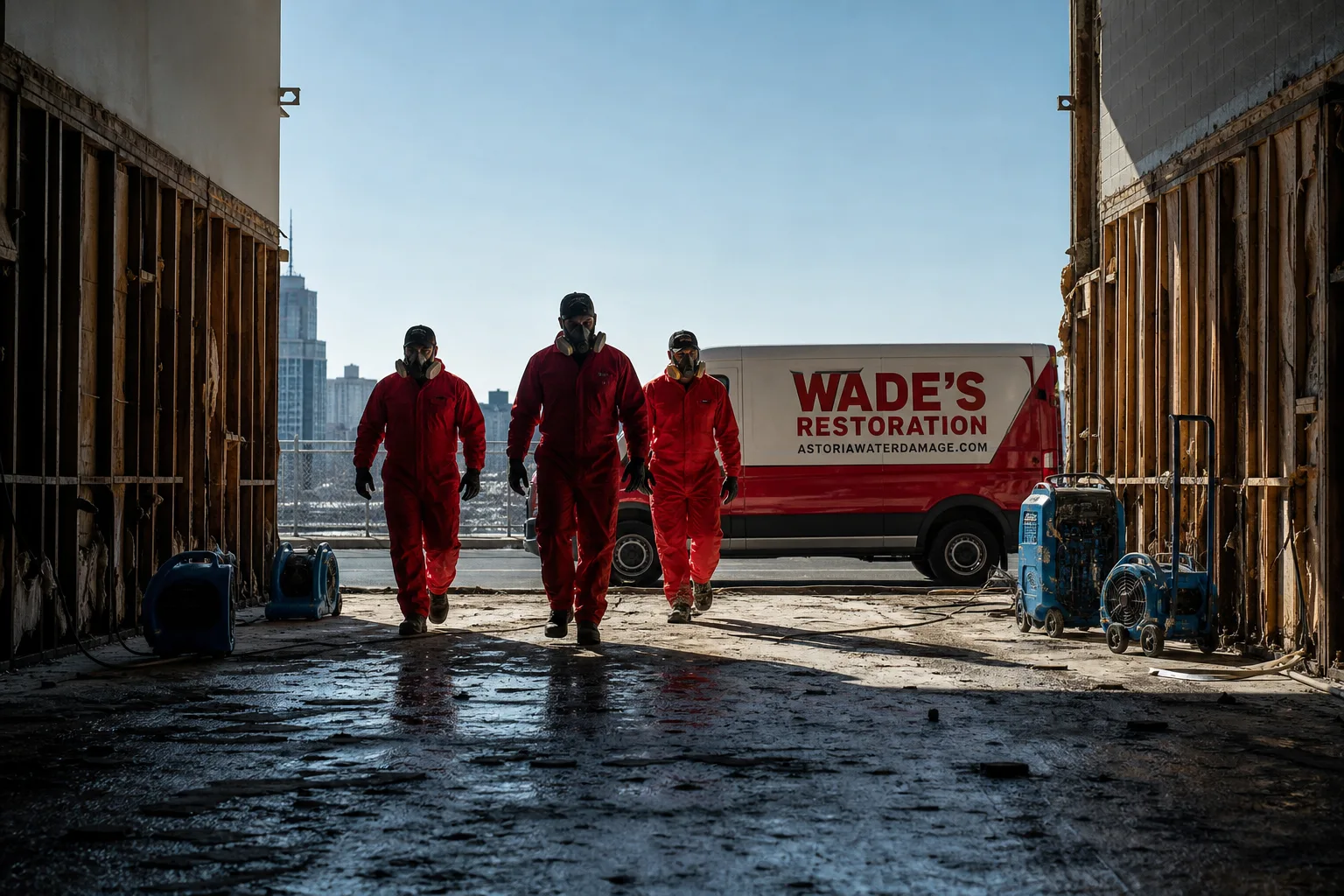
Free visual inspection and a written scope of work before any mitigation begins - photos, moisture readings, and drying logs go in your claim file
The scope we write is the scope we bill. Anything new gets shown to you, in writing, before we touch it.
 Before
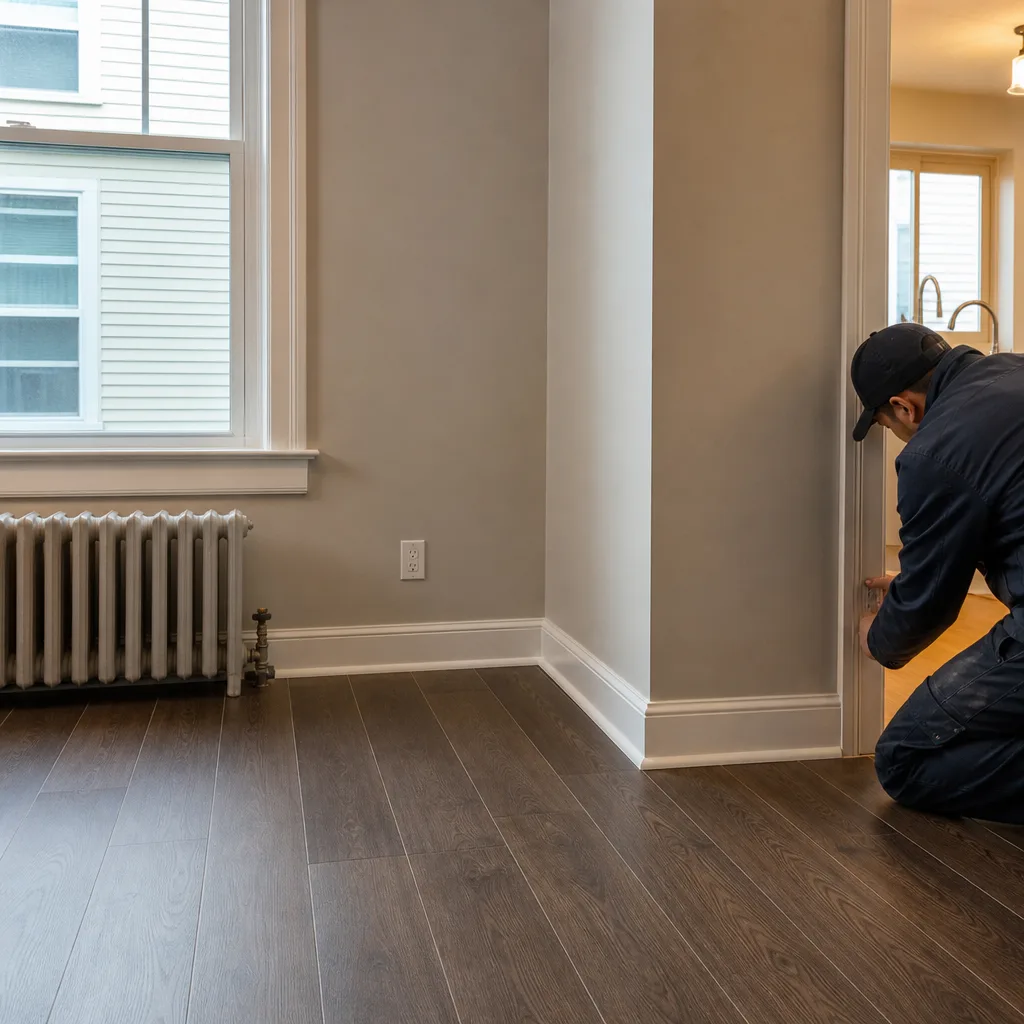 After
After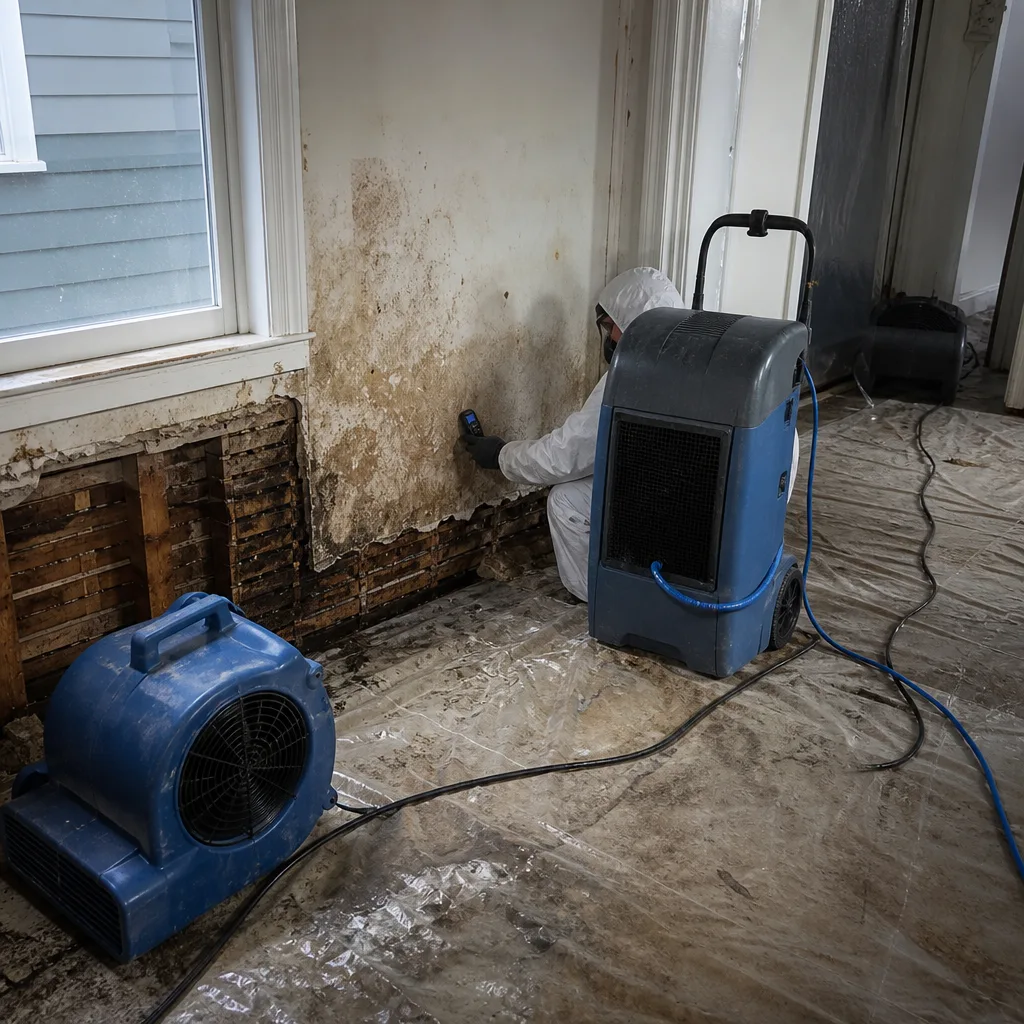 Before
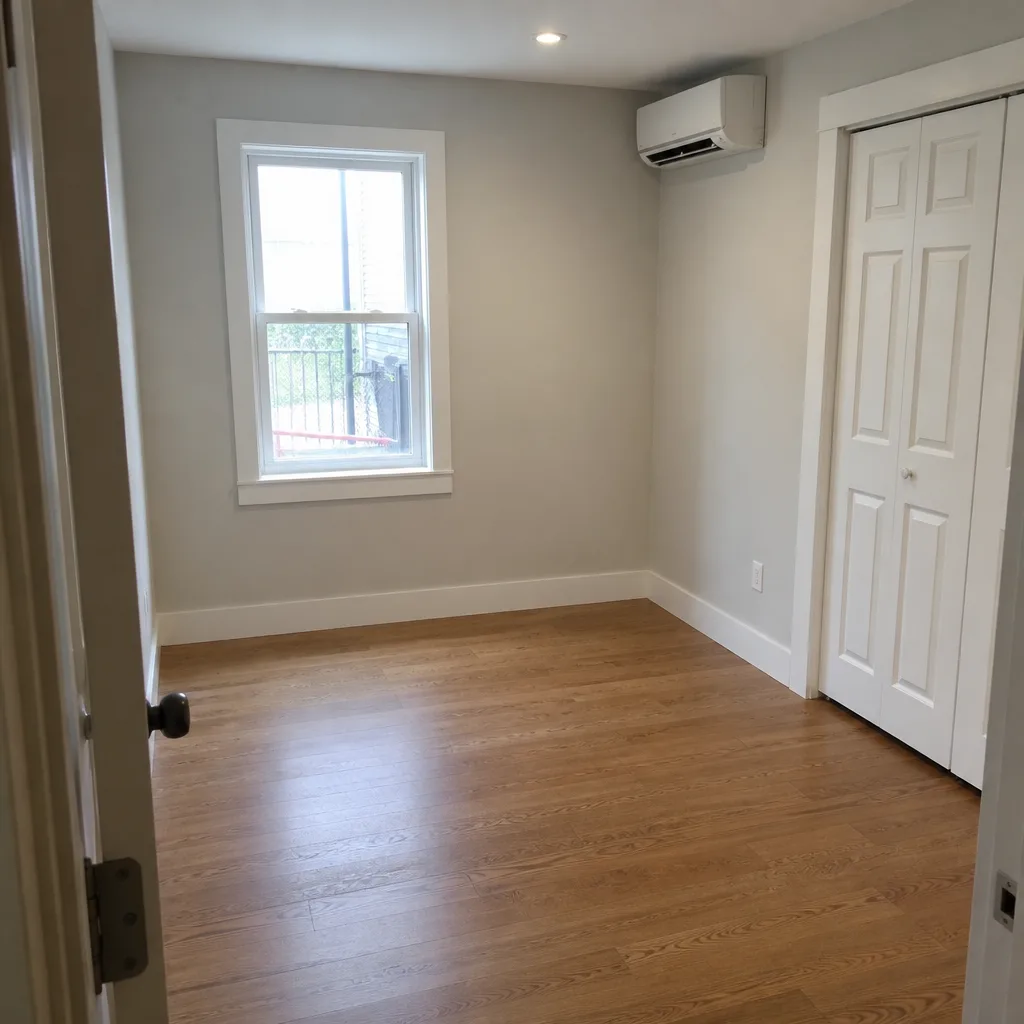 After
After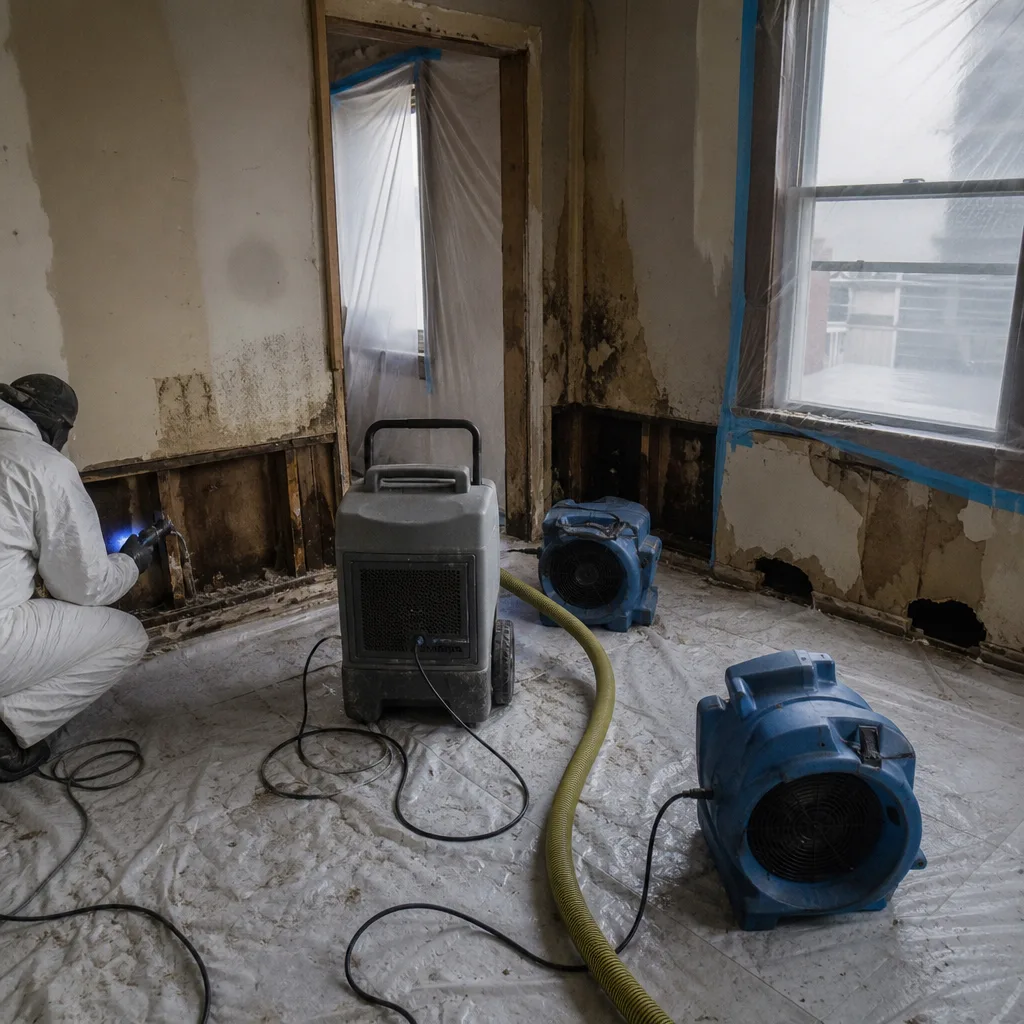 Before
 After
After24/7 Emergency Mold Remediation in Financial District
Mold remediation in Financial District typically runs $2,800-$7,500 for a contained basement or sub-basement job, and most projects take 3-7 days when the scope includes masonry salt treatment. If you’re seeing black spots spreading across drywall or smelling that musty odor in a converted warehouse unit, call (363) 208-1526 right now. Wade Ferris answers his own phone, and he can have a crew at your building inside the hour, because every hour of unchecked mold growth in this neighborhood means spores moving through shared steam chases and drain lines into the floors above you.
Mold doesn’t wait for business hours in FiDi. Neither do we.
Understanding Mold Remediation Severity in Financial District Properties
Mold severity in Financial District buildings works differently than in almost any other New York neighborhood. The residential stock here is overwhelmingly converted late-19th- and early-20th-century commercial towers and warehouses: cast-iron frames, thick masonry facades, and multi-level sub-basements that sit at or below sea level. When water enters these buildings, whether from a nor’easter surge that calls for our Storm & Disaster Restoration in Financial District, a failed drain line, or a burst steam pipe, it doesn’t just wet the surface. It wicks into porous masonry and stays there.
We classify mold work by the square footage of visible colonization and the moisture source feeding it. A Category 1 water loss (clean water from a supply line) is straightforward. A Category 3 loss (seawater, Sewage Cleanup in Financial District, or harbor surge) demands full containment, HEPA air scrubbing, and antimicrobial treatment, because the salt and organic load accelerate colonization dramatically. In Financial District sub-basements, we regularly find colonies behind walls that standard moisture meters miss entirely. That’s why Wade runs thermal imaging and takes masonry core samples on every job where the water source is ambiguous. Most companies don’t. We do because we’ve been back to too many FiDi buildings where hidden salt kept re-wetting the walls months after the “remediation” was finished.
Why Financial District Property Owners Choose Wade’s Restoration
- 45-minute response commitment: Wade heads out the moment you call, not after a call center triages your ticket. We have crews stationed nearby and can be setting up containment before most companies return your voicemail.
- A live person answers, 24/7: You’ll talk to Wade or someone on his crew, not an automated attendant. At 2 a.m. with water rising in a sub-basement, that matters.
- IICRC-certified, AMRT-code trained: Our mold remediation techs carry Applied Microbial Remediation Technician certification, not just a generic water restoration card. That training matters when you’re dealing with Stachybotrys in a converted office tower.
- Free visual inspection: Wade will walk your unit, take moisture readings, and tell you honestly whether you need full remediation or just a dehumidifier and a cleaning. No charge for that.
- Direct insurance billing: We document everything, bill your carrier directly, and Wade talks to the adjuster himself, so you’re never the messenger between two parties who don’t return calls.
- One team from start to finish: Containment, drying, demo, treatment, and reconstruction all handled by the same crew. No subcontractor roulette in your building.
Our Mold Remediation Process
Inspection & Assessment
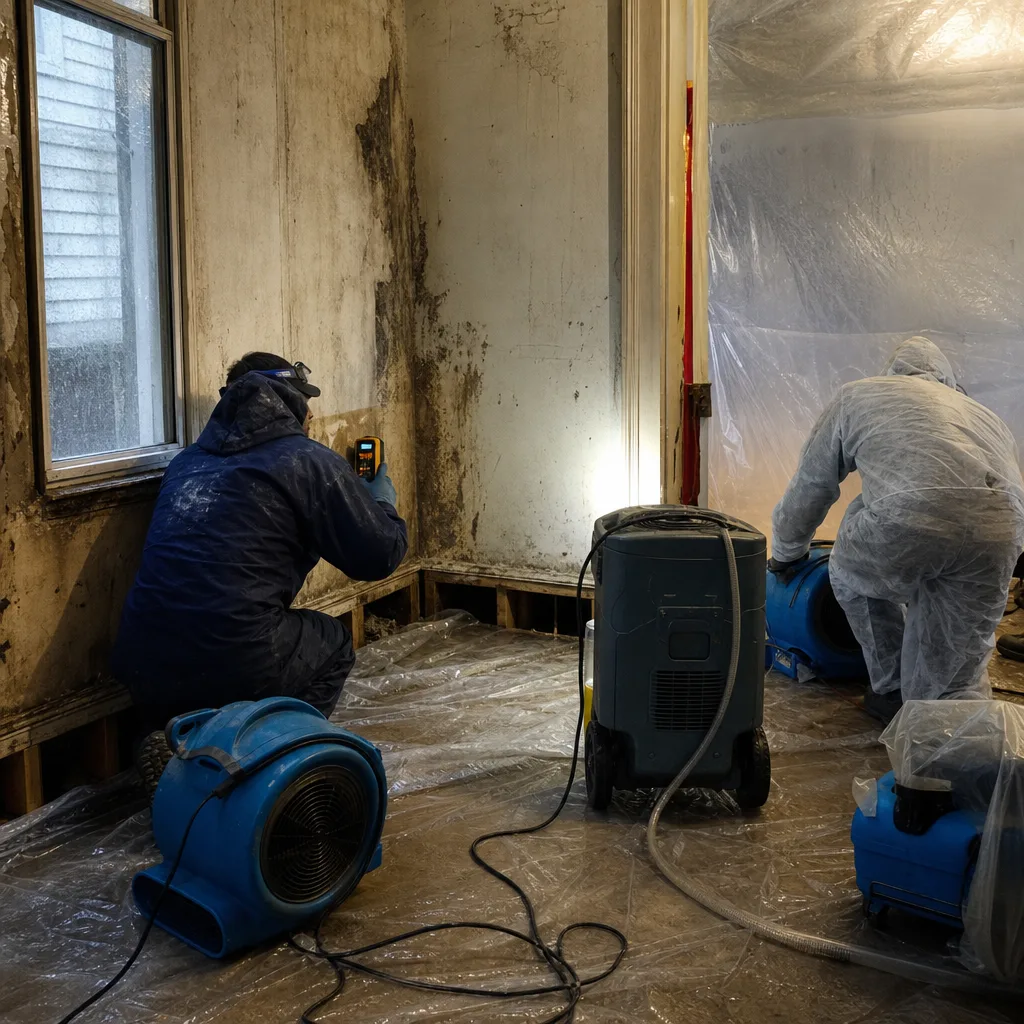
Wade walks the property with a thermal imaging camera and hygrometers, mapping moisture in walls, floors, and the ceiling cavities where spores travel. In Financial District converted buildings, this means checking the masonry itself, not just the drywall face.
Containment & Stabilization
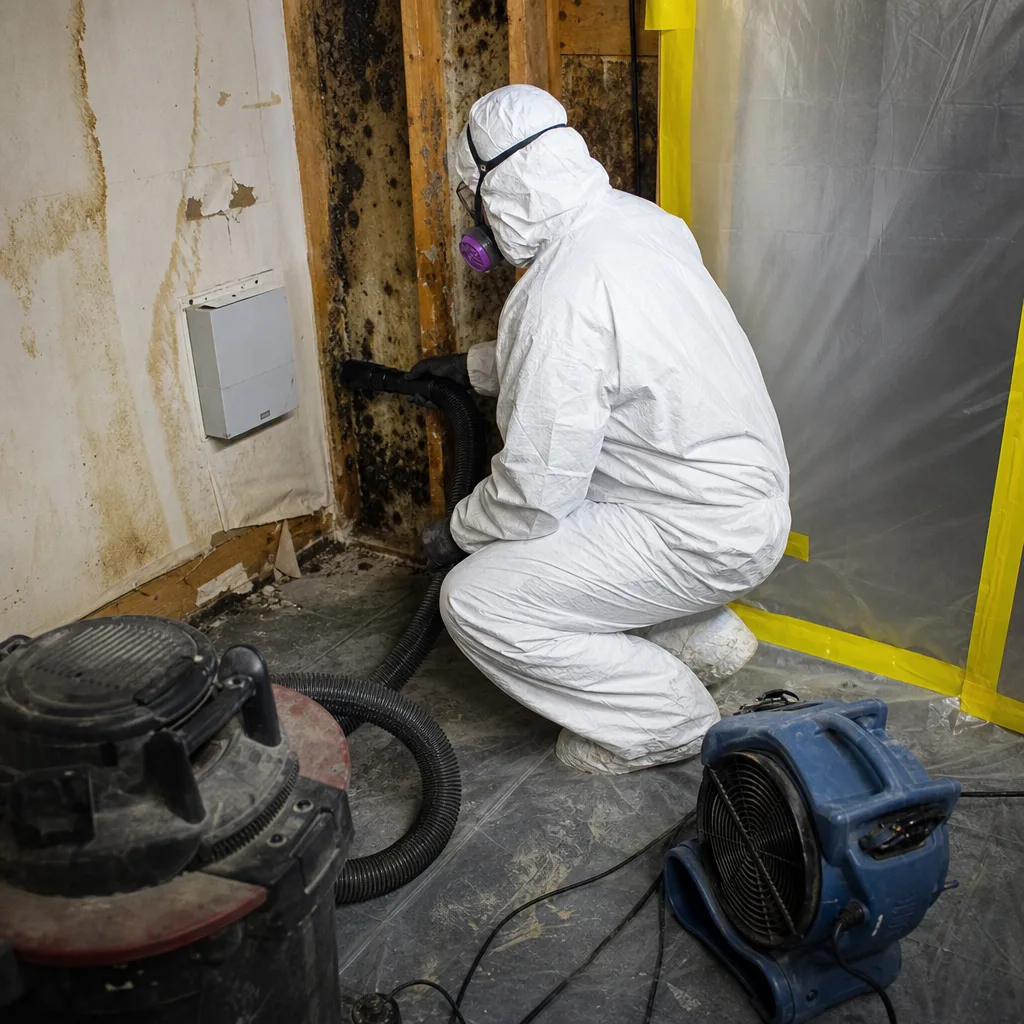
We seal off the affected zone with 6-mil polyethylene containment and run HEPA air scrubbers to create negative air pressure, stopping spores from migrating through the shared chases and corridors common in pre-war conversions.
Drying & Dehumidification
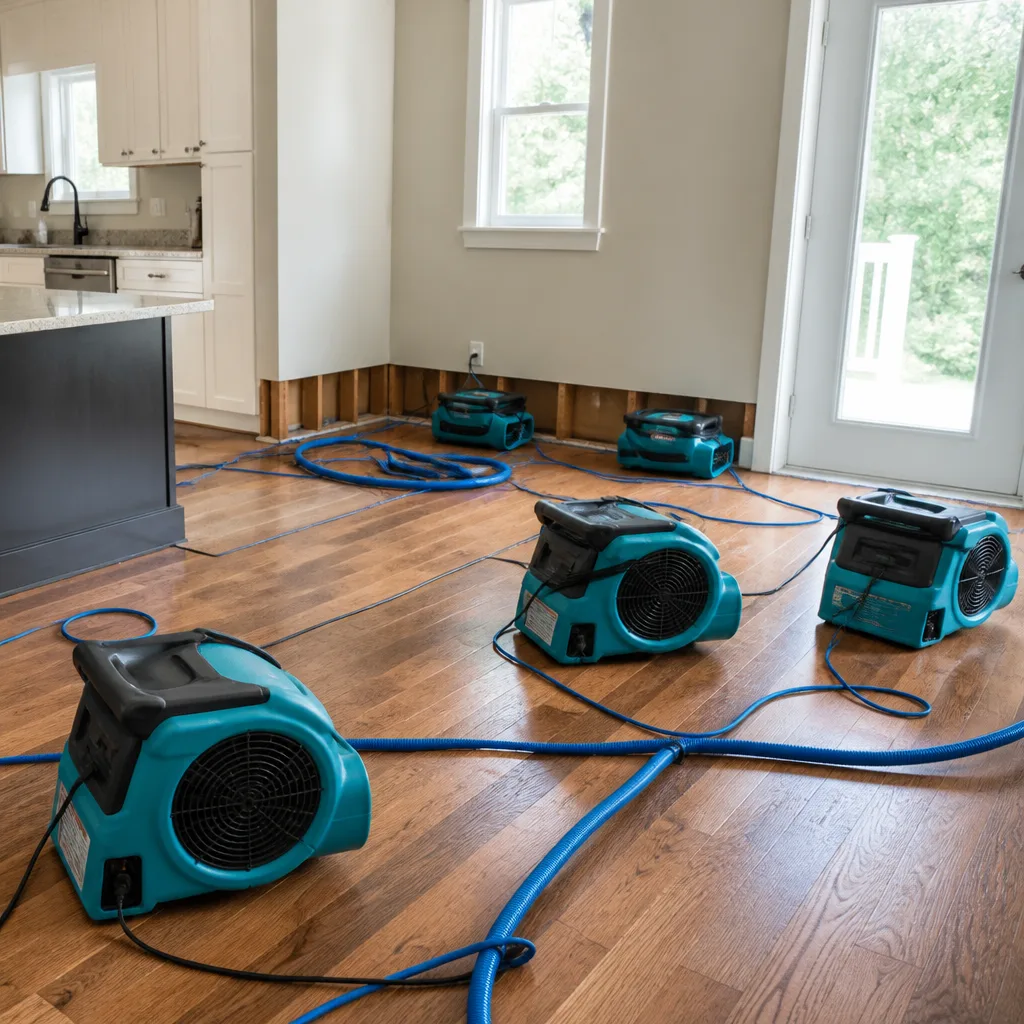
Dri-Eaz dehumidifiers and Phoenix axial air movers run continuously, with daily moisture readings logged in a document you get at the end of the job. Wade checks the numbers himself, every day, because drying a masonry wall is not the same as drying a sheetrock wall.
Cleaning & Antimicrobial Treatment
Contaminated materials are removed and bagged under containment. Every remaining surface gets treated with EPA-registered antimicrobial, including the masonry face behind removed finishes. We wire-brush visible salt crystallization before treatment, not after, which is what actually stops the re-wetting cycle.
Efflorescence Assays & Clearance Testing
For any sub-basement or below-grade space in Financial District, we test masonry core samples for salt content before clearing the space. If efflorescence is present, we repeat treatment and drying until the assays come back clean. This step is specific to coastal Lower Manhattan and is the reason our jobs hold up.
Repairs & Restoration
We rebuild what was removed: drywall, insulation, paint, flooring, and trim. We also address the moisture source that caused the mold in the first place, whether that’s a failed drain line, a leaking bulkhead, or a missing vapor barrier in a sub-basement.
Need Emergency Mold Remediation in Financial District Now?
Crews minutes away, answering live 24 hours a day. The sooner we start, the less it costs.
Working With Your Insurance Company
Mold claims in Financial District are rarely simple. If the mold stems from a hurricane or nor’easter surge, you’re likely dealing with an NFIP flood policy, not a standard homeowner’s rider, and those policies have specific documentation and timing requirements that adjusters enforce strictly. If it’s from a burst supply line or a failed appliance, the claim goes through your general property policy. Either way, documentation from the first hour determines what gets covered.
Wade has handled NFIP claims in FiDi since Sandy, and he knows which line items carriers push back on and which ones they approve when the paperwork is right. He talks to the adjuster directly, usually within the first 24 hours, and he makes sure the scope is written to match the actual loss, not a generic template. You hired a restoration company, not a paperwork translator. We handle both.
What We Provide Your Insurer
- Thorough documentation of the loss from hour one
- Photos of all damage, room by room, including sub-basement masonry
- Moisture readings and drying logs for every day on site
- A detailed, line-item scope of work with local rate justification
- Direct coordination with your carrier and NFIP adjuster
Built for Financial District’s Loss Calendar
Financial District’s mold season doesn’t follow the same rhythm as neighborhoods further uptown. Here, the threat calendar runs like this: August through October is hurricane season, and when a tropical system pushes harbor water over the Battery sea wall, salt water gets into sub-basements along Pearl, Water, and Front Streets, starting the efflorescence-re-moistening cycle that can feed mold for months after the visible water is gone. November through March brings nor’easters, which produce the same tidal surge from a different direction, plus cold-weather steam pipe failures in buildings that still run century-old heating infrastructure. April through July, the risk shifts to condensation and humidity, because below-grade spaces in converted commercial buildings simply don’t dry out in warm weather without mechanical dehumidification running around the clock.
What this means for you: if you live in a converted tower south of Wall Street or in a walk-up along Stone Street, you should check your sub-basement and any below-grade storage areas after every major storm, not just when you see mold. By the time it’s visible on drywall, the colony inside the wall cavity is typically 10 times larger than what you can see.
Mold Remediation Across Financial District’s Neighborhoods
Different parts of Financial District fail in different ways, and knowing which failure mode you’re dealing with changes how we run the job, whether it’s standard mold work or Biohazard & Crime Scene Cleanup in Financial District. In the converted office towers along Broadway and Exchange Place, mold typically originates in sub-basements and migrates upward through shared mechanical chases, which means we set containment on multiple floors even when the visible mold is only in one. Over on Pearl Street and Water Street, the old warehouse conversions have thick masonry party walls that hold water for weeks after a flood, so our drying timelines run longer and our clearance testing includes the salt assays that most companies skip entirely. In the residential pockets around Stone Street and Hanover Square, the buildings are smaller and older, often with original cast-iron drain lines that have been patched for decades; when one fails, the water spreads fast through floor cavities that haven’t been opened since the conversion. And in the newer high-rise residential towers near Battery Park, mold tends to come from condensation on chilled water risers and HVAC issues rather than storm surge, which calls for humidity control solutions more than demolition.
Serving Financial District means knowing which building stock you’re walking into before you open a wall. Wade has been doing this long enough that when you tell him the address, he can usually tell you the likely water source before he gets there.
Specialized Mold Remediation Services We Offer in Financial District
Mold Inspection & Testing
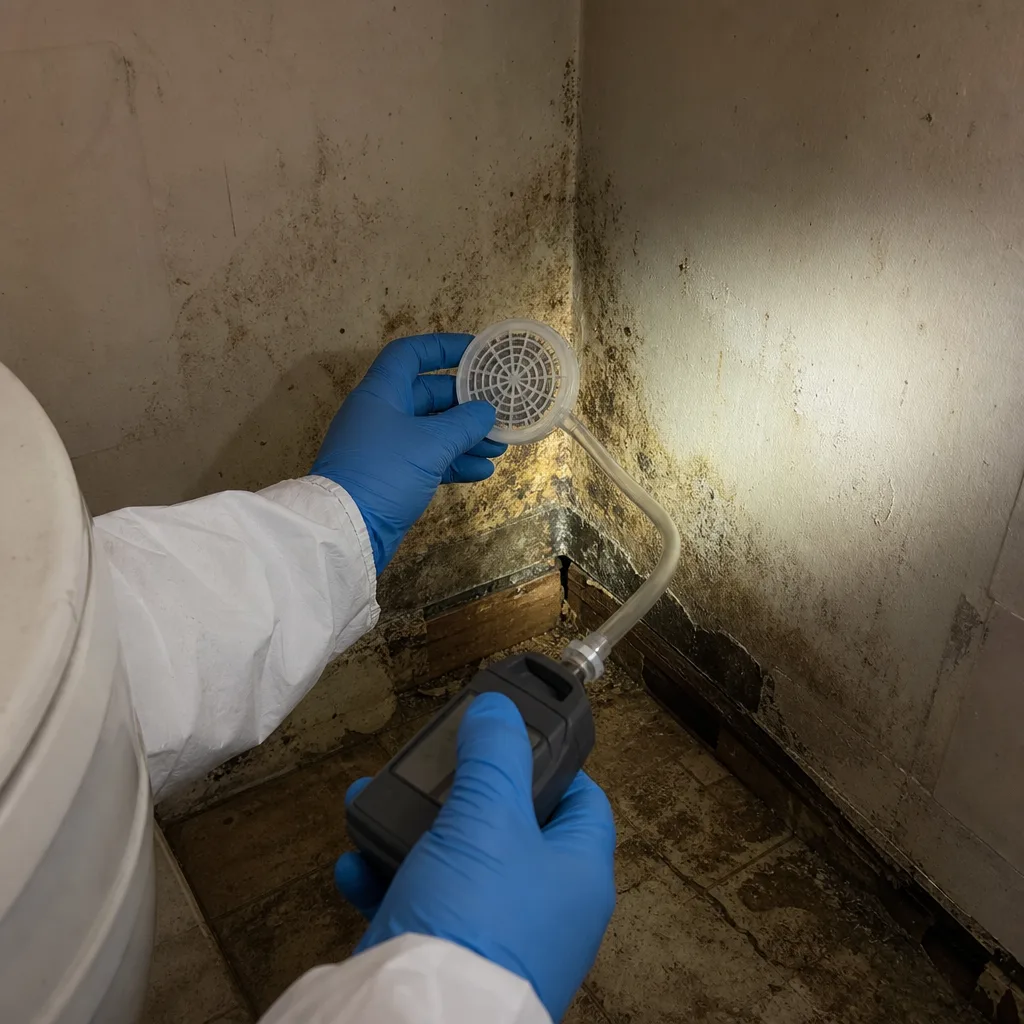
Before any work starts, you need to know what you’re actually dealing with. We take air samples, surface samples, and masonry core samples where applicable, then send them to an independent lab for analysis. In Financial District, we specifically test for salt content in below-grade masonry, because efflorescence is the single most common reason mold returns after remediation in this neighborhood.
Mold Removal
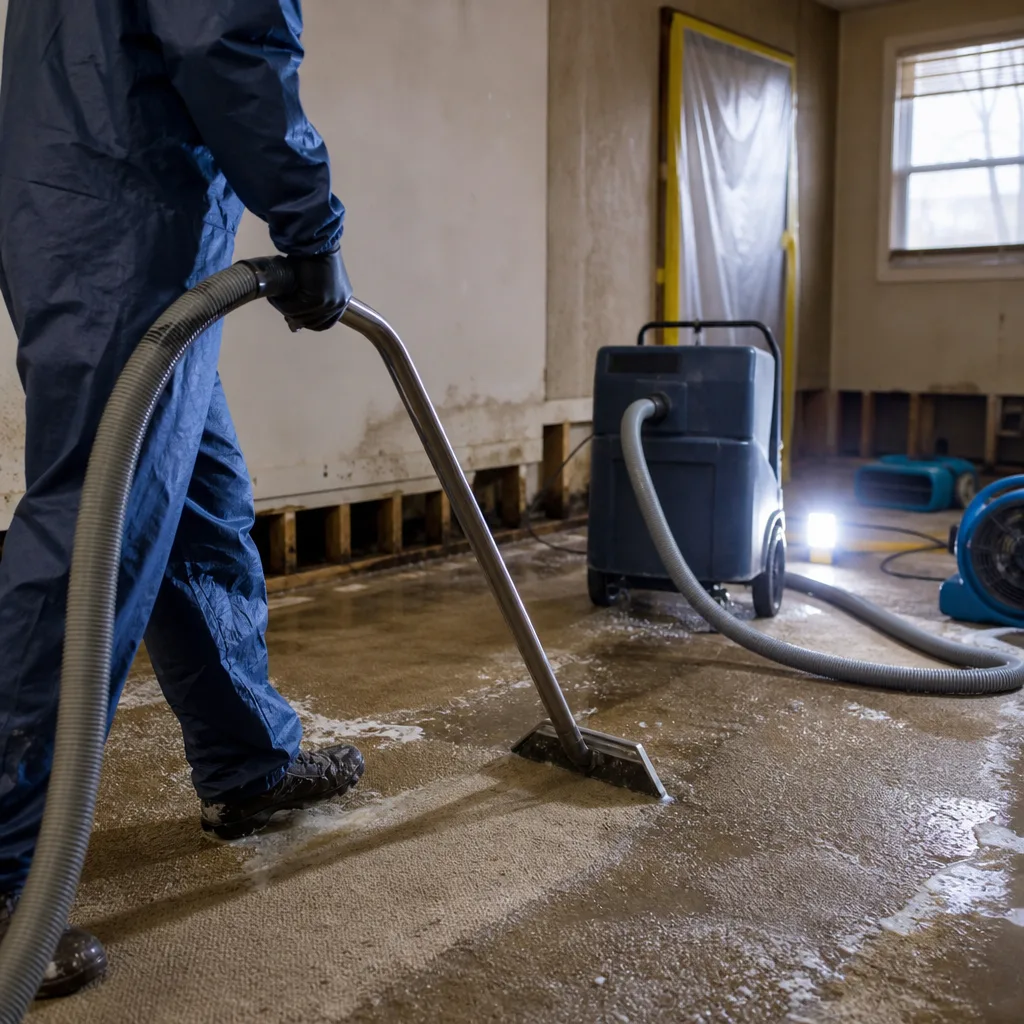
Mold removal means physically removing contaminated materials, not just spraying bleach on the surface. We cut out affected drywall, insulation, and flooring under containment, bag it, and remove it through the building’s freight entrance, not the lobby. Then we treat the remaining structure. In older FiDi buildings, this often means exposing and cleaning original masonry that hasn’t seen daylight in 90 years.
Black Mold Remediation
Black mold, usually Stachybotrys chartarum, is what most people are worried about when they call. It’s a legitimate concern: Stachybotrys produces mycotoxins that cause respiratory problems, especially in people with asthma, allergies, or compromised immune systems. In Financial District’s humid sub-basements, it grows especially well. Our Mold Remediation team sets up full containment with negative air pressure and uses HEPA filtration on everything that leaves the work zone, plus full PPE for our crew. This is not a DIY job.
Air Quality Restoration
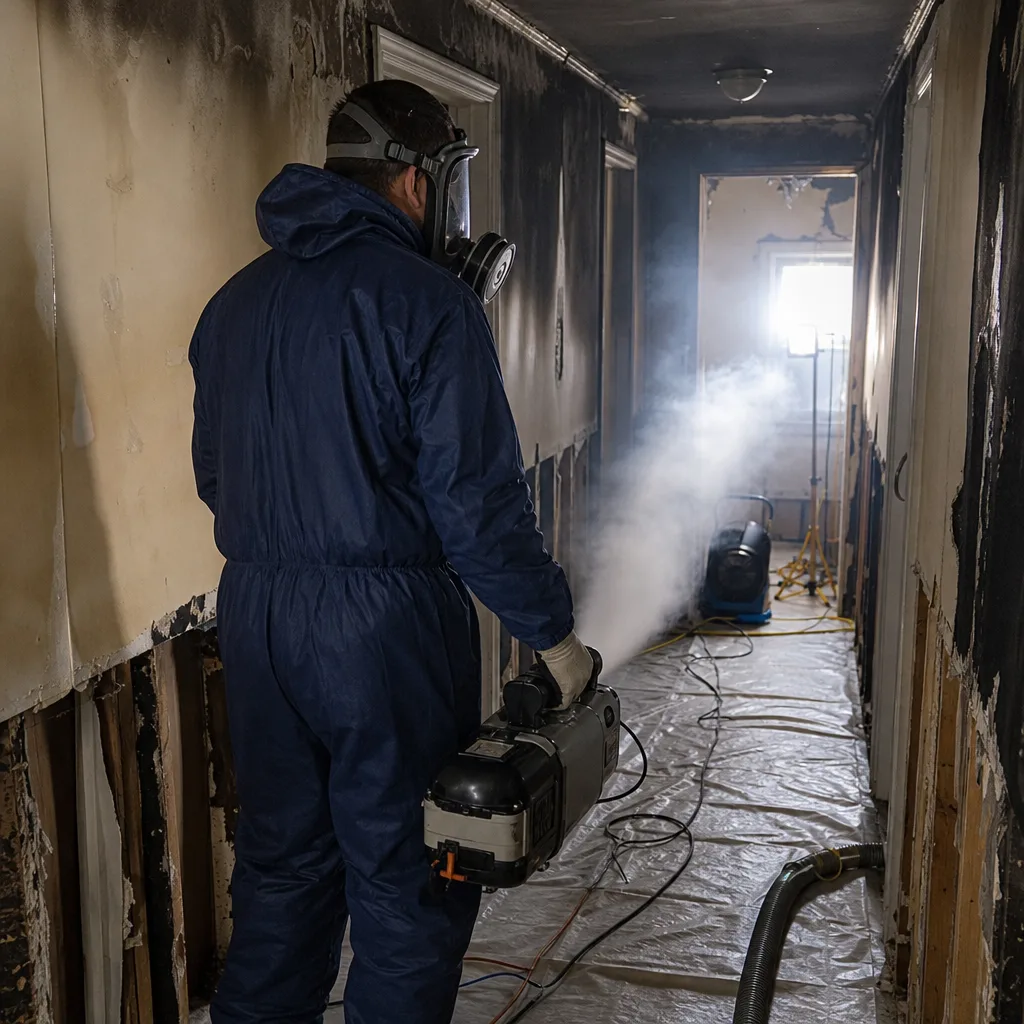
After the source of mold is removed, the spores that already moved through your unit need to be captured, not just left to settle. We run HEPA air scrubbers throughout the affected area, clean all surfaces with HEPA vacuums, and replace HVAC filters where possible. In converted commercial buildings where the air handling serves multiple floors, we coordinate with the building’s management to avoid cross-contaminating neighboring units.
Crawl Space Treatment
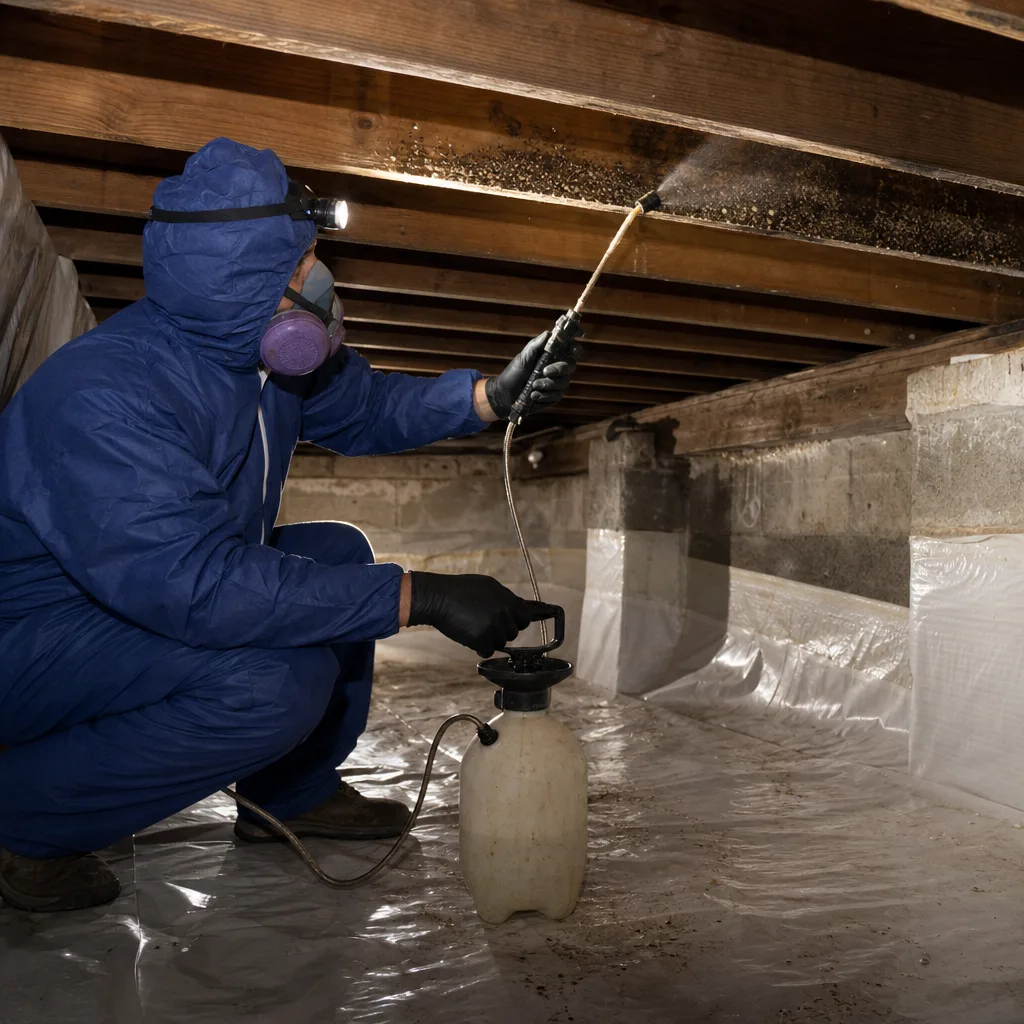
Below-grade crawl spaces in Financial District are some of the most mold-prone spaces anywhere in the city, because they combine the salt-laden masonry problem with chronic humidity and poor ventilation. We treat these spaces with vapor barriers, dehumidification systems, and antimicrobial application to the structural members, then we monitor conditions until readings stabilize.
Moisture & Humidity Control
Mold removal is only half the job. If the moisture source isn’t addressed, the mold comes back. In FiDi, that means dealing with rising damp through masonry, condensation on cold surfaces, failed waterproofing, and in some buildings, chronic high humidity that requires mechanical dehumidification running permanently. We size and install the right equipment, and show you how to read the readings yourself.
What happens when you call
- 1
A real person answersNo phone trees - you reach a local pro.
- 2
You get an upfront price rangeHonest numbers before anyone is dispatched.
- 3
A background-checked tech heads outLicensed & insured, dispatched right away.
- 4
You approve before work beginsNothing starts until you say go.
Mold Remediation Costs in Financial District, NY
Mold remediation in Financial District runs higher than in most other Manhattan neighborhoods for a simple reason: the buildings are harder to work in, and the salt-in-masonry issue means shorter drying protocols simply don’t hold. A small contained mold job in a single condo unit with good access typically runs $2,800-$4,500. A full sub-basement remediation in a converted warehouse with masonry treatment, multiple containment zones, and clearance testing runs $5,000-$12,000 depending on square footage and how much demolition is required. Air quality restoration as a standalone service typically runs $800-$2,000. Crawl space treatment with vapor barrier installation runs $1,500-$4,500 depending on access and size.
The best way to get an exact number is to call and have Wade walk the space. Estimates are free, and the inspection takes about an hour. If you have a written estimate from another company, bring it along. Wade will give you a free second opinion on it, and he’ll tell you honestly if you’re being oversold. Ask anyone on your street about the national franchise that quoted one price on the phone and another at the door; Wade quotes a number and stands by it.
We Also Serve Cities Near Financial District
Our crews serve the full Financial District area plus Mold Remediation in Financial District-adjacent communities including Astoria, Lower Manhattan, Flushing, and Midtown Manhattan. If you’re not sure whether we cover your building, call (363) 208-1526 and ask. If we can’t get to you, we’ll tell you straight up.
Financial District Mold Remediation Questions, Answered
How does saltwater intrusion from a storm surge affect mold remediation in Financial District sub-basements differently than freshwater flooding?
Saltwater leaves salt crystals behind in porous masonry. Those crystals continuously draw moisture from the air through a process called deliquescence, which keeps walls damp long after the visible water is gone. That damp masonry feeds mold even after standard drying protocols say the space is dry. In Financial District, remediation must include efflorescence testing and salt removal, or the mold returns within months.
Why do converted office towers in FiDi require multi-floor mold containment during remediation?
Because these buildings share vertical mechanical chases, drain lines, and air pathways that connect floors. Mold spores released during demolition on a lower floor can travel upward through these pathways and colonize other units. Multi-floor containment with negative air pressure prevents this migration. It costs more, but it’s the only way to do the job without spreading the problem.
What role do NFIP flood insurance claims play in Financial District mold remediation projects?
If your mold stems from storm surge or tidal flooding, your claim falls under NFIP, which has different documentation requirements, different coverage limits for mold, and different timelines than standard homeowner’s insurance. Our team documents everything to NFIP standards, coordinates with the flood adjuster directly, and writes scopes that match what NFIP actually pays for. Wade has handled these claims since Sandy.
How quickly can mold start growing in a FiDi basement after a nor’easter or storm surge?
Mold colonization can begin within 24-48 hours of water intrusion, especially in the warm, humid conditions common in below-grade spaces. In salt water, the window is shorter because the salt attracts moisture and organic material from the surge feeds growth. If water has entered a sub-basement, call us within the first few hours. The faster extraction and drying starts, the less demolition you’ll need.
Does NYC post-Sandy Local Law require specific moisture-barrier or mold prevention measures for FiDi buildings undergoing remediation?
Yes. Buildings in FEMA Flood Zone AE, which includes all of Financial District, must meet post-Sandy Local Law flood-proofing requirements when doing structural repairs. This includes specific moisture-barrier specifications, flood-resistant materials below the design flood elevation, and in some cases, dry flood-proofing measures. We coordinate with your building’s engineer on these requirements, because remediation that doesn’t meet Local Law will fail inspection.
How fast can you actually get to a Financial District address?
We aim to be at your door inside 45 minutes for emergency calls. Wade commits to that in writing on service calls. If it’s not an active emergency, we schedule next-day appointments. Either way, you’ll talk to Wade or someone from his crew, not an automated system.
Can we stay in our home or apartment during the remediation?
For contained mold jobs, it depends on the extent of the contamination and your health situation. Small isolated mold removal jobs can often be done while you’re home if the containment is set up properly. Larger jobs, especially those involving black mold or sub-basement demolition, are safer to vacate during active work and for 24-48 hours after clearance. Wade gives you a straight answer on this after the initial inspection.
What should I do in the first 30 minutes after discovering mold in my Financial District apartment or building?
Don’t touch it. Don’t spray it with bleach. Don’t try to cut it out. Close the door to the affected area, turn off any fans or HVAC that might spread spores, and call (363) 208-1526. Take photos for your insurance claim. If there’s active water flowing, shut off the water source if you can do so safely. Then wait for Wade. What you do in the first 30 minutes affects the scope and cost of the entire job.
Serving Financial District, NY - Our Local Coverage Area
We’re based in the Financial District area and know this community well. Use the map below to see our service coverage - if you’re nearby, we can almost certainly help.
Call Wade’s Restoration for Mold Remediation in Financial District
Mold in a Financial District building is never a “wait and see” problem. The salt-laden masonry below sea level, the shared chases in converted towers, and the humidity that never really leaves below-grade spaces all work against you. The longer it sits, the further it spreads, and the more the claim costs to settle.
Call (363) 208-1526 now. Wade answers his own phone. He’ll talk you through what you’re seeing, tell you honestly whether it’s an emergency or a job for next week, and if it’s bad, he’ll be on the road before you hang up. Free visual inspection. No charge for the first look. 90-Day Done Right Promise on every mold job, in writing. To wade is what you do through a flooded sub-basement at two in the morning, and it happens to be his name.
Written by Wade Ferris, Owner at Wade’s Restoration, serving Financial District and the surrounding New York City area since 2007.