
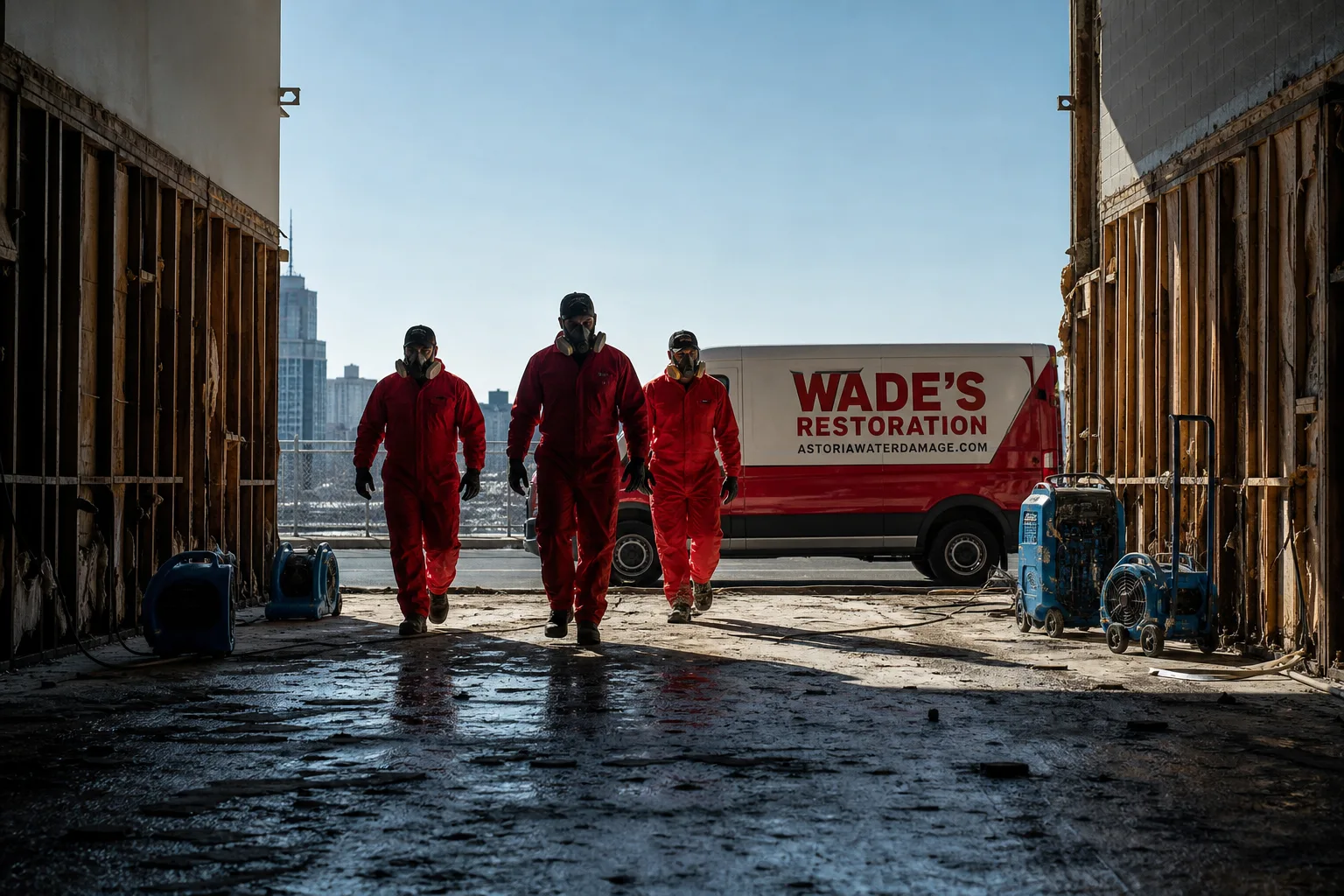
Free visual inspection and a written scope of work before any mitigation begins - photos, moisture readings, and drying logs go in your claim file
The scope we write is the scope we bill. Anything new gets shown to you, in writing, before we touch it.
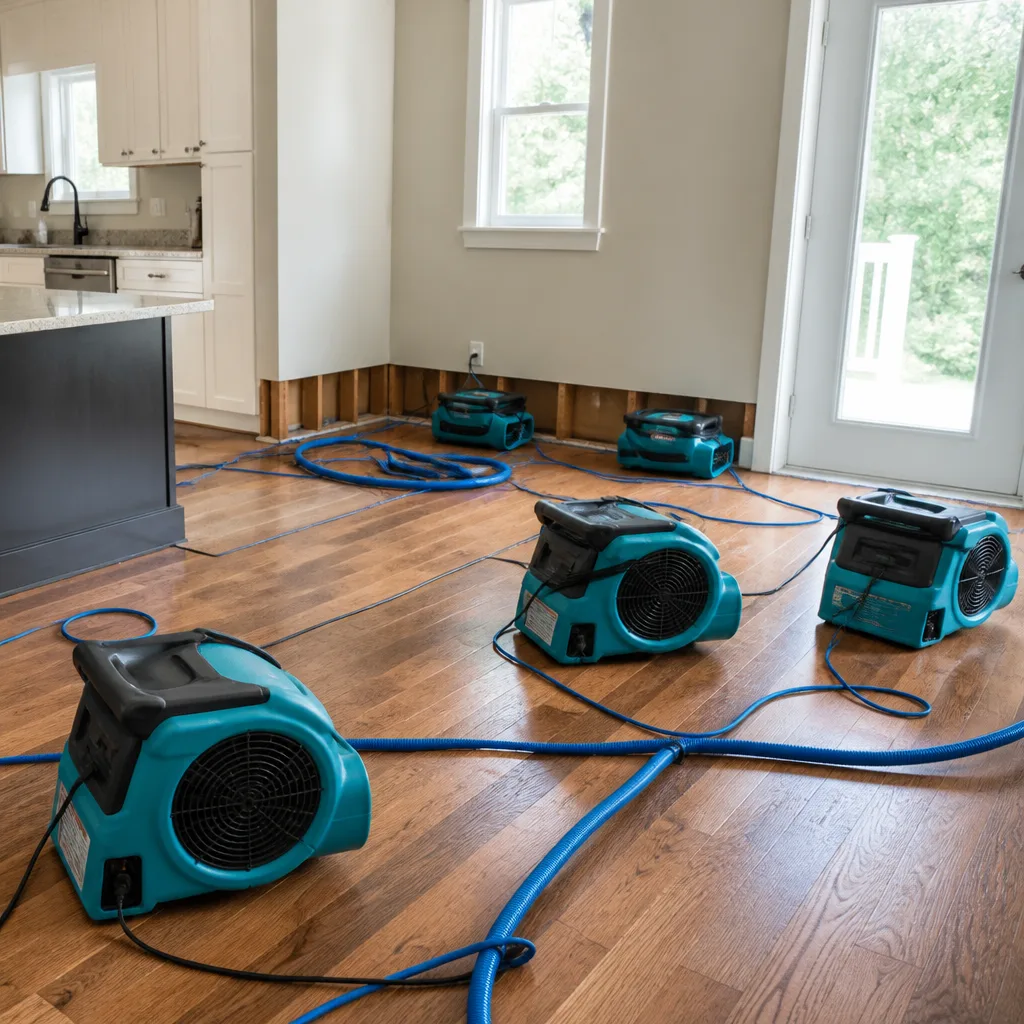
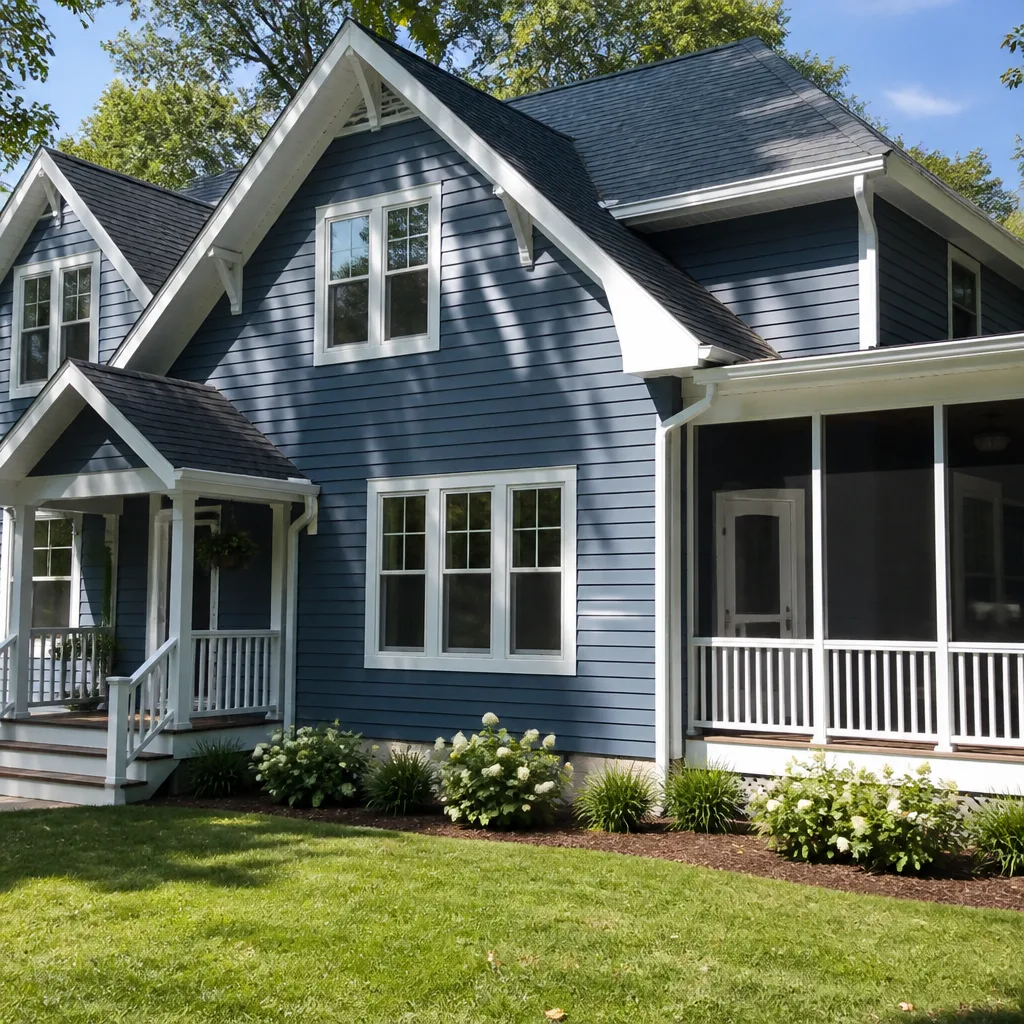
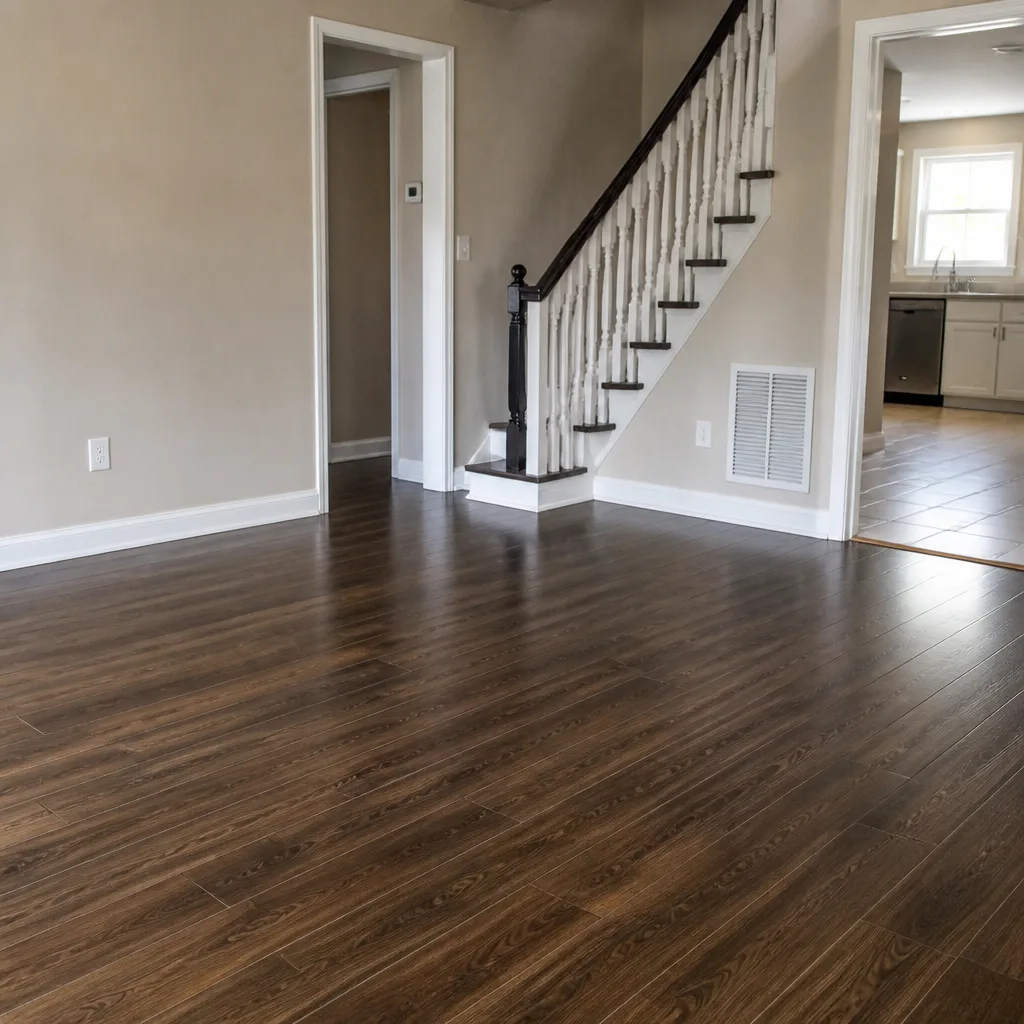
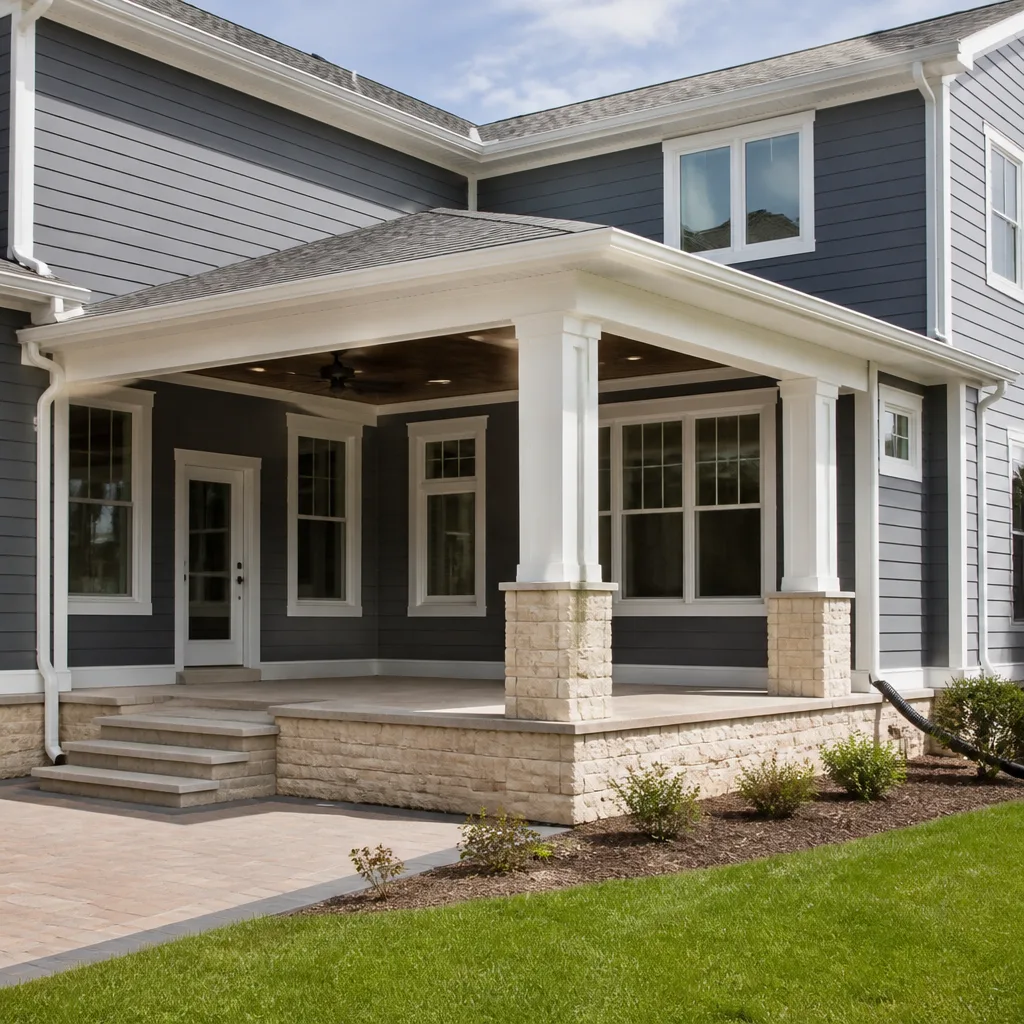
 Before
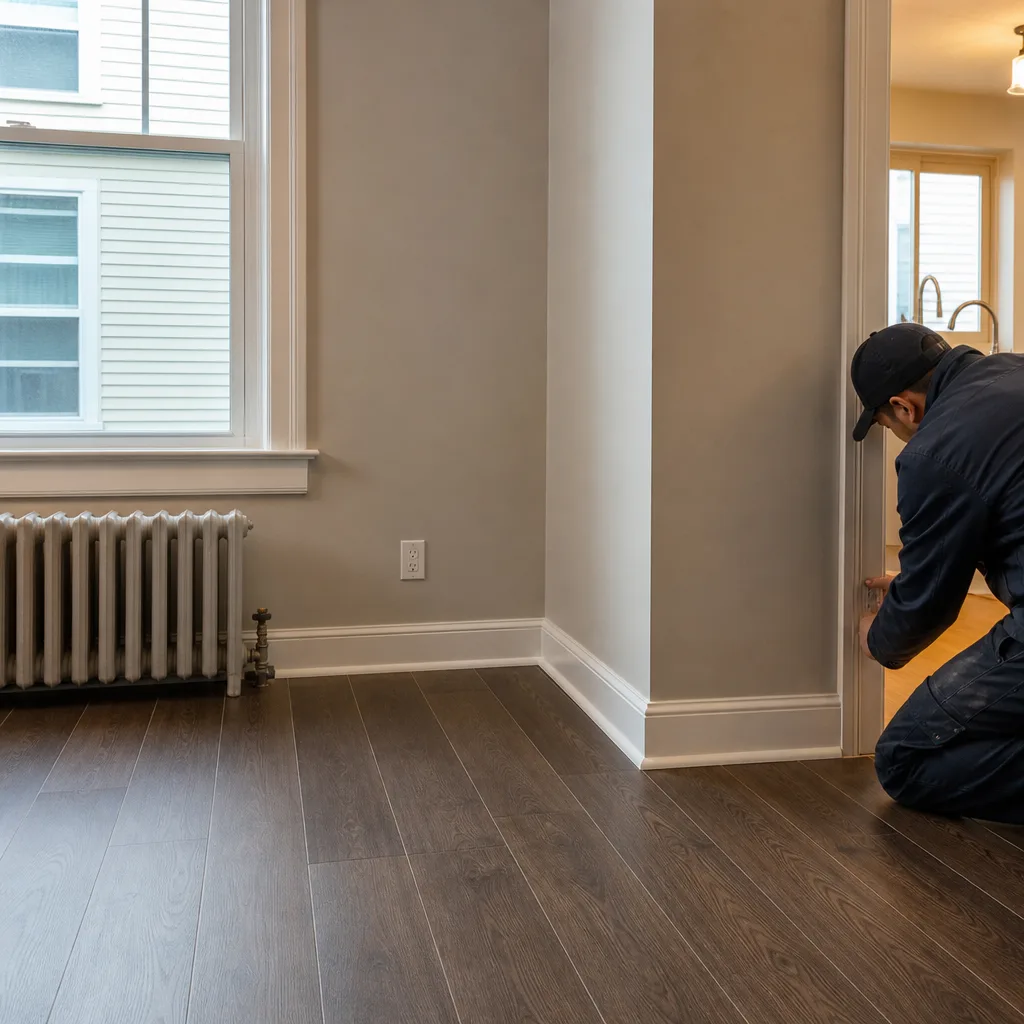 After
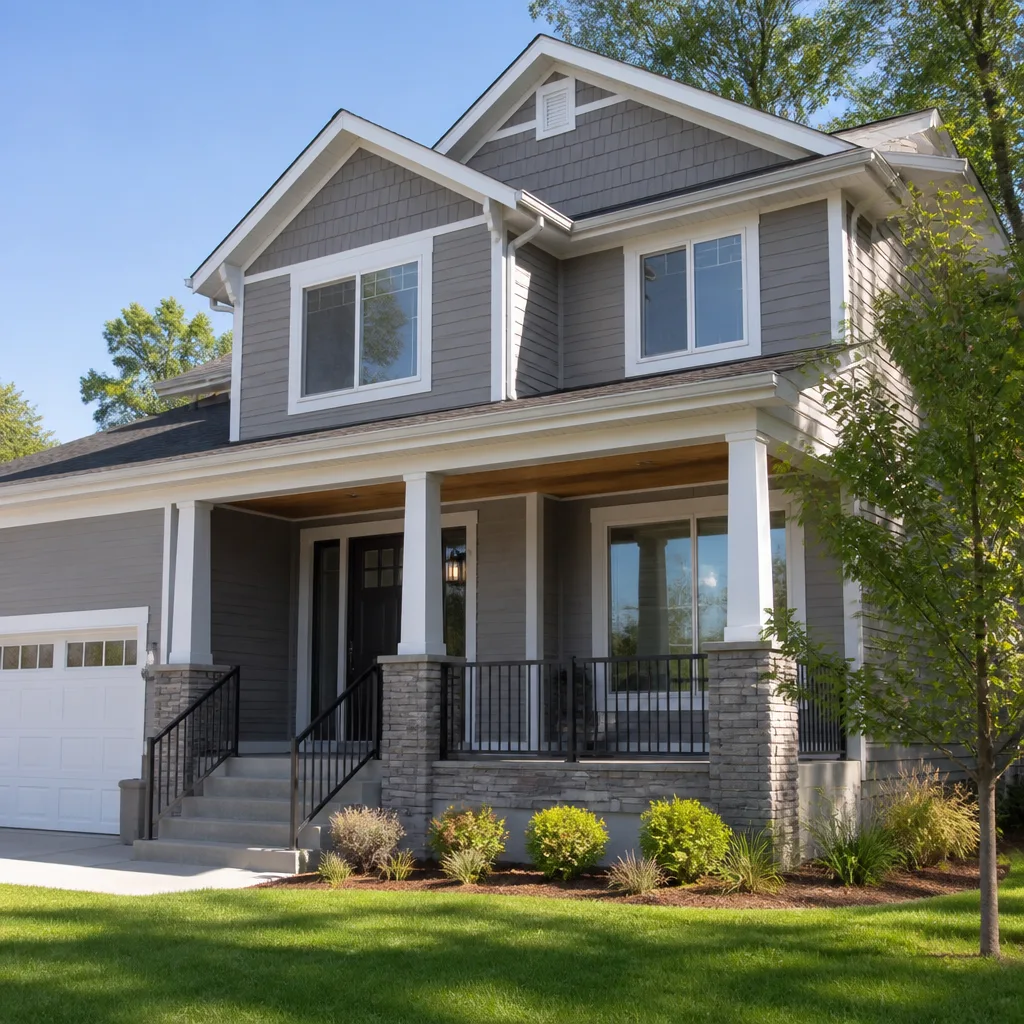
After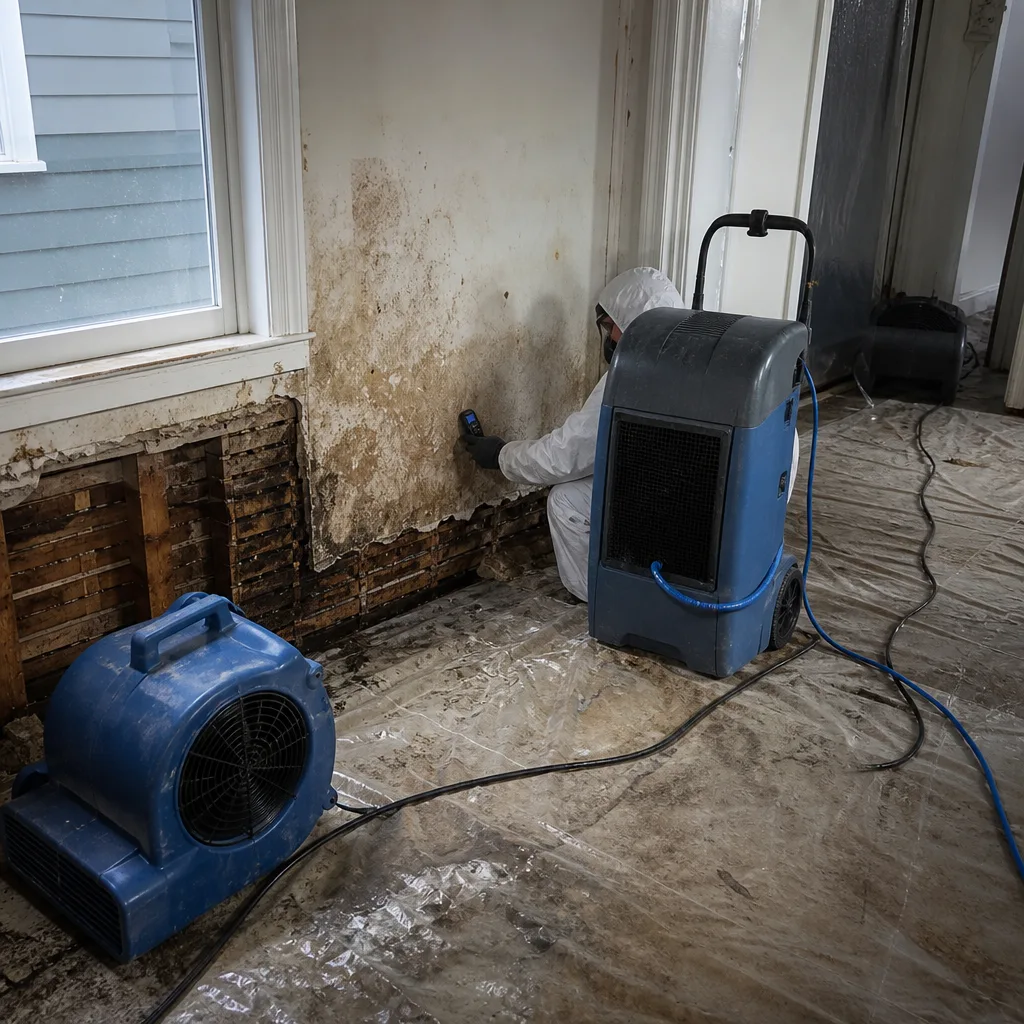 Before
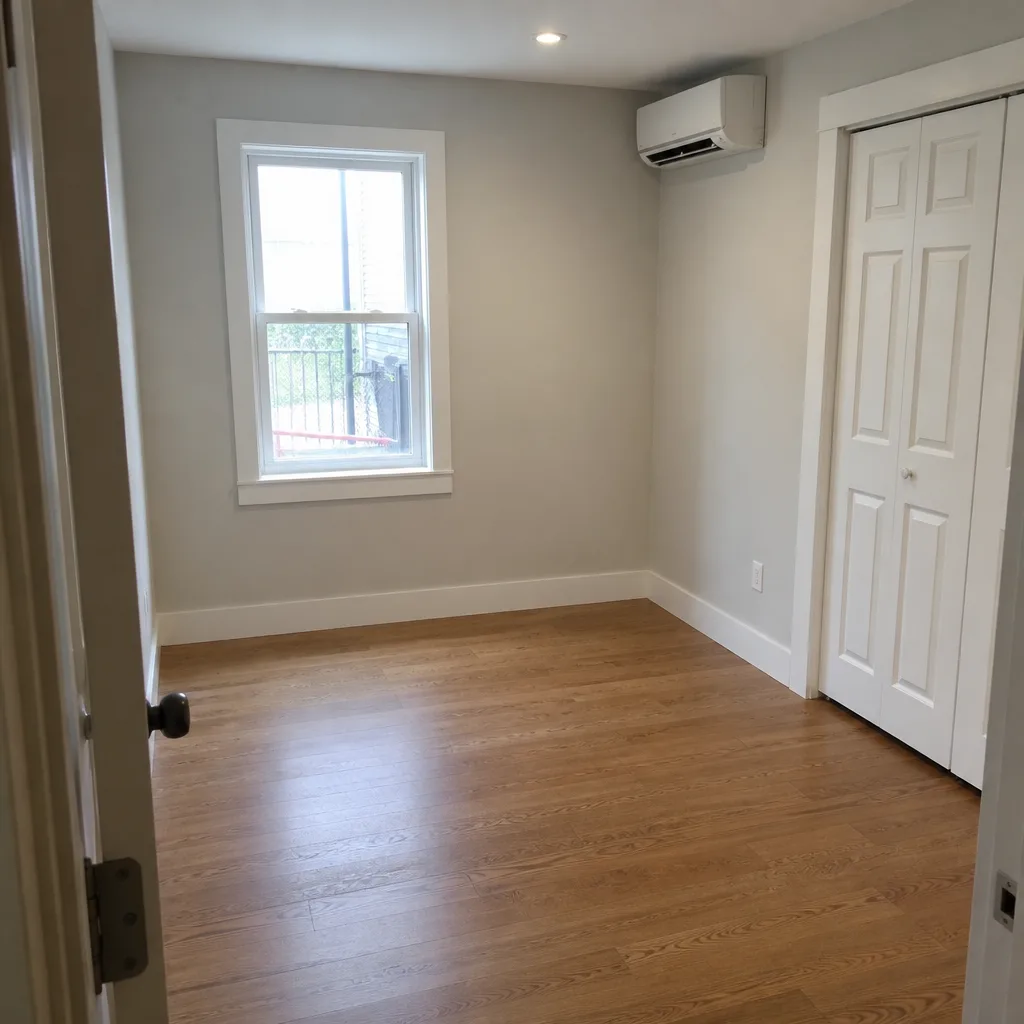 After
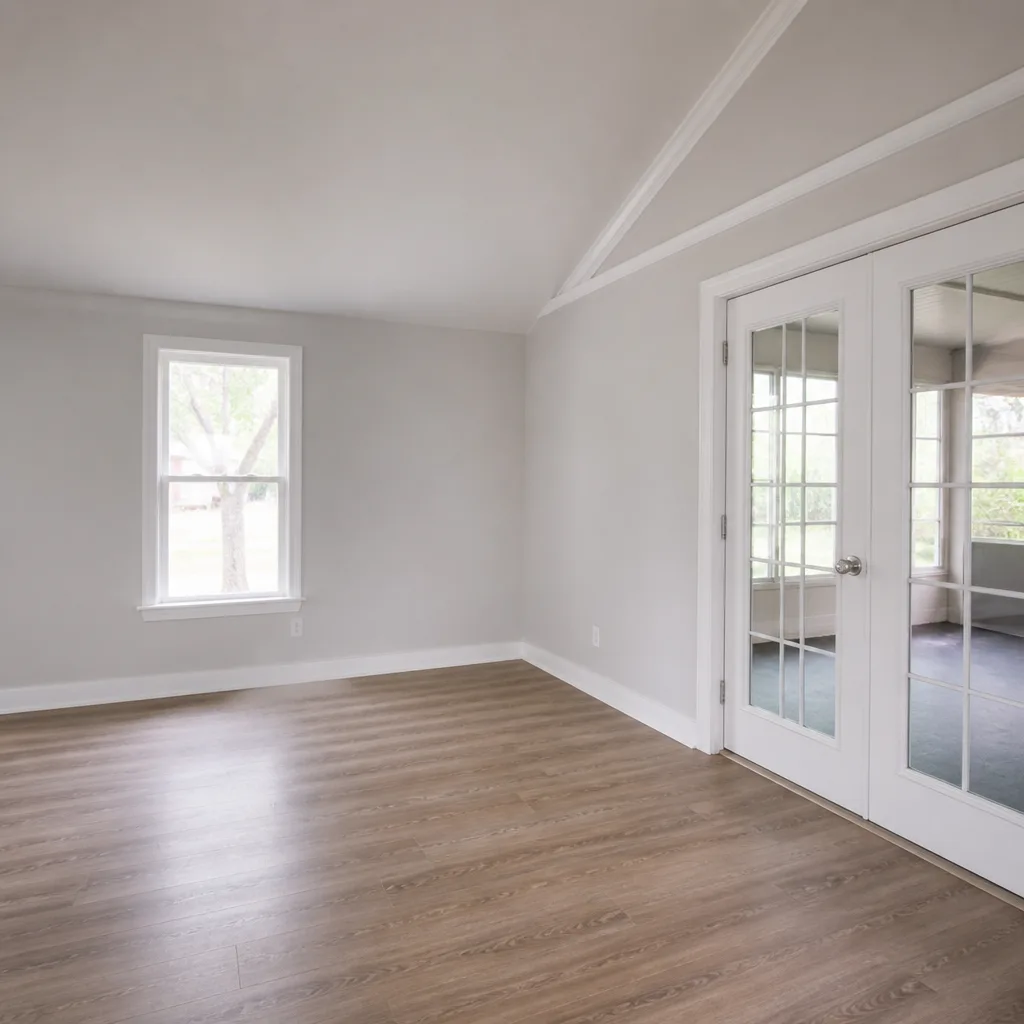
After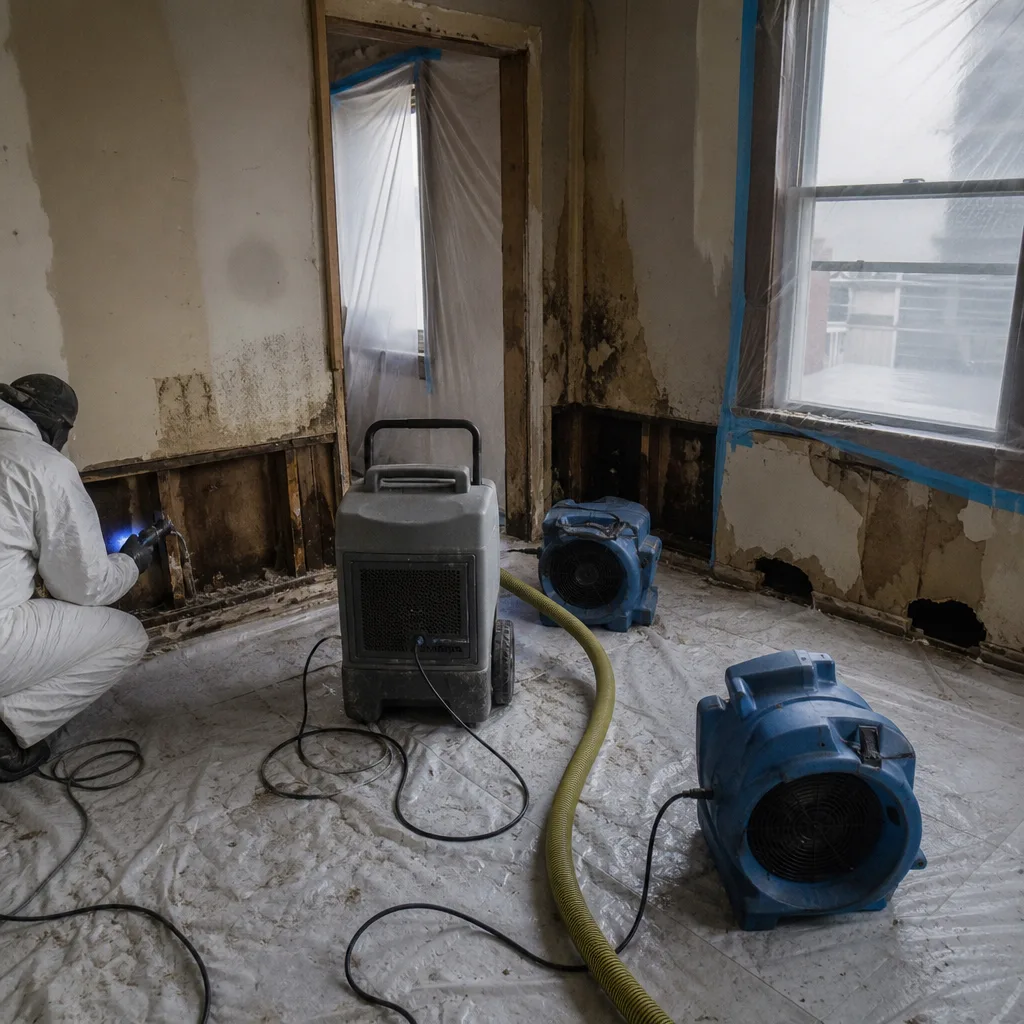 Before
 After
After24/7 Emergency Storm & Disaster Restoration in Astoria
Storm damage in Astoria doesn’t wait for business hours. When a nor’easter rips roofing off a 1930s walk-up on 31st Avenue or a summer downpour floods basements along Ditmars Boulevard, you need a crew that picks up at 2 a.m. and actually heads out. Wade’s Restoration has been doing exactly that since 2007. Wade Ferris answers his own phone, any hour, and can have extraction equipment running inside the hour. Storm and disaster restoration in Astoria starts with stopping the active water intrusion, securing the structure, and documenting everything for your carrier before the damage spreads to the next unit over. Call (363) 208-1526 the moment you see water, sagging plaster, or a breached opening. The first hour determines whether this is a cleanup or a rebuild.
Our Storm & Disaster Restoration team works the full scope: emergency board-up, roof tarping, flood water extraction, structural drying, and the reconstruction that follows. One crew from first response to final coat of paint. No handoffs to a sub nobody vetted.
Understanding Storm & Disaster Restoration Severity in Astoria Properties
Water from a storm falls into three categories, and Astoria’s housing stock makes that classification matter more than most places. Category 1 is clean water from a supply line or rainwater intrusion through a fresh roof breach. Category 2 carries some contamination: sump overflow, radiator condensate, or water that sat for hours. Category 3 is black water: East River surge, sewage mixing into storm flow, or anything that sat stagnant for 48 hours or more. Different categories demand different protocols, from air movers and simple drying to full containment, HEPA air scrubbing, antimicrobial treatment, and disposal of affected porous materials. In Astoria’s pre-war walk-ups and attached brick row houses, the real problem is lateral migration. Water doesn’t just drop. It travels inside party walls, through plaster-on-brick assemblies, and across joist bays shared by the family next door. What reads as a one-unit Category 1 loss at inspection often becomes a three-floor Category 2 or 3 remediation once thermal imaging and moisture mapping show where it actually went.
Hallets Point and the blocks fronting the East River add another layer. Any flood touching those streets carries salt and whatever the surge picked up along the waterfront. Treating that as clean rainwater is a mistake that leaves salt-laden residue and pathogens inside wall cavities for months. The building’s age compounds every category. Pre-1987 buildings mean plaster ceilings that hide active moisture for weeks with no visible stain, and original cast-iron drain stacks that crack under hydrostatic pressure during big storms. Storm and disaster restoration in Astoria means reading the building before you touch anything.
Why Astoria Property Owners Choose Wade’s Restoration
- 45-minute response commitment: Wade or one of his crew is on the road immediately, not “scheduled for tomorrow.” Storm water doesn’t stop moving because the answering service took a message.
- 24/7 live answer: A real person picks up. Overnight, holiday, during a citywide outage. Wade answers his own phone. No queue, no automated tree.
- IICRC-certified crews: WRT, FSRT, and AMRT certifications apply to water, fire, and mold work respectively. The crew knows the difference between Category 2 and Category 3 without guessing.
- Free visual inspection: No trip charge inside the county, and a straight answer about what you’re actually looking at before any money changes hands.
- Direct insurance billing: We coordinate with your adjuster directly. You don’t relay messages between two parties who’ve never met. We do it every week.
- One team, extraction to reconstruction: The same crew that pumps the basement is the crew that rehangs the drywall. Scope stays consistent, and the person who saw the damage first is the person fixing it last.
Our Storm & Disaster Restoration Process
Inspection & Assessment
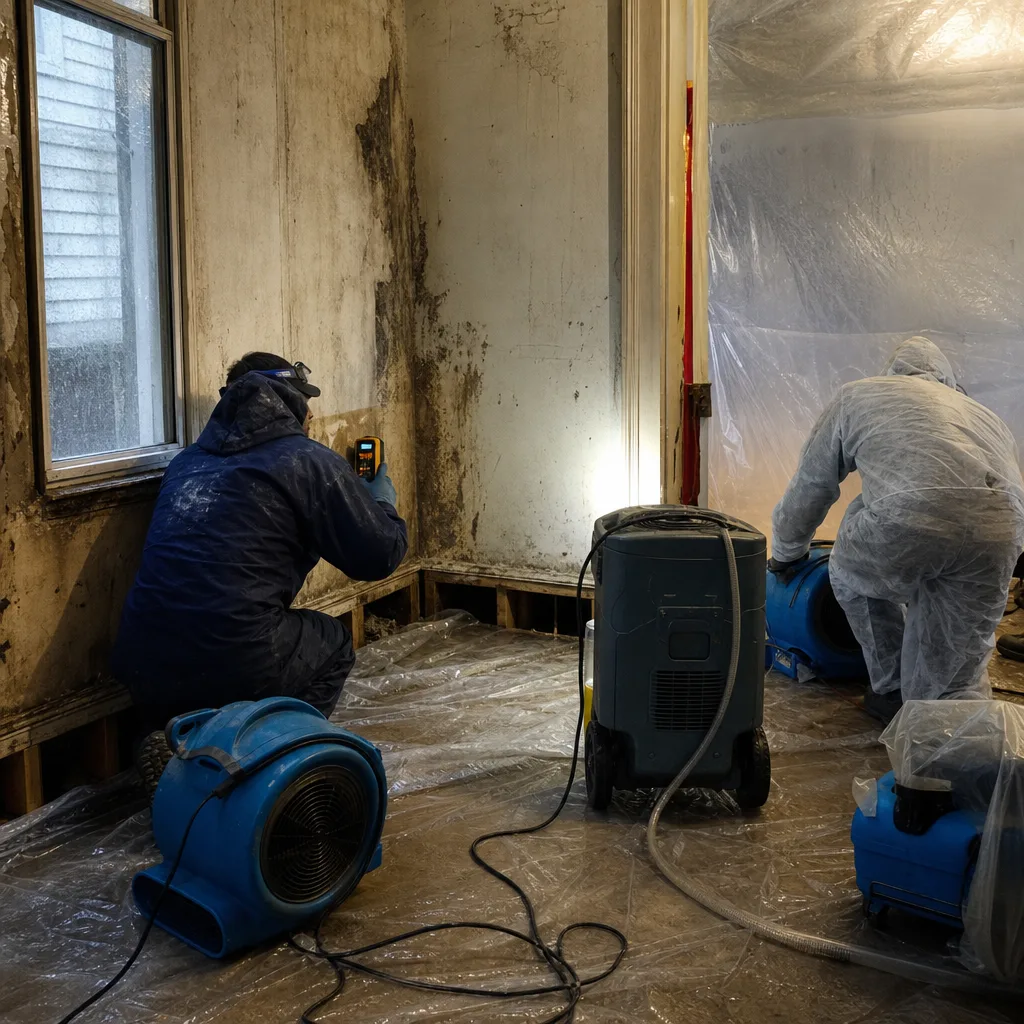
Thermal imaging and moisture meters go on every job before anything gets moved. We map the affected area, identify hidden water in party walls and ceiling bays, and determine the water category. If the building’s pre-1987, we flag the asbestos and lead survey requirement before anyone opens a wall.
Extraction / Stabilization
Standing water comes out fast. Truck-mounted extraction for flooded basements, portable units for upper-floor cascades. We secure openings with board-up or tarping so the structure isn’t taking on more water while we work.
Drying & Dehumidification
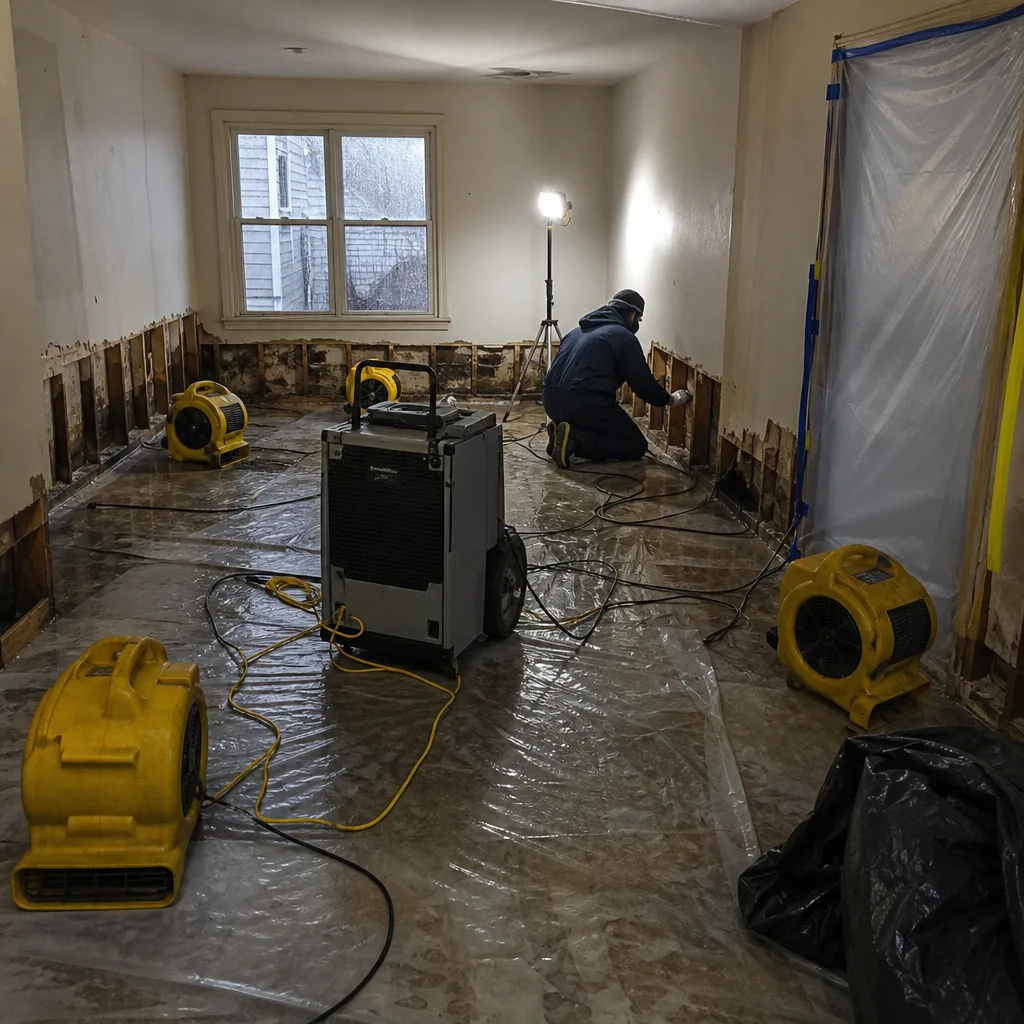
Dri-Eaz and Phoenix air movers and dehumidifiers positioned based on the moisture map, not guesswork. Daily moisture readings are logged and handed to you at job’s end. Nobody in this trade likes sharing their drying logs. We do.
Cleaning & Sanitization
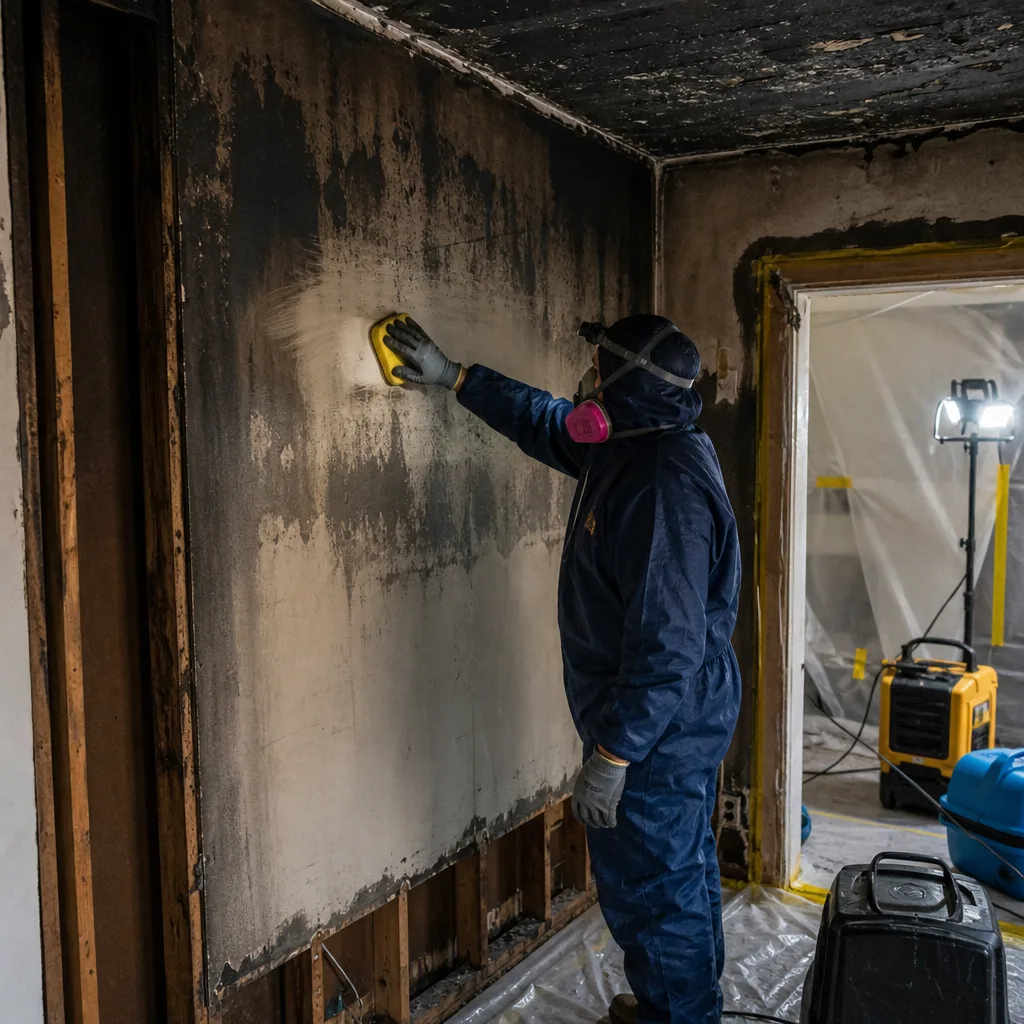
Dependent on the water category. Category 2 and 3 losses get antimicrobial treatment, containment, and HEPA air scrubbing with XPOWER units. Plaster that can’t be saved comes out properly, not half-removed.
Specialty Treatment
Storm-specific work: roof tarping, board-up on breached openings, debris removal from the property line, and brackish-water protocol for East River flood zones. Every step documented in writing.
Repairs & Restoration
Reconstruction follows remediation. Drywall, plaster patching, flooring, paint. The same team that opened the wall closes it. One contract, one point of contact, one person who knows exactly how this loss started.
Need Emergency Storm & Disaster Restoration in Astoria Now?
Crews minutes away, answering live 24 hours a day. The sooner we start, the less it costs.
Working With Your Insurance Company
Most Astoria storm losses are covered events, but the claim hinges on what gets documented in the first 48 hours. Missing photos, vague scope notes, and a drying log that doesn’t exist are how legitimate claims get reduced. We document from the first hour: photos of every affected room, moisture readings before and after equipment placement, a line-item scope of work with exact square footage and materials. Then Wade speaks with your adjuster directly. You’re not the messenger. When the adjuster has questions about Category 3 protocol or why a party wall had to be opened, our crew has the answers and the logs to back them. If your carrier wants a second opinion, we welcome it. Our documentation stands on its own.
What We Provide Your Insurer
- Thorough documentation of the loss
- Photos of all damage, room by room
- Moisture readings and drying logs
- A detailed, line-item scope of work
- Direct coordination with your carrier
Built for Astoria’s Loss Calendar
Astoria’s storm season follows a pattern anyone who’s lived here long enough can set a clock to. January and February bring the deep freezes that burst supply lines in uninsulated exterior walls, and here’s where it gets worse: in a 1920s walk-up, one burst pipe on the fourth floor becomes a water cascade through three units below. Spring thaw and March nor’easters push groundwater against basement foundations and expose roof weaknesses that winter hid. Summer brings the heavy convective downpours that hit northwestern Queens hard, overwhelming the dense impervious surfaces along 30th Avenue, Broadway, and Steinway Street, sending water into basements and sub-grade utility rooms faster than drains can carry it away. August and September mean hurricane-season storm surge for the Hallets Point and East River blocks. And through every season, the original cast-iron drain stacks and steam radiator systems keep doing what 90-year-old infrastructure does: failing at the worst possible moment. Storm and disaster restoration in Astoria isn’t a once-a-decade event. It’s a twelve-month reality for pre-war buildings.
Storm & Disaster Restoration Across Astoria’s Neighborhoods
Response routes and building stock change block to block in Astoria. Around Ditmars and 31st Avenue, the 1920s and 1930s six-unit walk-ups dominate, and storm losses here are usually vertical cascades: roof breach becomes top-floor damage becomes three floors of ceiling repair. Near Broadway and Steinway Street, the attached two- and three-family row houses sit tight against each other, which means lateral water migration through shared party walls is the dominant pattern; a neighbor’s roof leak becomes your wall damage. Down toward Hallets Point and the East River waterfront, flood zone protocols and brackish-water contamination drive the response, and board-up after a coastal storm has to account for wind-driven rain hitting the exposed side of the building for days. Over by Astoria Park and the blocks near the RFK Bridge, mixed housing and old commercial conversions mean roof tarping on flat-roof structures where ponding water finds every seam. Each neighborhood has its own failure mode. The crew that knows the difference gets there faster and scopes it right the first time.
We serve all of Astoria and the surrounding blocks, from the pre-war stretches along 30th Avenue to the attached row houses near 21st Street, the walk-ups around Ditmars, and the waterfront zone at Hallets Point.
Specialized Storm & Disaster Restoration Services We Offer in Astoria
Flood Damage Restoration
Flood water in Astoria is rarely clean. East River surge from Hallets Point carries brackish contamination that requires Category 3 protocol: full containment, antimicrobial treatment, and disposal of saturated porous materials. Inland basement flooding from overwhelmed storm drains picks up whatever sits on the street. We extract, dehumidify with Phoenix and Dri-Eaz equipment, and treat every affected surface. If the building’s in a FEMA flood zone, we document to that standard from the first hour, because your carrier will ask.
Storm Damage Cleanup
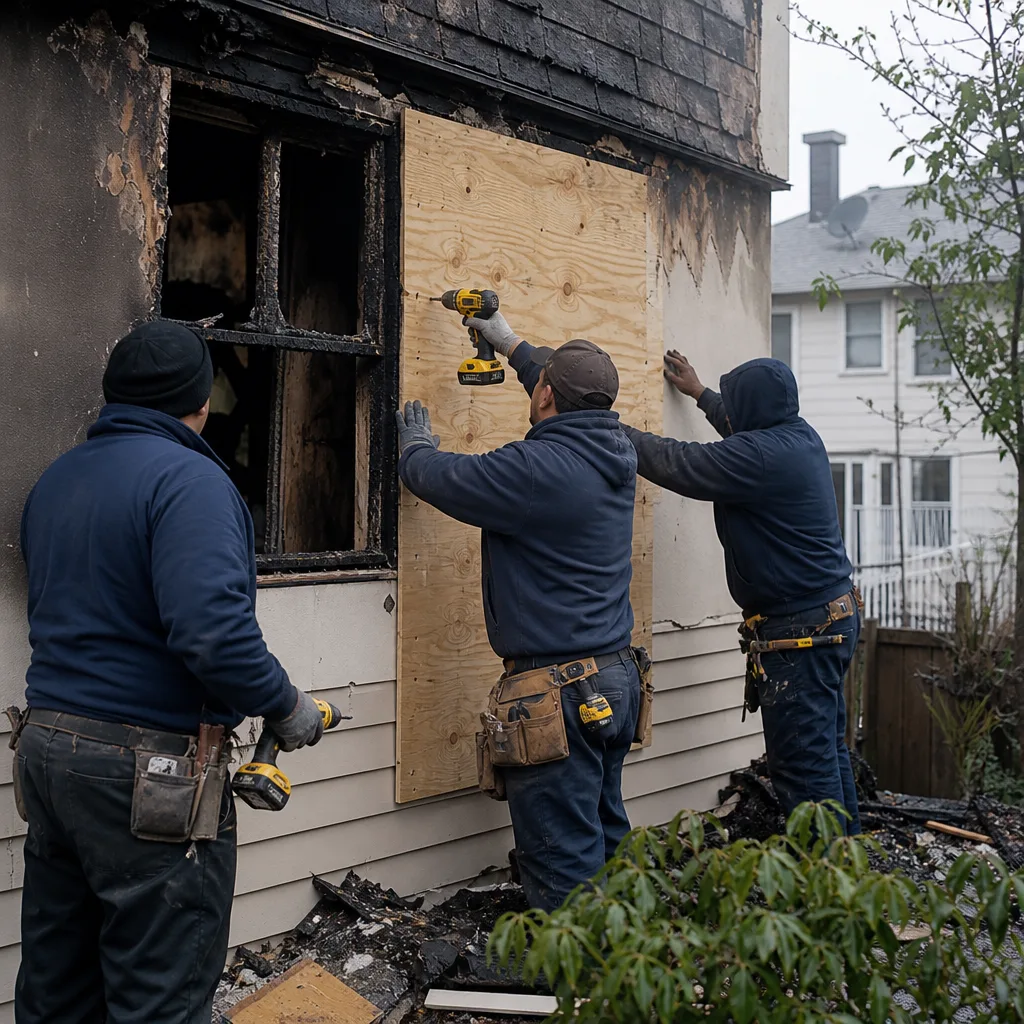
After the wind passes, the debris stays: fallen branches, torn roofing material, glass from breached windows, and whatever the storm deposited on your property line. We remove it, sort it, and dispose of it properly. But cleanup without inspection misses the real damage. We walk every affected area, check the roof for lifted flashing, look for water entry points around windows and bulkheads, and give you a straight assessment of what’s cosmetic and what’s structural.
Emergency Board-Up
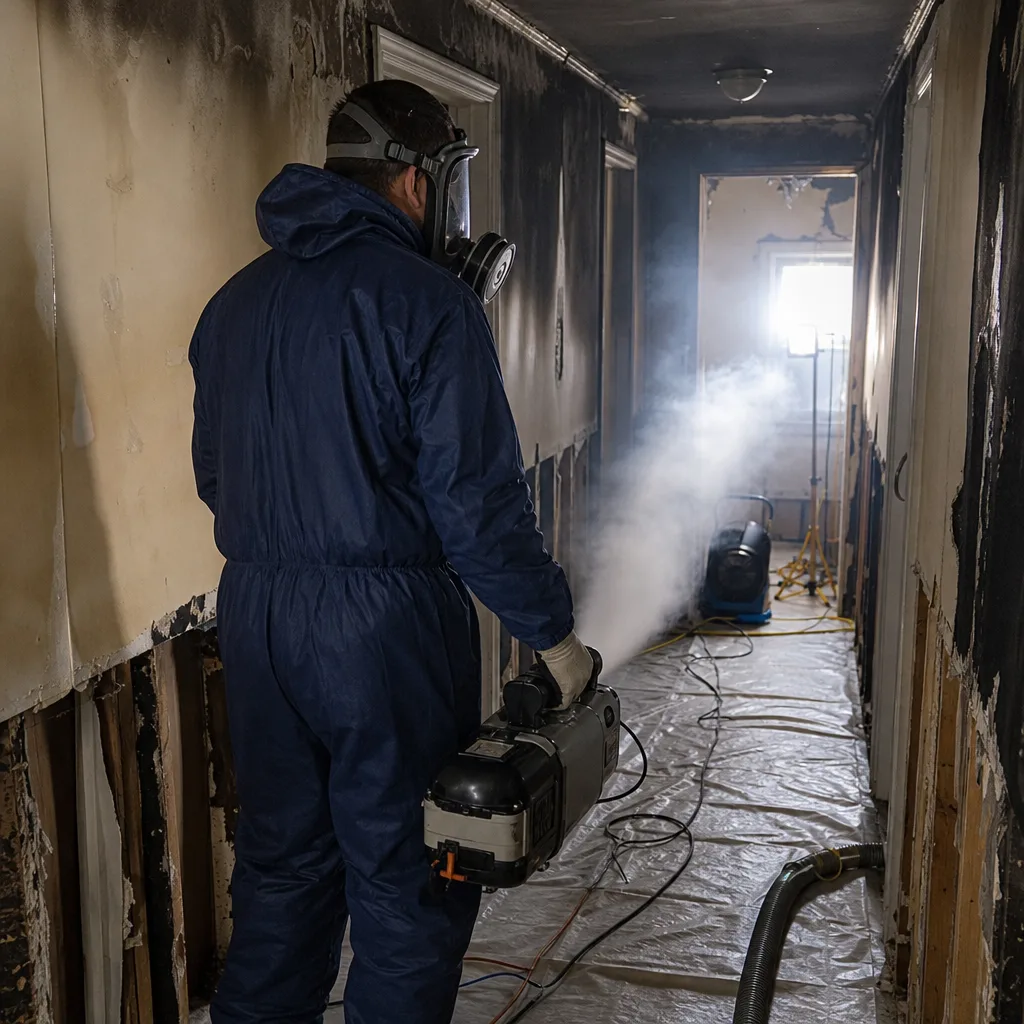
A breached window or torn-off door on an Astoria row house isn’t just an opening; it’s an invitation to every weather event that follows, plus whatever walks in. We board up fast, properly, and to city standard. On attached buildings where the party wall is newly exposed after a storm, board-up has to protect not just your unit but the exposed flank of the whole structure. Done wrong, it becomes a liability. Done right, it holds until permanent repairs are scoped and scheduled.
Roof Tarping
Flat roofs on Astoria’s pre-war walk-ups and row houses pond water after heavy rain, and a torn membrane turns that pond into a slow leak into the unit below. We tarp to stop active intrusion, then get a permanent repair quoted. Tarping buys time, but only if it’s anchored to survive the next nor’easter. We don’t do loose tarps that end up on the neighbor’s fire escape.
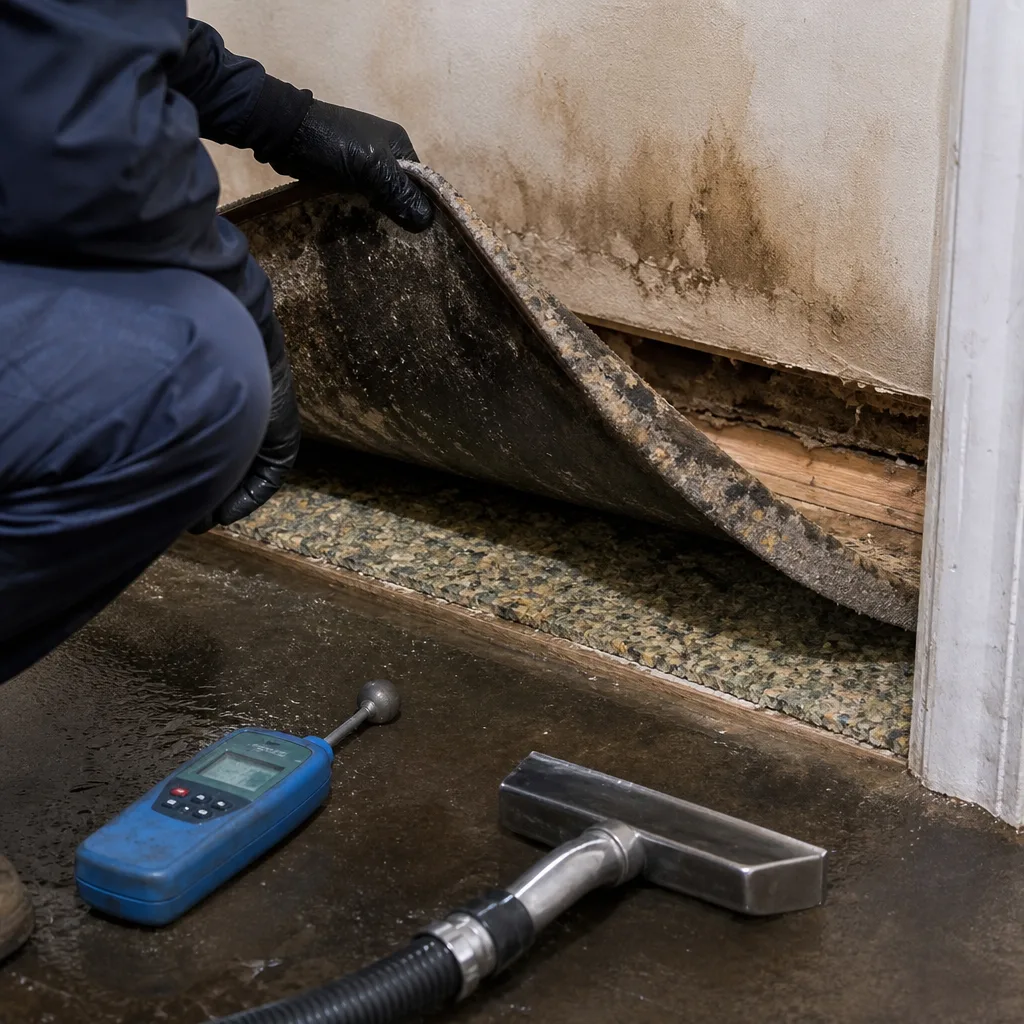
Debris Removal
Storm debris on a tight Astoria lot blocks access, creates slip hazards, and complicates insurance assessments. We clear it as part of the restoration scope, not as a separate add-on. If there’s construction debris from a partial collapse or damaged roof, we handle that too, including coordination with your carrier on disposal costs.
What happens when you call
- 1
A real person answersNo phone trees - you reach a local pro.
- 2
You get an upfront price rangeHonest numbers before anyone is dispatched.
- 3
A background-checked tech heads outLicensed & insured, dispatched right away.
- 4
You approve before work beginsNothing starts until you say go.
Storm & Disaster Restoration Costs in Astoria, NY
Storm damage restoration in Astoria typically runs between $1,200 and $8,500 depending on the scope. Emergency board-up and tarping runs $500 to $1,500 for a standard single opening or flat roof section. Flood water extraction alone in an Astoria basement ranges $1,800 to $4,200, depending on square footage and water category. A full Category 3 remediation with containment, antimicrobial treatment, and rebuild in a pre-war apartment spans $6,000 to $18,000 or more when multiple units are involved. The variables: whether asbestos or lead surveys are required before walls open, how far water migrated laterally through party walls, and whether the loss touches multiple stacked units with separate carriers. Insurance typically covers storm and flood restoration minus your deductible, and carriers accept industry-standard line-item scopes. The free visual inspection is the fast path to a firm number. We can’t quote accurately over the phone without seeing what the water actually did. Call (363) 208-1526 and Wade will walk it with you, no charge inside the county.
We Also Serve Cities Near Astoria
Our storm and disaster restoration coverage extends beyond Astoria into the neighboring blocks that share the same housing stock and the same weather. We serve Long Island City to the southwest, Flushing to the east, and the surrounding Queens neighborhoods in between. Same live answer. Same 45-minute response commitment. Same crew from first extraction to final paint.
Astoria Storm & Disaster Restoration Questions, Answered
Why does a small water leak in an Astoria pre-war apartment often require asbestos testing before repairs?
Because any building constructed before 1987 falls under NYC’s mandatory pre-demolition asbestos and lead-paint survey requirements. Before a wall or ceiling can be opened for drying or mold remediation, the Department of Environmental Protection requires clearance. This is not optional. Skipping it means stop-work orders, fines, and extended exposure to the water damage while the paperwork gets sorted. We file the notification and wait for clearance before touching any plaster. It delays hands-on work by days sometimes, but it’s the law and it protects the building’s occupants.
How do you determine if water damage in an Astoria attached brick row house has spread to a neighbor’s unit?
We use moisture mapping across party wall cavities and adjacent floors. Thermal imaging and moisture meters detect water that hasn’t shown a visible stain yet. In attached row houses, shared joist bays and brick party walls let water travel laterally for weeks with no obvious sign. We check both sides of the party wall as part of the initial assessment. If lateral migration is confirmed, both units’ losses get documented separately for their respective carriers. The neighbor isn’t on your claim and you’re not on theirs.
What makes flood restoration in Astoria’s Hallets Point and East River blocks different from inland Queens?
Salt and contamination. East River surge water is brackish and carries whatever it picked up along the waterfront. That’s Category 3 water by definition, which requires full containment, antimicrobial treatment, and disposal of saturated materials. Inland rainwater flooding might be Category 2 or even Category 1. Treating a Hallets Point flood as if it were clean rainwater leaves salt-laden residue and pathogens inside wall cavities, and the damage reappears months later. FEMA flood zone documentation requirements also apply to the claim, and carriers scrutinize those losses more than typical storm claims.
Is it safe to dry out plaster walls in a 1930s Astoria apartment after a radiator overflow, or do they always need to be opened?
Sometimes drying in place works, but it depends on how long the water sat and whether mold is already growing inside the wall cavity. Plaster over brick holds moisture stubbornly. If the overflow was caught quickly and the water was clean, air movers and dehumidifiers with daily moisture readings can dry it without opening the wall. If moisture mapping shows water trapped in the lath or brick interface for more than 48 hours, the plaster likely needs to come out. We make that call with meters, not guesses. And if we open a wall in a pre-1987 building, the asbestos clearance comes first.
How do you handle emergency board-up on an Astoria row house when the party wall is exposed to the weather after a storm?
We board to protect the entire exposed structure, not just your unit. An open party wall compromises the whole attached building, and the weather damage to a neighbor’s exposed interior becomes a liability for everyone. Board-up gets anchored securely, with materials graded for extended exposure. We document the board-up for your carrier and coordinate with the adjacent property owner if their unit is also affected. Speed matters here. An exposed party wall can take on water with every rainfall until permanent repairs are made.
How fast can someone actually get to Astoria for a storm emergency?
Our commitment is 45 minutes to get a crew on the road to your address. Wade answers his cell directly, day or night. If he’s already on another job in the neighborhood, another crew member goes. You’re never waiting on a call center to route a ticket. For Category 3 flood events or active water intrusion, the first equipment often arrives within the hour. Extraction starts immediately. The longer water sits, the more damage spreads, and the more the remediation costs. Call (363) 208-1526 the moment you see it.
Are your storm and disaster restoration crews certified?
Yes. WRT (Water Damage Restoration Technician), FSRT (Fire and Smoke Restoration Technician), and AMRT (Applied Microbial Remediation Technician) certifications through the IICRC. The crew is also RIA-affiliated and IFA-recognized. Certifications mean the person opening your wall knows the difference between water categories, understands containment protocol, and documents to the standard your insurer expects. We list our credentials because they matter. Ask for them on any job.
What should I do in the first 30 minutes after storm damage hits my Astoria property?
Call us. Before you move furniture, before you try to shop-vac it yourself, before you call your insurer. The first call establishes the response clock. The second call can be to your carrier, but let us document first. Don’t enter standing water if it came from outside, especially near Hallets Point or the East River, because it may be contaminated. Don’t turn on electronics that got wet. Don’t open walls yourself. Take photos if it’s safe to do so from a dry area. Then let the crew with the meters and the certifications do what they do. Every hour of delay adds cost and extends drying time.
Serving Astoria, NY - Our Local Coverage Area
We’re based in the Astoria area and know this community well. Use the map below to see our service coverage - if you’re nearby, we can almost certainly help.
Ready When the Storm Hits Astoria
Wade’s Restoration has been answering calls from pre-war walk-ups and attached row houses since 2007. Wade publishes his name, his license number, and his address. He answers his own phone at 3 a.m. when a nor’easter opens up a roof on 31st Avenue. He shows up himself, with a crew he knows, with equipment from Dri-Eaz, Phoenix, and XPOWER, and with the documentation your carrier expects before the adjuster even asks. Storm and disaster restoration in Astoria comes down to one thing: who picks up and who shows up. Call (363) 208-1526 now. Free visual inspection, no trip charge inside the county, and a straight answer about what you’re actually dealing with.
Written by Wade Ferris, owner of Wade’s Restoration. Wade has answered his own phone and headed out to storm damage calls in Astoria and across Queens since 2007, when a flooded basement at two in the morning is what you wade through, it happens to be his name.