
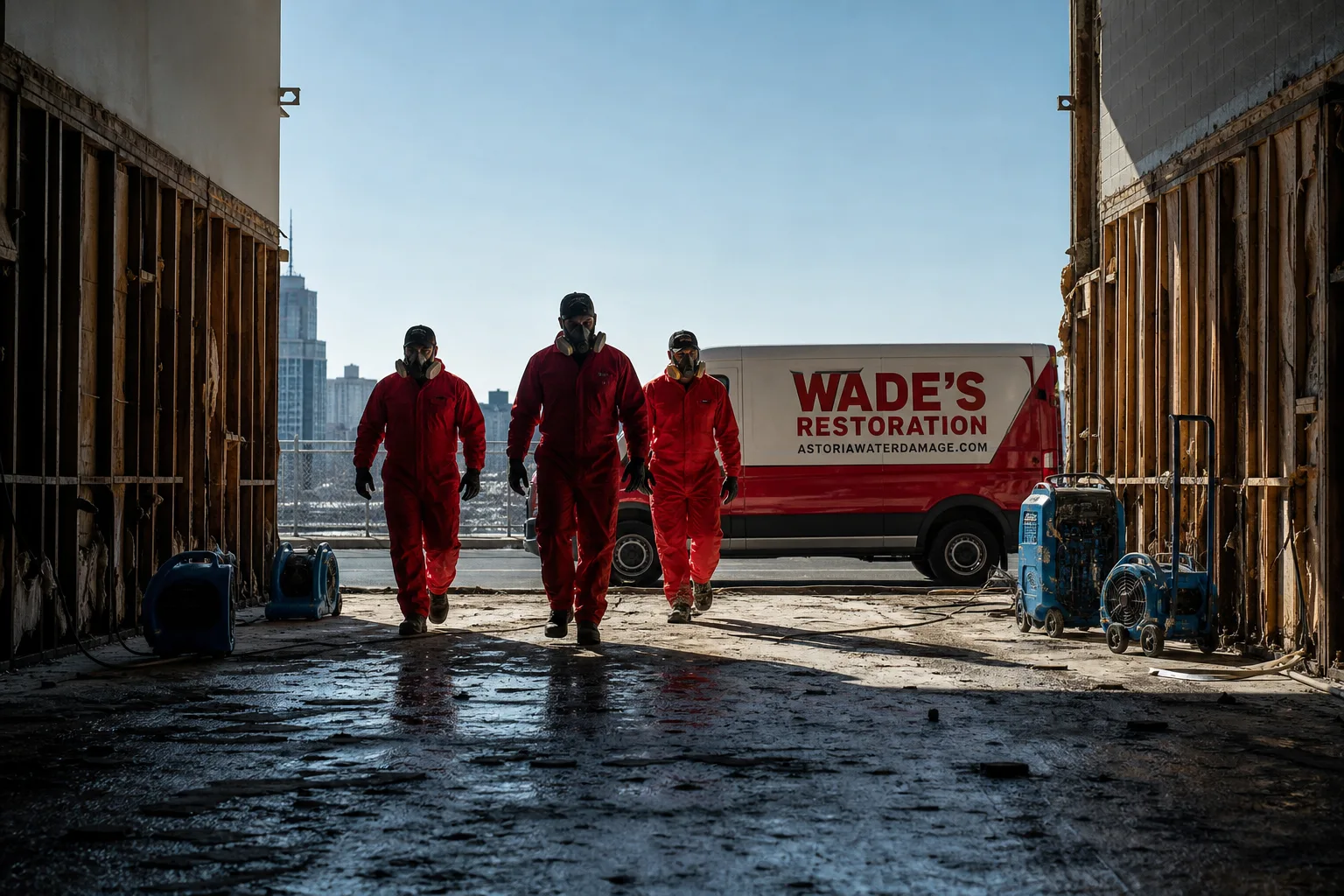
Free visual inspection and a written scope of work before any mitigation begins - photos, moisture readings, and drying logs go in your claim file
The scope we write is the scope we bill. Anything new gets shown to you, in writing, before we touch it.
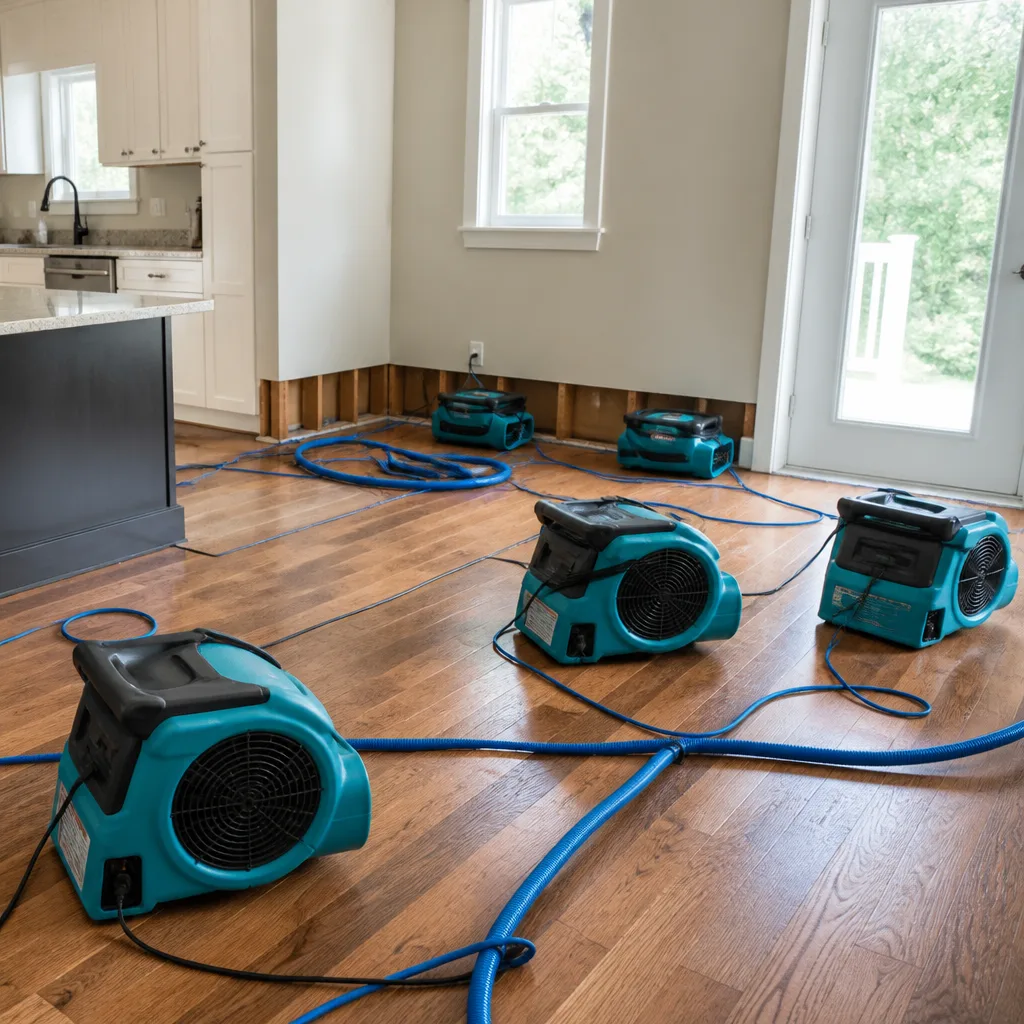
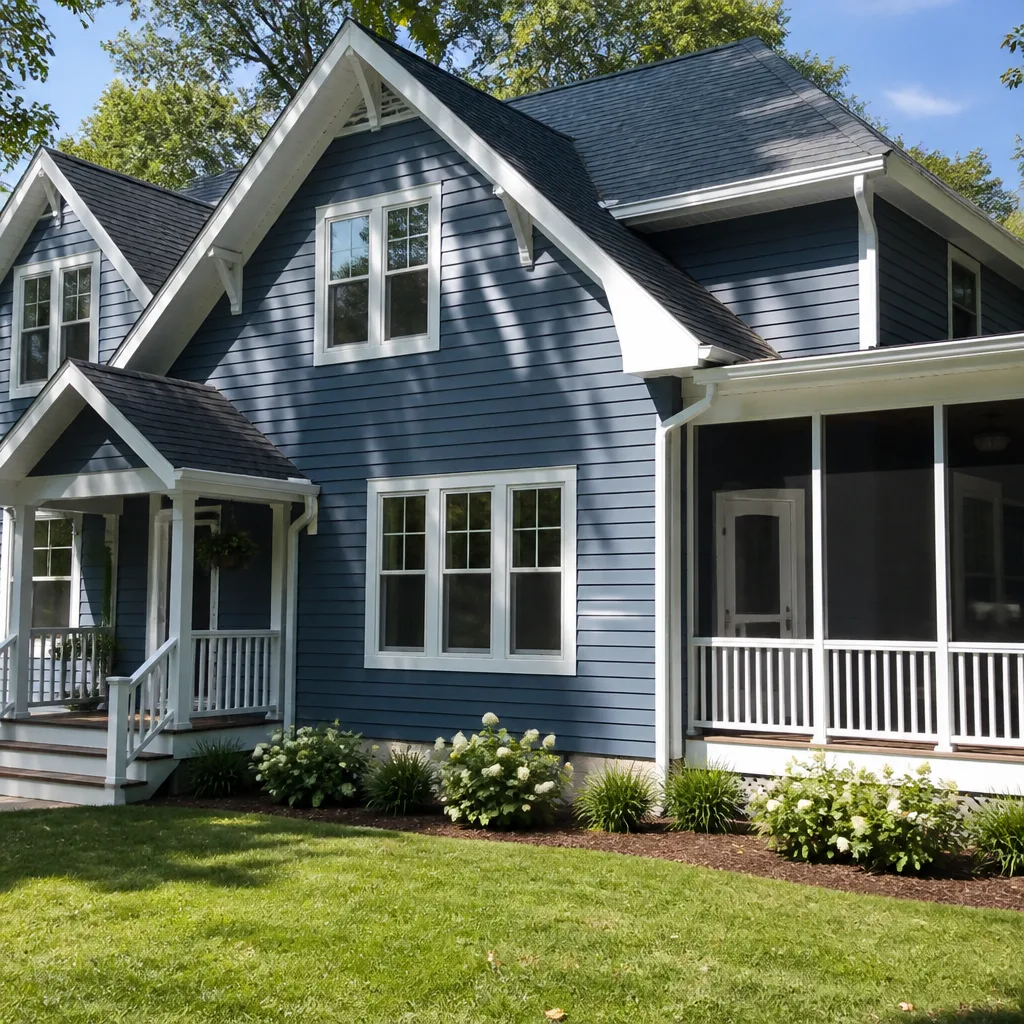
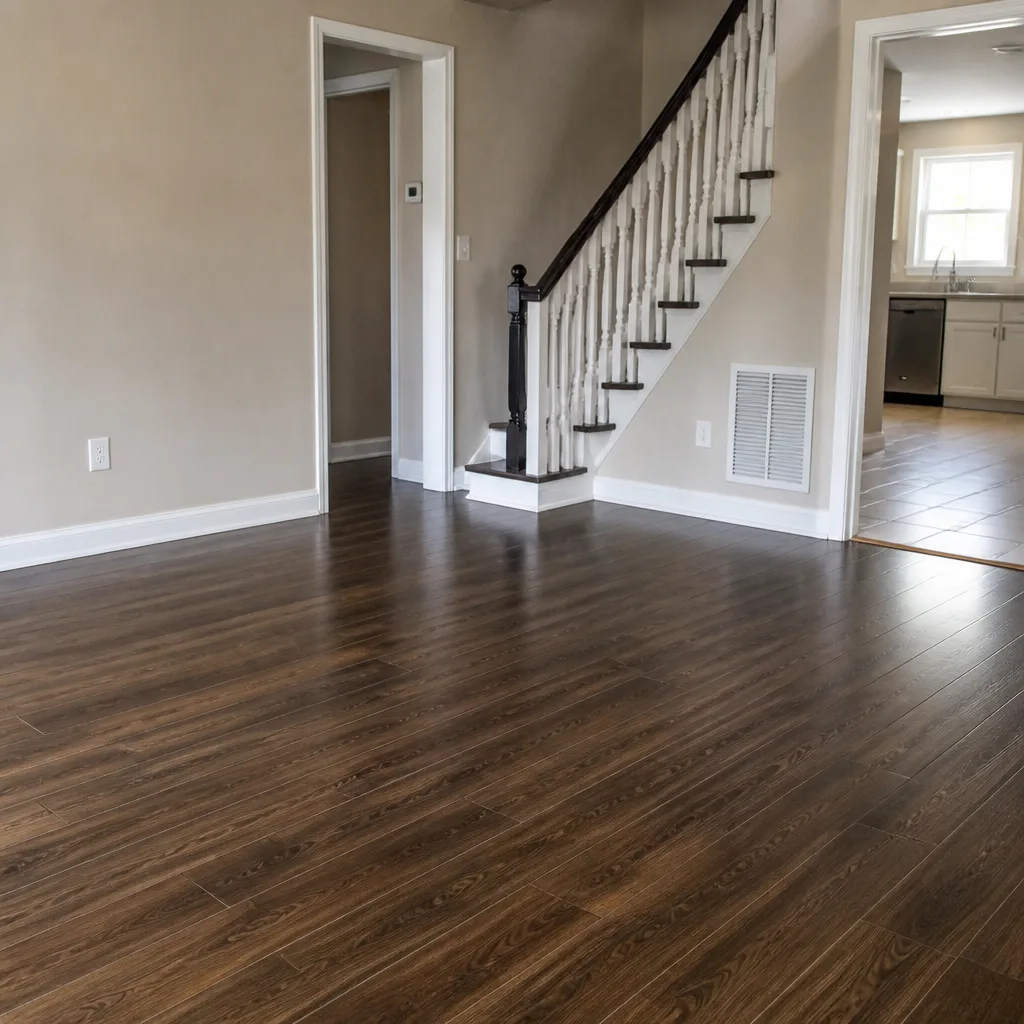
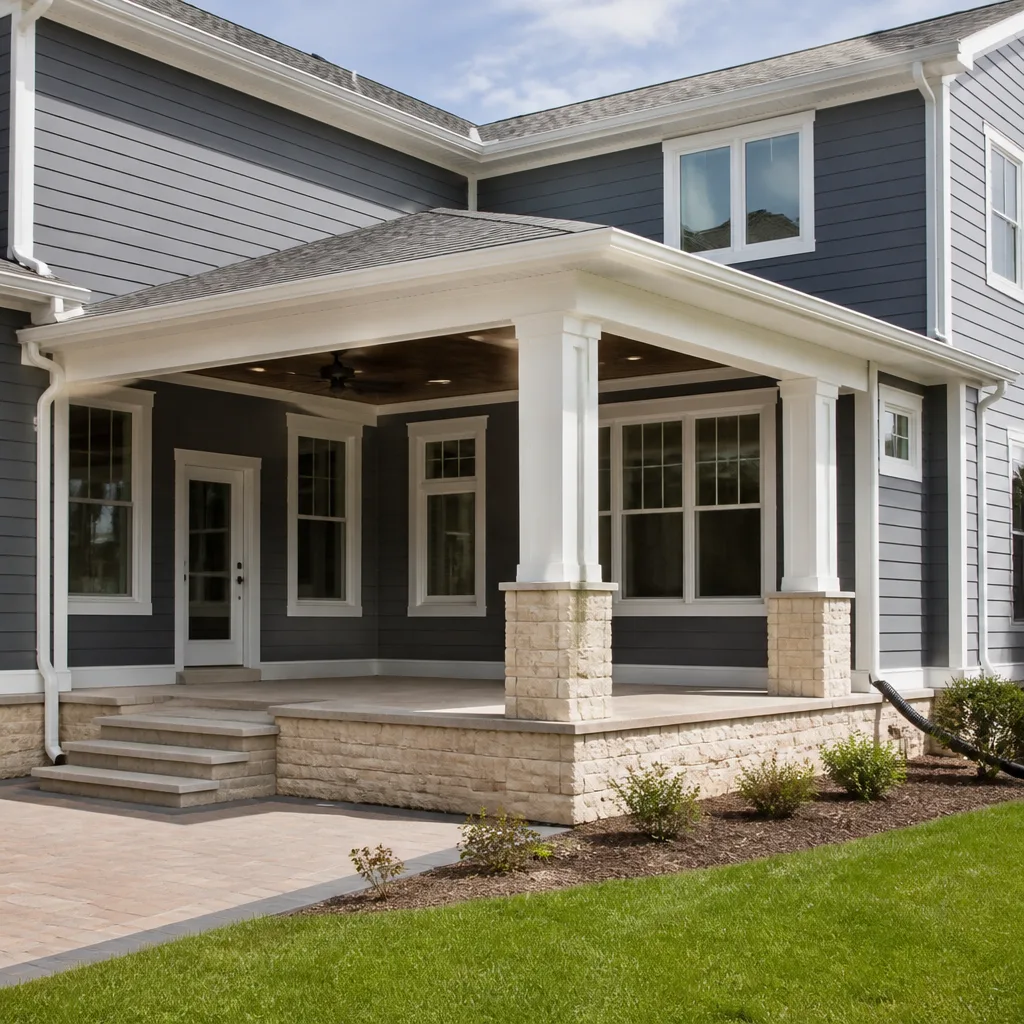
 Before
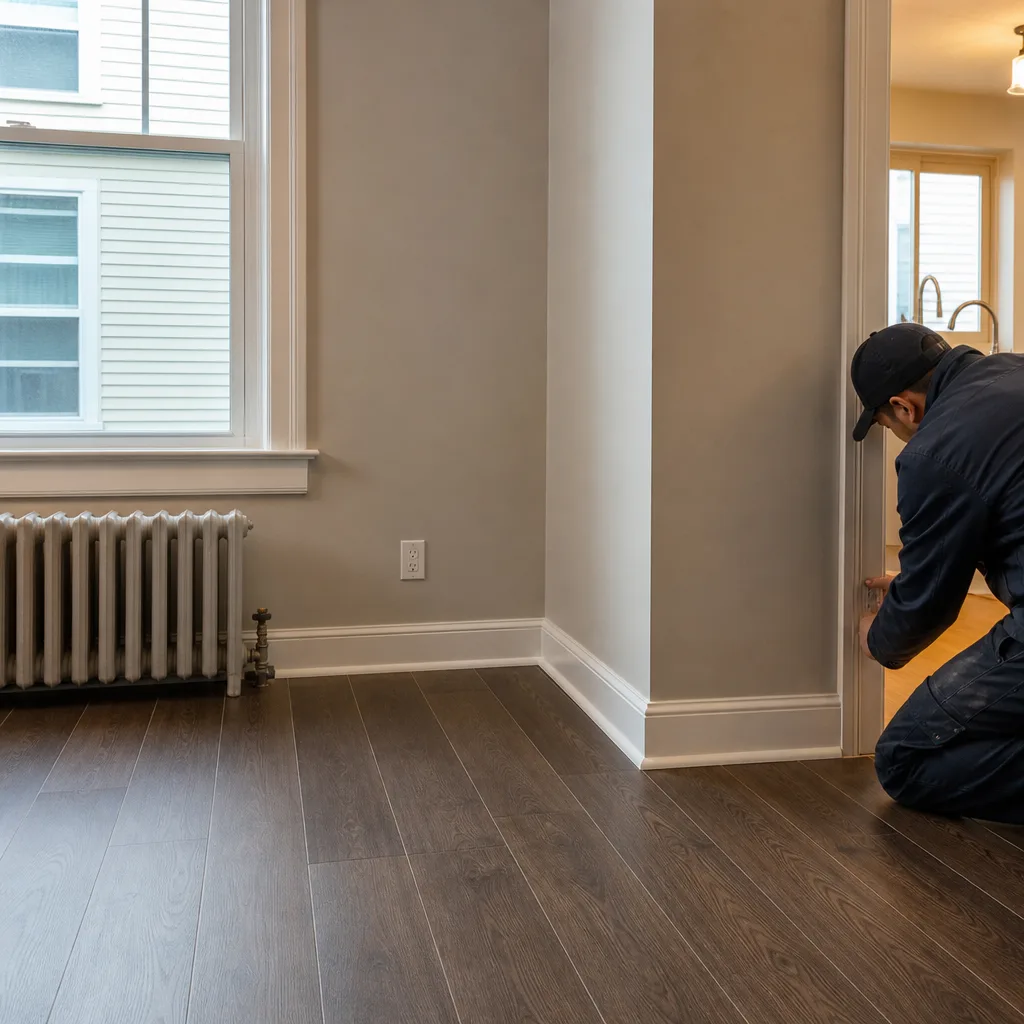 After
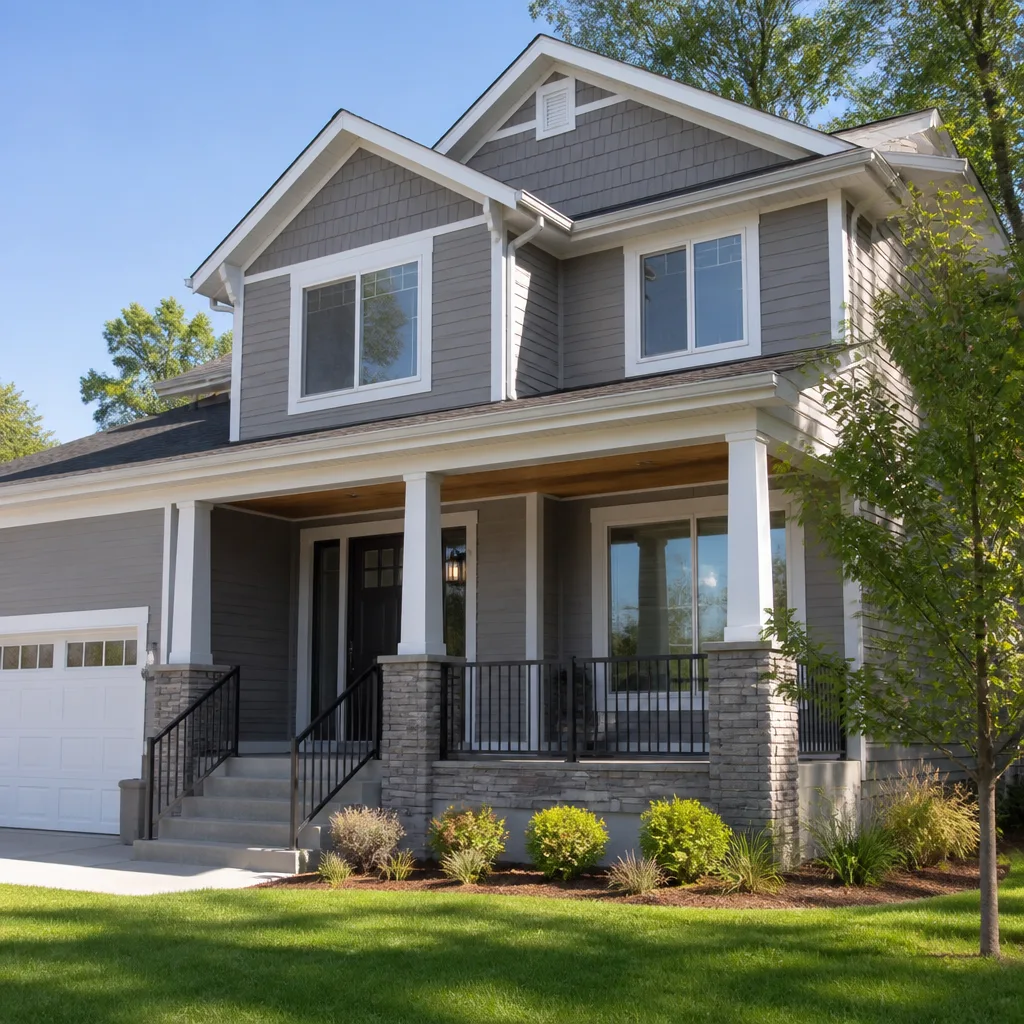
After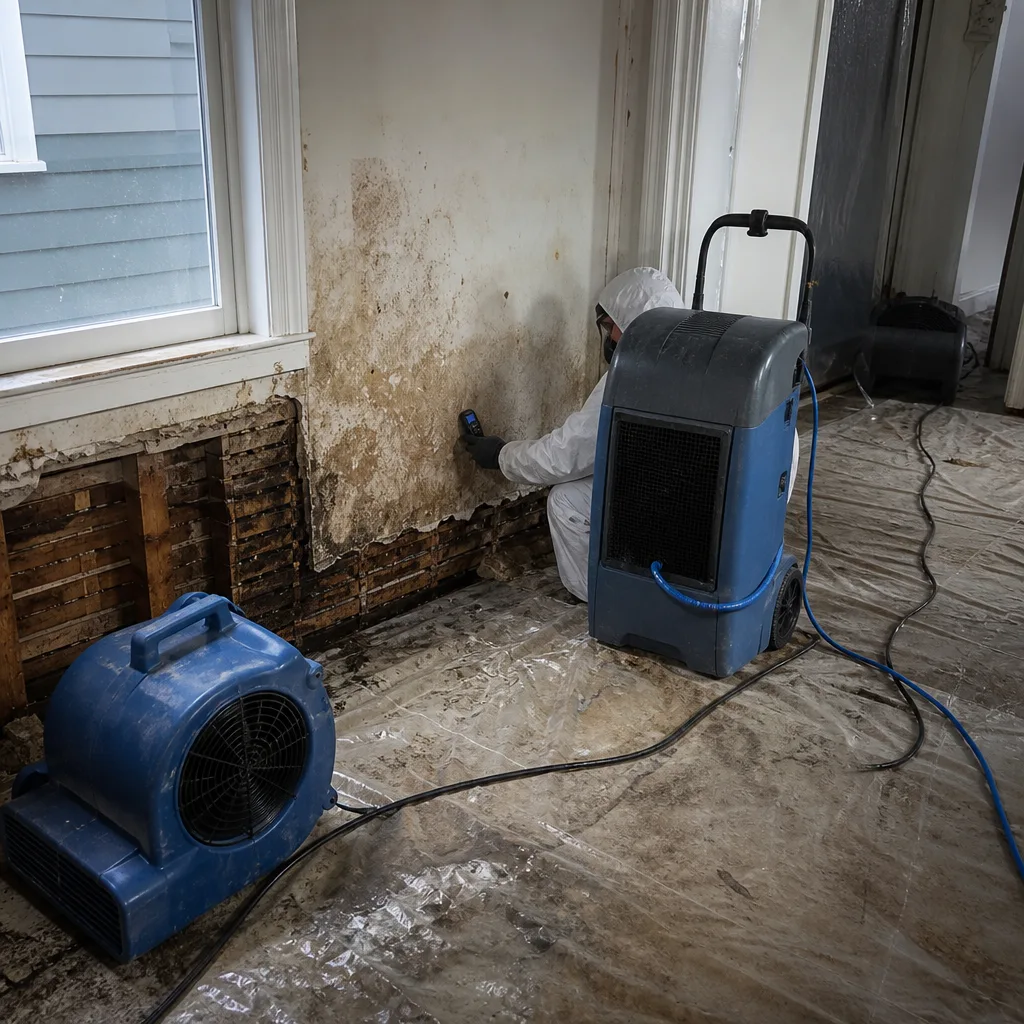 Before
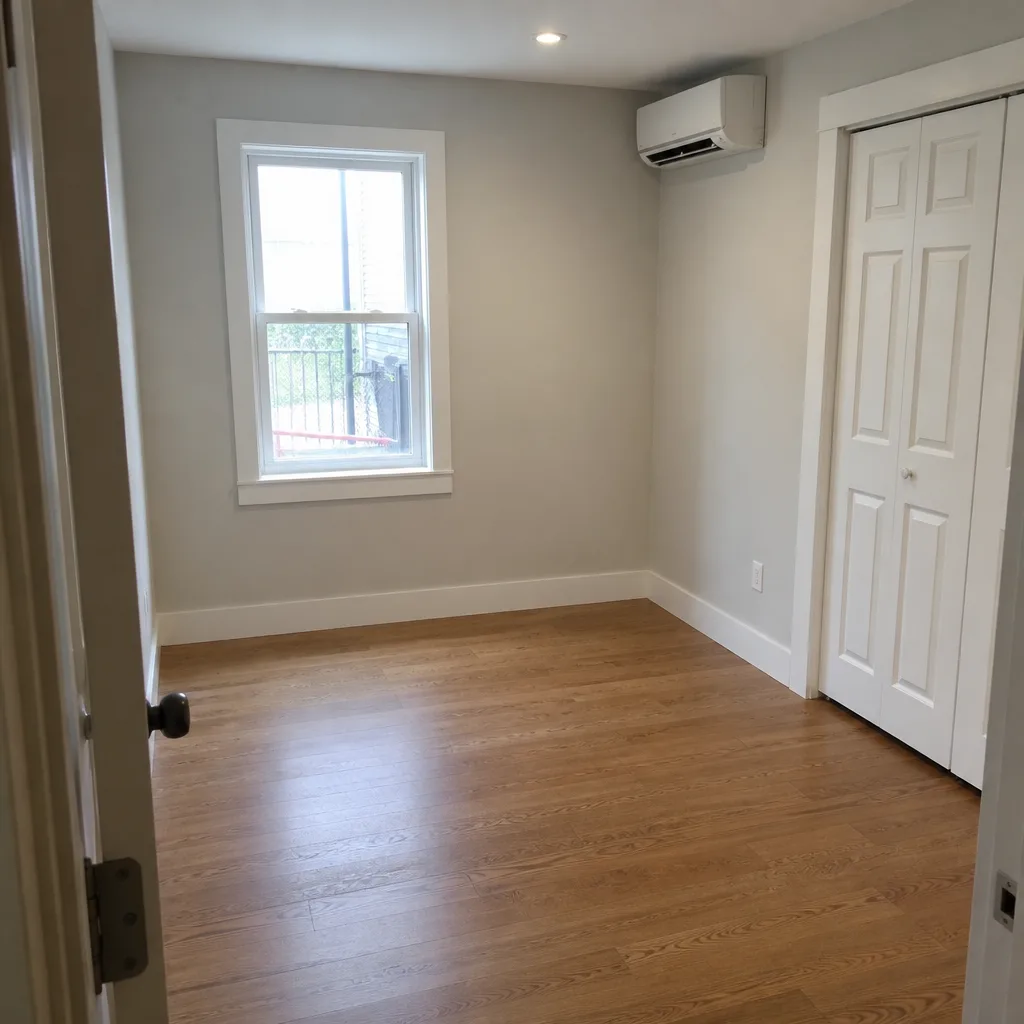 After
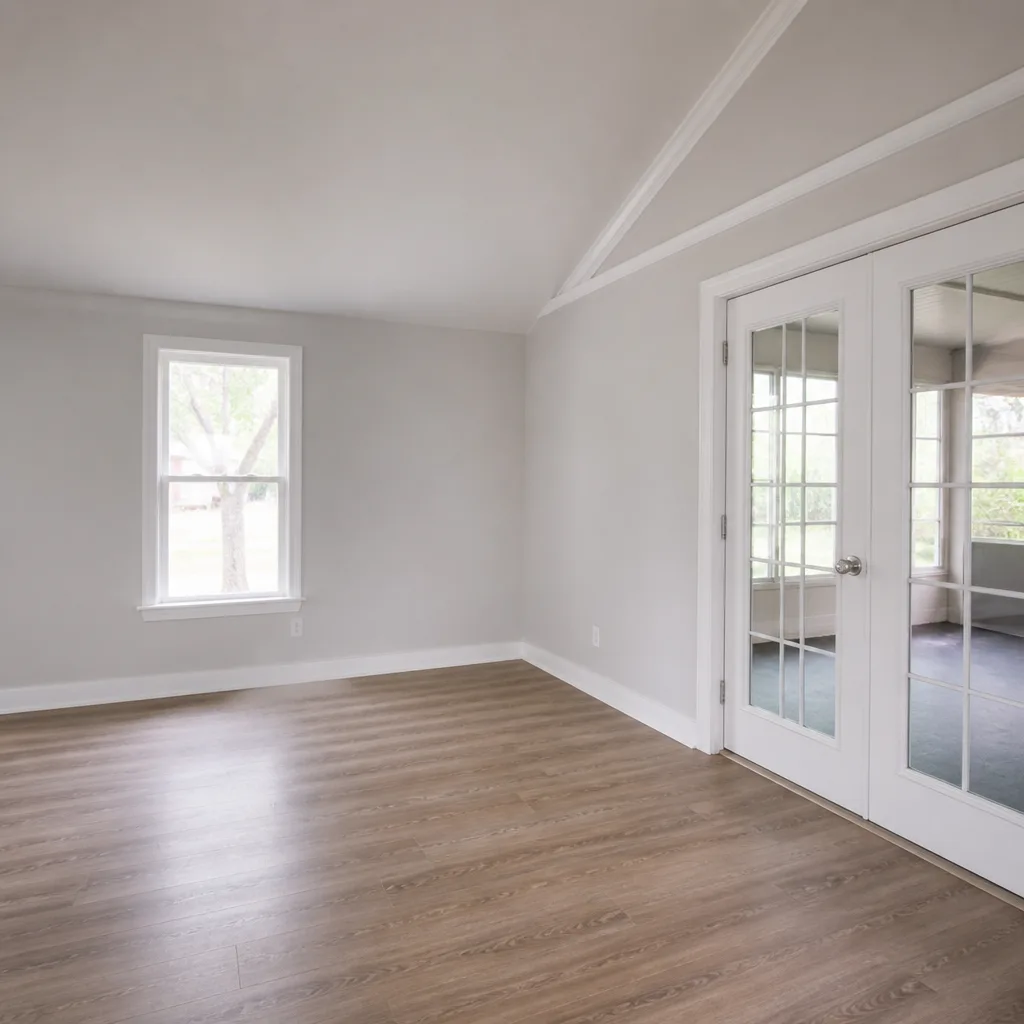
After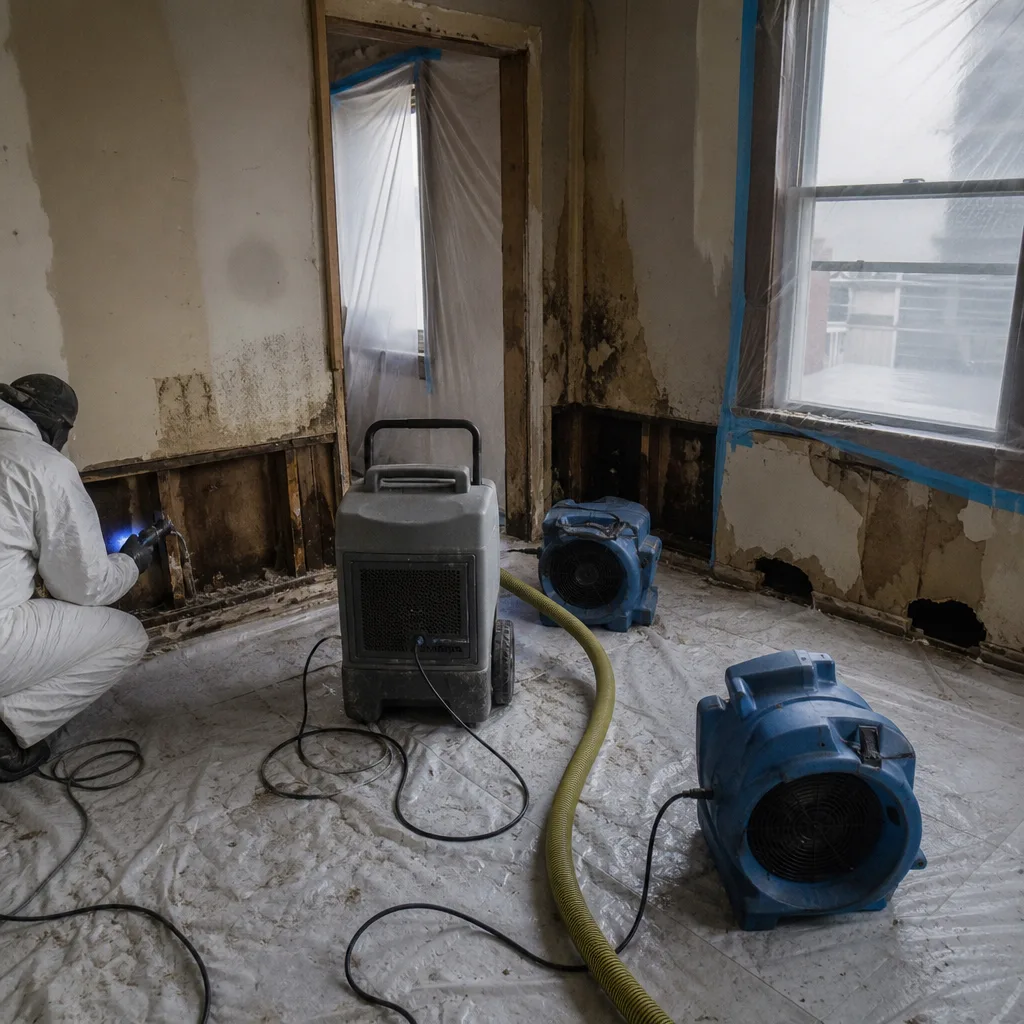 Before
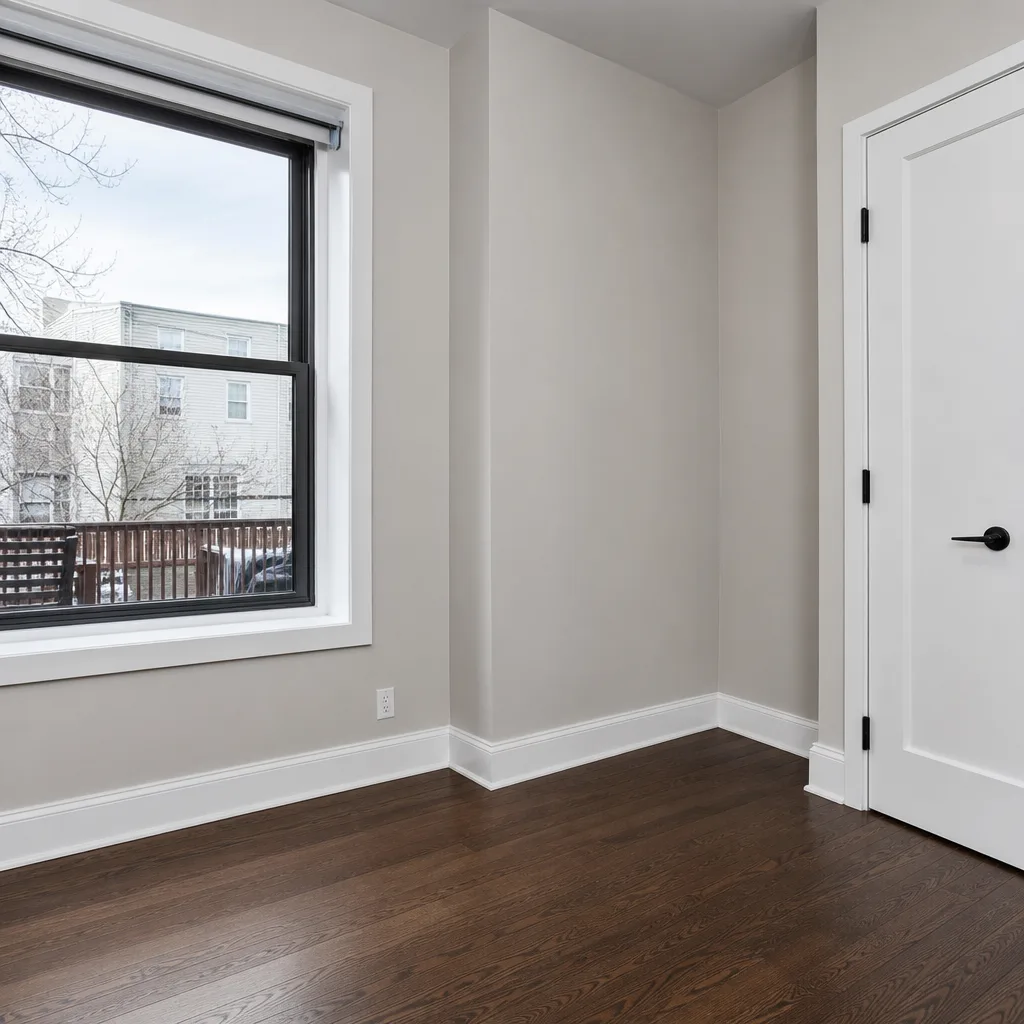 After
After24/7 Emergency Water Damage Restoration in Astoria
A burst pipe in a pre-war walk-up off Broadway or a roof breach on a Ditmars rowhouse doesn’t wait for business hours, and neither do we. Wade’s Restoration answers live at (363) 208-1526 around the clock, every day of the year, and Wade himself is often the one picking up. We can have extraction running inside the hour for most Astoria addresses, because every minute that water sits inside a plaster-on-brick wall assembly, it’s migrating laterally into the neighboring unit. The first hour determines whether you’re looking at a three-day dry-out or a three-week, multi-unit remediation.
If you’ve got water moving through your ceilings, bleeding from your radiators, or rising in your basement, call us now. The visual inspection is free, the moisture mapping is free, and you’ll get a straight answer before anything costs you a dollar. That’s how we’ve done it since 2007.
Understanding Water Damage Restoration Severity in Astoria Properties
Water damage is categorized by contamination level, and when we walk into an Astoria pre-war building, we’re almost never looking at a clean Category 1 situation. Category 1 means clean water, like a fresh supply-line break. Category 2 means significantly contaminated, like steam-system condensate that’s been sitting in a cast-iron pan for weeks. Category 3 means grossly contaminated: sewer backflow, or East River brackish surge that pushed into low-lying blocks near Hallets Point during Hurricane Sandy. Each category changes the drying protocol entirely, and in a building where your wall is also your neighbor’s wall, guessing wrong on the category isn’t an option.
Astoria’s housing stock is overwhelmingly attached 3-to-6-story brick walk-ups and two- and three-family rowhouses built between roughly 1920 and 1950. Most still carry original cast-iron drain stacks, galvanized or early copper supply lines, and steam radiators feeding off a single loop. Moisture inside these buildings doesn’t stay put. It moves through lime-and-gypsum plaster, across brick wythes, and along joist pockets that run between floors and between units. A leak that shows up in unit 2A may have originated in 4B’s radiator pan two floors up. Severity assessment in Astoria means mapping the entire assembly, not just the visible stain.
Why Astoria Property Owners Choose Wade’s Restoration
- 45-minute response commitment for Astoria addresses. Wade heads out himself, not a crew you’ve never met. He carries extraction gear on the truck, and he’s on the road before the dispatcher hangs up.
- A real person answers, 24/7. No answering service, no voicemail tree, no “someone will call you back.” You call, a person picks up. Often that person is Wade Ferris, the owner, on his own cell.
- IICRC-certified crews with WRT and ASD credentials. Water damage restoration and applied structural drying aren’t things you learn from a manual. Every crew Wade sends carries the certification to prove the training.
- Free visual inspection, every time. No charge to have someone come out, look at the damage, and tell you honestly what needs to happen and what doesn’t. That’s Wade’s standing policy, not a promotion.
- Direct insurance billing and adjuster communication. Wade deals with your carrier directly, so you’re never the middleman relaying technical details between a claims office and a drying crew.
- One team from extraction to reconstruction. You’re not handed off between a mitigation company, a drying company, and a reconstruction company. Wade’s crew handles the whole job, start to finish.
Our Water Damage Restoration Process
Inspection & Assessment
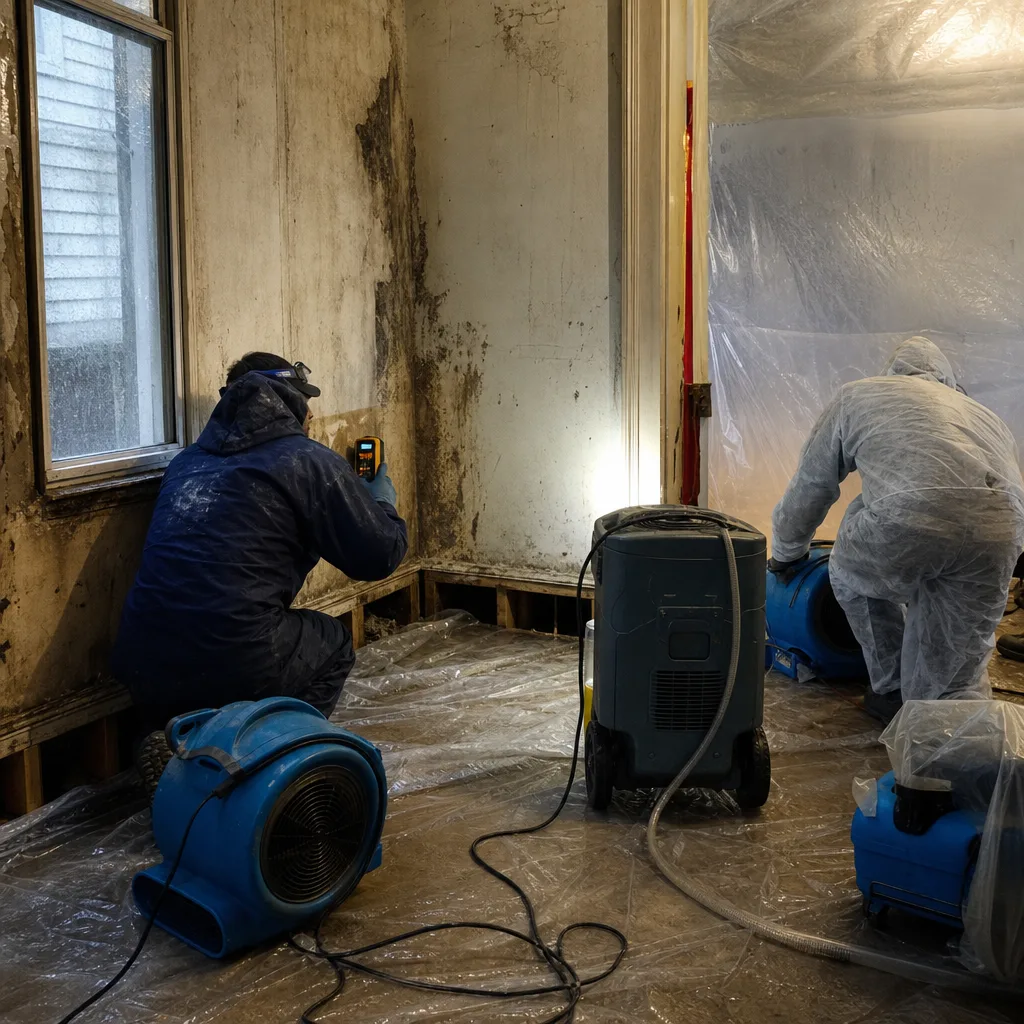
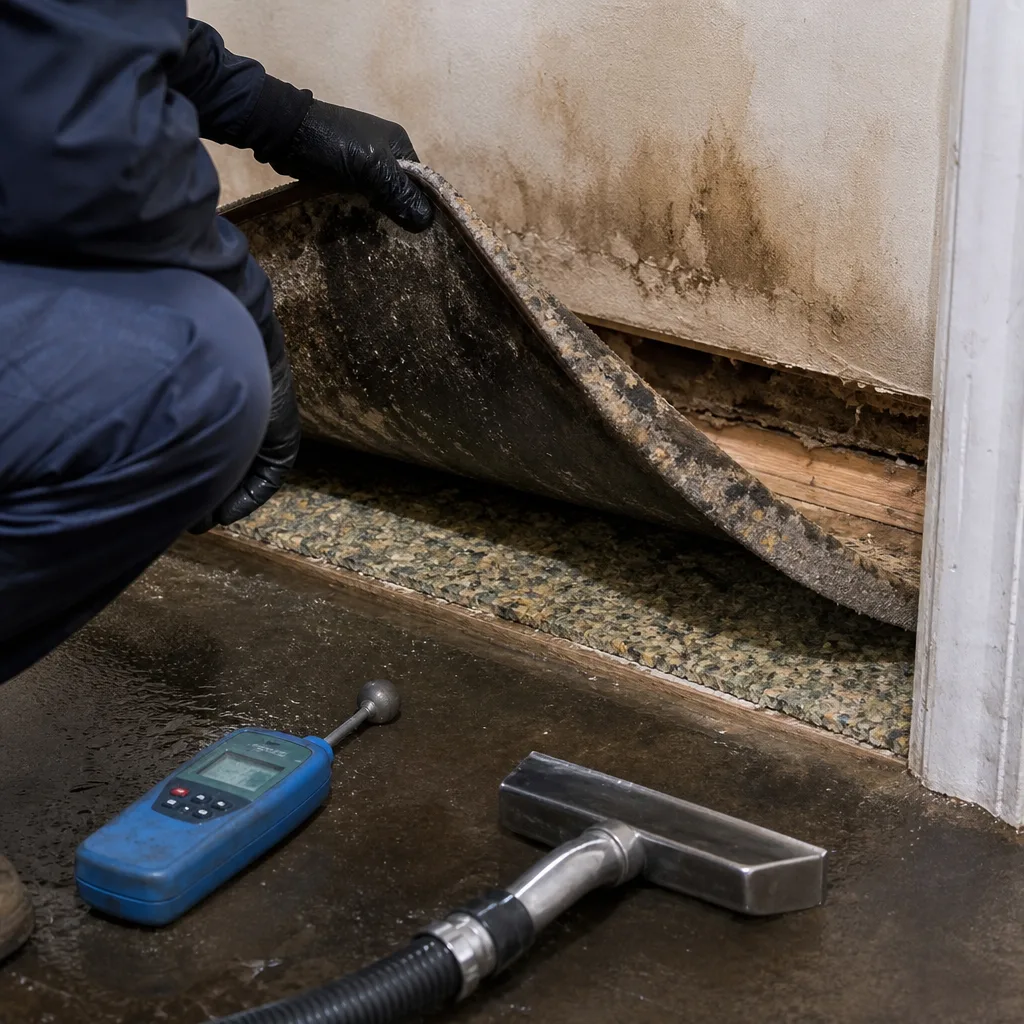
We arrive, walk the space, and map moisture with thermal imaging and penetrating hygrometers before anything is opened. In Astoria pre-war buildings, that includes checking shared party walls and chase runs that connect floors, because what you see in your apartment is rarely the whole story.
Extraction & Stabilization
We remove standing water with submersible and truck-mounted extraction, then stabilize the area so damage stops spreading. If the leak is from a burst pipe or active radiator failure, we coordinate shut-off before we start pulling water.
Drying & Dehumidification
Structural drying in masonry and plaster assemblies takes longer than drywall-and-stud framing, and we plan for that. We run Dri-Eaz LGR dehumidifiers, Phoenix axial air movers, and XPOWER centrifugal air movers on a drying chamber, with daily wood moisture equivalent readings tracked in a written log.
Cleaning & Sanitization
Category 2 and 3 water requires antimicrobial treatment and, in many cases, controlled demolition of contamination. In Astoria basements with tidal or sewer contact, that means HEPA air scrubbing and containment before cleaning begins.
Specialty Treatment: Plaster & Masonry Drying
Injectidry floor mat systems and wall-cavity drying panels let us dry inside brick and plaster assemblies without tearing every wall open, which matters when a building’s walls are also your neighbor’s walls and NYC asbestos protocols apply the moment a panel comes down.
Repairs & Restoration
After the structure hits dry standard and passes clearance testing, we restore what was taken apart: plaster repair, paint, flooring, trim, and any reconstruction the loss required. One crew, one scope, one point of contact the whole way through.
Need Emergency Water Damage Restoration in Astoria Now?
Crews minutes away, answering live 24 hours a day. The sooner we start, the less it costs.
Working With Your Insurance Company
Insurance claims for water damage in Astoria multi-family buildings get complicated fast. Three tenants, three carriers, one shared wall, and a cast-iron stack that failed on the third floor. Wade has handled hundreds of these, and he deals with the adjuster directly so you never have to explain what a moisture reading of 32% wood moisture equivalent means over the phone. From the first hour on site, we document everything: photos room by room, moisture logs updated daily, a line-item scope that an adjuster can actually parse. Our documentation is the reason carriers accept our numbers as written, and it’s also your record if the claim gets disputed later.
What We Provide Your Insurer
- Thorough documentation of the loss
- Photos of all damage, room by room
- Moisture readings and drying logs
- A detailed, line-item scope of work
- Direct coordination with your carrier
Built for Astoria’s Loss Calendar
January in Astoria means deep freezes that burst supply lines in uninsulated exterior walls, and with a 1920s brick walk-up, you’ve got a lot of uninsulated exterior wall. When the temperature drops into the teens overnight, the galvanized risers that run up through the bathroom chase on the exterior wall are the first to go. The water travels down through the joist pockets and presents three floors below the actual break, which is why the tenant in 1A often calls us before the tenant in 3B even knows they have a leak.
Summer brings a different problem. The heavy convective downpours that hit northwestern Queens dump water faster than Astoria’s combined sewer system can handle. The low-lying blocks near the East River and Hallets Point, especially those in FEMA-designated flood zones, see basement inundation. That water is never clean. It’s Category 3 the moment it enters, carrying whatever the streets and sewers were carrying. We treat every Astoria basement flood as contaminated until proven otherwise.
Fall and spring, we see the steam system waking up and shutting down. Air gets into the radiators, condensate pans overflow, and slow drips inside walls do their quiet work for weeks before anyone notices. By the time a ceiling stain shows on Steinway Street, the plaster behind it has been wet for a month.
Water Damage Restoration Across Astoria’s Neighborhoods
When a call comes in from Ditmars-Steinway, we’re usually looking at three-family rowhouses and small walk-ups along streets like 21st Avenue and 23rd Avenue, where the buildings are tight to the lot line and hose runs get long. Those jobs need careful extraction planning because you can’t park a truck-mounted extractor in an alley that doesn’t exist. Further south, around 30th Avenue and Broadway, the blocks are denser, the buildings older, and the service alleys narrower; we send our smaller truck-mounted units and hand-carry equipment up three, four, five flights of stairs.
West toward Hallets Cove and the East River, the flood-zone blocks near Vernon Boulevard and Shore Boulevard carry the tidal history of Hurricanes Sandy and Ida. Column water in those buildings often starts in basements and foundation walls, not pipes, and the remediation protocol accounts for brackish contamination. Up near Astoria Heights and along 31st Street, the attached brick rowhouses share plumbing chases through party walls, so a single failed galvanized riser shows moisture in two or three adjoining basements at once. We’ve also worked Astoria Houses and the surrounding blocks off Astoria Boulevard, where stacked units and long vertical drain runs mean scope-of-loss documentation has to account for ceilings, walls, and floors across multiple floors from one source.
Specialized Water Damage Restoration Services We Offer in Astoria
Emergency Water Extraction
The water coming through your ceiling or rising in your basement doesn’t care whether it’s 2 a.m. or 2 p.m. We extract standing water with truck-mounted units where the building allows and portable extraction systems everywhere else, because a lot of Astoria work means four-floor walk-ups and narrow service entrances. Extraction is the first move, always, because every hour water sits in a multi-layer plaster-on-brick assembly, the wet plume grows wider and deeper.
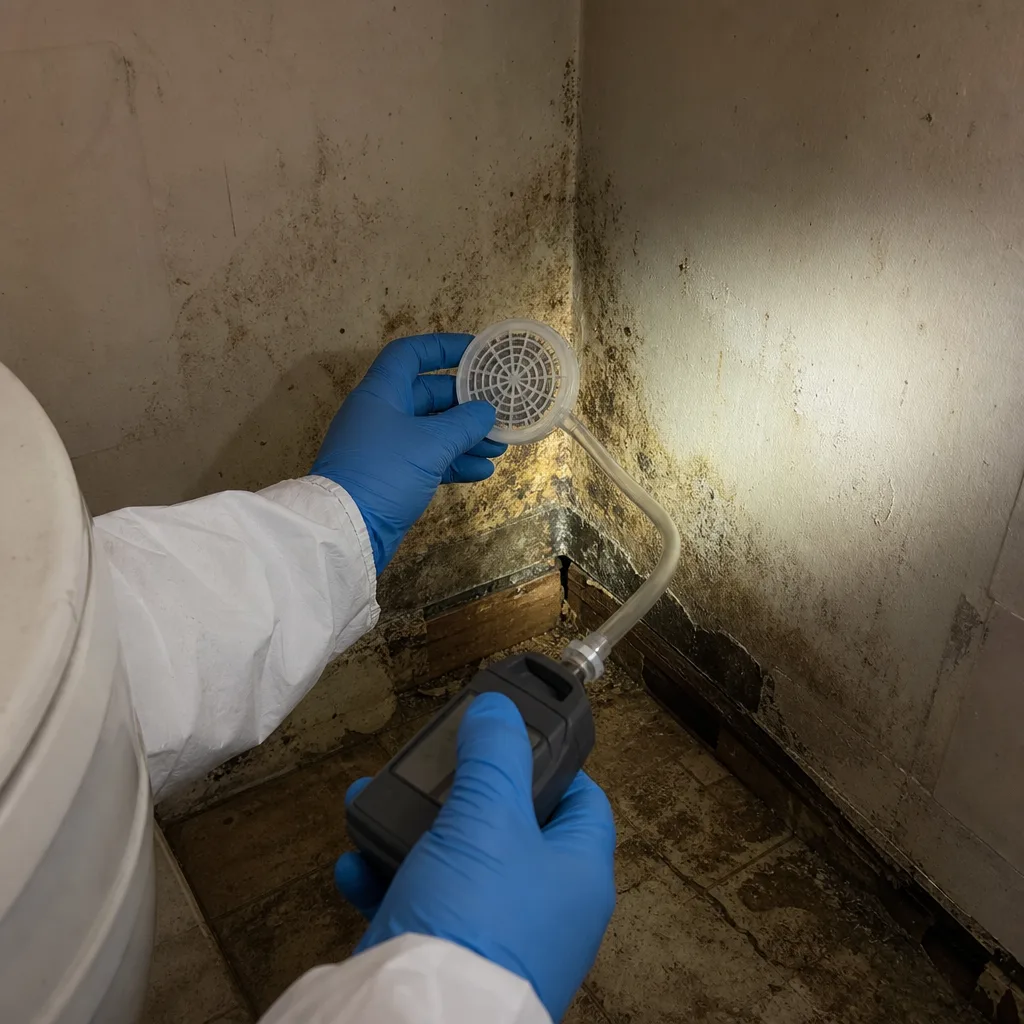
Burst Pipe Restoration
Pipes burst in Astoria pre-war buildings for predictable reasons: freezing on exterior wall chases, decades of mineral scale stressing old threaded joints, and galvanized riser corrosion. When yours goes, the damage is rarely contained to your apartment. We sequence these jobs carefully: stop the source, map the migration path with thermal imaging, and document every affected unit before drying begins. If the wall needs opening and your building is pre-1987, we’re filing DEP asbestos survey notices before tools touch plaster. More on that below.
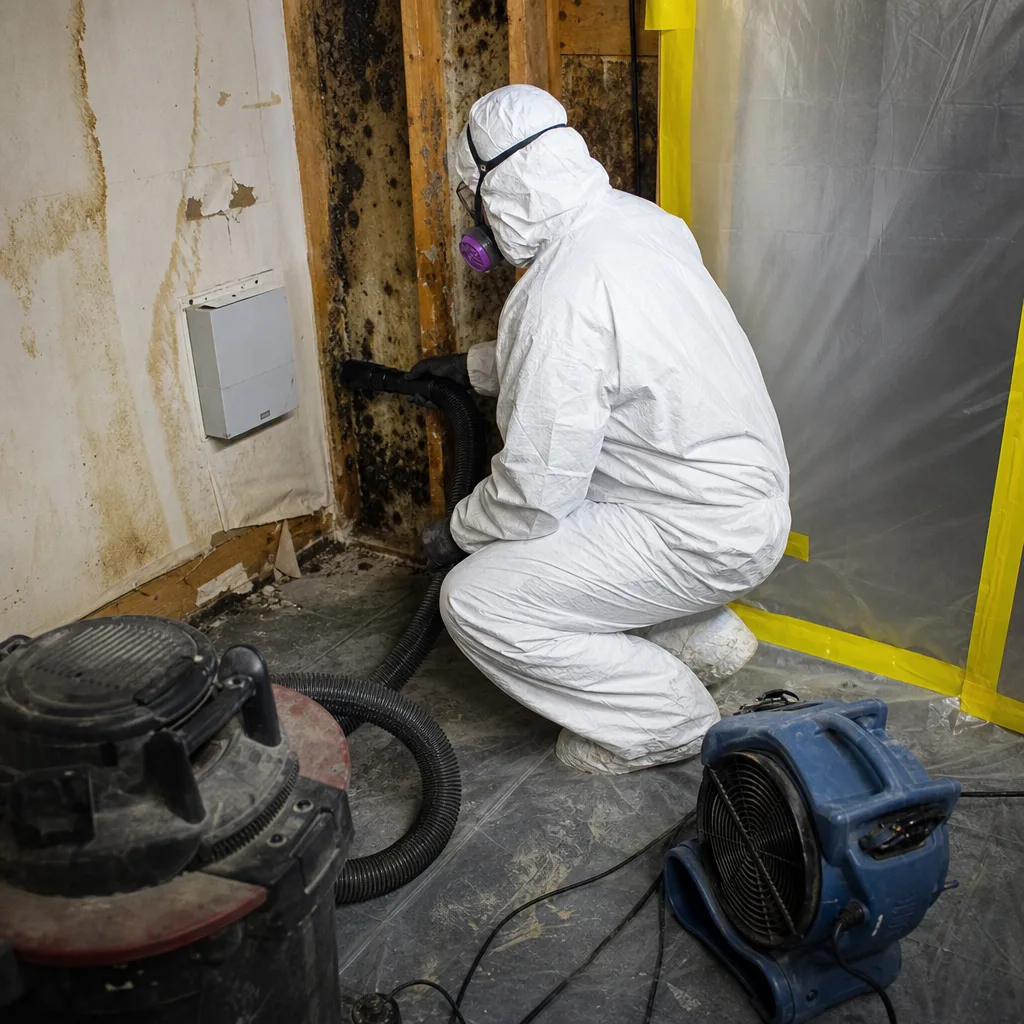
Ceiling & Roof Leak Water Damage
Steam condensate, radiator pan overflows, and membrane-roof failures on top-floor units under parged parapets. The leak that shows up as a stain on your ceiling may have been running inside the ceiling cavity for weeks. In Astoria’s attached buildings, that wet cavity often shares joist bays with the adjacent unit, so we always map moisture across the party wall line, not just under the visible stain.
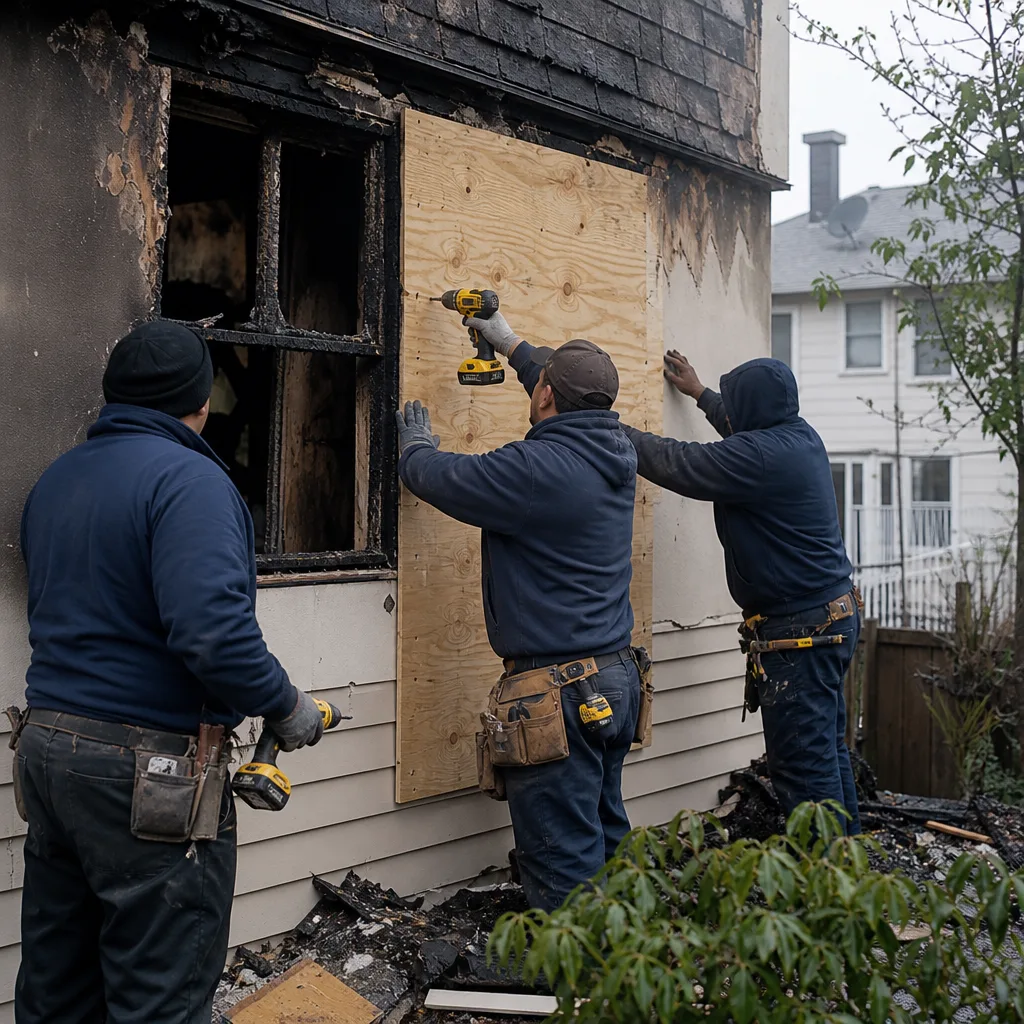
Structural Drying & Dehumidification
Brick, plaster, and old-growth joists dry on a different timeline than drywall and steel stud. We build Astoria drying chambers with attention to the assembly, not just the room. In a 1930s walk-up, that means Injectidry panel systems pulling water out of brick wythes and plaster keys, ambient-air dehumidifiers running around the clock, and daily WME readings recorded in a log you get at the end. We hit dry standard and prove it; we don’t just set fans and hope.
Basement Water Removal
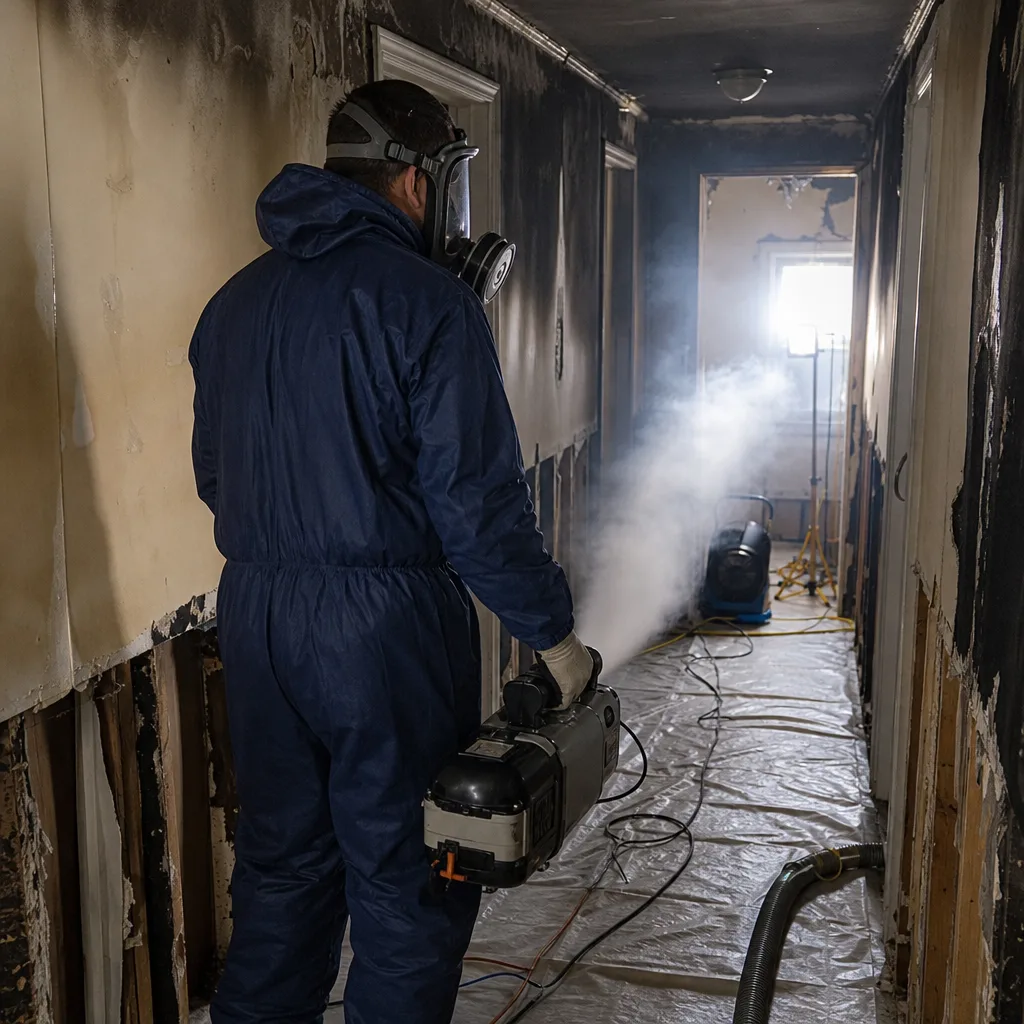
Astoria basements flood from three directions: up through foundation walls during heavy downpours, back through floor drains when the combined sewer surges, and over from the East River on storm-tide events. The source determines the category of water and the cleanup protocol. A basement at Shore Boulevard and Ditmars gets treated differently than one at 34th Avenue and 42nd Street. We test, we identify the source, and we clean accordingly, not on assumption.
Flood Cleanup
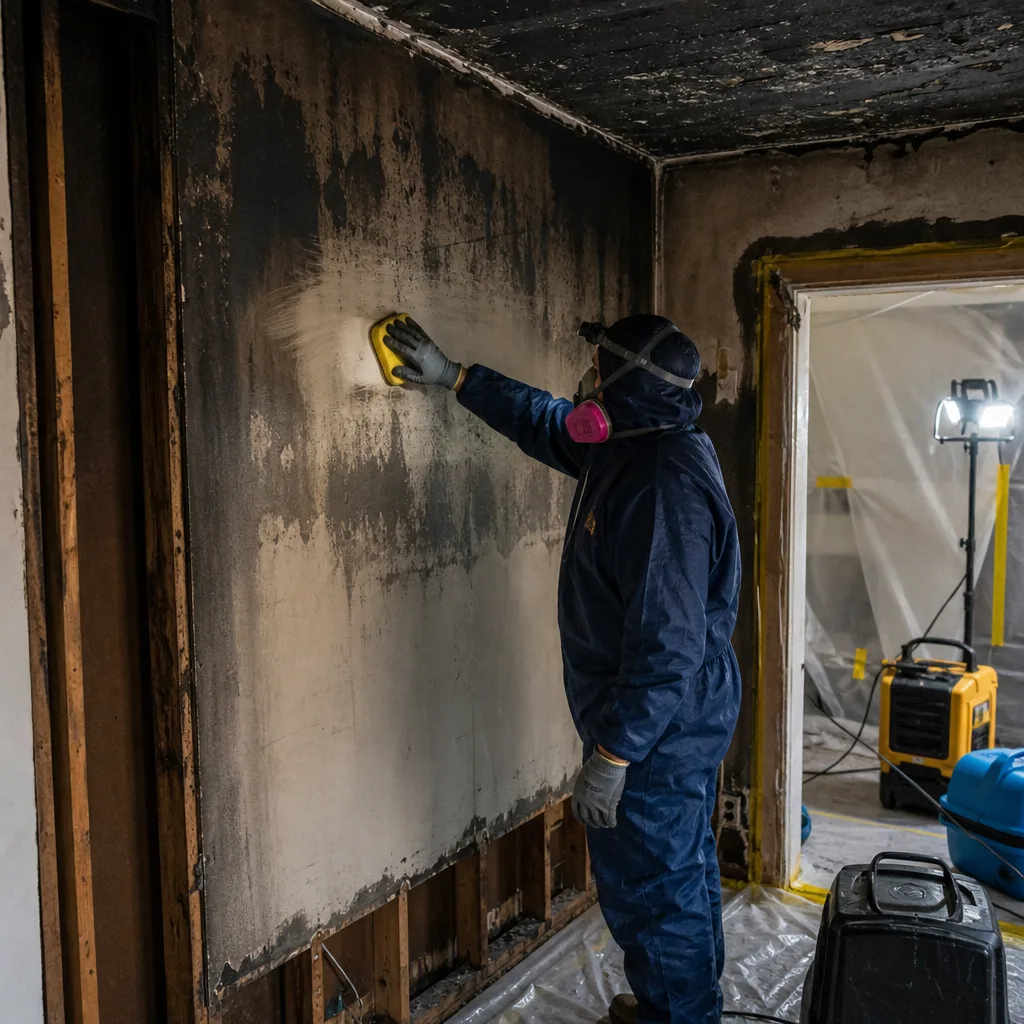
When the streets flood, the water coming into your basement is not rainwater anymore. It’s runoff that’s mixed with whatever came out of the sewers and off the asphalt. You need containment, HEPA air scrubbing, antimicrobial treatment, and structural drying procedures that assume contamination. We run that play for Astoria’s low-lying blocks every time a summer cell stalls over northwestern Queens.
What happens when you call
- 1
A real person answersNo phone trees - you reach a local pro.
- 2
You get an upfront price rangeHonest numbers before anyone is dispatched.
- 3
A background-checked tech heads outLicensed & insured, dispatched right away.
- 4
You approve before work beginsNothing starts until you say go.
Water Damage Restoration Costs in Astoria, NY
Let’s talk straight numbers, because every phone quote that starts at $1,500 and ends at $8,000 is how this industry gets a bad name. For an Astoria pre-war apartment with a contained leak, a single radiator overflow with Category 2 water, here’s the honest range: extraction, containment, three to five days of structural drying with daily monitoring runs $2,800 to $4,600. If the leak crossed a party wall into the adjacent unit, add another $1,200 to $2,800 for that unit’s drying, depending on floor area and assembly. A burst supply line that dumped clean water through a ceiling into one room typically lands at $1,800 to $3,200 to extract and dry, assuming no demolition. If walls need opening with asbestos survey and controlled demo, expect another $1,500 to $3,500 on top, depending on how many panels and floors. Full multi-floor remediation with mold, multi-unit scope, and reconstruction will run higher, $12,000 to $45,000 and up, and that’s where your insurance carrier’s involvement really matters.
What moves the price in Astoria specifically? Stairs. A fifth-floor walk-up off 30th Avenue takes longer to move equipment into than a garden-level unit. Multi-unit scope. If moisture crossed into a neighbor’s apartment, that’s another drying chamber and another set of daily logs. Age of the assembly. Pre-war plaster on brick holds more water and takes longer to dry than modern drywall. And asbestos survey status. If the DEP review hasn’t been cleared, remediation pauses, and paused drying changes the scope.
Your path to a firm number: call (363) 208-1526, tell us what happened, and Wade heads out for a free visual inspection. He’ll take moisture readings, tell you honestly what needs to be done, and put the scope in writing before you spend anything. No trip charge inside the county. Senior and veteran discount always applies, 10%.
We Also Serve Cities Near Astoria
If your building is across Newtown Creek or over the 59th Street Bridge, we handle calls in Long Island City and Flushing too. The drying challenges in LIC’s newer high-rises and Flushing’s attached brick stock are different, but the response speed and documentation standards are the same. Wade’s Restoration coordinates dispatch and scheduling from our New York City office, and crews serve Astoria locally every day.
Serving Astoria, NY - Our Local Coverage Area
We’re based in the Astoria area and know this community well. Use the map below to see our service coverage - if you’re nearby, we can almost certainly help.
Astoria Water Damage Restoration Questions, Answered
Why does restoring water damage in an Astoria pre-war apartment often require asbestos surveys before walls can be opened?
Under NYC DEP rules, any pre-1987 building requires an asbestos survey before demolition or renovation work disturbs plaster, pipe insulation, or other suspect materials. In Astoria, the building stock is almost entirely pre-war, which means almost every wall we open triggers the survey requirement. The survey identifies asbestos-containing material, and if present, abatement must be completed or the work must follow specific containment protocols before remediation can proceed. This adds a day to several days to the timeline, and any contractor who skips the survey is risking a stop-work order and fines, not to mention failing a clearance test later. Call (363) 208-1526 for details, free estimate.
A pipe burst in my Astoria apartment - can water really spread to my neighbor’s unit through the brick party wall?
Yes. In attached pre-war buildings, apartments share party walls built of brick and plaster, and joist pockets often run continuously across the structural bays. Water from a burst pipe in your apartment can migrate through the masonry, along joists, and into the adjacent unit’s wall assembly without any visible sign on your side. We regularly map moisture on the neighboring side of party walls and find WME readings as high as the source room next door. That’s why we scope the wall, not just the room, and why documentation includes both units. Call (363) 208-1526 for an exact quote, estimates are free.
What’s different about flood cleanup in Astoria near the East River versus inland Queens?
The water. Low-lying blocks near the East River, Hallets Point, and Shore Boulevard sit in FEMA-designated flood zones that experienced direct tidal surge during Hurricane Sandy. Floodwater in those areas is brackish, meaning it carries salt water, sewage, fuel residue, and whatever the tide pushed in. It’s always Category 3, always contaminated. Inland areas on higher ground typically see storm runoff and sewer backup, also contaminated, but the salt content changes how building materials and electrical systems behave after drying. We test the water source before writing the scope. Call (363) 208-1526 to schedule a free visual inspection.
Can you dry out an Astoria pre-war building’s plaster walls after a leak, or do they always need to be torn out?
Most plaster walls can be saved if the water category allows and drying starts quickly. We use Injectidry panel systems and Injectidry wall-cavity drying panels, which pull moisture out of the plaster and the brick behind it without removing the wall. In many cases, we save the plaster face and only remove the baseboard and a small access strip. But if the water is Category 3, if mold has colonized, or if the plaster keys have failed, controlled removal and replacement is the honest call. Either way, we show you the readings and explain the recommendation. Call (363) 208-1526 for a free estimate on your situation.
How long does a typical water damage restoration take in an Astoria pre-war walk-up compared to a newer building?
Longer. A newer drywall-and-steel building might dry in three to five days. An Astoria pre-war brick building with plaster assemblies and structural masonry often needs seven to fourteen days, sometimes more if multiple units are involved or if the DEP asbestos survey pauses work on the front end. The masonry holds water, the plaster holds water, and the enclosed wall cavities have limited air exchange. We set the drying plan for the assembly, not the room, and we’ll give you a realistic timeline before you sign anything.
How fast can someone actually get to my Astoria apartment?
Typically inside the hour for Astoria addresses. We keep crew availability for the area and Wade himself runs dispatch; if he’s not already on a call, he’s on his way. The first call started the clock, so call now, (363) 208-1526, and we’ll have someone to your building while the water’s still spreading. Free visual inspection, no charge to walk the space.
Who deals with my insurance adjuster?
Wade does. He communicates directly with your carrier, walks the adjuster through the scope, provides the moisture logs and photos, and negotiates the technical details that most homeowners don’t want to be involved in. You’re not the middleman. You tell us what happened, we document everything, and Wade pushes the claim through with the documentation to prove it. That’s been the model since 2007.
What should I do in the first 30 minutes after discovering water damage in my Astoria home?
Shut off the water at the source if you can find it safely, kill power to the affected area if water is near outlets or panels, move what you can without injuring yourself, and call (363) 208-1526. Then take photos of everything before we arrive. Don’t open walls yourself in a pre-war building; you don’t know what’s inside that assembly and you don’t want to trigger an asbestos issue before we’re on site with containment. Most importantly, don’t wait. The difference between a $2,000 dry-out and a $20,000 mold remediation is often measured in hours.
If you’ve got water moving through an Astoria apartment, rowhouse, or basement right now, don’t guess and don’t wait. Call Wade’s Restoration at (363) 208-1526 for a free visual inspection and a straight answer. Wade answers his own phone, he stands behind the work with the 90-Day Done Right Promise in writing, and he’ll be the one you see at the hardware store on Saturday if anything isn’t right. To wade is what you do through a flooded basement at two in the morning, and it happens to be his name.
Written by Wade Ferris, Owner at Wade’s Restoration, providing Water Damage Restoration and serving Astoria and nearby communities.