
Quick Summary
Homeowners insurance typically covers sudden and accidental water damage like burst pipes and appliance failures, but routinely excludes gradual seepage, poor maintenance, and overland flooding. Wade's Restoration explains that securing full claim approval requires immediate emergency mitigation and carrier-standard, itemized documentation to verify the loss meets policy terms. Readers will understand policy coverage distinctions and know how to partner with Wade's Restoration for 24/7 emergency water extraction and smooth claims processing.
Does Homeowners Insurance Cover Water Damage? Claim Guide
When asking does homeowners insurance cover water damage, the short answer is yes, provided the damage is sudden and accidental. Standard policies typically cover events such as burst pipes and leaking appliances. However, they routinely exclude gradual leaks, lack of maintenance, and flood damage from rising water.
According to the Insurance Information Institute, roughly 1 in 67 insured homes files a property claim for water damage or freezing each year, making it one of the most common property losses.[2] See also Water Damage Restoration Cost – Call Now-10% Off – Same-Day Service – Free Estimate.
Does Homeowners Insurance Cover Water Damage? Fast Policy Breakdown
Quick Answer: Homeowners insurance covers sudden and accidental water damage originating inside the home, such as a burst pipe or a leaking appliance. It excludes long-term leaks, ground water seepage through foundations, and flood damage from storms or overland flooding, which requires a separate policy through the National Flood Insurance Program (NFIP). Sewer and drain backups also typically require a separate endorsement.[3]
Standard property policies (HO-3) protect interior structures and personal property against unexpected mechanical breaks and sudden line ruptures. Coverage does not apply when moisture results from continuous dripping, long-term humidity, or lack of normal property maintenance.
The Sudden and Accidental Standard
To determine what water damage is covered by insurance, adjusters look for clear physical evidence that a break happened abruptly. If a supply pipe bursts, the resulting water damage to ceilings and flooring is typically covered. If that same pipe had a slow drip that caused gradual rot over months, the carrier will likely deny the claim under the gradual damage exclusion.
Key Takeaways for Property Owners
- Sudden ruptures are covered: Burst pipes, sudden appliance leaks, and freezing failures generally meet standard policy terms.
- Gradual seepage is denied: Slow leaks, foundation dampness, and long-term maintenance neglect trigger claim denials.
- Mitigation is required: Your policy requires you to take reasonable steps to stop the water and start drying to prevent secondary damage such as mold.
Covered vs Excluded Water Damage: Knowing What Your Policy Pays
Knowing what water damage is covered by insurance helps you avoid claim denials. The key distinction is sudden and accidental failure versus slow decay and external floodwaters.
What Standard Policies Typically Cover
Water damage and freezing account for a significant share of residential property claims. As specialists at Wade’s Restoration note, standard coverage pays for emergency property restoration, including water extraction and structural drying, when the source is an internal, sudden failure.
| Loss Event | Standard Policy (HO-3) | Optional Backup Endorsement | Flood Policy (NFIP) |
|---|---|---|---|
| Frozen / Burst Pipe | Covered | Excluded | Excluded |
| Sewer / Drain Backup | Excluded | Covered if added | Excluded |
| Overland Storm Flooding | Excluded | Excluded | Covered |
| Sudden Appliance Leak | Covered | Excluded | Excluded |
Common Exclusions That Cause Denied Claims
Insurers reject claims involving foundation seepage, deteriorating fixtures, and ongoing leaks that occur gradually over time.
Affected Building Materials: Drywall, Ceilings, and Subfloor Joists
Need does homeowners insurance cover water damage?
We’re available now - call for a fast, free estimate.
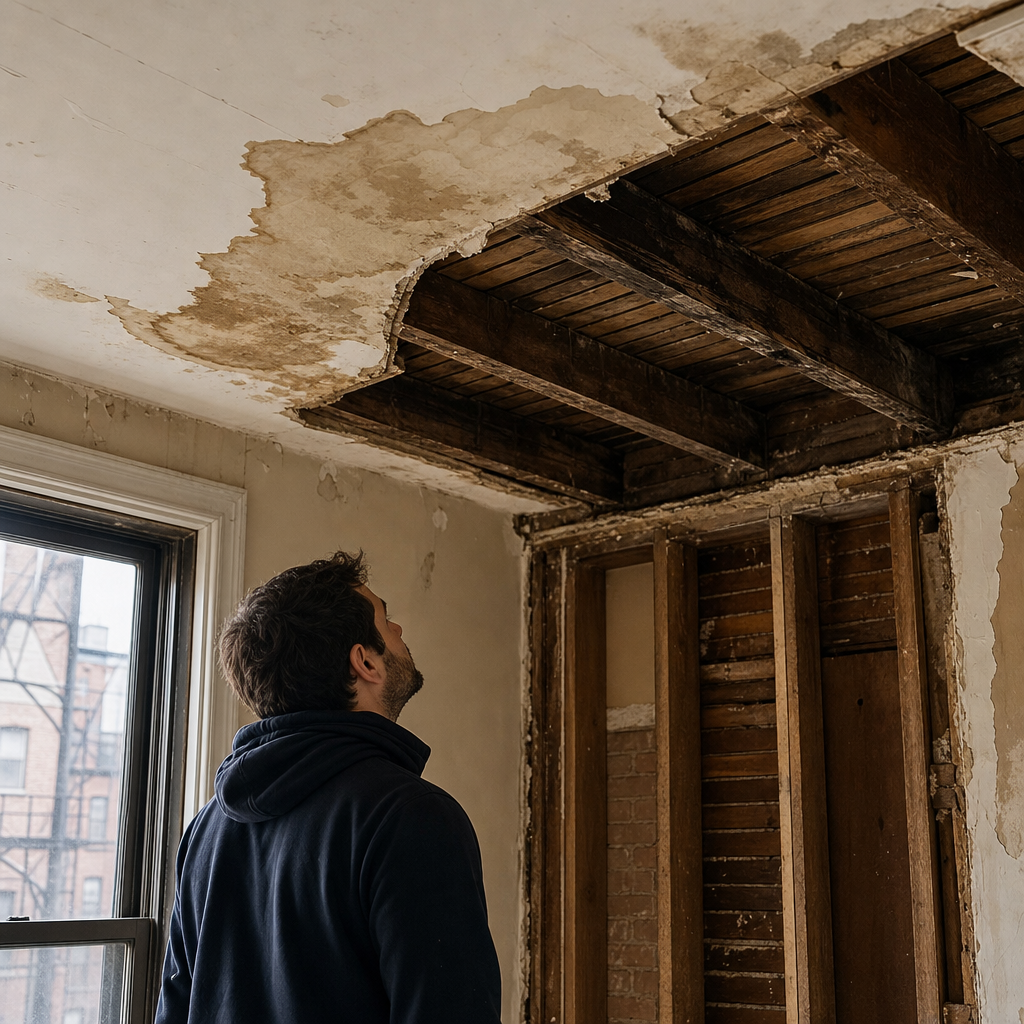
Water can quickly weaken standard building materials. Insurance adjusters verify whether the damage stems from a sudden break and whether the property owner took prompt steps to dry the property and prevent secondary issues.
Drywall and Plaster Ceiling Failures
Saturated drywall loses its structural integrity quickly, while plaster ceilings become heavy and can collapse. Prompt structural drying stabilizes these materials and helps prevent secondary damage behind baseboards and wall cavities.
Hardwood, Subfloors, and Structural Joists
Standing water causes hardwood floorboards to warp and subflooring to swell. Restoration professionals use specialized drying equipment to extract moisture from wood framing and subfloors whenever structurally safe.
| Building Material | Restoration Method | Standard Protocol |
|---|---|---|
| Drywall and Insulation | Selective Extraction and Removal | Remove wet insulation and cut drywall above the water line. |
| Hardwood and Floor Joists | In-Place Structural Drying | Apply air movers and dehumidifiers to extract moisture from wood framing. |
What Does Water Damage Restoration Cost Under Insurance?
On covered claims, property owners are generally responsible only for their policy deductible. The insurance carrier pays the remaining covered cost of mitigation, water extraction, and structural repairs up to policy limits.
Standard Industry Pricing Overview
According to the Insurance Information Institute, the average property claim for water damage and freezing is about $12,514. Restoration work generally breaks down into standard categories:[1]
| Restoration Service | General Cost Factors | Insurance Policy Alignment |
|---|---|---|
| Water Extraction and Drying | Volume of water and structural saturation | Covered under sudden loss mitigation |
| Drain Backup Cleanup | Pathogen containment and disposal | Requires water backup endorsement |
| Mold Remediation | Square footage of containment area | Subject to policy terms and sub-limits |
| Structural Repairs | Drywall, trim, flooring replacement | Paid via Dwelling Coverage (Coverage A) |
Why Itemized Documentation Protects Your Claim
Carriers often reject vague or generic estimates. Successful claims rely on detailed, line-item estimates paired with drying logs. When equipment use, moisture levels, and repair tasks are clearly documented by experts like Wade’s Restoration, adjusters can evaluate claims more efficiently.
Step-by-Step: How to File a Water Damage Claim
Following a clear process helps protect your home from ongoing damage and ensures an organized claims process.
-
Step 1: Shut Off the Source and Call Emergency Mitigation
Shut off your main water valve immediately. Standard homeowners policies contain provisions requiring the policyholder to take reasonable steps to prevent additional damage after a loss.
-
Step 2: Document Everything Before Cleanup Begins
Photograph and record video of all standing water, damaged personal property, and wet materials before items are moved or discarded. Keep records of serial numbers on damaged appliances.
-
Step 3: Submit Detailed Documentation to Your Adjuster
File your claim promptly and provide your itemized restoration estimate, moisture records, and photo logs directly to the adjuster to assist with claim review.
Frequently Asked Questions About Water Damage Insurance Claims
How Much Does Emergency Water Extraction Cost?
The total cost depends on how many rooms are affected, the depth of water, and the drying equipment needed. On covered claims, the homeowner pays only their deductible, while the carrier covers approved mitigation costs within policy limits.
Will My Homeowners Insurance Cover Sewer and Drain Backups?
Standard homeowners insurance policies typically exclude sewer and drain backups unless you have added a specific water backup endorsement to your policy.
What Is the Difference Between Flood Damage and Water Damage?
Water damage typically refers to internal water from sudden pipe bursts, leaking appliances, or sudden storm-related openings. Flood damage refers to rising overland water from outside, such as heavy rain runoff or overflowing bodies of water, which requires a separate flood policy.
How Fast Must I Call a Restoration Contractor After a Leak?
You should contact a restoration professional such as Wade’s Restoration promptly after discovering a leak. Taking immediate action helps prevent secondary damage and complies with policy duties to protect property after a loss.
Need does homeowners insurance cover water damage?
We’re available now - call for a fast, free estimate.
Sources
- Water Damage Insurance Claims Statistics (2026) | ConsumerAffairs® – consumeraffairs.com (2026)
- Water Damage Statistics and Information – This Old House – thisoldhouse.com (2025)
- Does Homeowners Insurance Cover Water Damage? – Allstate – allstate.com
Related reading: Ceiling Water Damage Repair Cost | 10% Off & Free Estimate | On-Site in 60 Minutes
Related reading: Cost to Fix Water Damaged Ceiling – Call Now-10% Off – Same-Day Service – Free Estimate
Related reading: Basement Flood Cleanup Cost | Call Now-10% Off | Same-Day Service | Free Estimate
Frequently Asked Questions
Does homeowners insurance cover mold remediation resulting from water damage?
Most standard policies cover mold removal only if it directly stems from an approved, sudden and accidental water loss, though carriers often impose specific sub-limits. Wade's Restoration provides detailed moisture mapping and rapid structural drying logs to document that mold growth was caused by a recent, covered event rather than pre-existing neglect.
Do I have to use the restoration contractor recommended by my insurance company?
No, homeowners have the legal right to hire any certified, licensed restoration contractor they prefer. Wade's Restoration advocates for property owners by working directly with adjusters and submitting carrier-standard documentation to ensure complete, uncompromised structural repairs.
How can I prove to an insurance adjuster that water damage was sudden rather than gradual?
Proving a sudden loss requires objective evidence, such as immediate time-stamped photographs, moisture meter readings, and professional plumbing failure assessments. Wade's Restoration helps homeowners document clear timelines and compile itemized line-item reports that substantiate the sudden nature of the mechanical failure.
About the author
 |
Sarah Miller Sarah Miller is a certified water damage restoration specialist with over eight years of experience helping property owners navigate the complexities of mitigation and recovery. She holds an associate degree in Construction Management from New York City College of Technology and has extensive knowledge of local building codes and insurance claim procedures. Through her writing, Sarah provides actionable advice to help property managers and homeowners in the Astoria area understand the true costs and critical steps involved in emergency water damage restoration. |
Water damage, flood, or mold emergency?
We’re available now - call for a fast, free estimate.
Call Now - Free Estimate