
Quick Summary
Navigating water damage insurance coverage requires understanding that standard policies cover sudden and accidental plumbing mishaps while strictly excluding gradual leaks, maintenance neglect, and unendorsed flood or sewer backups. Fulfilling your mandatory duty to mitigate secondary damage requires rapid extraction, which Wade's Restoration supports by delivering immediate emergency response alongside comprehensive, carrier-compliant claim documentation. Readers will learn how to identify covered losses, manage structural drying across various building materials, and secure a professional inspection with detailed moisture logs to achieve full claim approval.
Water Damage Insurance Coverage: How Coverage Works and How to Help Support a Claim
Navigating a water damage claim involves acting promptly to mitigate damage and documenting the loss carefully for your insurer. When water is pooling across your floor or dripping through a ceiling, your policy typically requires you to take reasonable steps to protect the property. Standard homeowners policies generally cover sudden and accidental water damage, such as plumbing breaks and appliance line failures, but exclude flood damage and often exclude sewer or drain backups unless endorsed. In addition, policies generally exclude gradual leaks, maintenance neglect, and normal wear and tear. Understanding how your policy works, what documentation helps support a claim, and where coverage gaps exist can help you protect your home.[4]
Water Damage Insurance Coverage: Fast Policy Breakdown
Understanding what water damage is covered by insurance depends primarily on the source of the water and how the failure occurred. Standard homeowners policies are designed for sudden and accidental events, not long-term maintenance issues or flood events.[2] See also Water Damage Restoration Cost – Call Now-10% Off – Same-Day Service – Free Estimate.
Key Takeaways: Quick Coverage Rules
- Sudden vs. Gradual Losses: Standard homeowners policies generally cover sudden and accidental water damage, such as a ruptured pipe, a cracked toilet tank, or a sudden appliance hose failure. They exclude slow, unaddressed leaks, gradual seepage, and normal wear and tear.
- Your Duty to Mitigate: Homeowners policies typically require policyholders to take reasonable, prompt steps to protect the property from further damage after a loss occurs.
- Flood Exclusions and Endorsements: Standard homeowners insurance policies exclude flood damage. Separate flood insurance policies are usually needed, and government-backed mortgages in Special Flood Hazard Areas may require flood insurance. In addition, sewer or drain backups and sump pump overflows are often excluded unless specifically added by endorsement.
What Water Damage Is Covered by Homeowners Insurance?
Property policies draw strict boundaries between internal plumbing mishaps, external flood events, and routine maintenance issues. Knowing where your damage falls helps clarify coverage rules and improve claim documentation.[5]
Covered: Sudden and Accidental Discharges
Insurers generally cover sudden and accidental failures originating inside the home. Examples may include:
- Supply lines under sinks or behind toilets bursting unexpectedly.
- Pipes freezing and splitting during severe cold snaps.
- Water heaters failing suddenly and releasing their contents.
- Dishwasher, refrigerator ice maker, or washing machine supply lines rupturing abruptly.
- Accidental fire sprinkler discharges.
Adjusters inspect the damaged area to verify whether the failure was sudden and accidental rather than the result of ongoing deterioration.
Excluded: Gradual Leaks, Masonry Dampness, and Neglect
Carriers generally exclude claims involving continuous seepage, recurring drips, or neglected maintenance. For instance, when water slowly leaks through masonry or behind walls over an extended period, policies typically classify this as wear and tear or long-term moisture rather than a covered sudden loss. Providing clear, dated evidence of a sudden failure can help support a claim and clarify the origin of the damage.
The Special Endorsement Gap: Water Backup and Flood Exclusions
Standard property policies do not automatically cover municipal sewer lines backing up into your drains, nor do they cover mechanical sump pump failures unless an optional water backup endorsement has been added. Furthermore, standard policies exclude flood damage from rising surface water or storm surges; separate flood insurance policies are usually needed to cover flood-related losses.[3]
Damage to Drywall, Ceilings, and Plaster Walls
Need water damage insurance coverage?
We’re available now - call for a fast, free estimate.
Water inside wall assemblies can degrade structural materials over time. Moisture softens gypsum cores and can promote mold growth if left untreated. Thoroughly identifying wet areas helps ensure your water damage claim documentation accurately reflects the full extent of the affected areas.
Symptoms of Saturated Wall Cavities
Common signs of moisture behind walls include drooping ceiling panels, peeling paint, bubbling wallpaper, and soft plaster or drywall. Moisture mapping and thorough inspection by specialists like Wade’s Restoration help determine the boundaries of water migration within wall cavities.
Repair vs. Replace Decisions for Plaster and Sheetrock
| Wall Material | Structural Reaction to Moisture | Restoration Protocol |
|---|---|---|
| Modern Drywall | Gypsum core softens and paper backing can support microbial growth if remaining wet. | Affected drywall is typically cut away above the moisture line and replaced once drying is complete. |
| Historic Plaster on Lath | Can retain density if keys remain intact, but may trap moisture against framing. | Specialized drying techniques and dehumidification may be used to help preserve plaster assemblies. |
When to Call for Immediate Moisture Extraction
Contacting a restoration professional promptly when water affects walls or ceilings can help stabilize the environment. Quick structural drying and an itemized repair estimate can help mitigate secondary damage and support your insurance claim.
Damage to Subfloors, Hardwood, and Structural Joists
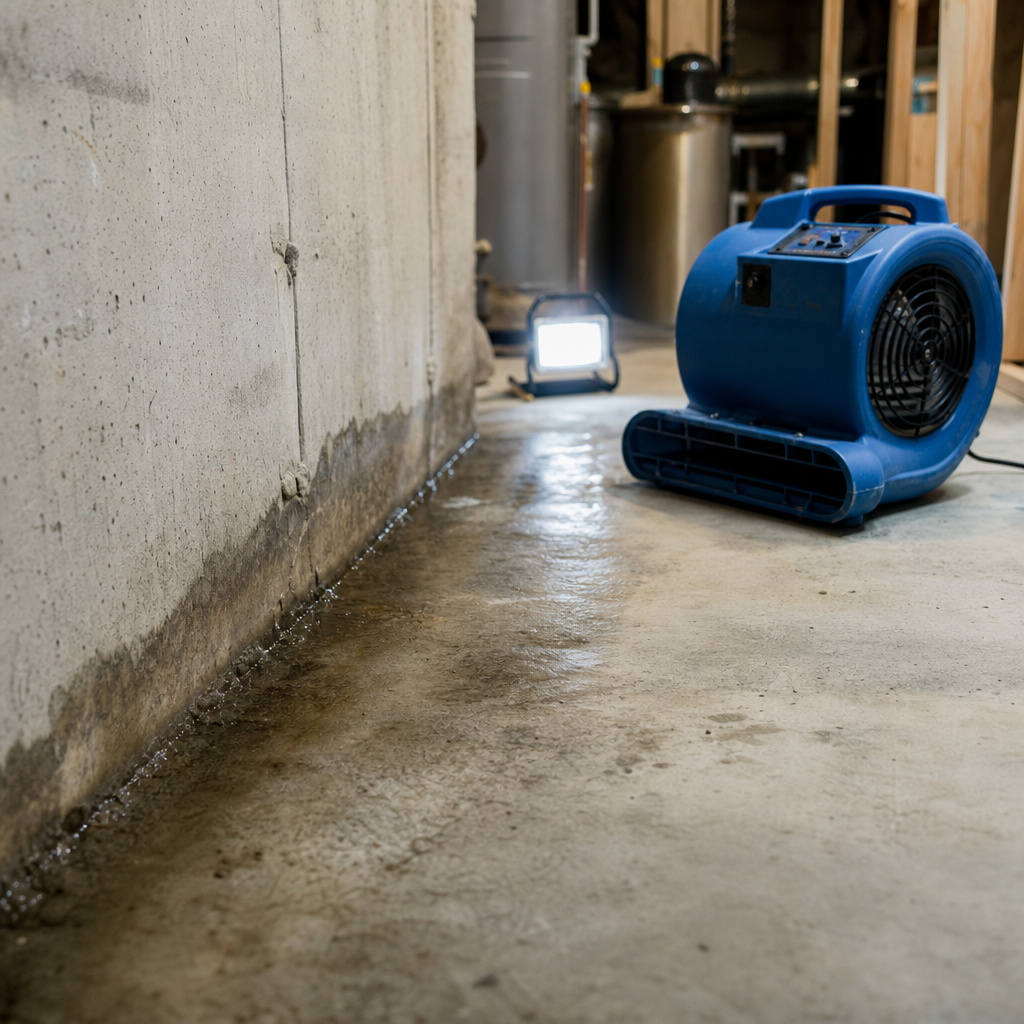
Moisture trapped beneath finished flooring can affect the subfloor and framing. Adjusters review flooring claims carefully to differentiate between surface repairs and structural drying needs.
Cupping Hardwood vs. Delaminating Subflooring
When water reaches the underside of hardwood flooring, uneven expansion can cause board edges to cup upward. If moisture remains trapped, subflooring materials can swell or delaminate. Targeted drying methods can sometimes stabilize hardwood and subfloors without complete removal, depending on the severity of the loss.
Saving Structural Framing and Joists
Structural framing can absorb significant amounts of water during a major plumbing leak. Tracking moisture levels until framing returns to normal moisture content provides helpful documentation to show that drying was necessary and properly completed.
Damage in Basements, Crawl Spaces, and Foundations
Lower-level claims face close inspection because insurers distinguish between covered interior plumbing failures and excluded groundwater seepage or flooding.
Hydrostatic Pressure vs. Internal Plumbing Failures
Groundwater pushing through foundation walls due to hydrostatic pressure or exterior flooding is excluded under standard homeowners policies. However, if an interior supply line, boiler fitting, or indoor plumbing fixture fails suddenly, the resulting damage is generally covered under standard sudden and accidental provisions. Documenting the specific point of origin helps clarify that the damage resulted from an internal failure.
Sewage Backup Remediation Standards (Category 3 Water)
When sewer or drain lines back up, the resulting water is contaminated and requires specialized remediation protocols. Proper cleanup typically involves extracting contaminated water, removing non-salvageable porous items, and sanitizing affected surfaces with appropriate cleaning agents.
What Does Water Damage Insurance Coverage Cost?
Need water damage insurance coverage?
We’re available now - call for a fast, free estimate.
On covered claims, the policyholder is responsible for their policy deductible, while the insurance carrier covers approved repair and mitigation costs up to policy limits.
| Service Scope | Category 1: Clean Water | Category 2: Grey Water | Category 3: Black Water |
|---|---|---|---|
| Source of Loss | Broken supply line, failed faucet fitting | Washing machine overflow, dishwasher discharge | Sewer backup, floodwater, long-standing water |
| Drying Documentation | Recommended for claim records | Recommended for claim records | Recommended for claim records |
| Antimicrobial Treatment | Applied as needed | Standard application | Mandatory deep application |
| Porous Material Removal | Dry in place when feasible | Pads and compromised insulation removed | Heavily affected porous materials typically removed |
Working with Restoration Contractors and Billing
Many restoration contractors, including Wade’s Restoration, can coordinate with your insurance carrier during the claims process. An initial itemized repair estimate and regular moisture logs help establish the scope of work and support your claim documentation throughout the drying process.
How to File a Water Damage Claim and Choose a Contractor
Filing an organized claim requires prompt action and clear evidence. Following these steps helps fulfill policy conditions and supports the claim review.
5-Step Insurance Claim Filing Checklist
- Shut Off the Water Source: Turn off your main water valve immediately to stop the flow of water, and document the failed component.
- Document Damaged Property: Take clear photos and videos of standing water, affected building materials, and damaged personal belongings before cleanup begins.
- Arrange for Mitigation: Bring in a certified restoration professional promptly to extract standing water, set drying equipment, and establish baseline moisture readings.
- Open the Claim with Your Carrier: Report the loss to your insurance company to receive a claim number and connect your restoration contractor with the adjuster to coordinate on scope.
- Submit Supporting Documentation: Provide moisture readings, drying logs, photos, and itemized contractor estimates to your adjuster to help support your claim.
Selecting the Right Restoration Contractor
Look for restoration contractors with recognized industry certifications, such as the Institute of Inspection, Cleaning and Restoration Certification (IICRC). A qualified contractor should provide detailed moisture logs, transparent scopes of work, and itemized documentation to help support your insurance claim.
Frequently Asked Questions About Water Damage Insurance
How much does water damage restoration cost on an insurance claim?
Costs vary widely depending on the category of water, the extent of structural saturation, and the materials affected. On covered and approved claims, the homeowner is typically responsible only for their policy deductible, subject to policy terms and coverage limits.[1]
How fast does a restoration company need to arrive?
Prompt response is important because standing water quickly absorbs into porous building materials and secondary issues, including mold, can develop within 24 to 48 hours in damp environments.
Does homeowners insurance cover mold removal after a water leak?
Insurance may cover mold remediation if it is the direct result of a covered sudden and accidental water loss that was promptly reported and addressed. Mold resulting from ongoing leaks, humidity, or neglected maintenance is generally excluded. Some policies also carry specific coverage sub-limits for mold.
What qualifications should a water damage restoration contractor have?
A restoration contractor should carry appropriate liability insurance, possess relevant industry credentials (such as IICRC certifications in water damage restoration and applied structural drying), and provide structured, itemized documentation of all mitigation work.
Need water damage insurance coverage?
We’re available now - call for a fast, free estimate.
Sources
- Flood Insurance in Communities at Risk of Flooding – cbo.gov (2023)
- Can FEMA and Flood Insurance Keep Up with the Rising Tide of Risks? – gao.gov
- Many homeowners have a big insurance coverage gap - and don't even know it – cnbc.com (2023)
- Flood Insurance Coverage by State – moneygeek.com (2026)
- Neptune Flood: 77% of At-Risk Homes Outside FEMA … – insurancejournal.com (2025)
Related reading: Ceiling Water Damage Repair Cost | 10% Off & Free Estimate | On-Site in 60 Minutes
Related reading: Cost to Fix Water Damaged Ceiling – Call Now-10% Off – Same-Day Service – Free Estimate
Related reading: Basement Flood Cleanup Cost | Call Now-10% Off | Same-Day Service | Free Estimate
Frequently Asked Questions
What specific documentation is required to prove water damage was sudden and accidental?
Insurers require timestamped photos of the failed plumbing component, moisture mapping logs, and drying records to confirm the loss occurred abruptly. Wade's Restoration provides carrier-compliant documentation through their Claim Clarity Program to deliver the forensic evidence adjusters need for claim approval.
Can an insurance carrier deny a claim if water extraction is delayed?
Yes, property policies include a duty to mitigate clause requiring homeowners to take prompt action to prevent secondary damage like mold growth and rot. Partnering with Wade's Restoration for emergency water extraction satisfies this policy condition and protects your eligibility for full coverage.
Does homeowners insurance pay water damage restoration companies directly?
Most carriers work directly with certified restoration contractors through direct billing arrangements once the scope of work is approved, leaving the homeowner responsible only for their policy deductible. Wade's Restoration coordinates directly with insurance adjusters to submit itemized estimates and streamline the payment process.
About the author
 |
Sarah Miller Sarah Miller is a certified water damage restoration specialist with over eight years of experience helping property owners navigate the complexities of mitigation and recovery. She holds an associate degree in Construction Management from New York City College of Technology and has extensive knowledge of local building codes and insurance claim procedures. Through her writing, Sarah provides actionable advice to help property managers and homeowners in the Astoria area understand the true costs and critical steps involved in emergency water damage restoration. |
Water damage, flood, or mold emergency?
We’re available now - call for a fast, free estimate.
Call Now - Free Estimate