
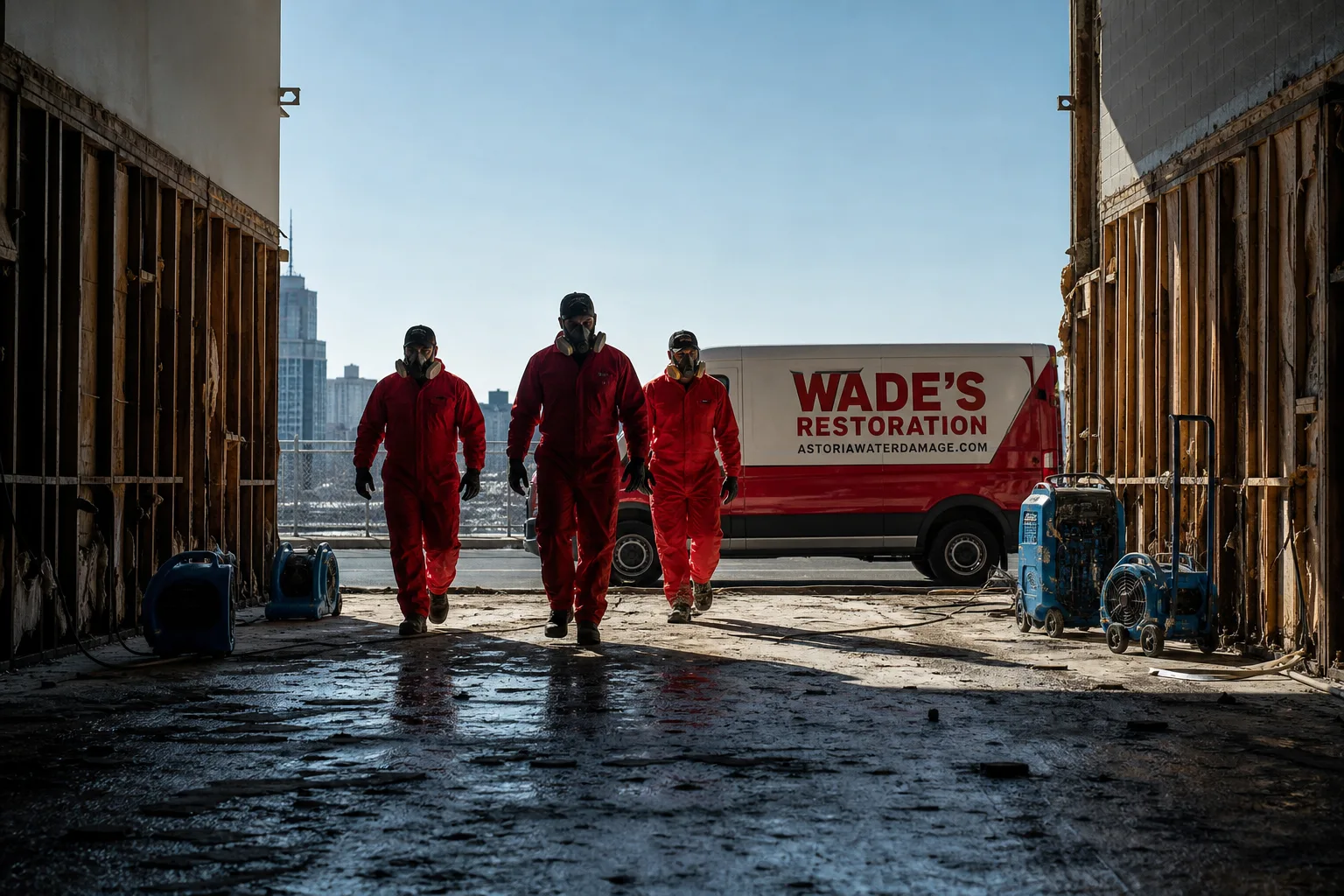
Free visual inspection and a written scope of work before any mitigation begins - photos, moisture readings, and drying logs go in your claim file
The scope we write is the scope we bill. Anything new gets shown to you, in writing, before we touch it.
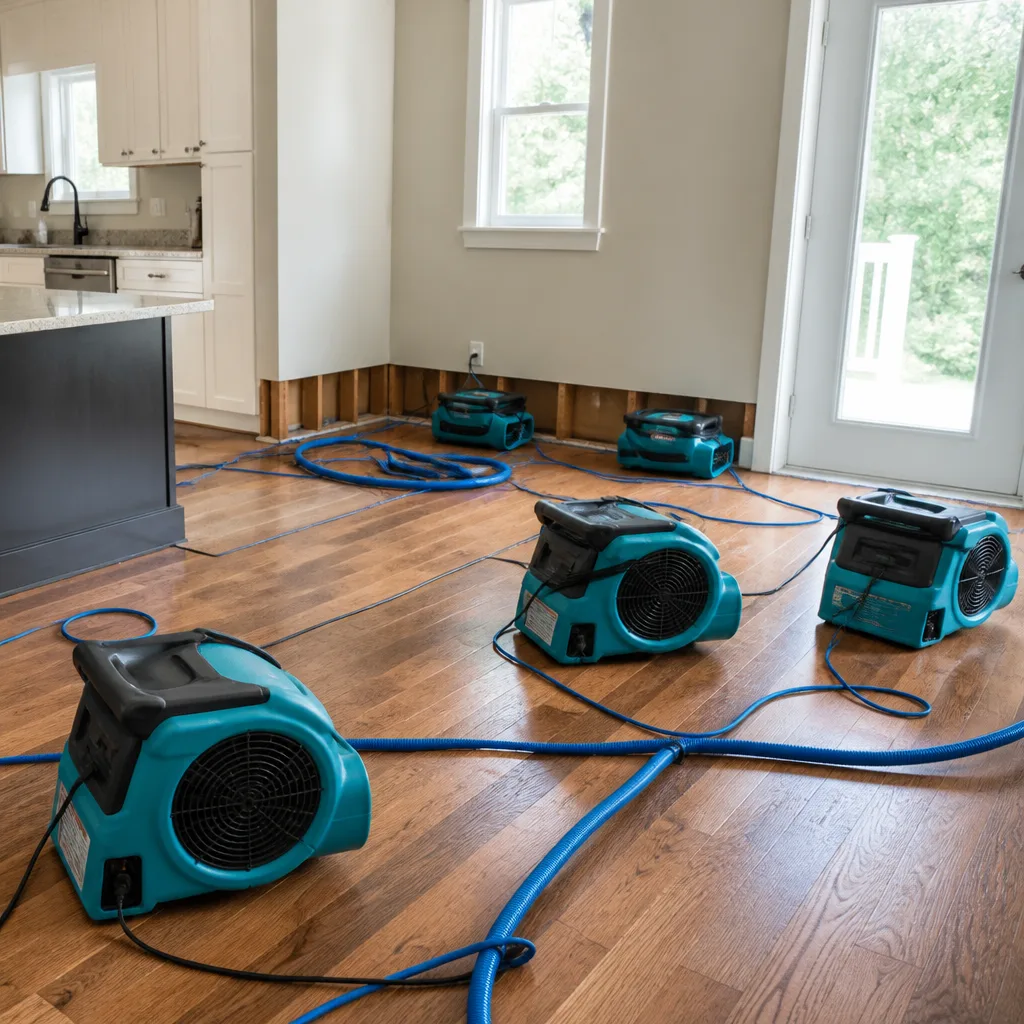



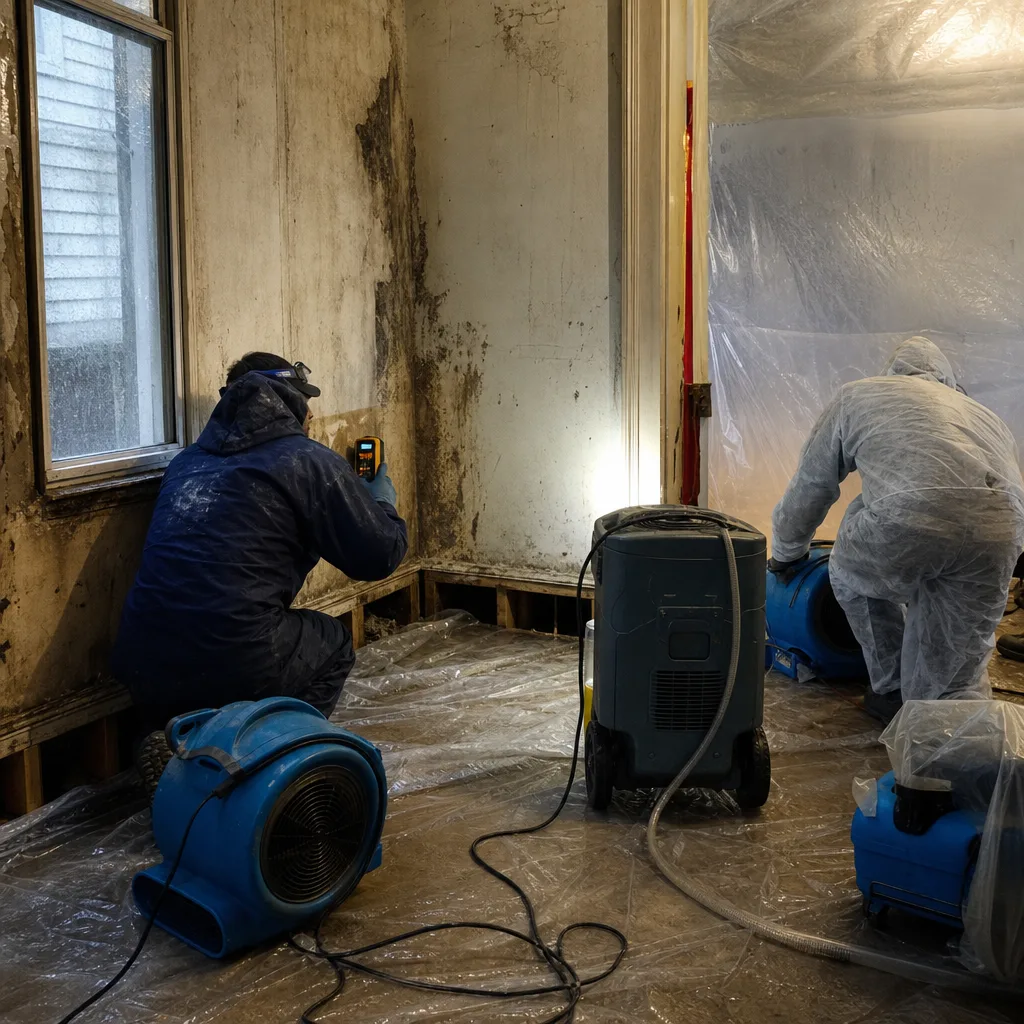 Before
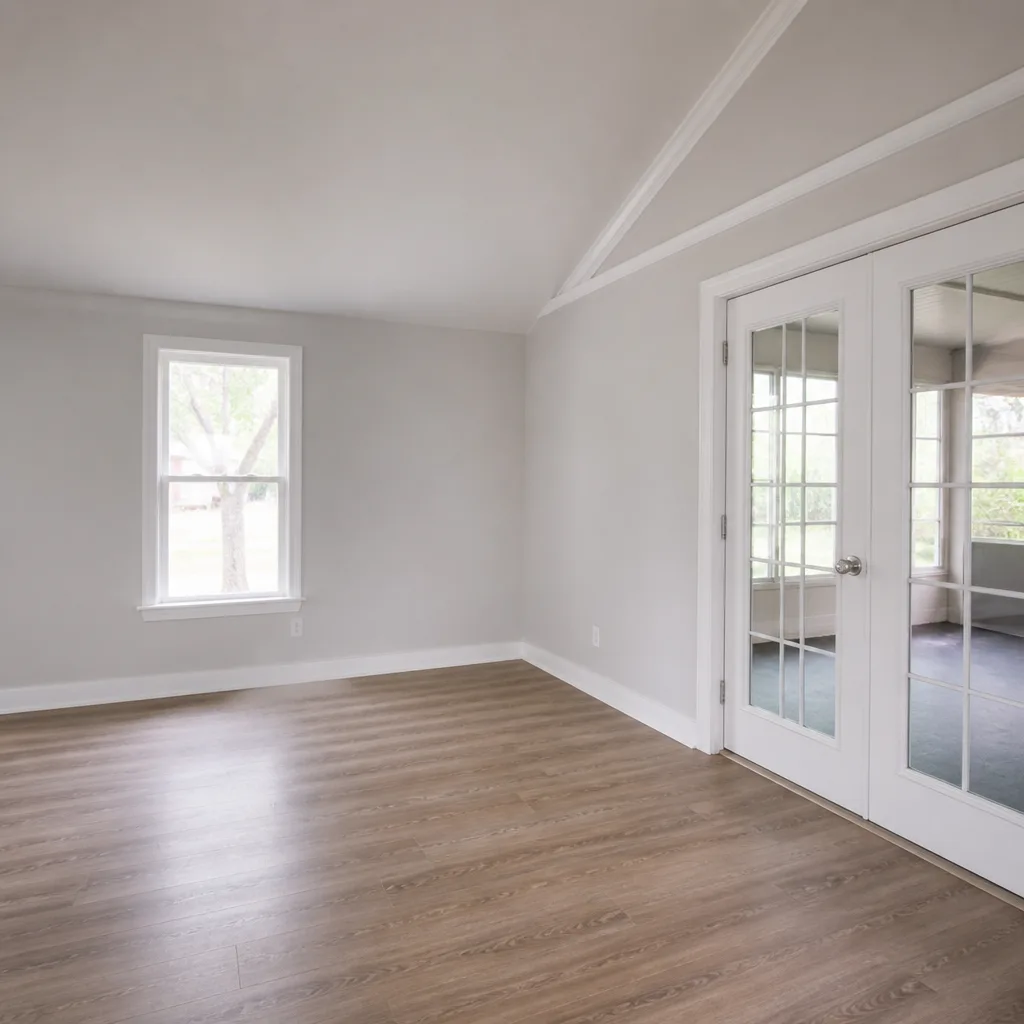
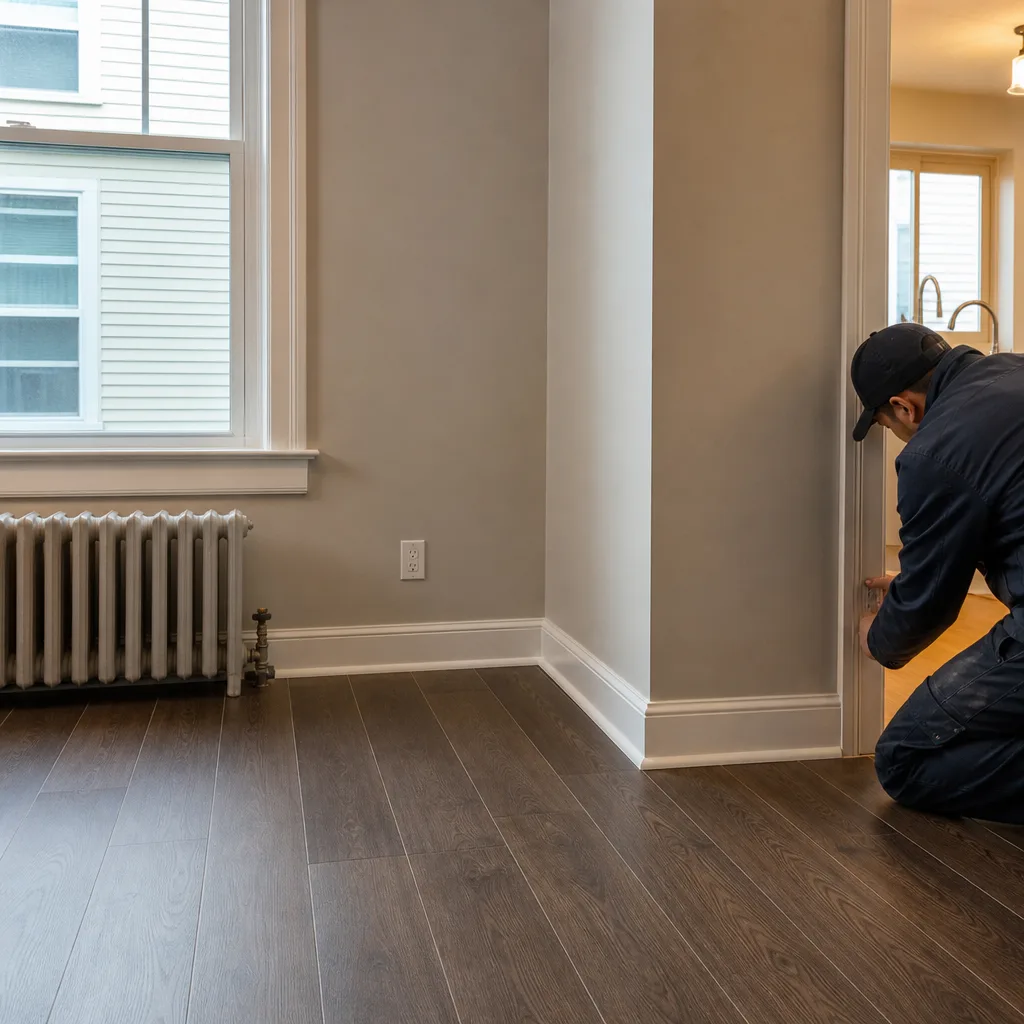 After
After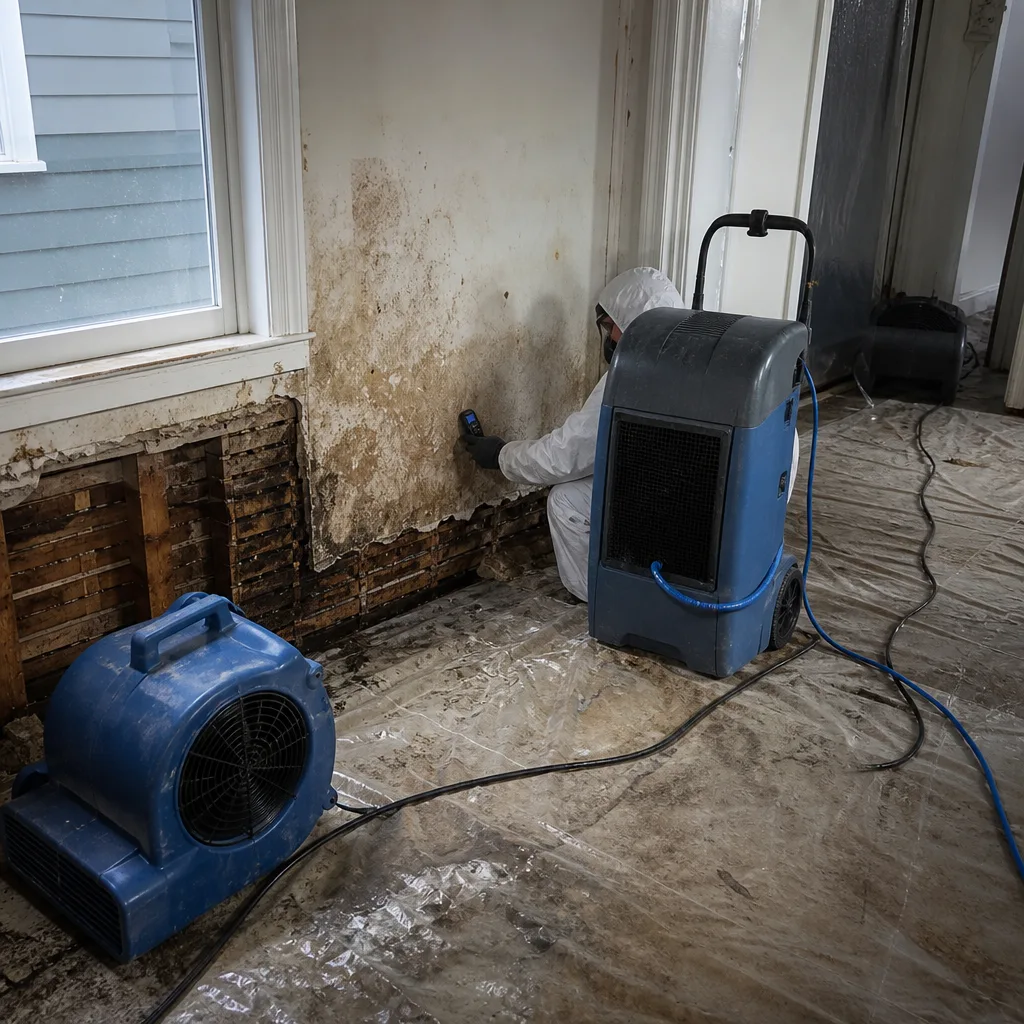 Before
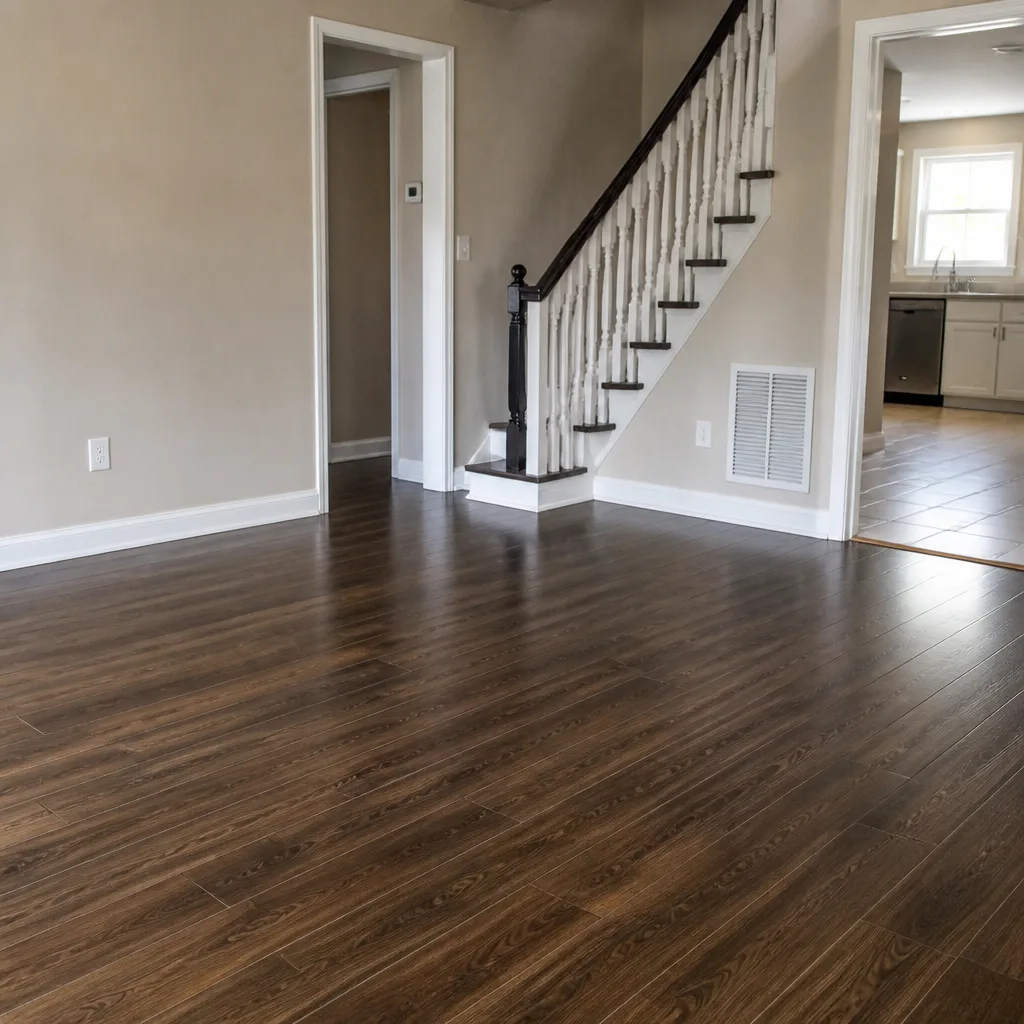
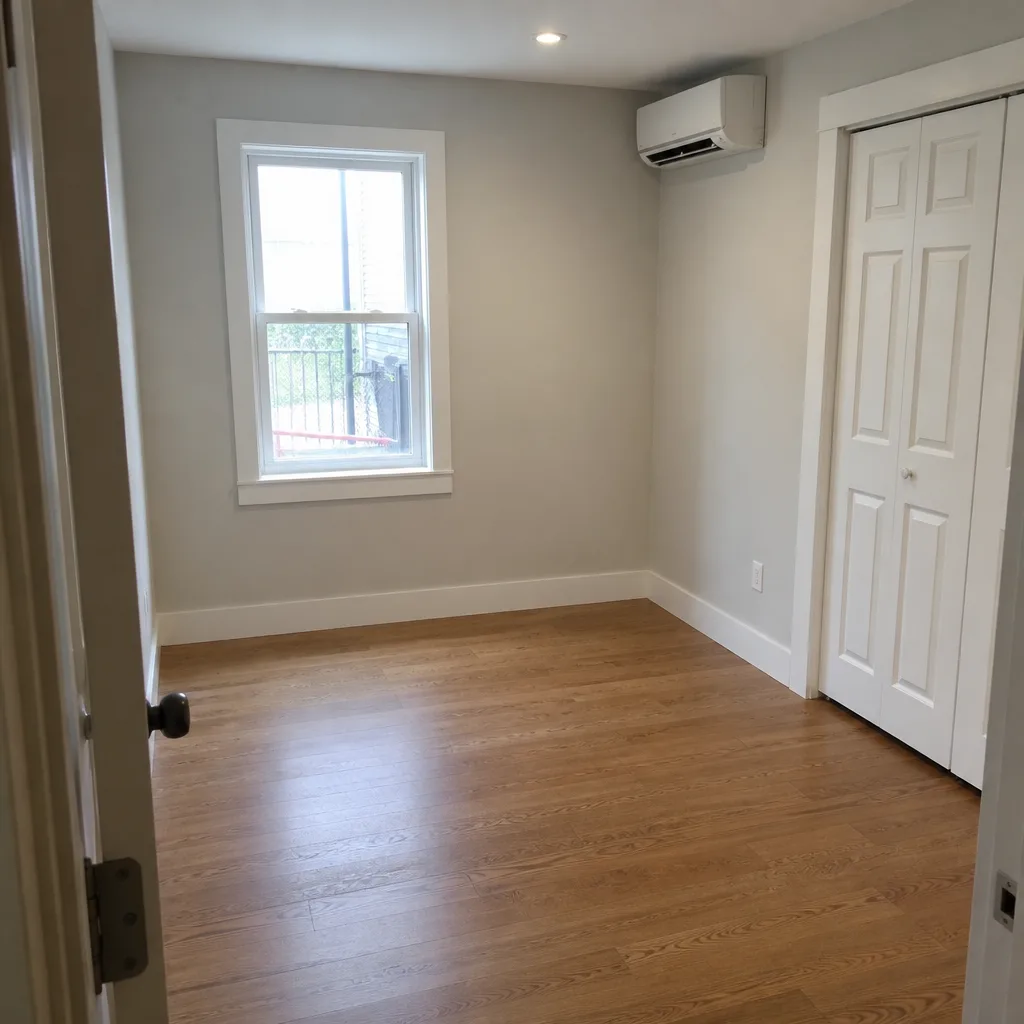 After
After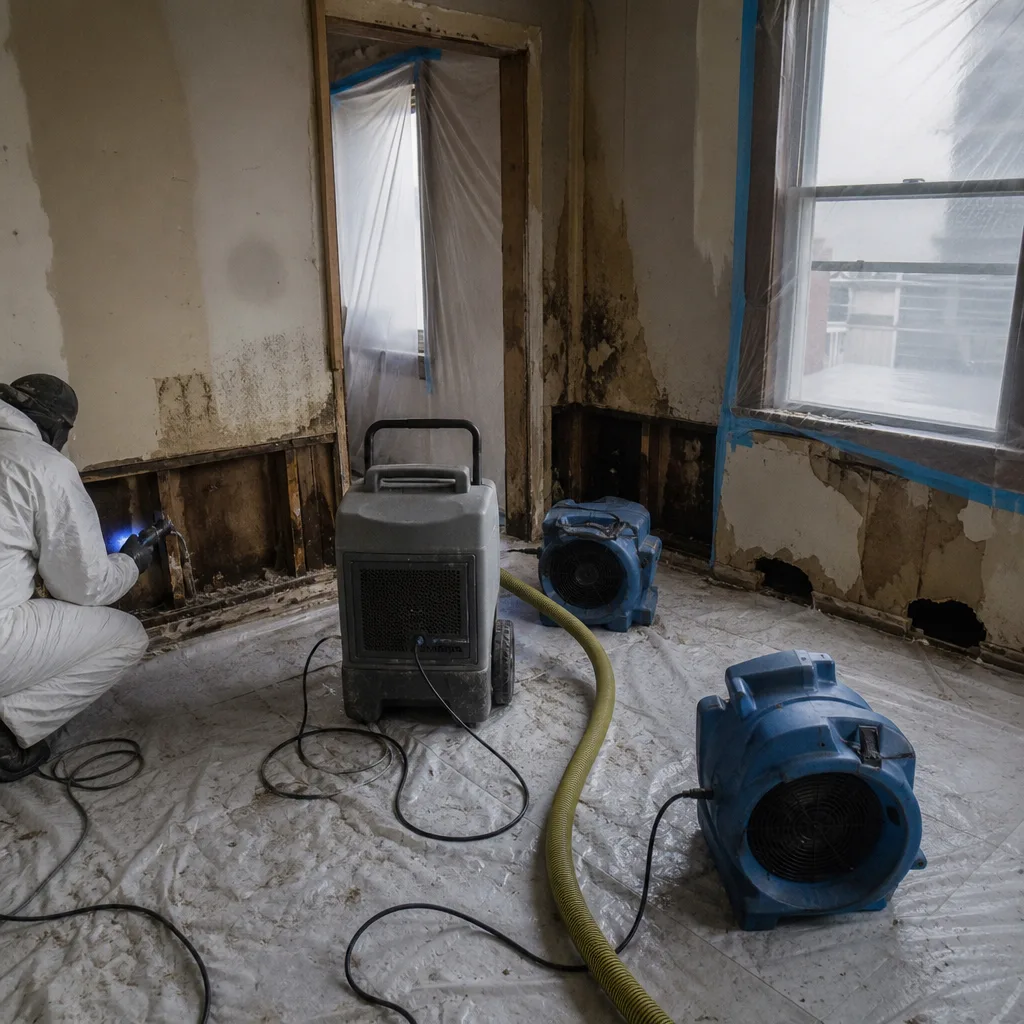 Before
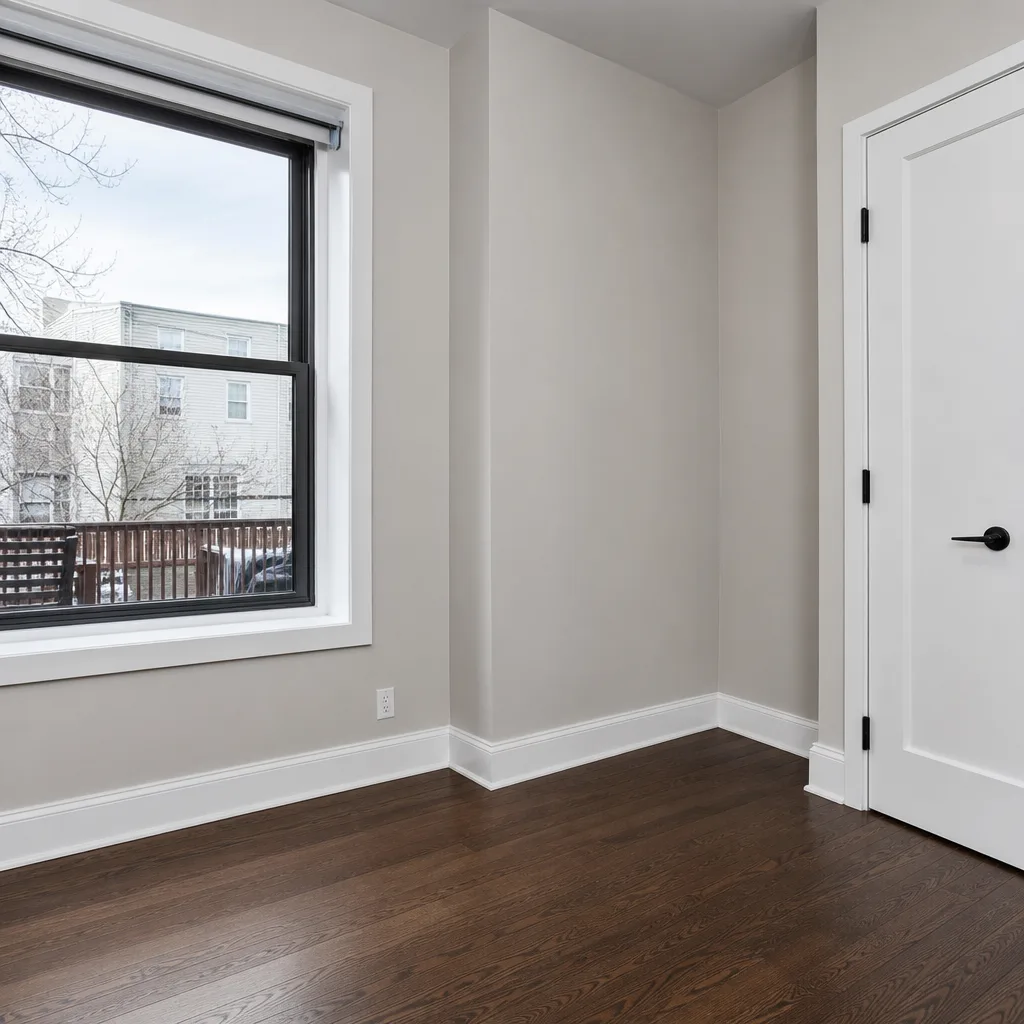 After
After24/7 Emergency Reconstruction & Cleanup in Long Island City
Storm surge from the East River or a sewage backup from Newtown Creek doesn’t wait for business hours. When water gets into a Long Island City loft, a Hunters Point high-rise unit, or a Dutch Kills basement, the clock starts on structural damage immediately. Our crews are on call around the clock and can be inside the Long Island City area within the hour, not the next day. Call (363) 208-1526 and you’ll reach a live person, not an answering service. Wade Ferris answers his own phone, and he can have water extraction running before your floorboards start cupping. The first hour decides whether you’re cleaning drywall or replacing it.
The free visual inspection is just that: free. No trip charge inside the county. We look, we measure, we write down what we see, and we hand you a scope before any work starts. That’s the Wade’s Restoration way, and it’s been that way since 2007.
Understanding Reconstruction & Cleanup Severity in Long Island City Properties
Long Island City’s building stock splits into two very different worlds, and each one fails differently when water or fire hits. The post-2010 curtain-wall towers along the Hunters Point waterfront pack sophisticated mechanical, electrical, and plumbing systems into tight vertical chases. Water travels down those chases fast, spreading through multiple floors before anyone notices a stain on the ceiling of the unit below. Moisture mapping and thermal imaging matter here because the water is rarely where the visible damage is.
Then there are the converted early-1900s industrial lofts across Dutch Kills and the interior blocks. These buildings have brick and timber bones, original wood floors, and often, asbestos-containing materials and lead paint hidden behind decades of renovation layers. Before any wall comes open in one of these lofts, a hazmat assessment has to happen. Not because we’re slow. Because releasing asbestos particulates into a living space during reconstruction is exactly the kind of thing that turns a cleanup into a health emergency. We also classify water correctly from the first reading: Category 1 is clean supply-line water, Category 2 is gray water from appliances, and Category 3 is black water, the kind that carries sewage and pathogens. In Long Island City, ground-floor floods after heavy rain are almost always Category 3, and treating them as anything less is how you get mold behind baseboards two weeks later.
Why Long Island City Property Owners Choose Wade’s Restoration
- Wade answers his own phone. At 2 a.m., you get Wade, not a call center. If he says a crew is coming, a crew is coming.
- Documented moisture logs, every single day. We take readings every day and hand you the full log at the end. Almost nobody in this trade does that.
- IICRC-certified teams. Our techs hold WRT and FSRT certifications, and for mold jobs we run AMRT-certified crews with full containment.
- Free visual inspection. We look before anyone signs anything. Written scope before a single tool comes off the truck.
- Direct insurance billing. Wade deals with your adjuster directly. You don’t relay messages between two sides.
- One team from extraction to reconstruction. No handed-off subcontractors you’ve never met. The same crew that pulls the water rebuilds the wall.
Our Reconstruction & Cleanup Process
Inspection & Assessment
We start with thermal imaging and moisture meters to map where water actually went, not just where it pooled. This tells us what comes out, what gets dried, and what gets rebuilt.
Extraction & Stabilization
Standing water goes first. We use truck-mounted extraction where access allows and portable XPower units in high-rise units where a truck can’t reach.
Drying & Dehumidification
Dri-Eaz air movers and Phoenix dehumidifiers run until daily moisture readings return to baseline. In a Long Island City loft with brick walls, that can mean several days longer than drywall construction - one reason Water Damage Restoration in Long Island City takes specialized planning.
Cleaning & Sanitization
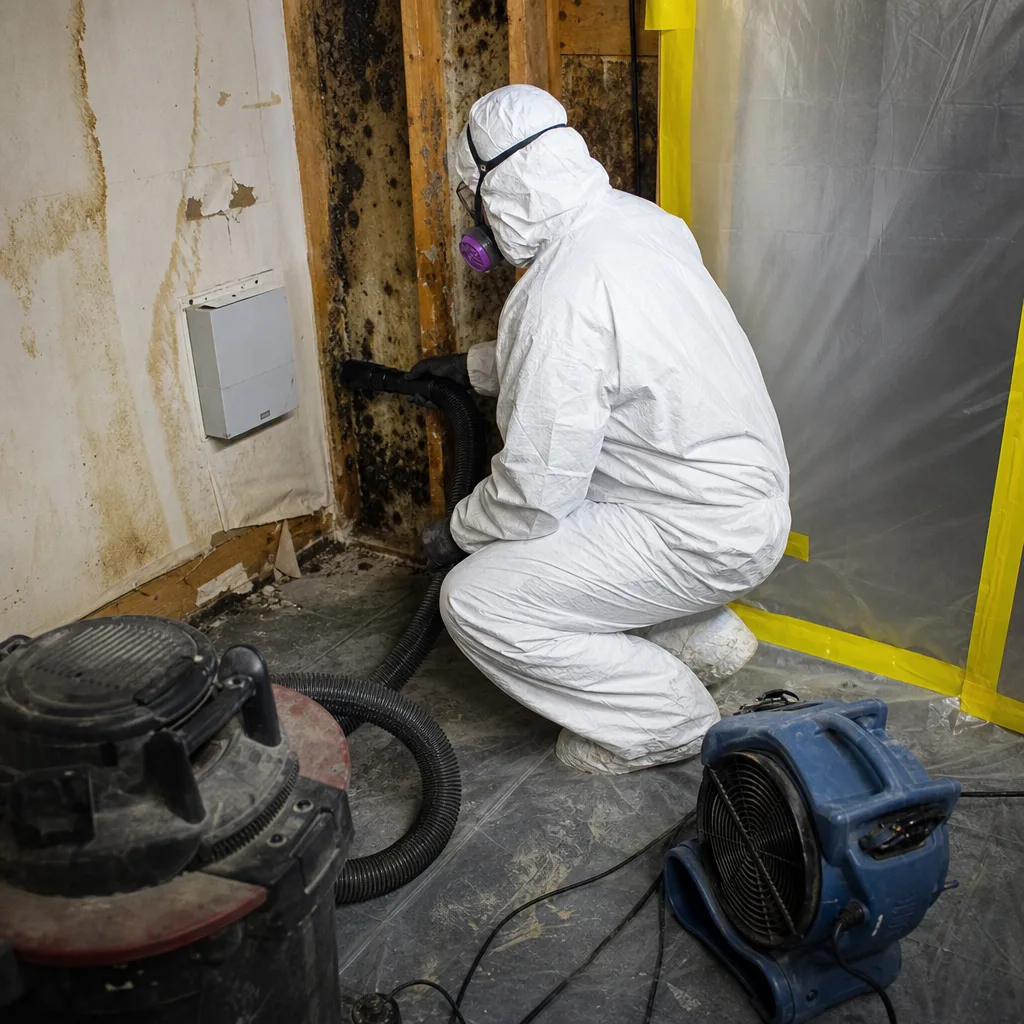
Category 3 water means antimicrobial treatment before anything dries. We also run HEPA air scrubbers during any work that disturbs lead paint or asbestos-containing materials.
Contents Restoration & Pack-Out
Furniture, rugs, and personal property get photographed, documented, and moved out for cleaning or off-site restoration. Nothing gets thrown away without a written decision from you.
Repairs & Restoration
Drywall goes back up, flooring gets replaced, paint gets matched. We coordinate with your building’s management in high-rises, and we pull permits where Long Island City Commercial Restoration projects require them.
Need Emergency Reconstruction & Cleanup in Long Island City Now?
Crews minutes away, answering live 24 hours a day. The sooner we start, the less it costs.
Working With Your Insurance Company
Insurance claims live and die on documentation, and the documentation has to start in the first hour. That’s why we photograph every room before anything moves, log moisture readings daily, and write a line-item scope that your adjuster can actually read. Wade has spent nearly two decades talking directly with adjusters, and he knows what they need to see: photos with timestamps, drying logs with readings, and a scope that matches the policy language. You don’t have to be the person stuck in the middle, relaying questions between your carrier and a contractor.
What We Provide Your Insurer
- Thorough documentation of the loss
- Photos of all damage, room by room
- Moisture readings and drying logs
- A detailed, line-item scope of work
- Direct coordination with your carrier
Built for Long Island City’s Loss Calendar
Long Island City sits at the confluence of the East River and Newtown Creek, much of it at or near sea level, and the loss calendar here follows the water. January deep freezes burst supply lines in pre-war lofts and modern high-rises alike, and a burst line on the 14th floor of a curtain-wall tower is a multi-floor event by the time the water stops. Spring brings thaw and basement seepage, especially in the older loft blocks where foundations have been holding back groundwater for a century. Summer thunderstorm flash flooding is the one that catches people off guard: rain overwhelming the combined sewer system, which then backs up into ground-floor spaces through floor drains and toilets.
Then there’s storm season. Nor’easters and the occasional tropical system push East River surge into the low-lying blocks of Hunters Point and along Newtown Creek. Sandy showed what that looks like in 2012, and the FEMA Flood Zone AE designation across large swaths of the neighborhood means storm-surge flooding isn’t a hypothetical here. It’s a repeat event. Our Reconstruction & Cleanup team plans for this calendar, so when the storm hits, we’re not scrambling to figure out what Long Island City needs. We already know.
Reconstruction & Cleanup Across Long Island City’s Neighborhoods
In Dutch Kills, the pattern is unmistakable. Older brick and timber industrial lofts, many converted to residential decades ago, sit over combined sewer laterals that offer no separation between stormwater and sanitary flow. After a heavy rain, ground-floor and basement spaces with floor drains and even without them flood with sewage-tainted water. That means our first move is containment and antimicrobial treatment, not just pumping water out. On a recent job after a nor’easter pushed East River surge into a ground-floor loft on 47th Avenue near Newtown Creek, moisture mapping showed water had wicked 22 inches up the drywall. Because the building’s combined sewer lateral had backed up, we treated the water as Category 3, set containment, removed all saturated drywall and insulation to studs, and ran Dri-Eaz air movers and dehumidifiers for six days until readings returned to pre-loss condition. Then we rebuilt.
Hunters Point is a different animal: luxury high-rise towers with expansive glass, complicated MEP systems, and residents who expect white-glove service. Water damage here tends to travel down elevator shafts and pipe chases, and building management is usually heavily involved. We coordinate directly with supers and property managers, which is a different skill than working in a private loft. Along Vernon Boulevard and Jackson Avenue, the mix of older walk-ups and newer commercial spaces means every call is its own thing. One block is a 1905 warehouse conversion; the next is a 2018 glass tower. That’s the job in Long Island City.
Specialized Reconstruction & Cleanup Services We Offer in Long Island City
Full-Service Reconstruction
From studs to paint, we rebuild what water or fire took out. That includes structural repairs, custom millwork matching in older lofts, and coordinating with building management in Hunters Point towers where even moving sheetrock requires freight elevator scheduling.
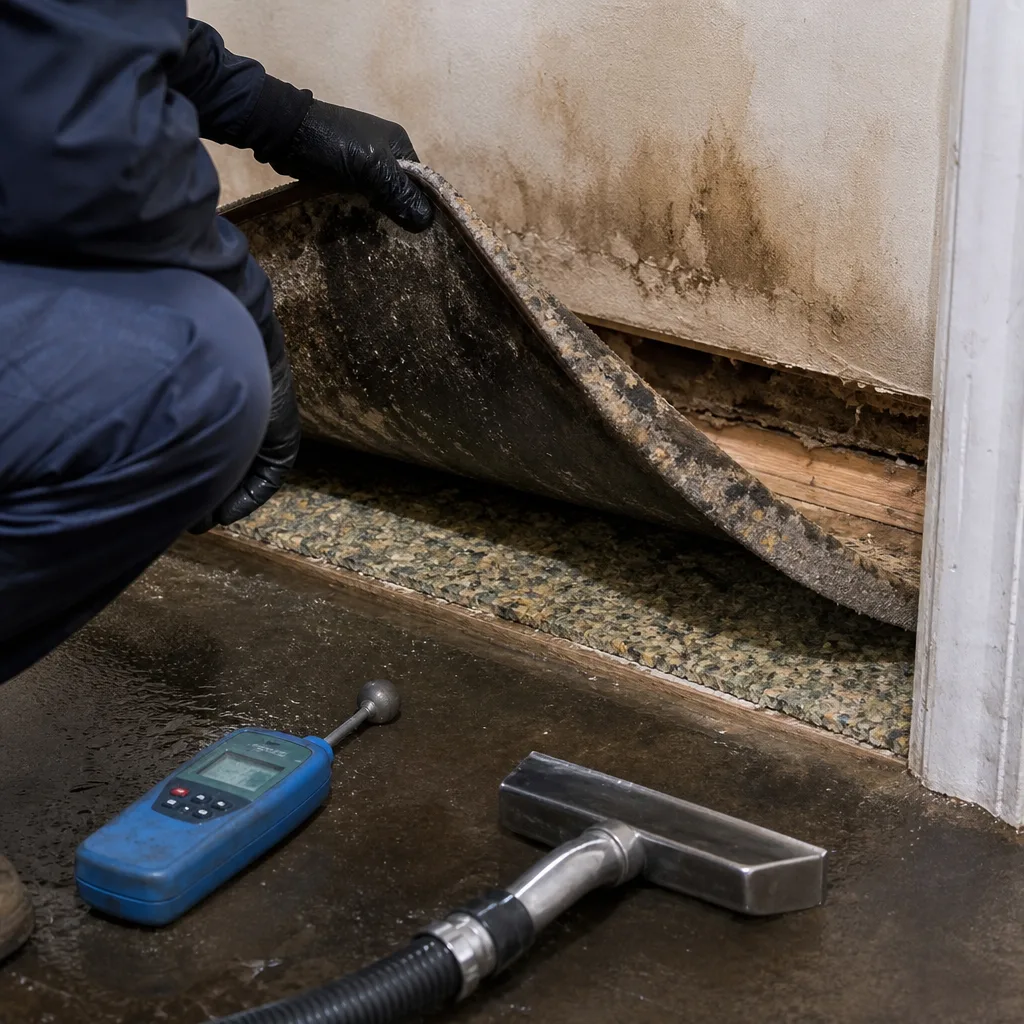
Drywall & Flooring Repair
Long Island City’s older buildings often have original oak or maple flooring that can sometimes be saved after a flood if drying starts fast enough. Where it can’t, we replace it with material that matches, not whatever the big-box store had on sale.
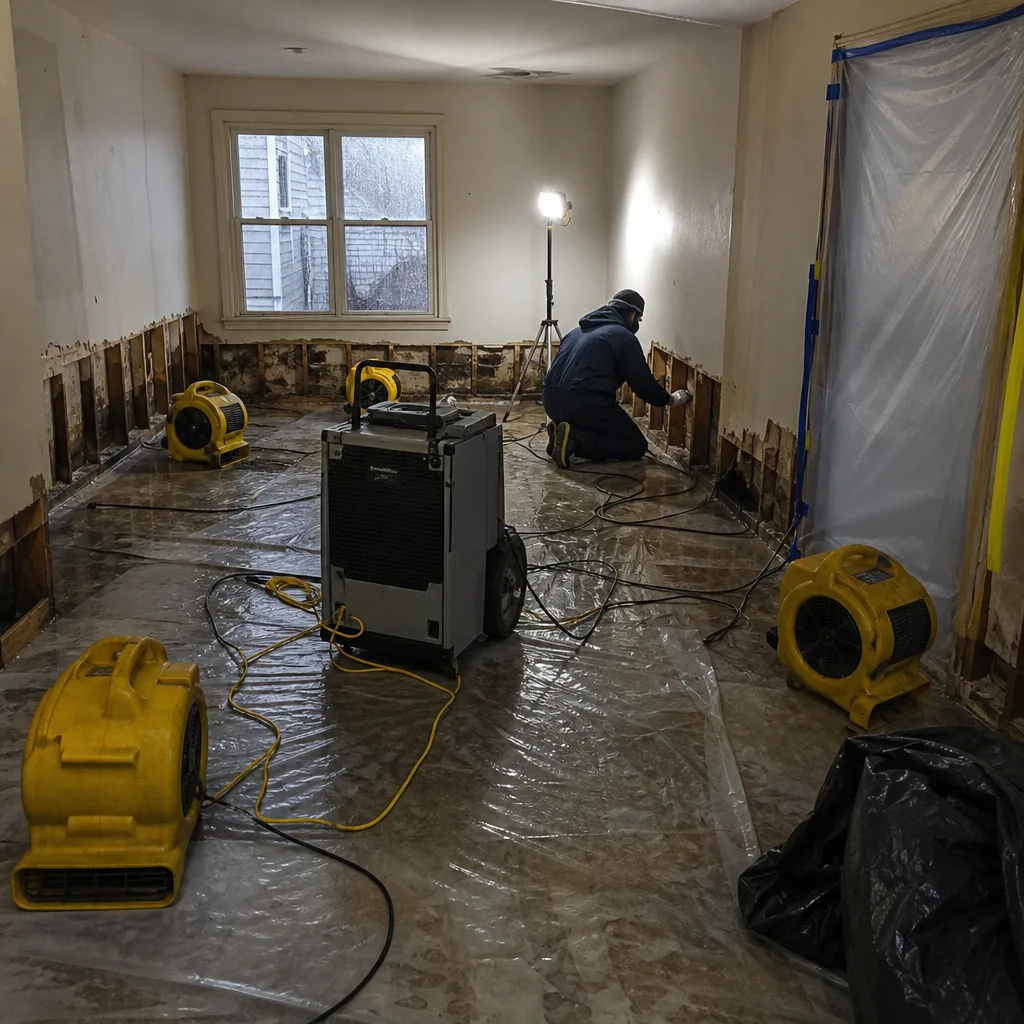
Contents Restoration
Furniture, clothing, rugs, documents. We pack out, clean, store, and return everything with a documented chain of custody. In Category 3 events, anything porous that was in contact with contaminated water gets a written recommendation, not a silent toss.
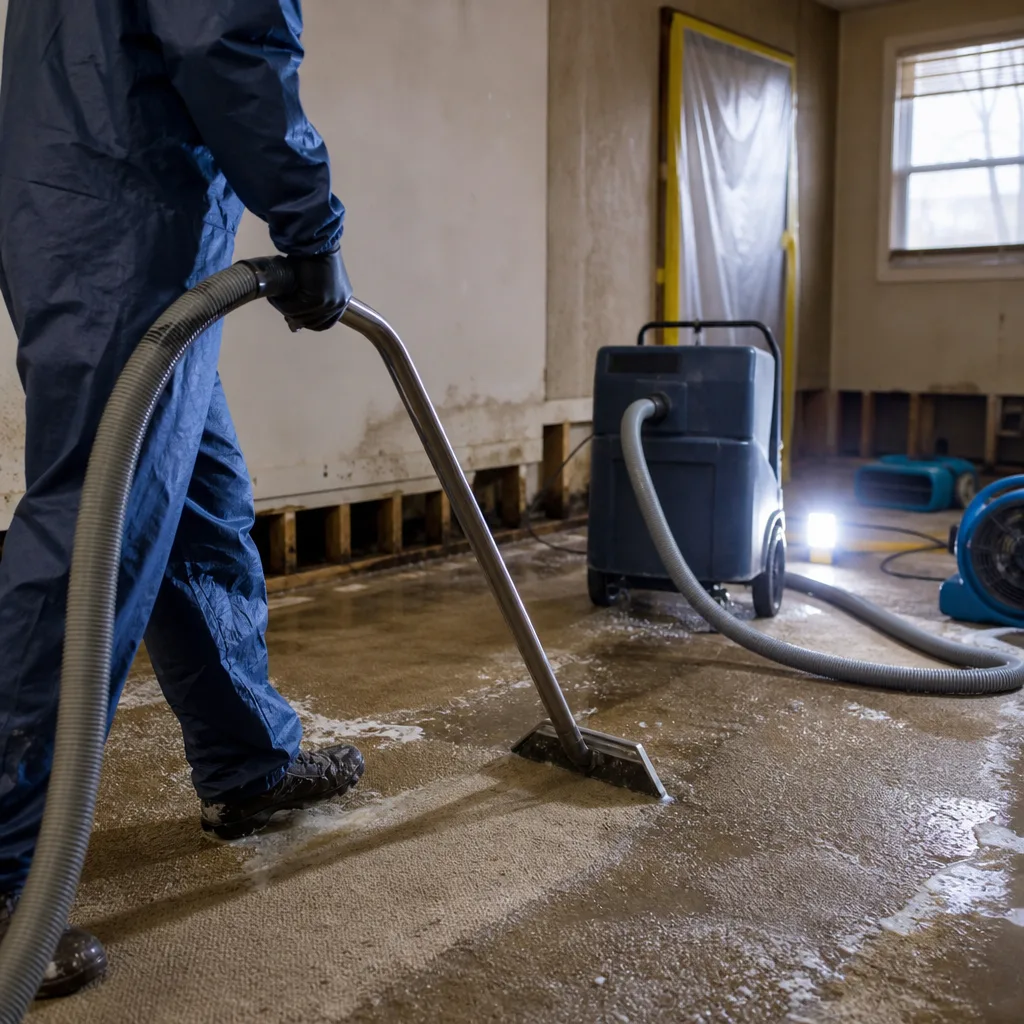
Carpet & Upholstery Cleaning
Not every flood is a total loss. When carpet and upholstery can be saved, we clean it with professional equipment and verify dryness before anyone walks on it again.
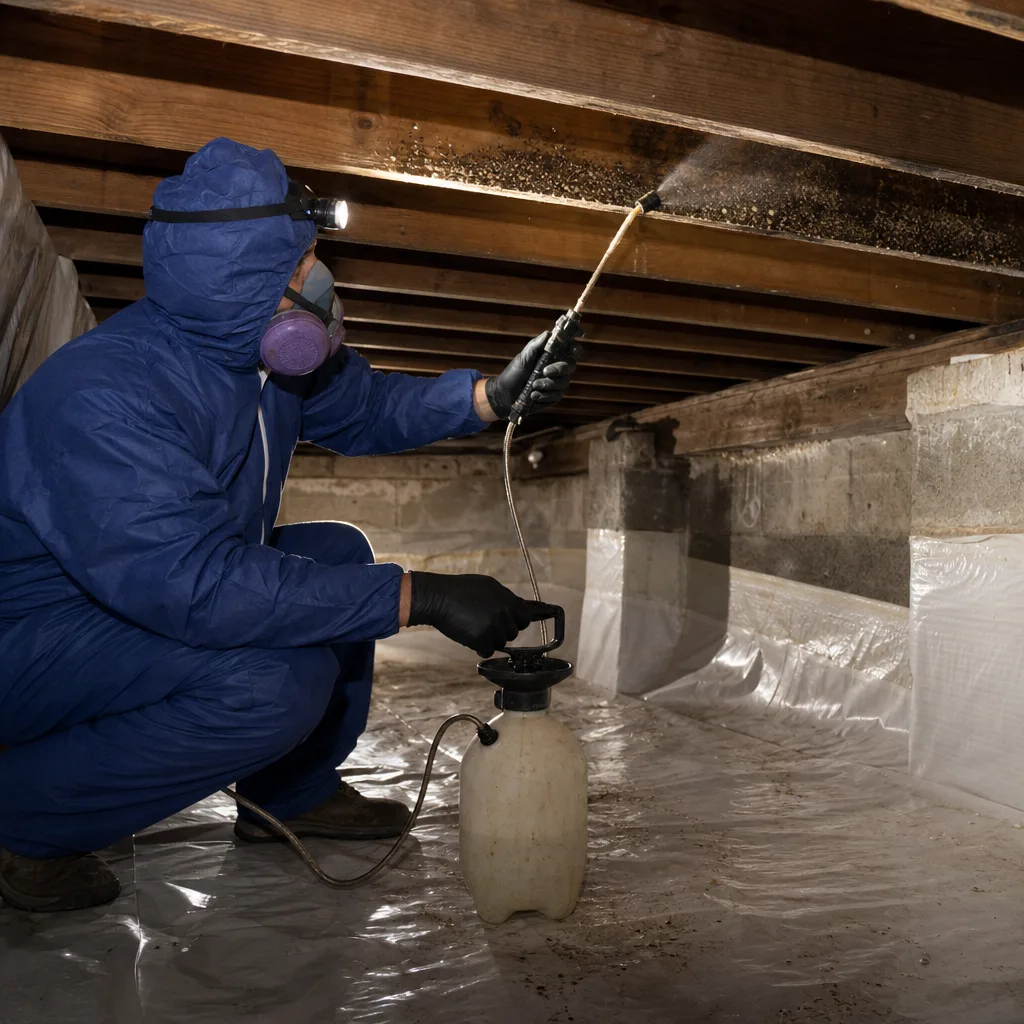
Post-Construction Cleanup
After we rebuild, we clean. Dust from drywall sanding, debris from demo, construction residue. We leave the space ready to live in, not “ready for you to hire a cleaning service.”
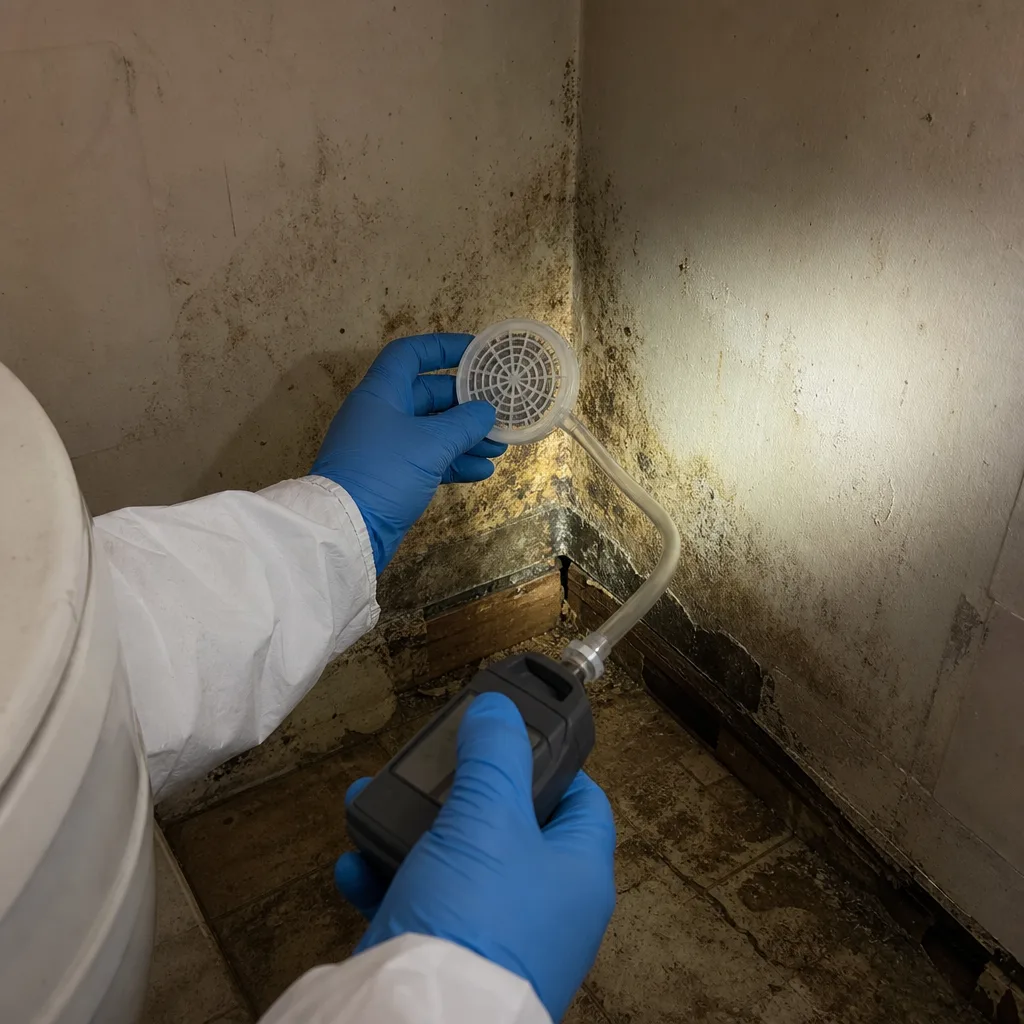
Insurance Claim Documentation
Wade’s crew documents everything from hour one: photos, moisture readings, daily logs, and a line-item scope that speaks the insurer’s language. You get a copy of everything.
What happens when you call
- 1
A real person answersNo phone trees - you reach a local pro.
- 2
You get an upfront price rangeHonest numbers before anyone is dispatched.
- 3
A background-checked tech heads outLicensed & insured, dispatched right away.
- 4
You approve before work beginsNothing starts until you say go.
Reconstruction & Cleanup Costs in Long Island City, NY
A small Category 1 water cleanup with minimal drywall removal in a Long Island City apartment typically runs $1,800 to $3,500. A Category 3 sewage backup in a Dutch Kills loft where drywall, insulation, and flooring all come out often lands between $8,000 and $18,000 before reconstruction. Full storm-surge restoration in a Hunters Point high-rise unit with water damage across multiple rooms can exceed $30,000, and that’s before contents restoration. What moves the price: the category of water, how far it traveled through walls and floors, whether asbestos or lead abatement is required, and whether building management adds access constraints. Insurance may cover most of it. We’ll help you know what’s covered before anyone swings a hammer. Call (363) 208-1526 and we’ll give you a free inspection and a written scope with real numbers.
We Also Serve Cities Near Long Island City
We work across the East River waterfront and inland Queens. That includes Astoria, where newer separated sewer lines sometimes mean a less severe water classification, and Flushing, with its own mix of older housing stock and storm-related flooding patterns. Same crew, same phone number, same promise.
Long Island City Reconstruction & Cleanup Questions, Answered
How do you document wind-driven water damage in a Long Island City curtain-wall tower for an insurance claim?
We photograph the point of entry before anything moves, then trace the water path with thermal imaging and moisture meters through the unit and the chases below it. Photos of wind-driven rain intrusion at window perimeters, time-stamped moisture readings from Day One, and a line-item scope that ties the damage to the storm event, not pre-existing conditions, is what gets the claim paid correctly.
Does Newtown Creek flood contamination change how you clean concrete floors in LIC lofts?
Yes. Newtown Creek is an EPA Superfund site, and floodwater that carries its sediment requires hazmat-level cleaning, not a mop and bucket. We use containment, HEPA air scrubbing, and antimicrobial agents appropriate for industrial contaminants. Standard concrete cleaning isn’t enough when the water came from that creek.
Can you rebuild basement drywall in Dutch Kills after a sewage backup, or does it all need to come out?
In a Category 3 sewage event, all saturated drywall and insulation comes out, no exceptions. Drywall acts like a sponge for sewage-borne pathogens, and cutting it at the water line and leaving the rest is how you get mold behind walls within two weeks - which is why Mold Remediation - Long Island City crews always remove to studs first. We remove to studs, treat the cavity, verify dryness, and rebuild with new material.
What’s the right way to handle asbestos-containing materials in early-1900s LIC lofts during reconstruction?
Before any wall or floor opens, if the building predates the 1980s and hasn’t had documented abatement, we bring in a licensed asbestos inspector to sample. If it’s present, licensed abatement contractors remove it under containment before we proceed. That adds time and cost, but skipping it releases carcinogenic particulates into your living space.
Why do you use separate air movers and dehumidifiers after a storm in Hunters Point high-rises?
Because high-rise units have different drying dynamics than houses. Air movers create airflow across wet surfaces; dehumidifiers pull moisture from the air. In a tower unit, you need both working together, often with an air scrubber, because the building envelope is tight and moisture can’t escape the way it does in a house with a drafty attic.
How fast can you actually get to Long Island City?
If you’re in Long Island City proper, we’re often on-site within 45 minutes to an hour. For a water event, that’s the difference between drying drywall and replacing it. Call (363) 208-1526 and Wade will tell you exactly when the crew arrives.
Will my insurance company work with you directly?
Most will. We bill insurers directly, coordinate with adjusters on scope and pricing, and provide the documentation they require. If you have a policy with a preferred contractor list, we’ll still work with your adjuster to get the claim approved correctly.
What should I do in the first 30 minutes after water enters my Long Island City home or loft?
If it’s safe to do so, shut off electricity to the affected area. Don’t use a wet vacuum on sewage water, and don’t touch anything that may have been in contact with Newtown Creek water. Then call us at (363) 208-1526. We’ll walk you through the next steps while the crew is on the road.
Serving Long Island City, NY - Our Local Coverage Area
We’re based in the Long Island City area and know this community well. Use the map below to see our service coverage - if you’re nearby, we can almost certainly help.
A Straight Deal in a City of Lofts and Towers
Long Island City is a place where a 1905 loft sits across the street from a 2021 glass tower, and the same storm hits both buildings very differently. We’ve worked both. We know the supers in the towers and the history in the lofts. We know that Dutch Kills floods with sewage when the rain comes hard, and we know that Hunters Point surge means water in the MEP chases. Wade Ferris has been doing this work since 2007, and he still answers his own phone. That’s not a marketing line. It’s just how he runs the business.
If your home or building in Long Island City has taken on water, lost a wall, or needs a full rebuild after the storm, call (363) 208-1526. We’ll come look, free. We’ll write down what we find. And we’ll tell you the truth about what needs to happen next.
Written by Wade Ferris, Owner at Wade’s Restoration. Wade has led restoration crews across New York City’s industrial waterfront neighborhoods since 2007.