
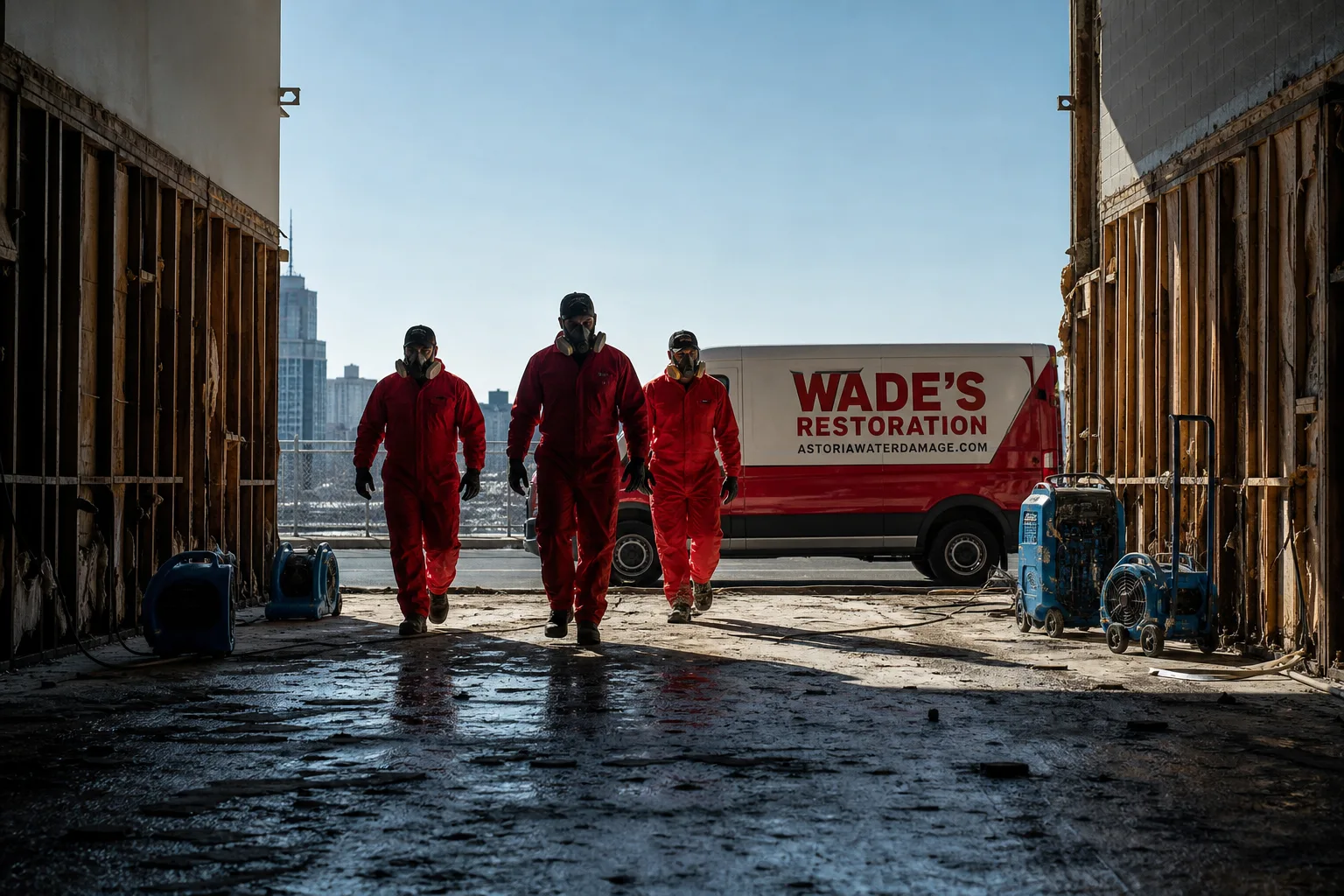
Free visual inspection and a written scope of work before any mitigation begins - photos, moisture readings, and drying logs go in your claim file
The scope we write is the scope we bill. Anything new gets shown to you, in writing, before we touch it.
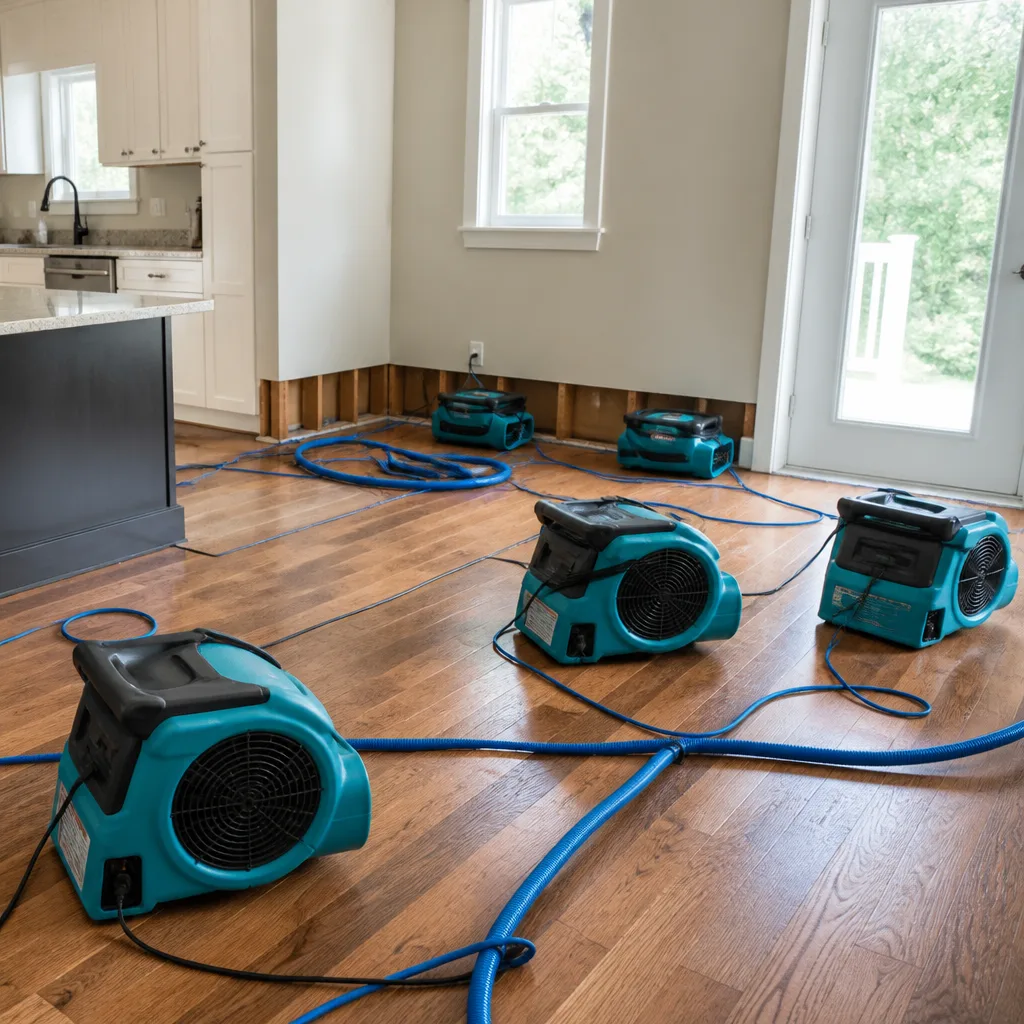
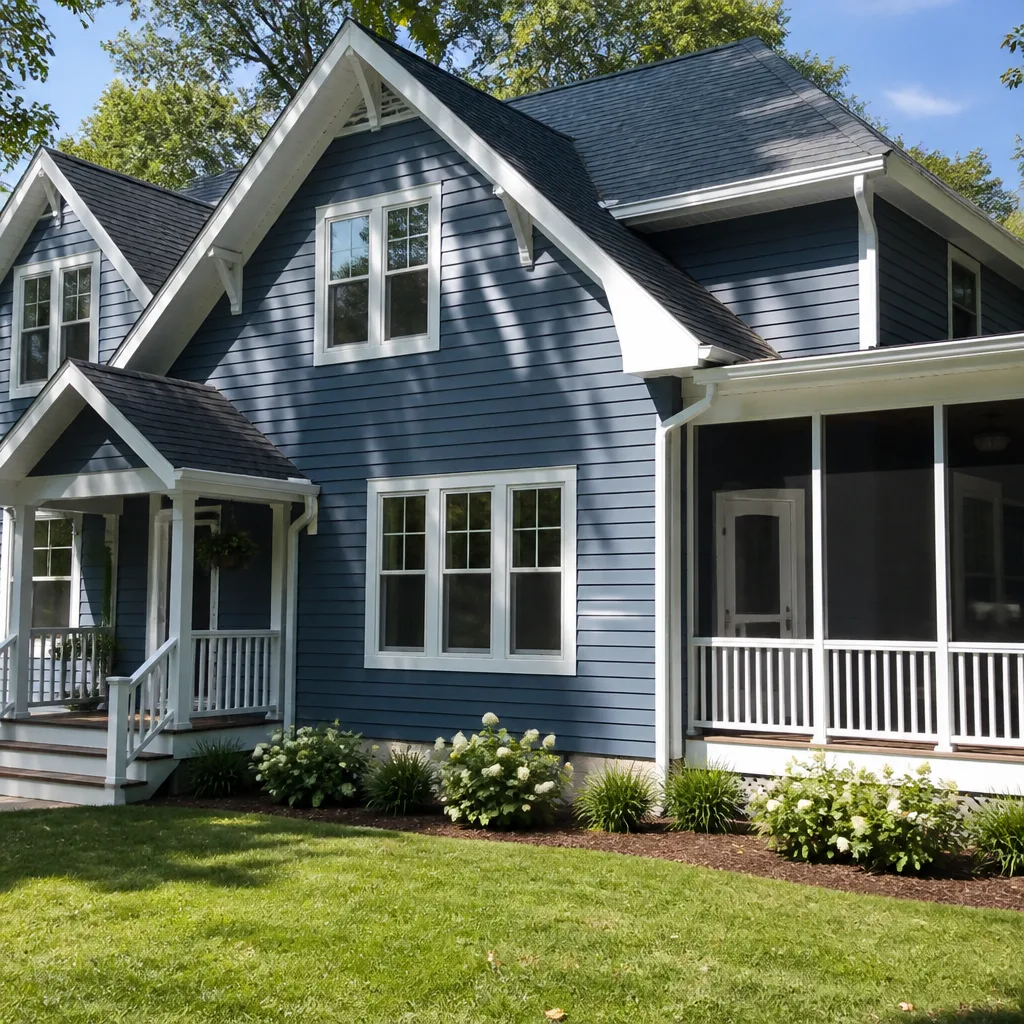
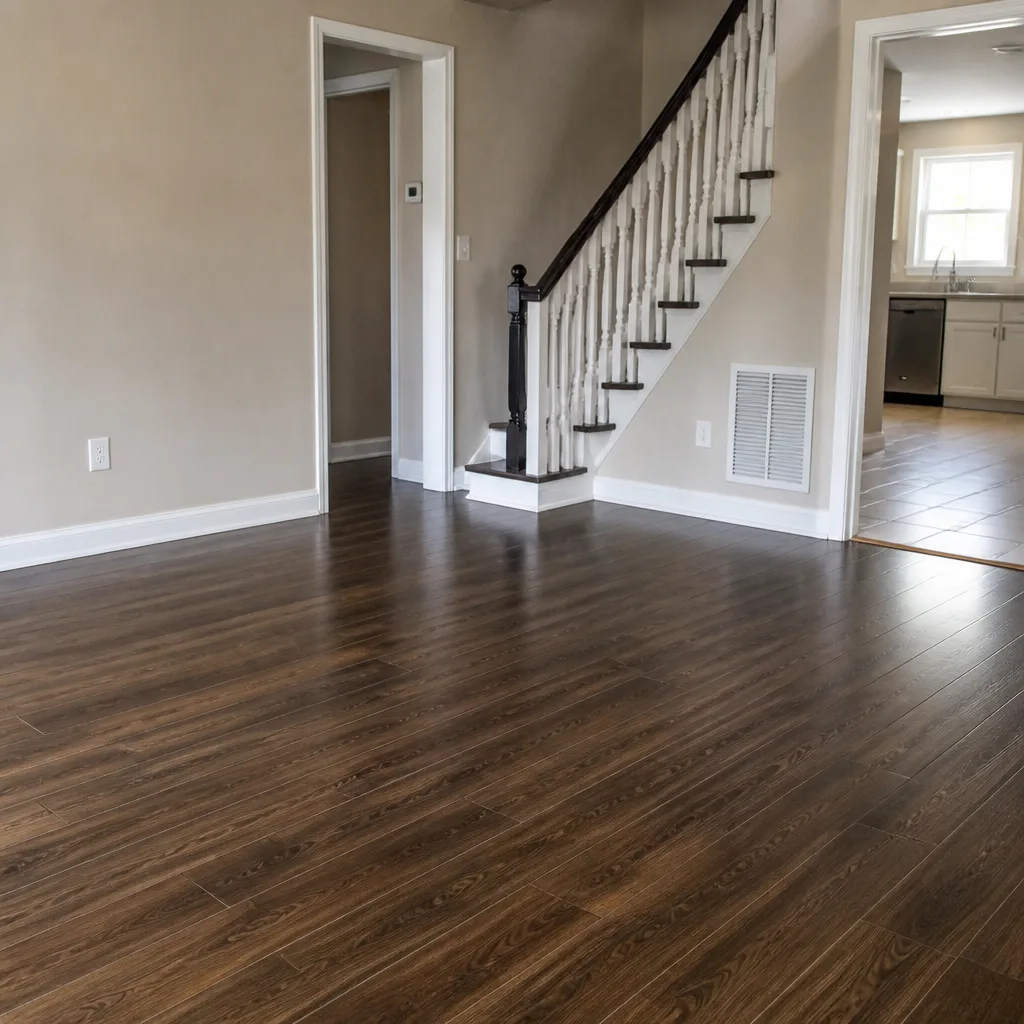
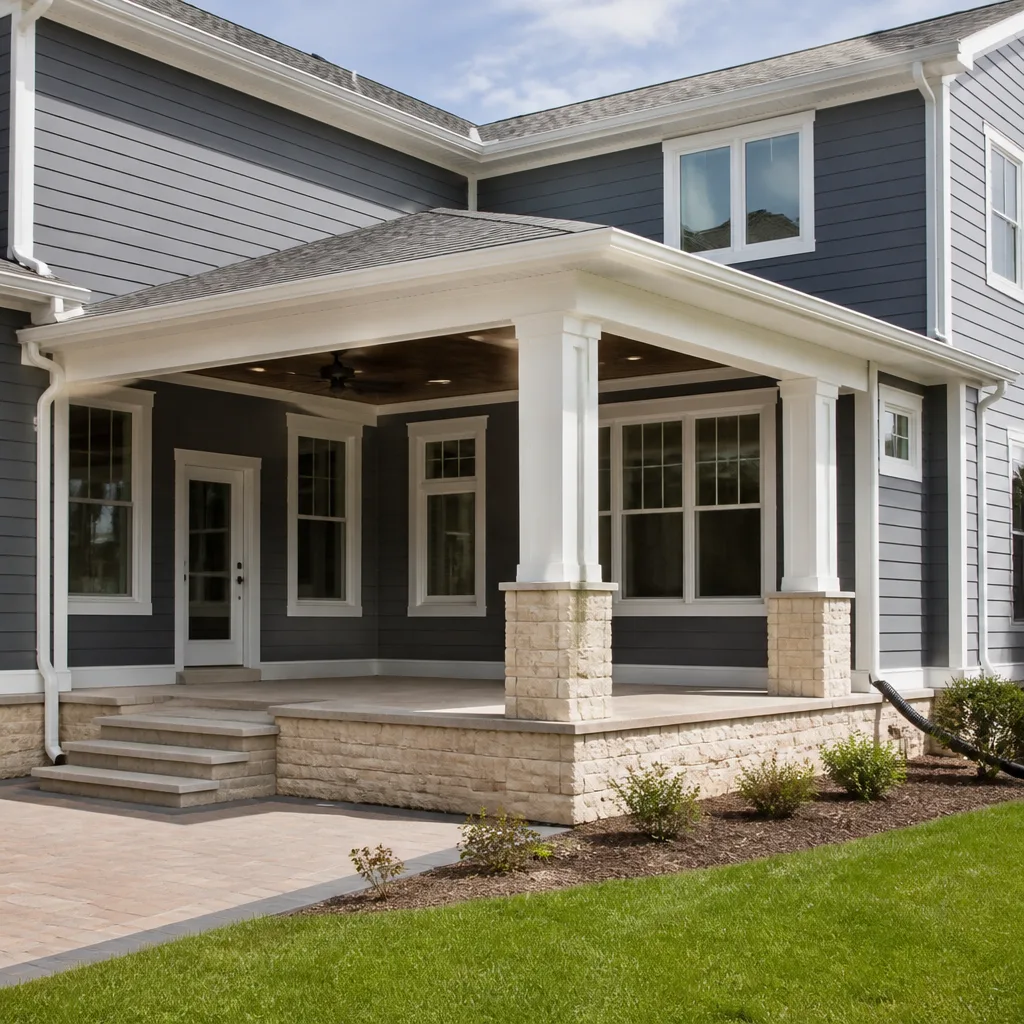
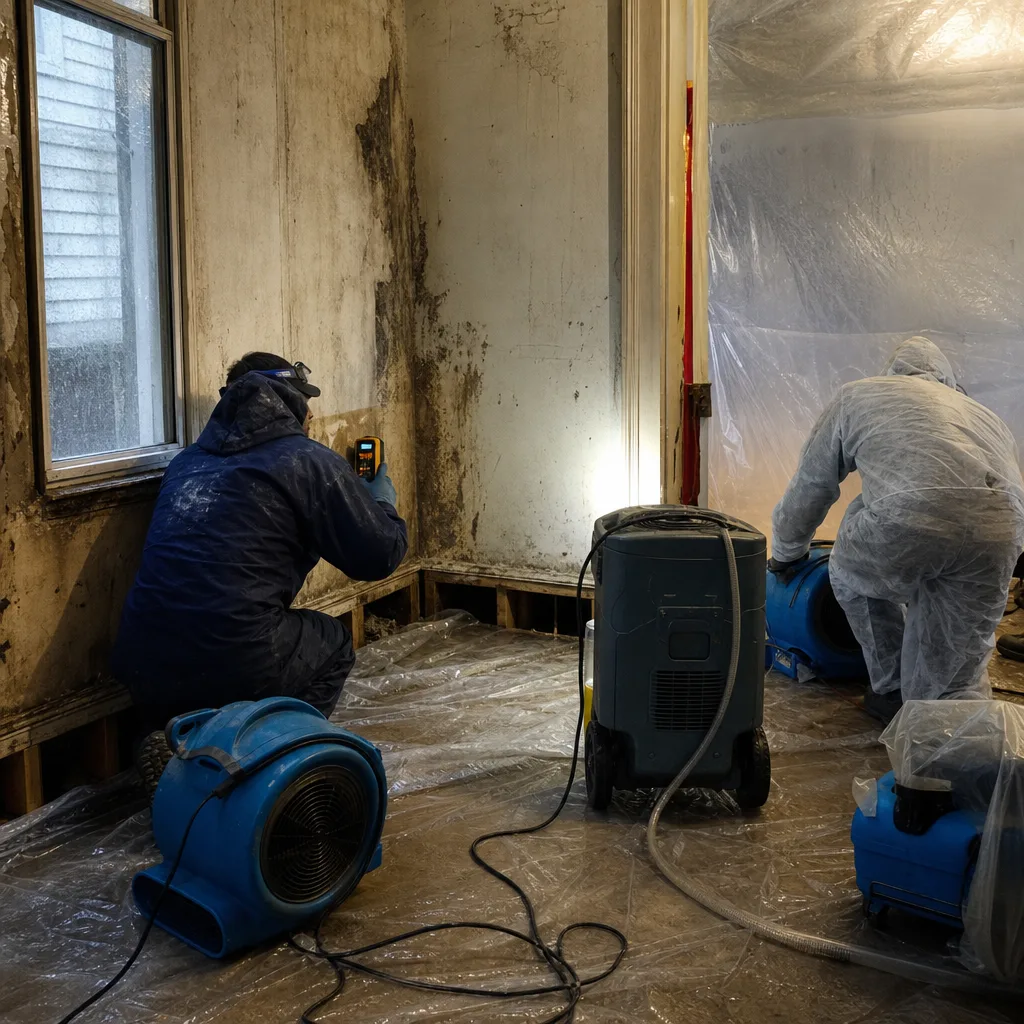 Before
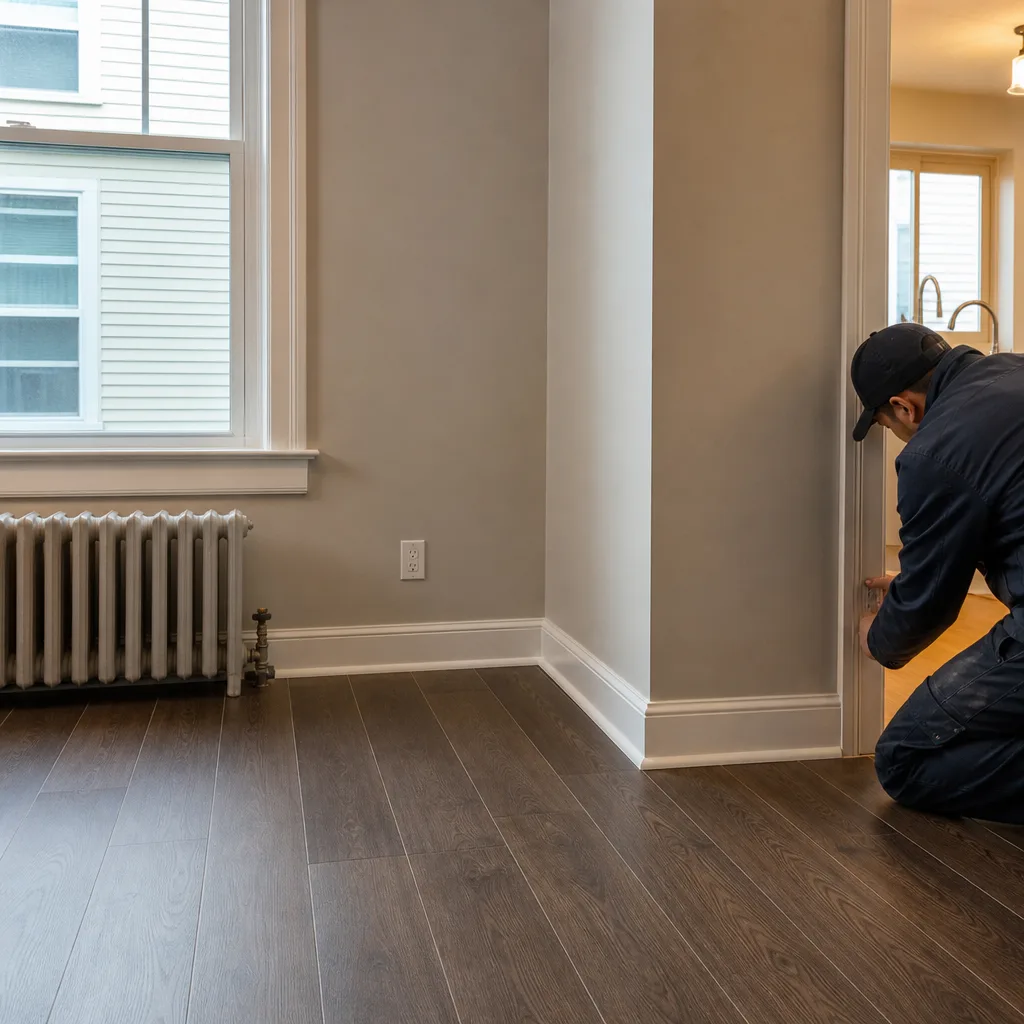 After
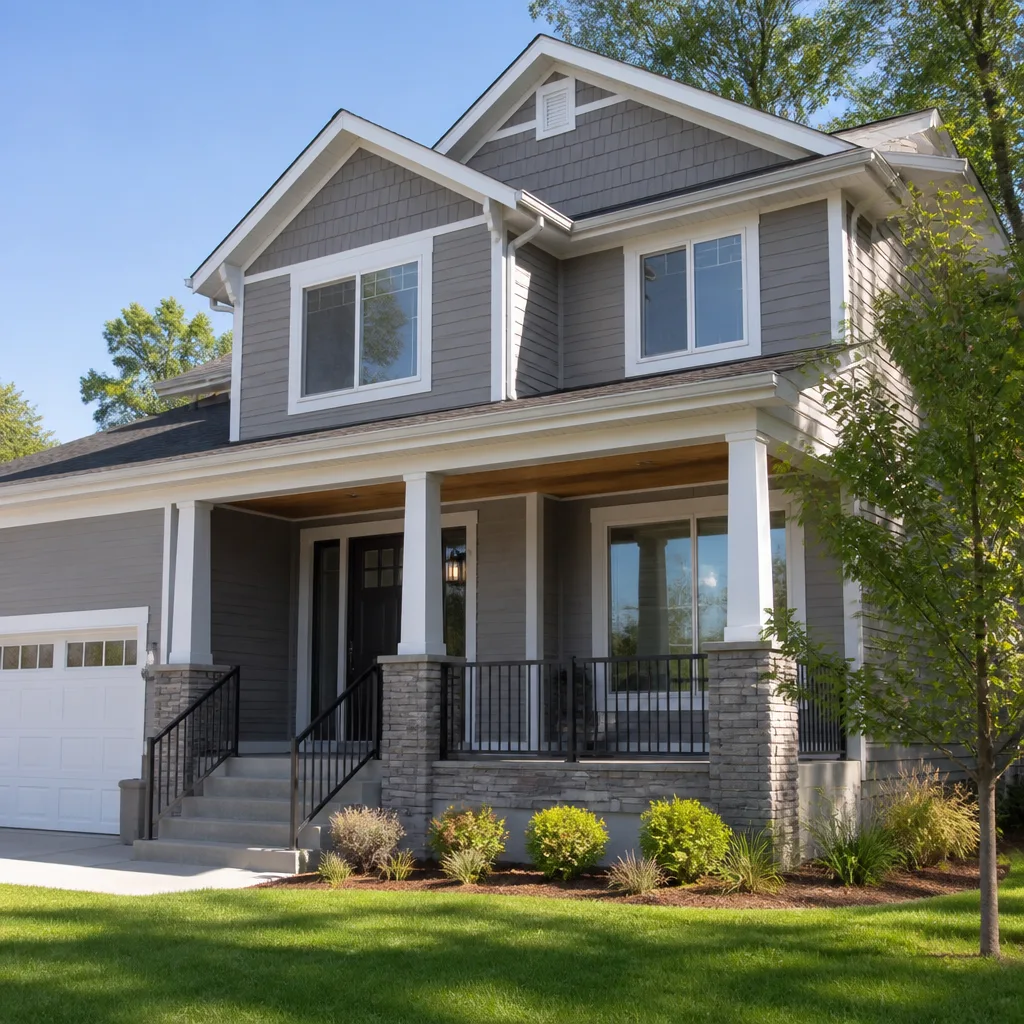
After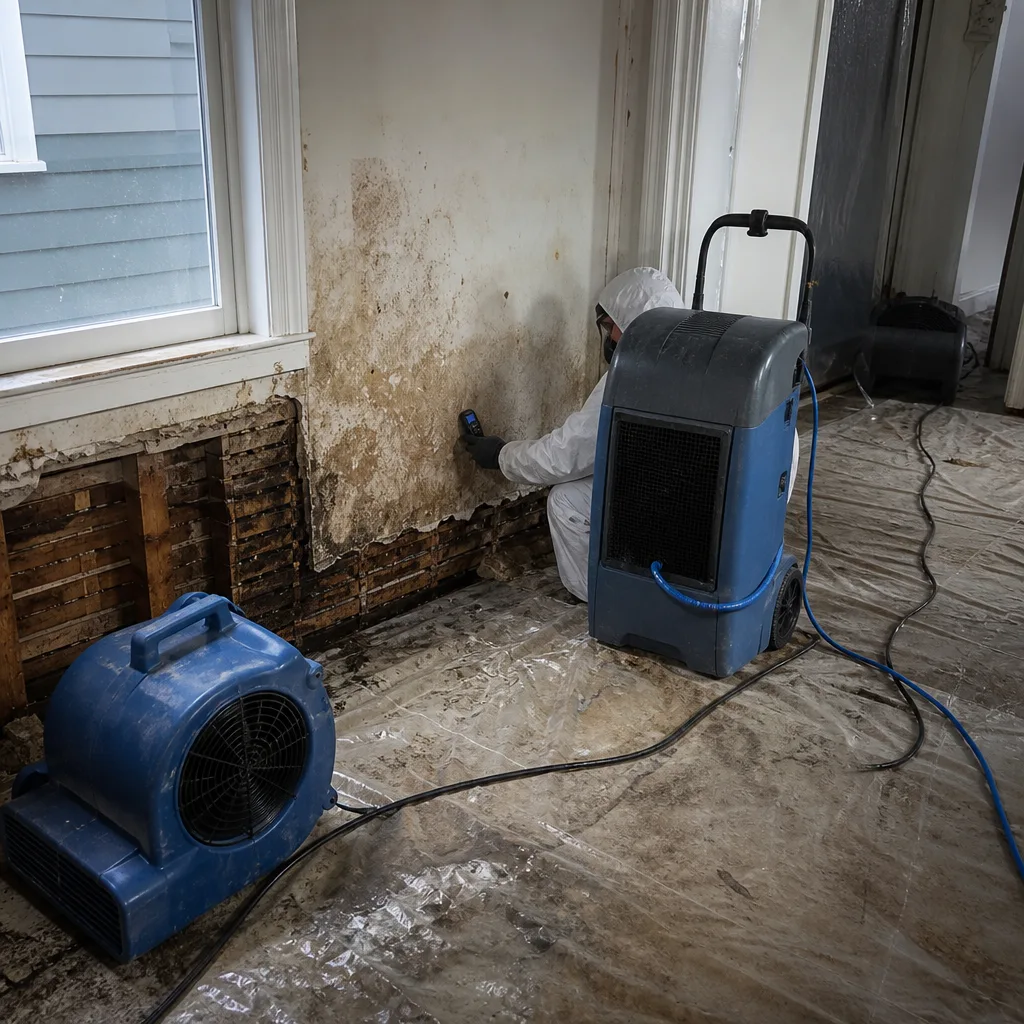 Before
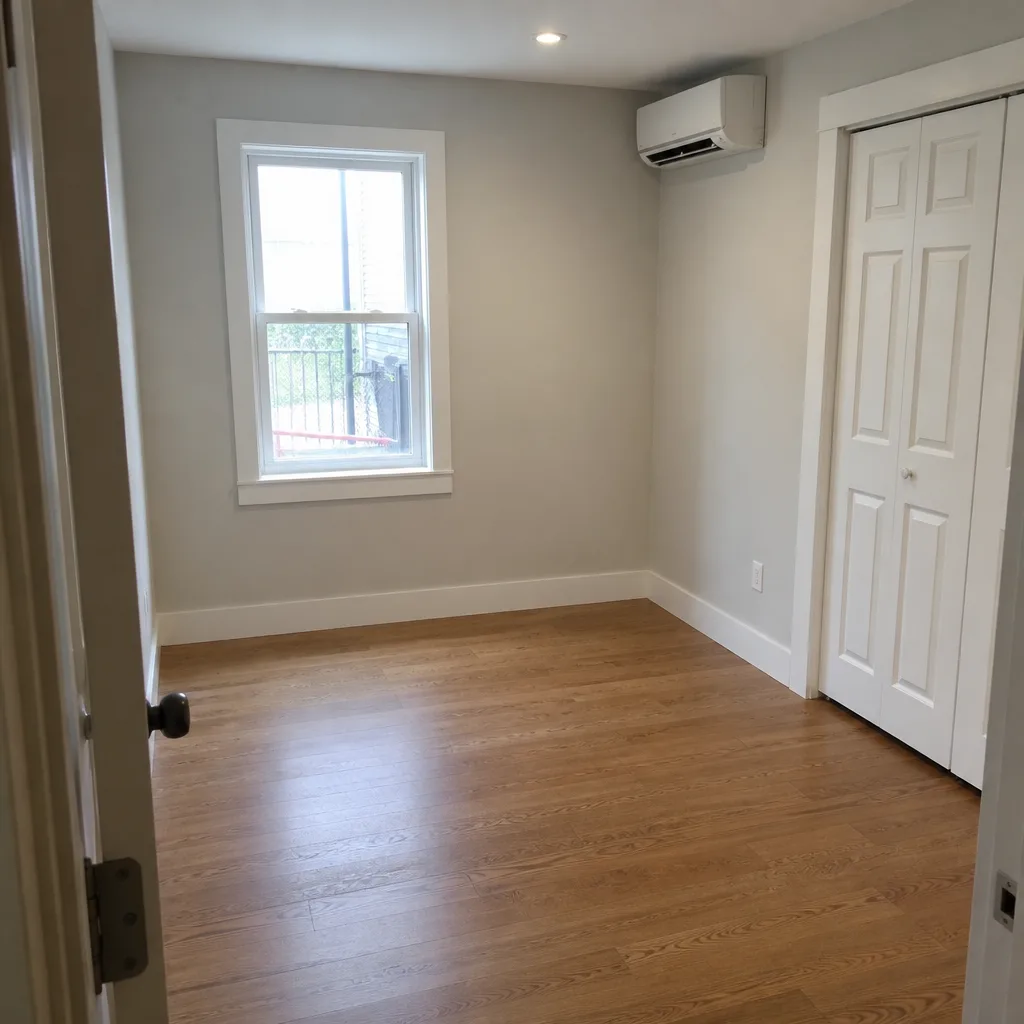 After
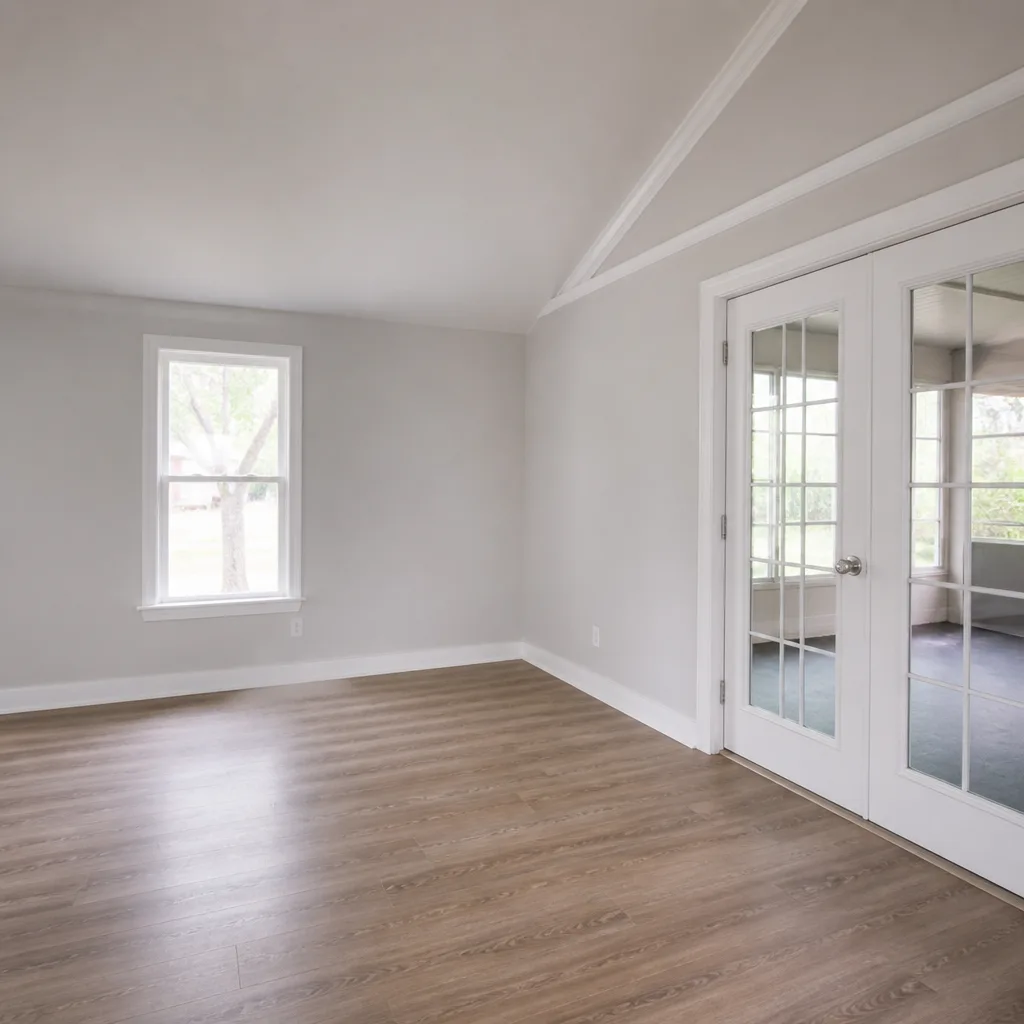
After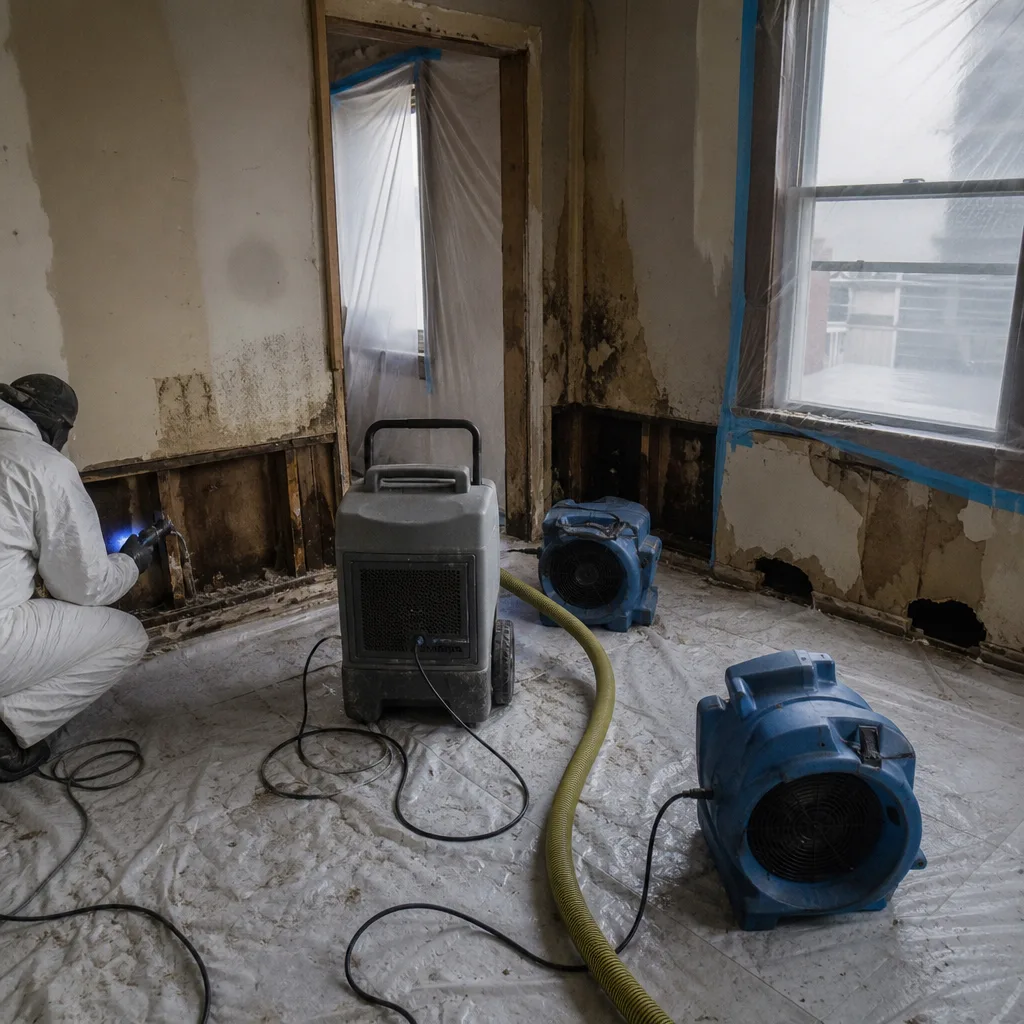 Before
 After
After24/7 Emergency Reconstruction & Cleanup in Midtown Manhattan
Water, fire, or a steam-line rupture in Midtown Manhattan doesn’t wait for business hours, and neither do we. Wade’s Restoration answers live around the clock and can have a crew moving toward your building within minutes of your call to (363) 208-1526. The first hour after water intrusion in a pre-war high-rise or a converted office tower matters more here than almost anywhere else in New York: horsehair plaster wicks moisture deep into wall cavities, cast-iron risers keep feeding a leak until the super isolates the valve, and every delay means more tenant spaces, more floors, and more insurance carriers involved. We do a free visual inspection first, so you know exactly what you’re dealing with before any equipment gets staged.
Understanding Reconstruction & Cleanup Severity in Midtown Manhattan Properties
Midtown’s building stock turns a routine discharge into a structural event fast. Category 1 water from a supply line is clean until it hits a 1910-era floor assembly; then it becomes Category 2. If a steam main or sewage line is involved, you’re in Category 3 territory and we treat the space accordingly with full containment and antimicrobial protocols. We run moisture mapping with thermal hygrometers before any drying begins, because in horsehair-plaster walls of Hell’s Kitchen walk-ups, the visible stain is often three feet away from the actual saturation point. Structural drying in these buildings is not a matter of placing air movers and waiting. It’s about knowing which wall cavities are shared with the unit next door, which floors have original cast-iron stacks that may be wrapped in asbestos insulation, and whether the building super needs to schedule freight-elevator time before we can even get a dehumidifier upstairs. If you’re in a curtain-wall high-rise near Sixth Avenue, roof-drain ice damming can saturate wall cavities two floors below the actual leak, so surface drying is a fool’s errand until we’ve traced the true water path. Severity here is a function of building physics, not just how much water came out of the pipe.
Why Midtown Manhattan Property Owners Choose Wade’s Restoration
- 45-minute response commitment for emergencies inside Midtown, because steam and water don’t pause for a call-back queue.
- A live person answers at 2 a.m. Not an automated system. Wade Ferris answers his own phone, and he is the one who decides which crew rolls.
- IICRC-certified crews with WRT and ASD credentials who know the difference between a pre-war riser leak and a curtain-wall gasket failure.
- Free visual inspection before any work is authorized. You get a written scope and a square-footage-based drying plan, not a scare quote.
- Direct insurance billing with photo documentation from the first hour, so your claim package builds itself while we work.
- One team from extraction to reconstruction. Drywall back, trim matched, floors refinished, paint cut in. No handoffs, no third-party subs bouncing in and out.
Our Reconstruction & Cleanup Process
Inspection & Assessment
We map the full affected area in Midtown’s actual building context. That means identifying the water category, checking for asbestos survey requirements, reading the meter, and coordinating with the building super about freight-elevator access before we bring up any equipment.
Extraction/Stabilization
Standing water comes out with truck-mounted or portable extractors. If the source is a cast-iron riser or a roof drain, we work with the super to isolate the valve or patch the breach before drying starts.
Drying & Dehumidification
Dri-Eaz air movers and LGR dehumidifiers go in, but placement matters more than count in small pre-war rooms. We run daily moisture readings and adjust the drying array each morning until we hit dry standard.
Cleaning & Sanitization
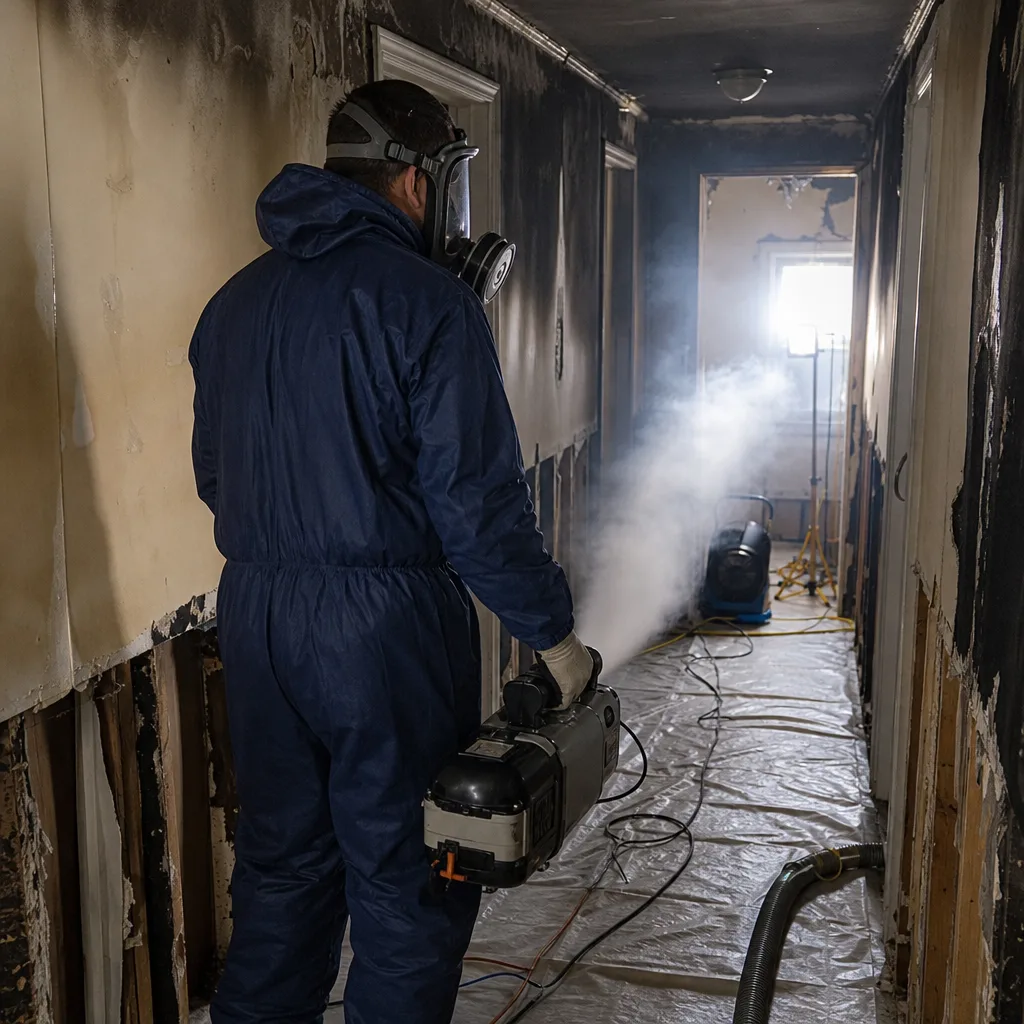
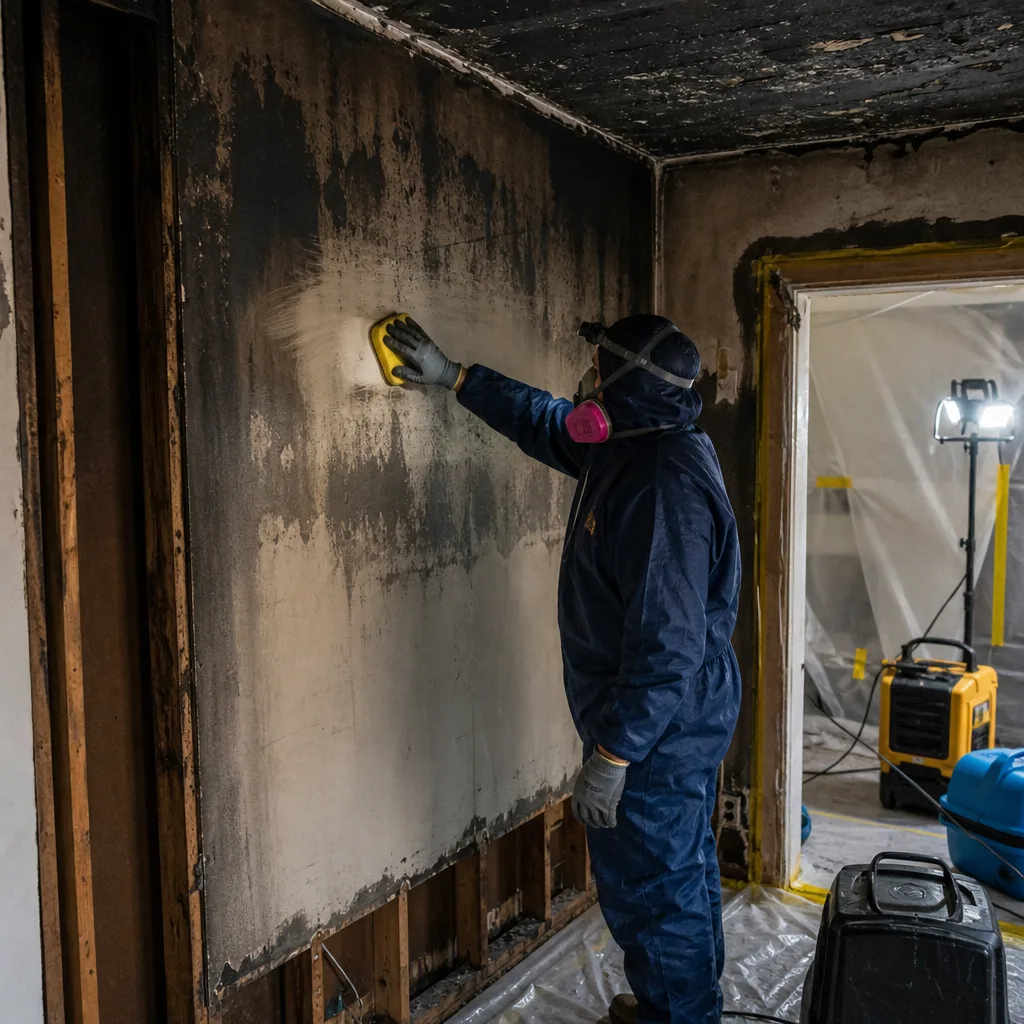
Category 2 and 3 losses get HEPA air scrubbing, antimicrobial application, and controlled demolition of unsalvageable materials before we even discuss rebuilding.
Asbestos & Hazardous Material Coordination
This is the step most national franchises skip entirely. If we’re cutting into walls or pipe insulation in a pre-1980s Midtown building, we coordinate with a licensed asbestos contractor and industrial hygienist before any demolition proceeds.
Repairs & Restoration
Drywall hung and finished, plaster patched, flooring matched, paint cut in, trim reinstalled. We handle Full-Service Reconstruction down to the last light switch plate.
Need Emergency Reconstruction & Cleanup in Midtown Manhattan Now?
Crews minutes away, answering live 24 hours a day. The sooner we start, the less it costs.
Working With Your Insurance Company
In Midtown Manhattan, a reconstruction claim rarely involves one insurance policy. There’s the shareholder’s policy, the co-op or condo master policy, often a commercial tenant’s business-interruption policy, and sometimes the building owner’s carrier. We’ve handled all four on a single job. Wade’s Restoration documents from the first hour, with photos of every affected room, daily moisture logs, and a line-item scope written in the exact categories adjusters expect. Wade talks directly to your adjuster, so you’re not the one stuck relaying information between a building manager, a tenant, and a carrier’s desk in another state. If you’re in a co-op on Park Avenue or a hotel conversion near Bryant Park, that coordination is the difference between a claim that gets approved in two weeks and one that stalls for two months.
What We Provide Your Insurer
- Thorough documentation of the loss
- Photos of all damage, room by room
- Moisture readings and drying logs
- A detailed, line-item scope of work
- Direct coordination with your carrier
Built for Midtown Manhattan’s Loss Calendar
Midtown’s calendar is predictable, even if every building’s version of the event looks different. January deep freezes turn rooftop water-supply lines into burst risk, especially on older commercial buildings where mechanical rooms sit unsheltered behind parapets. February and March bring freeze-thaw cycling that forms ice dams at roof drains on flat-roofed pre-war towers, sending meltwater down interior wall cavities in the Hotel District and along Broadway. Spring nor’easters push rain through aging window gaskets and envelope seals on curtain-wall buildings from Sixth Avenue to the East River. Summer thunderstorms overwhelm already-strained roof drains and basement sumps in dozens of commercial spaces at once, with nowhere for the water to go but down. And in any month, Con Edison’s district steam network under Midtown’s streets remains a unique variable. When a steam main lets go, sub-basements across an entire block can take on moisture simultaneously. We plan our response patterns around this calendar: extraction equipment staged for winter, drying capacity ramped for spring and summer storms, and a roster of licensed asbestos contractors on call for the steam events.
Reconstruction & Cleanup Across Midtown Manhattan’s Neighborhoods
Midtown is not one building type. It’s a patchwork, and the response has to match. In Hell’s Kitchen, tenement-era walk-ups and converted townhouses have original cast-iron risers and horsehair-plaster walls, so a Category 2 discharge usually means full plaster removal, not in-place drying. In Murray Hill, pre-war co-ops with steam heat run their own riser replacement schedules, and when one gives out, water moves through wall cavities shared by multiple units, dragging three or four insurance policies into one claim. The Garment District operates on commercial timelines: a flooded freight-elevator shaft or a soaked cutting room means a business that cannot legally stay closed, so we build containment and drying plans that let them keep working around us. Around Rockefeller Center and Grand Central, high-rise office towers with curtain-wall glazing have their own calculus: a window gasket leak at floor 30 soaks the 28th-floor ceiling, while the actual source stays hidden behind a mechanical chase. Even the response route changes by block: Second Avenue’s bike lane and bus lane kill truck access from 7 to 10 a.m., so we stage equipment before rush hour or after evening traffic clears. Working Midtown Manhattan means knowing which streets a box truck can actually stop on.
Specialized Reconstruction & Cleanup Services We Offer in Midtown Manhattan
Full-Service Reconstruction
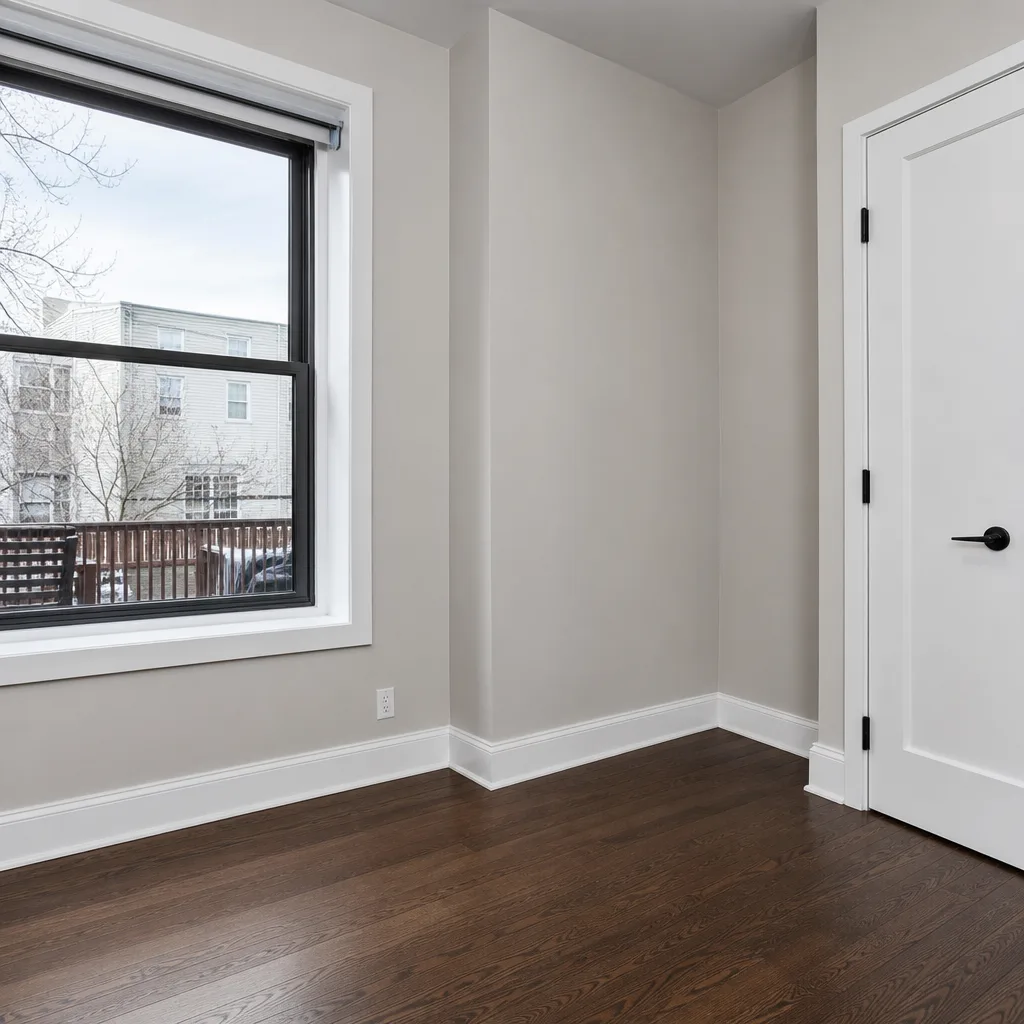
When the drying phase ends, the rebuilding starts. In Midtown, that often means restoring pre-war details, not just hanging fresh drywall. We’ve matched plaster crown molding, rebuilt built-in shelving, and paired replacement hardwood to 1920s flooring oak. Wade Ferris’s crew handles the whole Reconstruction & Cleanup sequence: framing, drywall, flooring, trim, paint, and final cleanup. If a co-op board requires specific finishes or soundproofing between units, we spec to those requirements before the first stud goes back in.
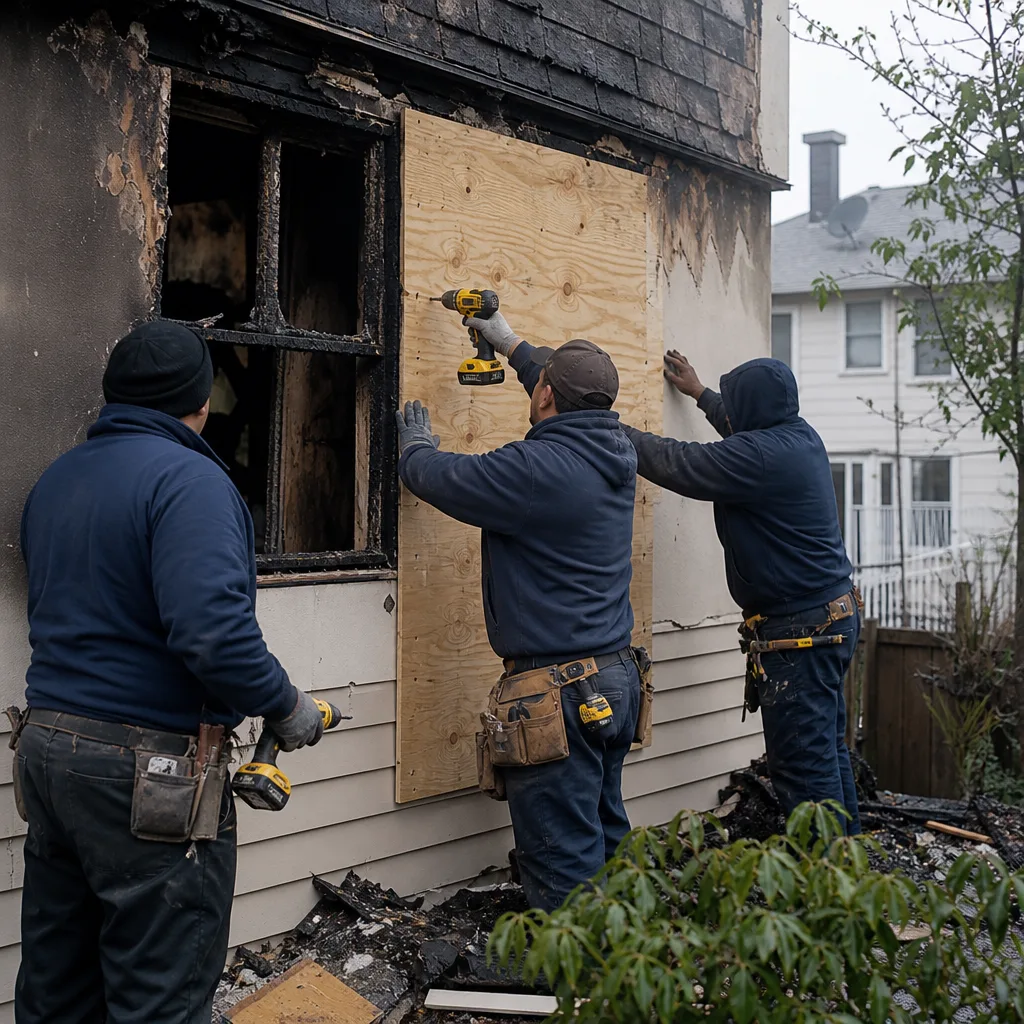
Drywall & Flooring Repair
Midtown’s older buildings amplify drywall and flooring damage because water doesn’t stop at the unit line. A ceiling collapse in a Hell’s Kitchen walk-up often takes the next floor down with it. We cut out saturated drywall, check the framing for mold or rot, and replace with material matched to the surrounding surface. For flooring, we match existing hardwood species and stain, or replace subfloor and finish layers where warping has begun. The goal is a repair that doesn’t look like a repair.
Insurance Claim Documentation
This is the service that saves Midtown property owners the most money. We photograph everything before, during, and after the job. We log moisture readings daily and hand you the full log at the end. We write line-item scopes that align with how carriers actually review claims. And Wade talks to your adjuster directly. For co-op and condo shareholders dealing with overlapping master policies and unit policies, this level of documentation is what keeps your out-of-pocket share from ballooning.
Contents Restoration & Pack-Out
When a Midtown apartment floods or a commercial space takes on smoke, the contents often need to leave before the walls can be opened. We pack out, inventory, clean, and store contents in a secured facility, then deliver everything back when reconstruction is done. For commercial tenants, we run a contents list with photo documentation so the business-interruption claim has the inventory support it needs.
Carpet & Upholstery Cleaning
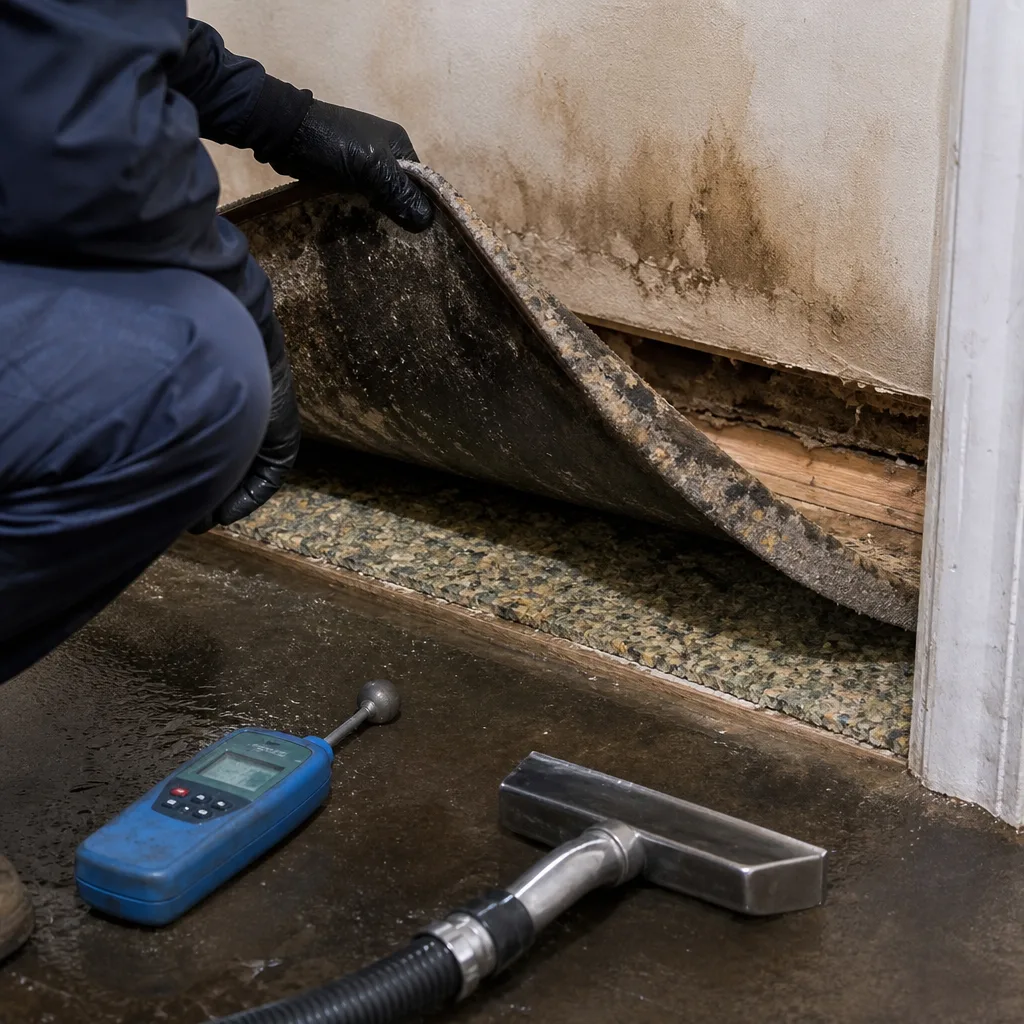
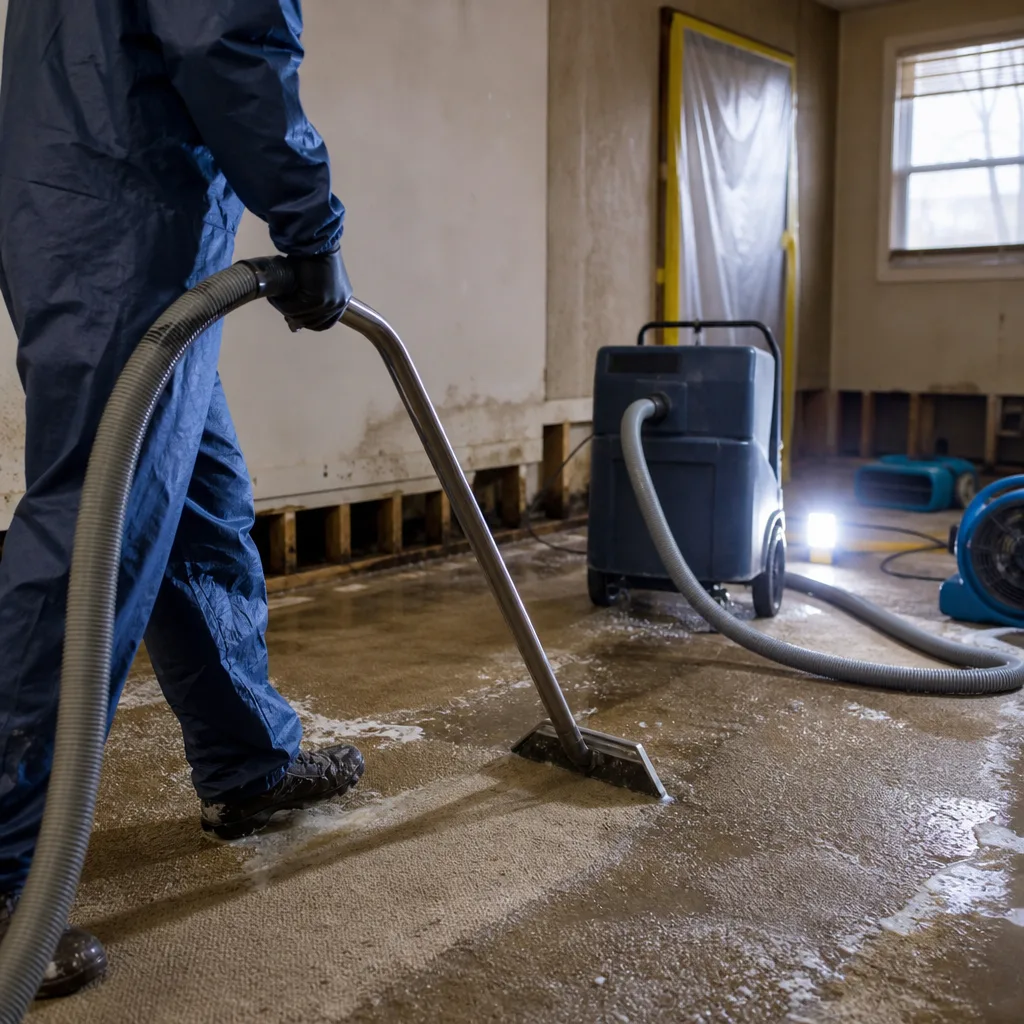
Post-disaster, carpet and upholstery usually carry the odor even after structural drying is finished. We run hot-water extraction with professional-grade equipment on salvageable carpet, and HEPA-vacuum and wet-clean upholstery where the fabric permits. In buildings where the super has rules about diesel equipment indoors, we use electric portable extractors that run off the unit’s existing power.
Post-Construction Cleanup
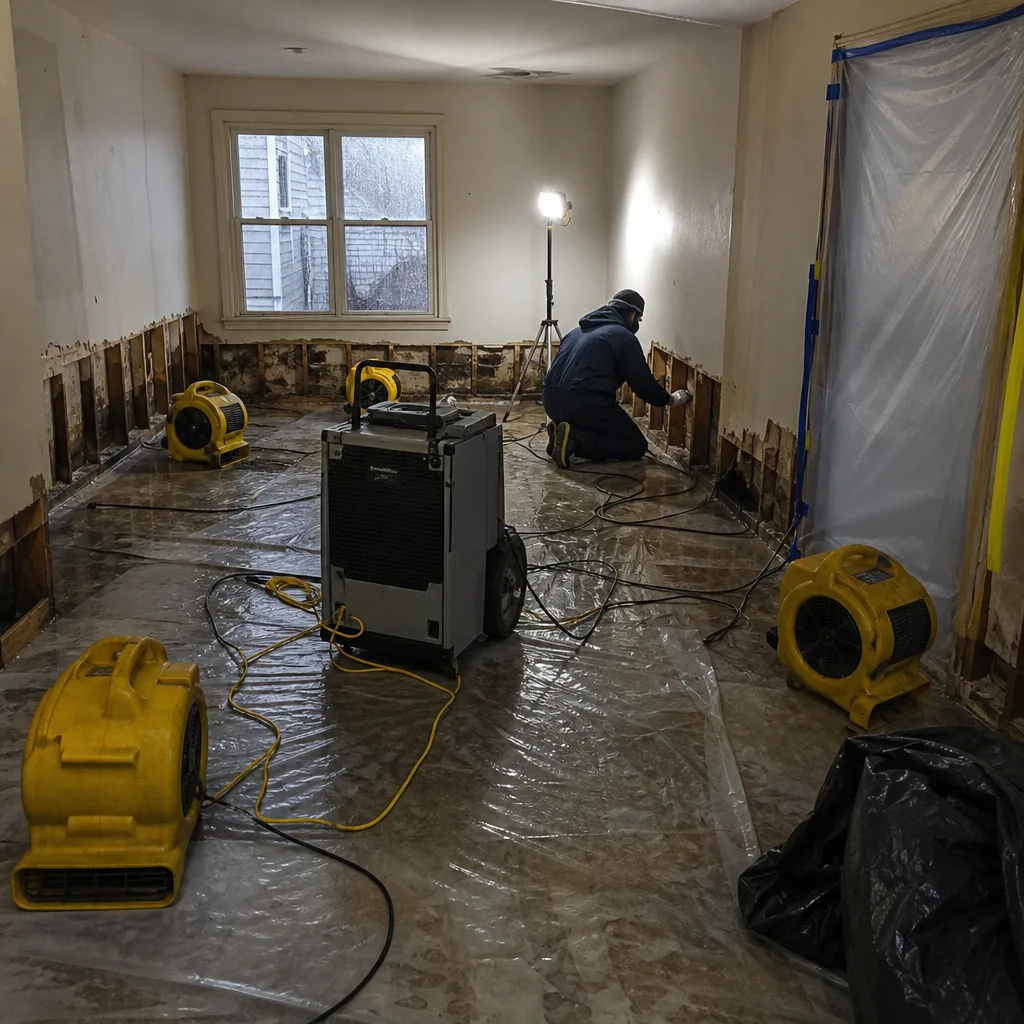
When our own or another contractor’s reconstruction work is complete, we can handle the final pass: construction dust off every surface, windows cleaned inside, floors mopped and buffed, bathrooms and kitchens sanitized. In Midtown buildings where residents or tenants return the next morning, this is the step that makes the job look finished instead of merely done.
What happens when you call
- 1
A real person answersNo phone trees - you reach a local pro.
- 2
You get an upfront price rangeHonest numbers before anyone is dispatched.
- 3
A background-checked tech heads outLicensed & insured, dispatched right away.
- 4
You approve before work beginsNothing starts until you say go.
Reconstruction & Cleanup Costs in Midtown Manhattan, NY
Reconstruction pricing in Midtown runs higher than the borough averages, for structural reasons. A typical drywall repair job in a standard Manhattan apartment runs $1,200 to $3,800 depending on square footage, ceiling height, and finish level. Plaster repair on pre-war horsehair walls runs $80 to $160 per square foot when hand-troweled, because the material and labor are specialized. Full flooring replacement in a water-damaged Midtown living room ranges from $12 to $28 per square foot for hardwood, with matching and finishing adding 18 to 30 percent on top. Asbestos survey and abatement, when required, adds $2,000 to $9,000 depending on the scope of pipe or wall insulation affected. If you file an insurance claim, most of these costs fall under your dwelling coverage, minus your deductible. The free inspection is how you know the actual number: we come out, we look, we write a scope with real dollar figures, and you decide. Call (363) 208-1526 and we’ll get you a clear answer, not a range that floats.
We Also Serve Cities Near Midtown Manhattan
Wade’s Restoration runs crews from our New York City office into every borough and the near metro. If you’re just across the river or a few stops down the line, we regularly handle reconstruction and cleanup work in Astoria, the Financial District, Lower Manhattan, and Flushing. Response times vary by borough, but the phone number is the same, and it always rings to a live person.
Midtown Manhattan Reconstruction & Cleanup Questions, Answered
Does Midtown Manhattan Reconstruction & Cleanup require asbestos testing before any wall or pipe work?
If your building predates 1980, yes, in almost every case. We cannot legally cut into walls, remove pipe insulation, or disturb original plaster in most pre-war Midtown buildings without an asbestos survey first. That means any water-damage demo job in a Hell’s Kitchen tenement or a Murray Hill co-op starts with testing, not with demolition. When asbestos is found, a licensed abatement contractor handles removal before we start drying or rebuilding. Skipping this step triggers a stop-work order and could expose your building to serious liability. Wade’s Restoration coordinates the survey and abatement so you don’t have to manage that process alone. Call (363) 208-1526 and we’ll tell you if your building’s age triggers the requirement.
How do you move drying equipment into a 20th-floor Midtown office without shutting down tenant operations?
It starts with the freight elevator, and specifically with the super’s schedule. In most Midtown high-rises, the freight car runs on approved windows only, often early morning or after 6 p.m. We plan air movers and dehumidifiers around those slots, sometimes staging equipment in a lower-floor holding area overnight. For offices that cannot close, we build negative-air containment around the affected area so drying continues while tenants keep working on the other side of the plastic. We’ve done this in occupied Class A buildings near Bryant Park and around Grand Central. Call (363) 208-1526 to talk through your building’s specific access rules.
What happens when a Midtown steam main ruptures near a building basement - can you start drying right away?
No, and any company that says otherwise doesn’t understand Midtown. A Con Edison steam-main rupture introduces moisture and often disturbs legacy asbestos in sub-basements and mechanical rooms. Before any drying equipment goes in, an industrial hygienist has to assess the space, and if asbestos is present, a licensed abatement contractor has to clear it. Only then do we stage air movers and dehumidifiers. We’ve handled steam-event basements near Lexington Avenue and the 2018 rupture zone, and the sequence never changes: assess, abate, then dry. Call (363) 208-1526 if you suspect your basement has taken steam or moisture exposure.
Can horsehair-plaster walls in a Midtown walk-up be dried in place or do they always need replacement?
In most cases, horsehair plaster that has been saturated for more than 24 hours needs to come out. The plaster wicks moisture deep into the lath and the wall cavity, and once the horsehair binder swells, the material loses structural integrity and holds a mold risk. In-place drying works for minor surface wetting, but a full Category 2 discharge in a Hell’s Kitchen or Murray Hill walk-up usually means cutting the plaster back to the framing, drying the cavity, and rebuilding with drywall or a plaster match. We tell you which scenario you have during the free inspection. Call (363) 208-1526 to schedule it.
How do you handle reconstruction in a Midtown co-op where the shareholder’s insurance, the building’s master policy, and adjacent units all have different coverage?
We treat the job as a three-way claim from the start. The building’s master policy often covers structural elements, the shareholder’s policy covers interior finishes and contents, and adjacent-unit claims are separate if water migrated across a common wall. We document everything in a way that supports all three carriers, with photos, moisture logs, and a line-item scope that separates structural from finish work. Wade talks to every adjuster directly. That’s the only way to keep a Murray Hill co-op claim from turning into a six-month negotiation. Call (363) 208-1526 and we’ll walk you through how we’d approach your specific building’s policy structure.
How fast can you actually get to a Midtown Manhattan address?
For emergency water or steam events, we typically have a crew on the way within 45 minutes of your call. Midtown’s street grid works in our favor when we dispatch from the New York City office, but we’re honest about the variables: Second Avenue during the morning rush, a crane closing a block on Sixth, or a UN General Assembly week can push that window. When you call (363) 208-1526, the person who answers will tell you the real ETA, not a corporate promise.
Will my insurance cover reconstruction and cleanup in Midtown Manhattan fully?
Most water, fire, and steam claims in Midtown are covered under your dwelling or commercial property policy, minus your deductible. Coverage depends on the cause and your specific policy, not the neighborhood. What differs in Midtown is the complexity: master policy deductibles on co-op buildings can run $25,000 to $100,000 or more, and adjacent-unit claims often get subrogated. Our direct-adjuster coordination and daily documentation make sure your share of the claim is the smallest it can be. Call (363) 208-1526 and we’ll answer honestly even if the answer is “you’ll be out of pocket for part of this.”
What should I do in the first 30 minutes after water or steam damage in a Midtown building?
Call the super and have the water isolated at the riser or main. Then call us at (363) 208-1526 while you still have the super on-site or reachable. In Midtown buildings, that access is the single biggest variable in the first hour. Do not cut into walls or ceilings yourself, do not run box fans, and do not enter a sub-basement if a steam main may be involved. Let us assess before anything gets moved. The first hour is about stopping the water and locking in your documentation, not doing demolition.
Serving Midtown Manhattan, NY - Our Local Coverage Area
We’re based in the Midtown Manhattan area and know this community well. Use the map below to see our service coverage - if you’re nearby, we can almost certainly help.
Contact Wade’s Restoration for Midtown Manhattan Reconstruction & Cleanup
If you’re standing in a wet apartment, a smoke-filled office, or a basement that smells like steam and old pipe insulation, call (363) 208-1526 right now. Wade Ferris or a live member of his team answers. We’ll tell you honestly whether you need a dry-out, a full reconstruction, or just a second opinion on an estimate you already got. The initial inspection is free. The quote comes in writing. And if we do the work, it’s covered by the 90-Day Done Right Promise, in writing, on every water, fire, and mold restoration job. For senior and veteran property owners in Midtown, we also apply a permanent 10 percent discount. We work this neighborhood every week. Ask anyone on your street.
Written by Wade Ferris, Owner at Wade’s Restoration, serving Midtown Manhattan from our New York City office since 2007.